

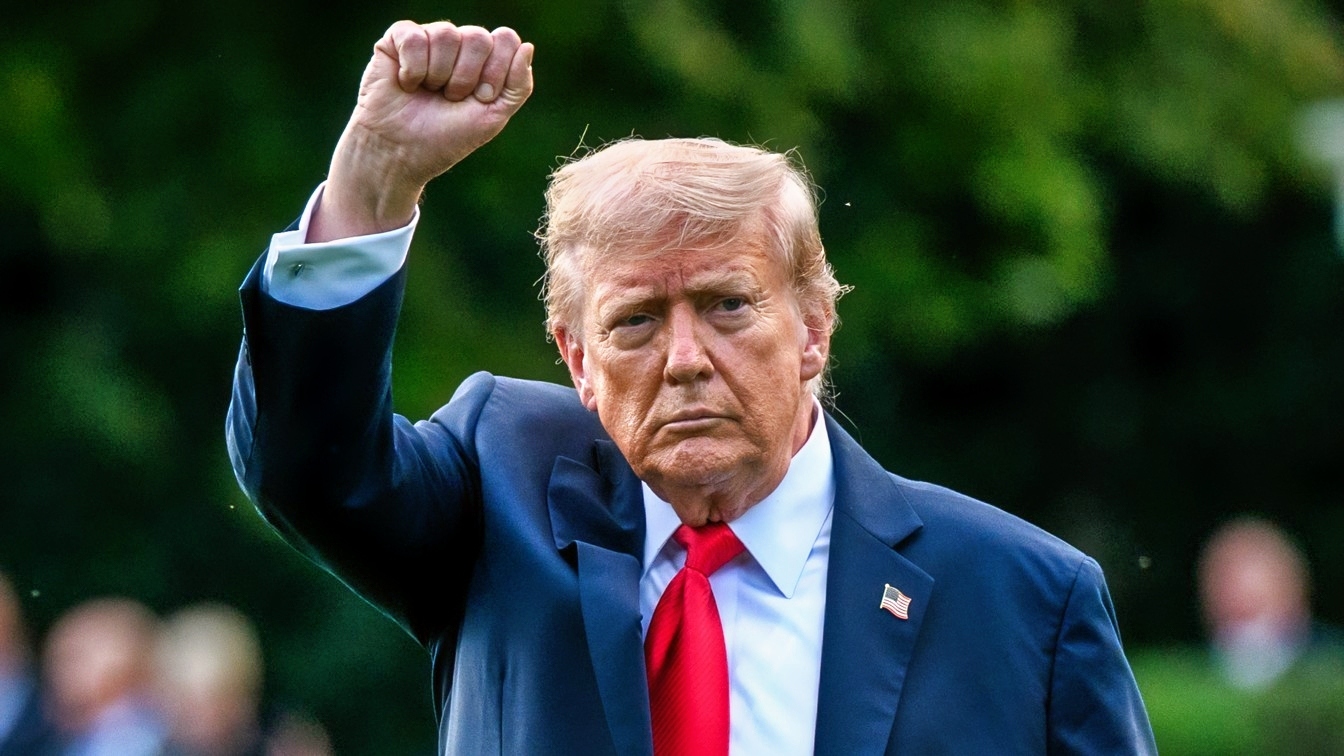
On June 14, 2026, President Donald Trump took to TruthSocial to announce a deal with Iran. “I hereby fully authorize the toll-free opening of the Strait of Hormuz, and, simultaneously herewith, authorize the immediate removal of the United States Naval blockade. Ships of the World, start your engines. Let the oil flow!” he declared.
Trump’s belief in the power and permanence of his own agreements misunderstands Iran. Multiple power centers have always characterized the Islamic Republic, allowing the regime to entangle the United States in an elaborate game of good cop-bad cop.
Successive Iranian officials brag openly about this. President Mohammad Khatami charmed Western leaders with talk of a “dialogue of civilizations.” President Bill Clinton responded to Khatami’s charm by shutting down efforts to hold Iran accountable for the 1996 Khobar Towers bombing.
A decade later, Khatami’s spokesman Abdollah Ramezanzadeh bragged about how the reformists fooled Washington. The purpose of dialogue, he argued, was not to compromise but to build confidence and avoid sanctions. “We had an overt policy, which was one of negotiation and confidence building, and a covert policy, which was continuation of the activities,” he explained.
New Hormuz Crisis: How Long Will the Iranians Allow Tankers to Flow Unimpeded?
Trump is now ensnared in a similar dynamic. “Everything we sought to achieve through military action, we obtained several times over through negotiation; it was not even comparable,” chief negotiator and Parliamentary Speaker Mohammad Bagher-Ghalibaf said.
The chief difference between hardliners and reformers in Iranian politics is one of tactics, not goals.
The reality is that the Islamic Republic now sees the Strait of Hormuz as a cash cow.
The regime no longer must close it; they can just threaten to do so, and the ensuing global panic will drive up the price of oil and lead European states, and perhaps now even the United States, to acquiesce in blackmail. For the Iranian leadership, the temptation will be great. The Iranian fiscal year runs from March 21 to March 20.
Because Iran relies on oil sales to fund its Treasury, pay salaries, and finance government functions, Iranian economists must estimate the average oil price for the coming year.
If they overestimate that figure, the regime runs a shortfall and cannot make payroll. Should that happen in the future, expect the Revolutionary Guard to threaten the Strait of Hormuz. Nor will a budget shortfall be the only potential trigger, as any number of diplomatic demands could cause Tehran to pull the trigger.
Will Extortion and Tolling Schemes Extend Beyond the Strait of Hormuz?
The problem is that what happens in Iran does not stay in Iran.
Every deal Trump makes creates a precedent, whether he likes it or not.
The Bab el-Mandeb—the 20-mile-wide choke point at the base of the Red Sea—separates Houthi-controlled Yemen from China-dominated Djibouti. If the Islamic Revolutionary Guard Corps can enrich itself to the tune of hundreds of billions of dollars by blackmailing the world, it is a no-brainer for the Houthis to do likewise. Long before the Iranians closed the Strait of Hormuz, the Houthis were already charging tolls for ships seeking to transit. Such schemes will only increase exponentially among other literal states.
Thirty-five-year dictator Isaias Afwerki, for example, has run Eritrea’s economy into the ground. Eritrea is already a rogue state; charging ships passing by will be tempting. The same is true for Sudan’s General Abdelrahman al-Burhan, whose Sudanese Armed Forces now control the coast in the civil war-devastated country. Secretary of State Marco Rubio’s decision to support pro-China Somalia over pro-American Somaliland only increases the danger.
Malaysia is Southeast Asia’s most Islamist country, an industrialized hub for Al Qaeda support. Both Malaysia and Indonesia, the world’s most populous Muslim countries, sit on the Strait of Malacca. Both countries could theoretically also charge tolls, especially given the volume of Persian Gulf oil shipped by tanker to East Asian customers.
What I Saw in Libya and Possible Answers to Oil Crisis
With freedom of navigation and global tanker traffic threatened, the Trump administration does have an ace up its sleeve if Rubio and the State Department are willing to break free of the State Department’s policy auto drive: Libya.
The United States largely abandoned Libya after the September 11, 2012, murder of U.S. Ambassador Chris Stevens in Benghazi. Few Americans paid attention to what came next: Field Marshal Khalifa Haftar launched Operation Dignity to cleanse Benghazi and its environs of the militias responsible. More than 5,000 Libyans lost their lives to restore stability to eastern Libya.
In March 2026, I spent a week in Benghazi and was able to move around the city both day and night without security. The Libyan Armed Forces under Khalifa Haftar and his son Saddam Haftar now control 70 percent of the country, including the country’s main oil fields, pipelines, and export terminals. They would have taken full control over the country if not for Turkey’s shipment of drones to the Islamist militias around Tripoli.
The State Department, however, recognizes the Tripoli-based government. This is problematic for several reasons. Its prime minister, Abdul Hamid al-Dbeibeh, is a fool; Libyans mock him as their equivalent of “Baghdad Bob.” For all the talk about legitimacy, the election mandate of Dbeibeh’s government has long since expired, as has the mandate of the Benghazi-based House of Representatives.
This should open the door for Washington to support those who can best deliver stability and energy; Rubio instead embraces Dbeibeh, who not only protects the Islamist militias that killed Stevens, but also Sadiq Al-Ghariani, the “grand mufti” of Libya, who speaks and acts like late Al Qaeda leader Usama Bin Laden. Trump envoy Massad Boulos seeks to unify Libya, a noble policy, but he has his mechanisms wrong: Rather than force a stable, Arab nationalist, energy-rich, and popular administration to subordinate itself to Dbeibeh, Boulos should do the opposite and instruct the Tripoli-based authorities to join the Haftars.
Frankly, this is already occurring on a security and intelligence front; only the State Department’s antiquated policy and its lack of a functioning embassy inside Libya prevent stabilization that could resolve not only the Islamist militia problem but also make the United States and Europe immune from Iranian and Houthis’ energy blackmail. To export oil from Libya to Europe would require no passage through checkpoints or hostile territory. That Libya’s oil is premium light sweet crude only adds to the imperative.
Diplomacy should serve to advance American national and security interests, not empower adversaries or unnecessarily hamper recovery. Unfortunately, the State Department’s bureaucratic aversion to change and a holistic, strategic approach repeatedly undermines American interests. With all strategic choke points now at risk, it is time to re-embrace Libya. It is a very different country than it was 14 years ago.
About the Author: Dr. Michael Rubin
Dr. Michael Rubin, a Director of Policy Analysis at the Middle East Forum, specializes in Iran, Turkey, and the Horn of Africa. His career includes time as a Pentagon official, with field experiences in Iran, Yemen, and Iraq, as well as engagements with the Taliban prior to 9/11. Mr. Rubin has also contributed to military education, teaching U.S. Navy and Marine units about regional conflicts and terrorism. His scholarly work includes several key publications, such as “Dancing with the Devil” and “Eternal Iran.” Rubin earned his Ph.D. and M.A. in history and a B.S. in biology from Yale University.


