


The Thursday, 2 July, attack on Kyiv was one of the most massive ever launched on the Ukrainian capital. One key indicator being cited as evidence of the ferocity of the attack is the number of persons who were forced to take refuge in the city’s underground.
Kyiv Metro authorities reported that 52,500 people, including 4,500 children, had sheltered in these underground stations overnight. That figure, they stated, was the highest number in “recent years”.
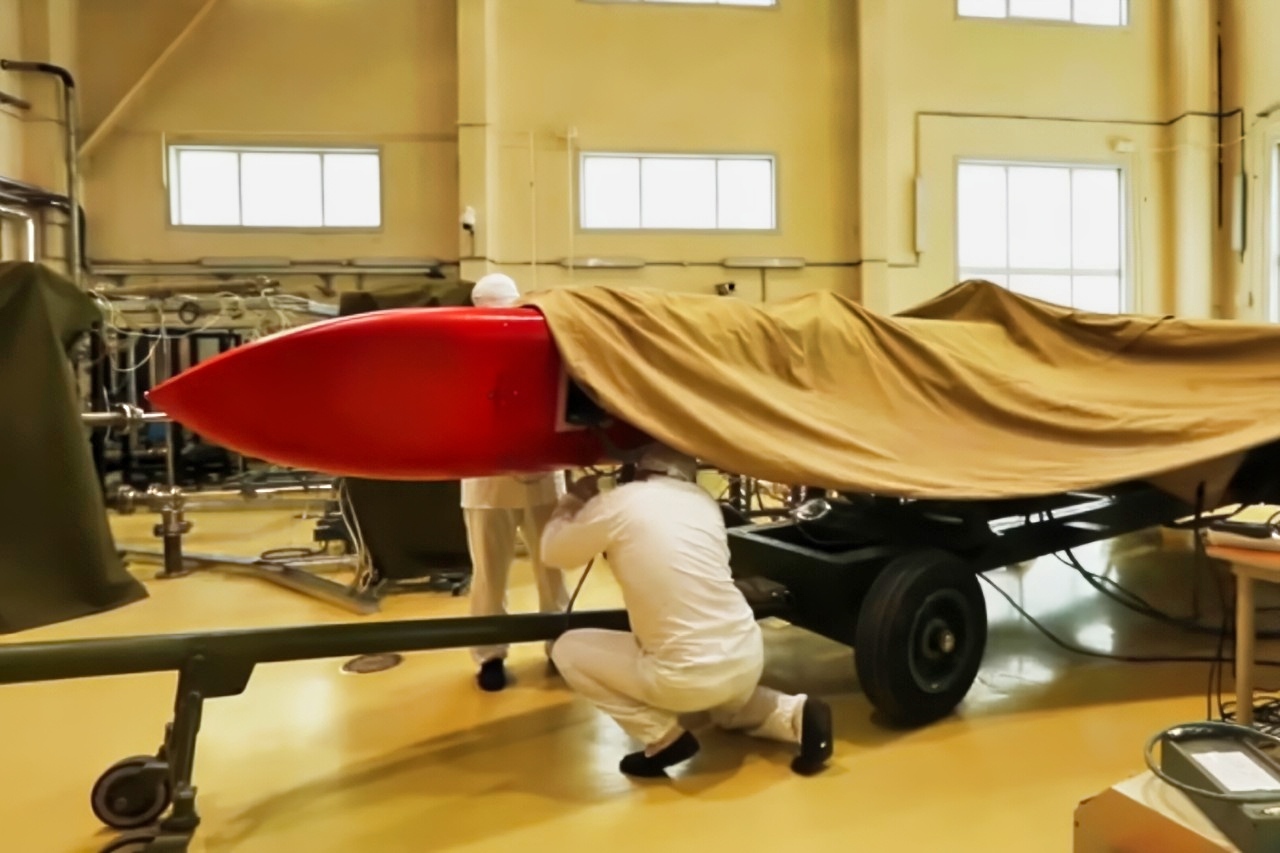
Skyfall Missile Russian Flying Chernobyl. Russian Government/Screenshot.
The Ukrainian Air Force (PSU) stated that Russia’s air, naval and drone forces had launched 74 missiles and 496 drones in this overnight attack, the majority of which had targeted the capital. Ukraine’s Air Defense Forces (PPO) did repel many of these, but 25 ballistic missiles and 12 drones did get through these defenses and hit 33 locations.
Ukraine’s own armed forces will not comment on any difficulties that they would have had in intercepting these Russian missiles and drones. Any such revelations would be essentially “drawing a map for Moscow as to where there are safe corridors that its missiles and drones can pass through,” said one Ukrainian air defense industrial enterprise executive, who spoke to the National Security Journal.
Diversity Of Attack Configurations: Russia vs. Ukraine
“People in the West like your HR commissars are always banging on about how ‘diversity’ is such a wonderful attribute that can improve almost any situation it is applied to, regardless of how many times the opposite has proven to be true,” said a Ukrainian anti-drone and UAV design specialist who also spoke to National Security Journal. “It’s even more the case that it is of benefit to no one if that diversity comes in the form of too many differing types and sizes of drones and missiles coming at you from too many different directions and at too many various altitudes.”
Ukrainian defense analysts who have been tabulating and assessing the patterns of Russian attacks have characterized Thursday’s continuous 11-hour barrage after barrage as one of the greatest challenges the country’s air defenses have faced in recent months.
Well-known aviation specialist Bohdan Dolintsev told Ukrainian media that the Russians were now engaging in a technique of using as many differing types of weapons as possible – and all within the same time window.
This is more than just the Russian traditional reliance on mass, he and other experts explained. By diversifying these attacks so that the air defense batteries on the ground are perplexed about which weapon will come next and from which direction, it makes an air assault of this kind seem even larger than it already is. It is meant to wear down the air defenses by creating “an exceptionally complex challenge” for the Ukrainian PPO service.
Missile Shortage
Ukraine has for many months suffered from a shortage of air defense missiles that can be used against Russia’s ballistic missiles. The most in-demand weapon, still built at an almost anemic production rate, is the Lockheed Martin PAC-3 Missile Segment Enhancement (MSE) interceptor – one of the three missiles used in the Patriot battery.
On Thursday, Ukrainian forces had managed to take down more than 90 percent of the slower-flying cruise missiles and 90 percent of the Iranian-designed Shahed-type attack drones. The problem is intercepting the Russian ballistic missiles, which is a constant problem due to the inadequate supply of Patriot PAC-2 and PAC-3 missiles, said the Ukrainian Ministry of Defense.
Following Thursday’s attack on the capital, the Ukrainian Defense Minister Mykhailo Fedorov appealed to around 40 partner countries for them to urgently transfer any Patriot missiles they might have in their existing stockpiles. Ukraine’s Foreign Minister has urged all these nations to effect these transfers as soon as possible, which in reality means they are needed by the end of this month.
In April, Ukraine signed a contract for a record number of hundreds of PAC-2 missiles for the first time. The contract requires support from German industry, and deliveries of these interceptors are reportedly set to begin in the coming years. The first phase of this effort was to acquire around 100 Patriot missiles worth US$1 billion through an EU loan.
In 2026, Ukraine began receiving missiles from European partners’ stocks for the first time. From their experience in combating these attacks, Ukraine’s effectiveness of Patriot systems against the Russian Iskander IRBM has more than doubled. This is thanks to data from all previous intercepts provided by Ukraine and interpreted in accordance with the NATO After-Action Review standard.
About the Author: Reuben F. Johnson
Reuben F. Johnson has thirty-six years of experience analyzing and reporting on foreign weapons systems, defense technologies, and international arms export policy. Johnson is the Director of Research at the Casimir Pulaski Foundation. He is also a survivor of the Russian invasion of Ukraine in February 2022. He worked for years in the American defense industry as a foreign technology analyst and later as a consultant for the U.S. Department of Defense, the Departments of the Navy and Air Force, and the governments of the United Kingdom and Australia. In 2022-2023, he won two awards in a row for his defense reporting. He holds a bachelor’s degree from DePauw University and a master’s degree from Miami University in Ohio, specializing in Soviet and Russian studies. He lives in Warsaw.


