

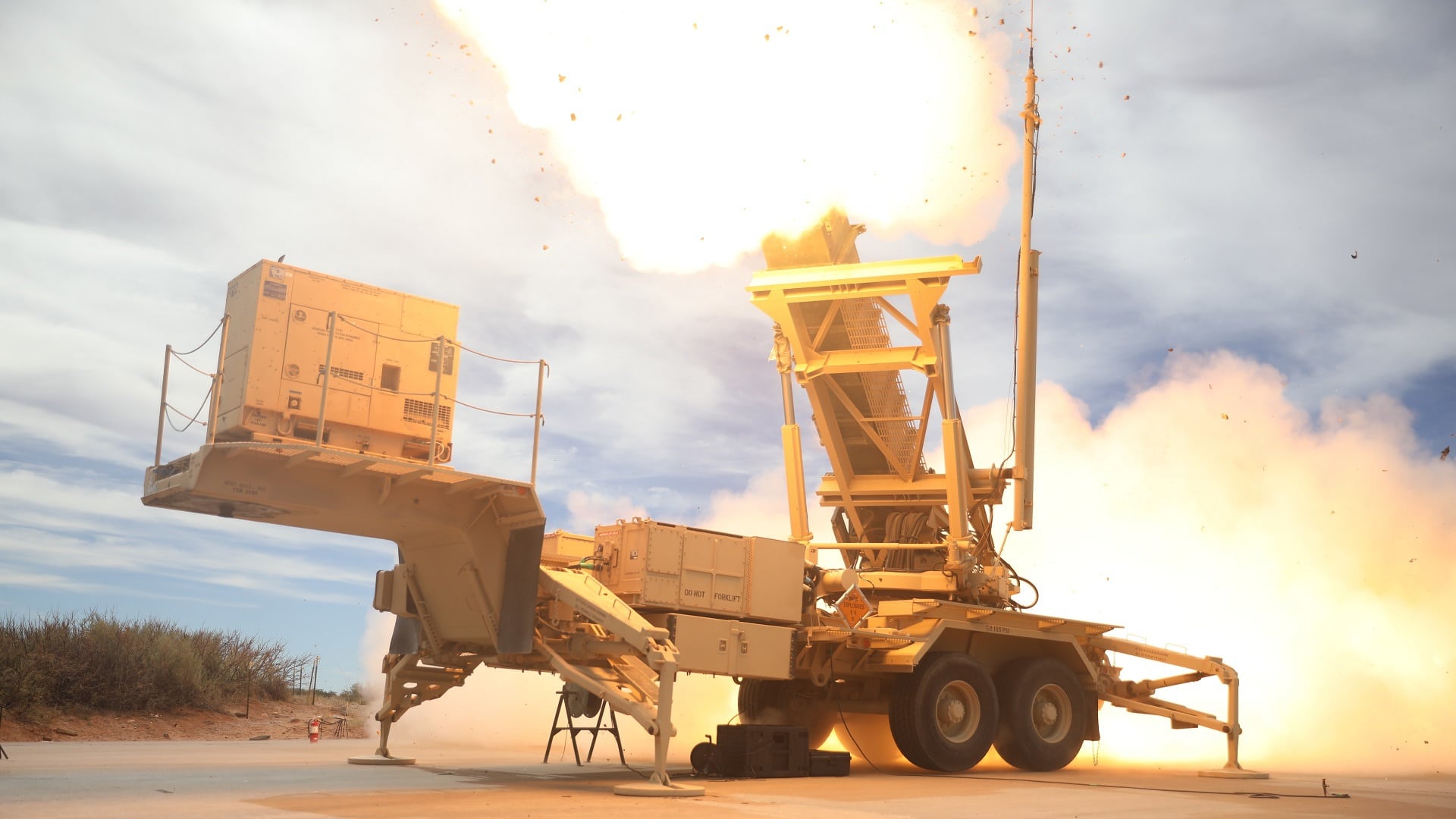
Key Points and Summary – Ukraine’s battlefield has become a live lab for the Patriot air defense system.
-Constant engagements against Russian cruise, ballistic, and “hypersonic-claimed” threats are driving software updates for better discrimination, track management, and raid prioritization—while refining tactics to conserve interceptors.
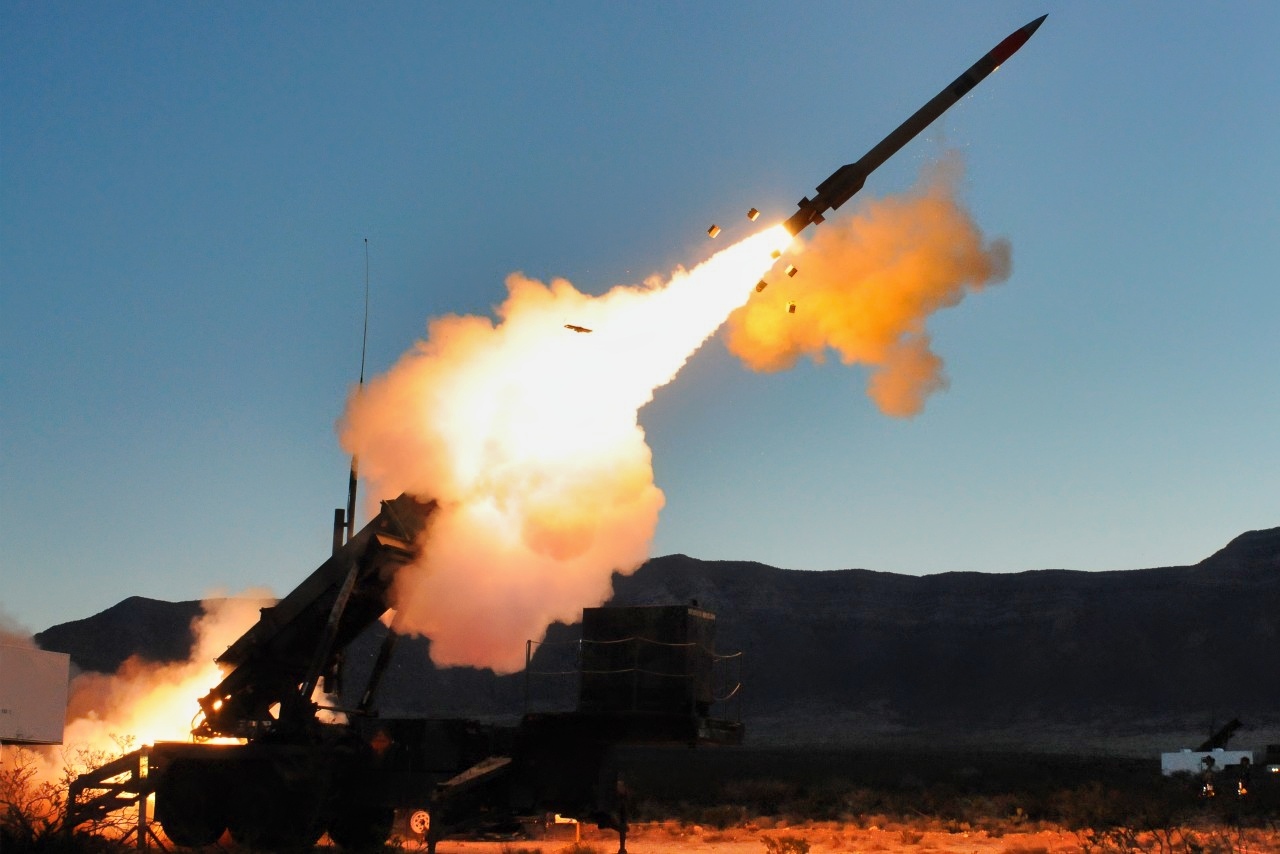
The PAC-3 MSE is a highly sought-after air defense munition due to its advanced capabilities and versatility. As a next-generation interceptor, it offers improved range, speed, and maneuverability, making it an effective counter to a wide range of threats, including tactical ballistic missiles, cruise missiles, and aircraft. (Official U.S. Army photo)
-Patriot now operates as part of a tighter layered network (IRIS-T, NASAMS, Gepard, legacy SAMs), sharing radar data and expanding coverage.
-Demand for PAC-3/MSE and GEM-T is accelerating production and sustainment.
-Training pipelines and deployment practices are adapting, too.
-Limits remain: decoys, jamming, and saturation raids stress any system, and logistics matter.
-Still, Patriot’s hardware, software, and doctrine are measurably improving under fire.
The War in Ukraine is Helping Improve the Patriot Air Defense System
Repeated interception of a variety of Russian munitions has facilitated the honing of Patriot hardware, software, and operational doctrine.
The ongoing war in Ukraine has put the American-made Patriot air defense system into intense, real-world use.
That experience has driven improvements to the Patriot’s software, tactics, its employment on the battlefield, and the actual system’s hardware.
Some of these factors have been reported on. Much of it, however, must be inferred, given the sensitive and classified nature of that air defense system.
Ukraine: Revelations and Improvements
Following repeated heavy Russian missile and drone attacks against Ukrainian civilian infrastructure, including rail networks and energy nodes, by Russian curves missiles, ballistic missiles capable of complex maneuvers, and even some claimed hypersonic threats, the Patriot’s control software has been updated to improve target-tracking, discriminating between actual threats and decoys, particularly in scenarios where air defenses are saturated with potential engagable targets.

Exercise Artemis Strike is a German-led tactical live fire exercise with live Patriot and Stinger missiles at the NATO Missile Firing Installation in Chania, Greece from Oct. 31-Nov. 09. Over 200 U.S. soldiers and approximately 650 German airmen will be participating in the realistic training within a combined construct, exercise the rigors associated with force projection and educate operators on their air missile defense systems. The 10th Army Air Missile Defense Command will deploy, operate and fire live missiles within a tactical scenario, under Supreme Headquarters Allied Powers Europe operational readiness evaluation criteria.

German soldiers assigned to Surface Air and Missile Defense Wing 1 fire the Patriot weapons system at the NATO Missile Firing Installation (NAMFI) during Artemis Strike Nov. 7 in Chania, Greece. Artemis Strike is a German-led multinational air defense exercise. German soldiers Over 200 U.S. soldiers and approximately 650 German airmen will be participating in the realistic training within a combined construct, exercise the rigors associated with force projection and educate operators on their air missile defense systems. (Photo By Officer Candidate Sebastian Apel, Air Defence Missile Group 24)
Likewise, Ukrainian operators of the Patriot systems have been able to refine which threats are of the highest priority and should be engaged first, opting to conserve Patriot missile interceptors when possible, and leading to a more efficient application of limited interceptor resources.
However, Ukraine’s air defenses, including the Patriot, are part of a broad, multi-layered air defense network that combines shorter- and longer-range assets, such as IRIS-T, a European alternative to Patriot, NASAMS, Germany’s Gepard, and older Soviet air defense systems.
Ukrainian-operated Patriot batteries then operate in tandem with those systems’ radars, sharing a broader operational picture and aiding threat detection for improved efficiency.
Tyler Rogoway, the founder and Editor-in-Chief of The War Zone, a website, elaborated on the valuable battlefield experience that is being gleaned from the ongoing war in Ukraine to improve the Patriot air defense system on X, formerly Twitter. “Patriot batted 1000 today.
A lot of software improvements for Patriot have come out of the war in Ukraine,” he wrote. “Saudi’s defense against the Houthis as well, but I have been told Ukraine was a huge leap. Mounds of constant data from real engagements used to tweak the system.”
“And yes,” Rogoway added, “it still means multiple interceptors per target, especially in a limited first raid. Missiles fail. But every enemy weapon was successfully engaged.”
Ukraine has also utilized and requested more advanced missile interceptors, such as PAC-3, PAC-3 MSE, and GEM-T, which are better suited to counter ballistic and maneuverable threats, thereby driving both demand and, consequently, production prioritization.
The use of Patriot missiles in Ukraine also illustrates which interceptors are still viable and which have been eclipsed by the sophistication of other threats.
The Human Factor
Ukrainian air defense crews train in the United States, Germany, and other locations to prepare for the pressures of combat, honing their reaction times, maintenance speeds, and sharpening their abilities.
Stress-tests to support equipment and keep launchers and radars protected but operational under wartime conditions have also been prioritized, leading to adjustments in operational deployment.
One of the most significant takeaways from the war in Ukraine regarding air defense has been the increased demand for interceptors, which has had a substantial impact on defense firms, prompting them to boost production. As a consequence, improvements and streamlining of production pipelines have become necessary to meet the increased demand.
While Ukrainian forces have become extremely adept at using Patriot batteries, Russian munitions have also adapted accordingly.

Sukhoi Su-34 Fullback. Image Credit: Creative Commons.
Increased maneuverability of Russian munitions, the wider use of decoys and electronic countermeasures, including jamming, make interception more difficult, and Patriot, or indeed any air defense system, is no panacea. Saturation attacks involving hundreds of missiles and drones simultaneously strain the capabilities of even the most advanced air defense assets, increasing the costs of interception while decreasing interception rates.
Likewise, Patriot batteries are extremely powerful but do not offer air defense coverage everywhere all the time, necessitating difficult choices dictated by the number of interceptors and their coverage areas.
As would be the case in any conflict, keeping Patriot batteries supplied with sufficient missiles and spare parts, while also maintaining Patriot radars and launchers, is no small feat.
Patriot: What Happens Now?
Because Ukraine is testing its Patriot air defense batteries and other air defense systems under intense, real-world battlefield conditions, the Patriot systems have been forced to evolve, not only in their physical hardware and digital software, but also in how they are employed.
The information it has gleaned has therefore led to improved radar processing, tracking of multiple, maneuverable threats, the more efficient use of interceptors, and more seamless integration with a variety of other air defense systems, while also benefiting from increased interceptor production.
Although Ukraine’s air defense forces are among some of the most experienced and seasoned air defense crews in the world, attuned to defeating some of the most sophisticated threats that exist today, the cat-and-mouse game continues unabated.
Similarly, Russian ballistic, cruise, and hypersonic missiles are also increasing in sophistication — as are the slow-moving Shahed-derivative strike drones they are fielding.
About the Author: Caleb Larson
Caleb Larson is an American multiformat journalist based in Berlin, Germany. His work covers the intersection of conflict and society, focusing on American foreign policy and European security. He has reported from Germany, Russia, and the United States. Most recently, he covered the war in Ukraine, reporting extensively on the war’s shifting battle lines from Donbas and writing on the war’s civilian and humanitarian toll. Previously, he worked as a Defense Reporter for POLITICO Europe. You can follow his latest work on X.
More Military
The B-1B Lancer Bomber: Can It Fire Hypersonic Missiles?
USS Enterprise (CVN-65): Best Aircraft Carrier Ever?
The Kitty Hawk-Class Aircraft Carriers Have A Message for the U.S. Navy
The X-43A Hit Mach 9.6 (And It Was Cancelled?)
The Montana-Class Battleships Have a Message for the U.S. Navy


