

Ukraine will loom large over the July 7-8, 2026, NATO Summit in Ankara, Turkey. The war in Ukraine is now well into its fifth year. Russian President Vladimir Putin’s gamble has cratered Russian conventional power. The frontline is a meat grinder. Russia loses in just one month what it lost over nearly a decade in Afghanistan. Putin dismissed the notion that Ukrainian culture and identity were anything more than contrived; he could not envision that Ukrainians would rally around the flag and lay down their lives for a false ideal. Arrogance predominated. Putin believed he could seize Kyiv in just two weeks.
The White House and Central Intelligence Agency agreed. National Security Advisor Jake Sullivan counseled Ukrainian President Volodymyr Zelensky to flee Kyiv; U.S. intelligence suggested the former comedian was a dilettante. They saw a protest candidate, not the most consequential wartime leader since Winston Churchill.
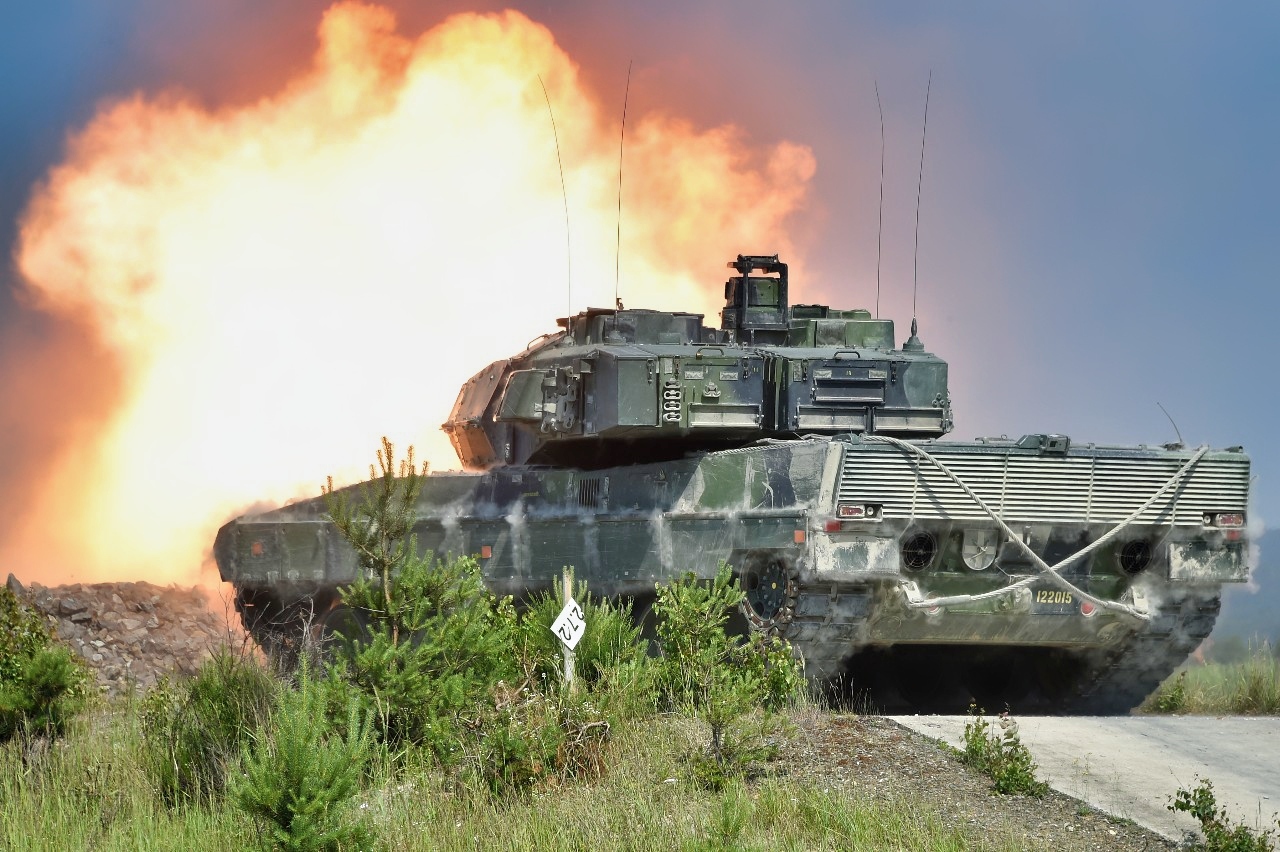
Leopard 2. Image Credit: Creative Commons.
My Time in Ukraine: What I Saw
I spent a week in Ukraine last month. Like many American analysts, I drove to Lviv and then took the overnight train to Kyiv. I then went east, however, to the cities along the frontline: Kharkiv, Dnipro, and Zaporizhzhia.
While Kyiv most often faces saturation attacks—simultaneous strikes by Russian glide bombs, ballistic missiles, and drones—after dark on nights when it is not raining, the war impacts the cities further east in a more visceral way, with attacks coming around the clock regardless of weather.
Still, Ukraine’s esprit de corps is sky-high. Life is normal. In Lviv, couples grab coffee or watch street performers in the central square. Children rent little motorized carts to drive around the park. In Kyiv, Ukrainians are out and about up to curfew. So long as they have their cell phones with the air attack alert app, they feel safe knowing they can take shelter whenever they need. Even in Kharkiv, life goes on as students in one of Europe’s top university towns play soccer or listen to live music in restaurants and bars, the thud of attacks at the front an ever-present reality. Elementary and middle schools have relocated to old nuclear bunkers and metro stations.
While some Ukrainians fled conscription, many others have served or performed alternative service, helping build Ukraine’s drone fleet. I visited one factory to observe development: Entrepreneurs just two or three years out of college spoke about how they had transformed a garage shop into a company employing 10,000 people who worked around the clock, producing dozens of drones each hour.

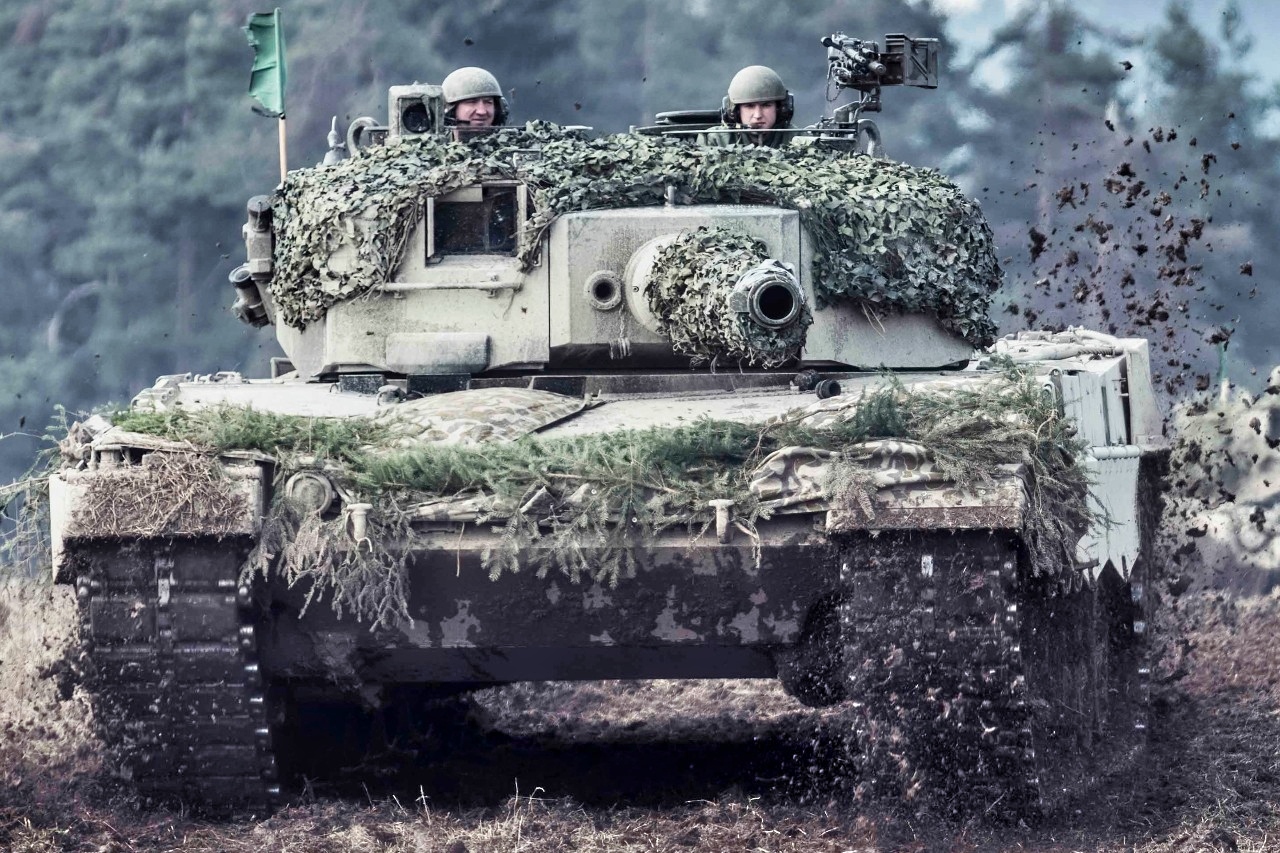
A Canadian Army Leopard 2A4M tank fires a round while taking part in the Canadian Army Trophy tank competition at Ādaži in Latvia. The Canadian Army Trophy tank competition, held in May 2024, allowed participating nations to show off their gunnery skills while building camaraderie. Image Credit: Creative Commons.
Whereas in the United States it can take years, if not decades, to usher a weapons system from appropriation to delivery, and then months or years more to implement upgrades, Ukraine is agile enough to alter each drone design up to 500 times per year in response to real-time input from the frontline. Ukrainian drones are now among the world’s best, exceeding the capabilities of Iran, Russia, and Turkey.
The White House and many European NATO members are reticent about including Ukraine in the alliance for fear that Ukrainian membership would provoke Russia; the reality is that NATO now needs Ukraine more than Ukraine needs NATO. While leaders in Ankara will affirm NATO’s role, the alliance’s dirty little secret is that most NATO contingents can no longer fight. The U.S. Army, of course, is an exception.
But Western Europe has gone soft. The contribution of Scandinavian countries—Denmark excepted—revolves around lecturing in international law and skiing. In the Balkans, the great contribution is logistics, but wars cannot be won with Croatian truck drivers.
Turkey brags about the size of its army, but while Turks launch airstrikes on Kurdish farmers and bully NATO neighbor Greece and European Union member Cyprus, Turkey is no match for countries of its own size, let alone Russia. Since the purges of a decade ago, the Turkish army has been a shell of its former self. Within NATO’s European contingent today, only Poland has an army that has both the will and the way.
Kyiv Has Proven Its Worth
Ukraine has proven itself both on the battlefield and in the tech sector. The biggest weakness in the United States today is a lack of political will. American politicians of both parties would rather defeat an incumbent from the other side than vanquish America’s enemies. Ukraine exudes a national solidarity akin to that of the United States during World War II, but long since forgotten among younger generations of Americans.
If, with the Russian threat removed, Ukrainians hypothetically wanted to march to Paris, it is doubtful any country could stop them.
Opponents to Ukraine’s membership will argue that it is impossible to grant membership to a country with territory still under occupation. This is nonsense, as West Germany’s NATO membership showed.
A greater concern is that including NATO could lead to an escalation and risk drawing the United States into a conflict that could easily go nuclear. This, too, is overblown as NATO would likely not grant Ukraine membership until a ceasefire, if not an armistice with Russia. The idea of Ukrainian membership would be to deter the resumption of war.
President Donald Trump is dubious of NATO’s value. At the same time, he demands that NATO pull its weight.
Trump is right to criticize decades of European free-riding, a criticism many NATO states now address, but if Trump wants a NATO that can operate more autonomously on the battlefield, then the only solution is Ukrainian accession.
About the Author: Dr. Michael Rubin
Dr. Michael Rubin is director of policy analysis at the Middle East Forum and a distinguished fellow at the Usanas Foundation.


