

On Monday, Iran fired at least two missiles targeting civilian commercial shipping vessels that were transiting the Strait of Hormuz. The attack occurred after the IRGC warned that vessels not transiting the Iranian-approved route would be shot at. The event once again highlights the fragile state of the current ceasefire, which could be called off or canceled at any moment by a diplomatic misstep.
Currently, negotiations between Iran and the U.S. are on pause as Iran holds a multi-day funeral for the previous Supreme Leader, Ali Khamenei, who was killed during the first days of Operation Epic Fury.
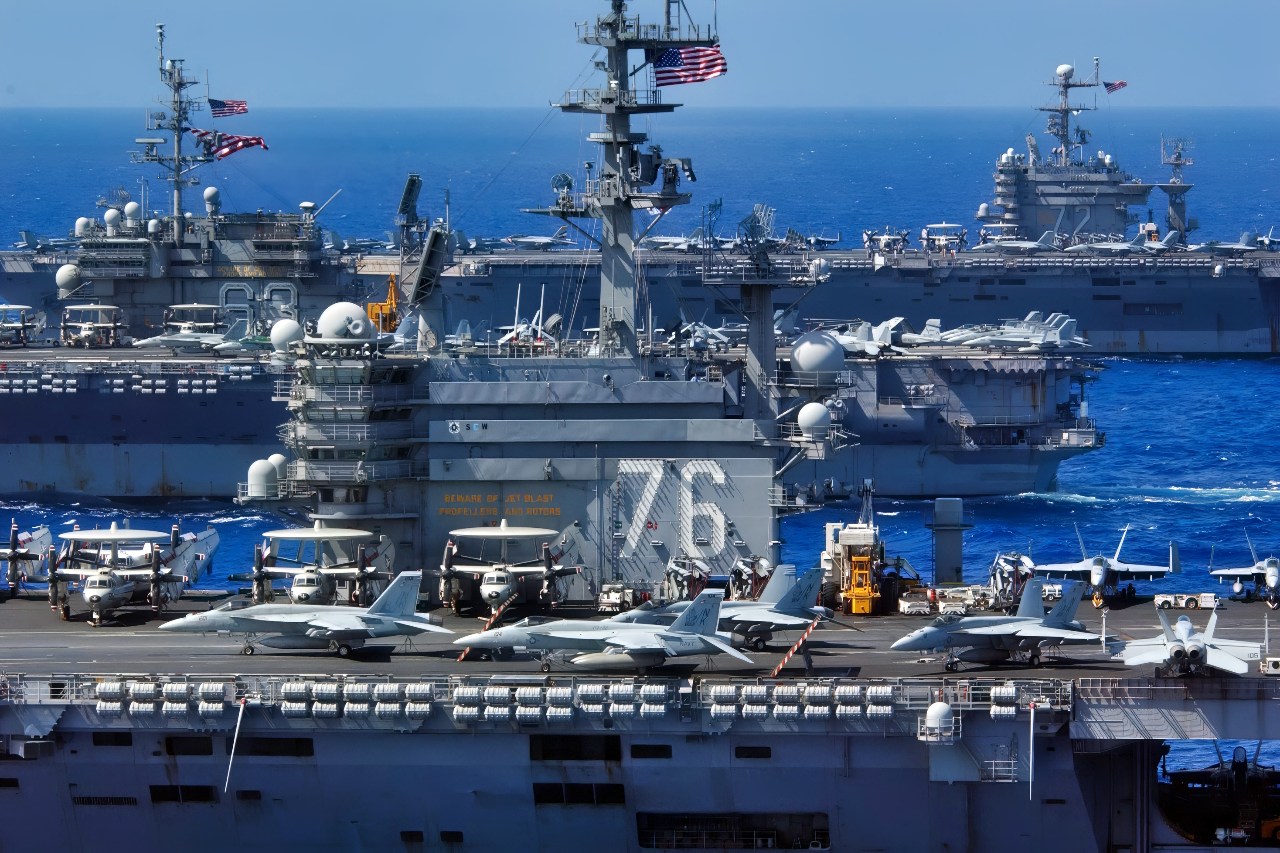
USS Ronald Reagan (CVN 76), USS Kitty Hawk (CV 63), and USS Abraham Lincoln (CVN 72) cruise side-by-side in the Philippine Sea June 18, 2006, during exercise Valiant Shield 2006. The joint exercise consists of 28 naval vessels, more than 300 aircraft, and approximately 20,000 service members from the Navy, Army, Air Force, Marine Corps and Coast Guard. (U.S. Navy photo by Chief Photographer’s Mate Spike Call) (Released)

MEDITERRANEAN SEA (Feb. 21, 2017) The aircraft carrier USS George H.W. Bush (CVN 77) transits the Mediterranean Sea in support of Operation Inherent Resolve. The George H.W. Bush Carrier Strike Group is conducting naval operations in the U.S. 6th Fleet area of operations in support of U.S. national security interests. (U.S. Navy photo by Mass Communication Specialist 3rd Class Daniel Gaither/Released)
Despite the ongoing ceasefire, tensions between all parties in the Middle East remain high as the fundamental issues behind the conflict remain largely unanswered.
New Iran Problems: Is the Strait of Hormuz Closed Again?
The event was first reported by the United Kingdom Maritime Trade Operations agency (UKMTO), which stated that a tanker was struck by an unknown projectile while transiting the Strait of Hormuz, resulting in an onboard fire.
Another vessel was similarly struck in transit, but fortunately no casualties were recorded on either vessel. One of the ships targeted in last night’s attack, Al Rekayyat, was a Qatari LNG transport operating under the Saudi flag. Majed Al Ansari, a spokesperson for the Qatari Foreign Ministry, denounced the incident as a blatant attack on the security of international navigation and trade.
Interestingly, UKMTO has either failed to report or deliberately omitted a number of other cases where Iran has attacked commercial vessels transiting the Strait. According to some OSINT reports, Iran may have struck as many as five tankers transiting through non-IRGC-approved routes. Of course, news is still breaking, and nothing is confirmed.
Two tankers were reportedly struck on Monday afternoon (local time), while another two were struck on Monday night/Tuesday morning. Another ship was reportedly spotted on satellite imagery after it was hit by an Iranian munition of some sort, bringing the total up to five. It is possible that UKMTO is choosing not to report these incidents to avoid disrupting diplomatic talks or scaring the oil market again.
Oil Market and International Reaction
Speaking of the oil market, oil prices have seen a small climb due to these renewed attacks.
Since the implementation of the Memorandum of Understanding (MOU), oil prices have tanked significantly in June, with WTI Crude falling from $91 per barrel on June 8 to $68 per barrel by July 1.
In the wake of these attacks, however, the price has risen once again to over $70 per barrel, with most other oil companies reporting similar price increases. However, given how high prices were just a month ago, this increase is unusually small, suggesting that Iran is reasserting its control over the Strait.
The Gulf Cooperation Council (GCC) condemned the attacks, denouncing them as an unnecessary escalation. The head of the GCC, Secretary-General Jassim Mohammed Al-Budaiwi, called the attack a “dangerous escalation that threatens the security and stability of the region.” In his statement, he called on the international community to adopt a “firm and deterrent stance against these repeated Iranian attacks in order to safeguard regional and international peace and security and prevent the recurrence of such hostile acts that threaten the stability of the region.” The U.S. has yet to make any official comments on the recent attacks.
What’s Happening on the Diplomatic Front?
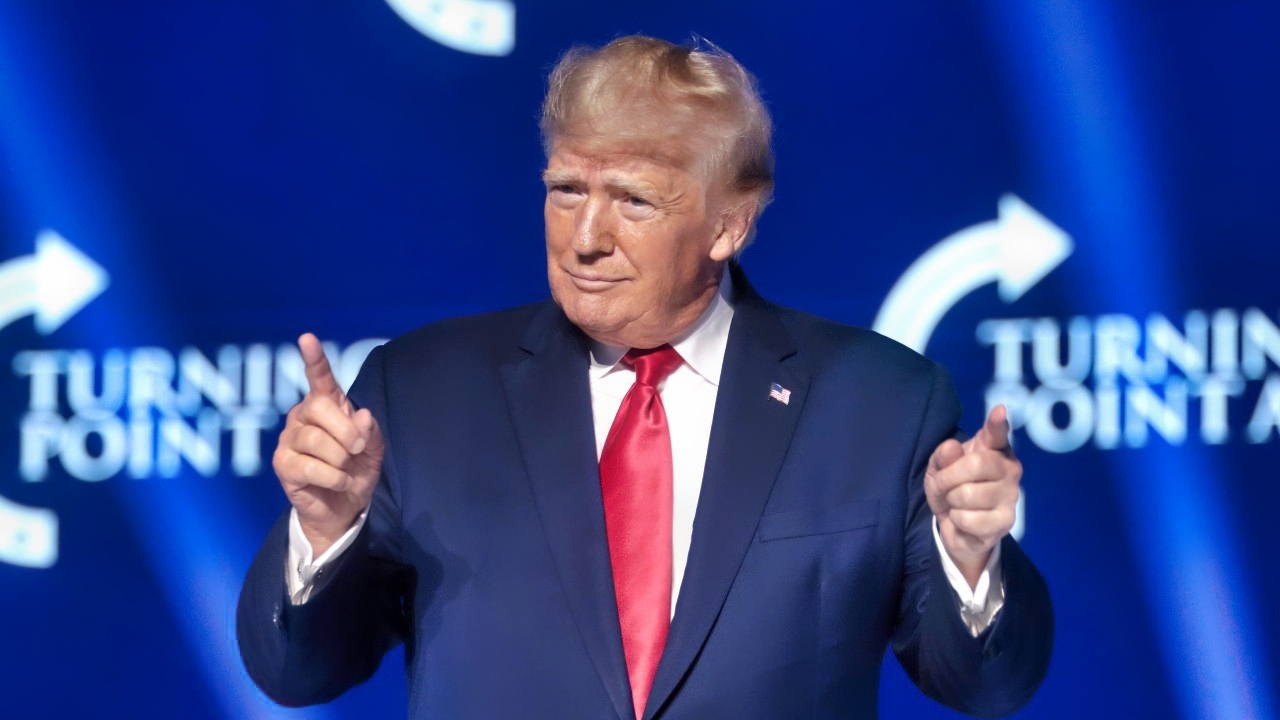
Negotiations between the United States and Iran have been on pause for the last few days as Iran takes time to publicly mourn its former Supreme Leader, Ali Khamenei, who was killed by a U.S. airstrike in the first moments of the war. The funeral is being attended by representatives from more than 30 countries and has seen thousands of civilians flock to the streets to mourn Khamenei’s death. This, however, has not stopped both sides from taking verbal potshots at each other. President Trump threatened Iran, saying he’d be forced to finish the job unless it made a deal. “I’d rather make a deal, because I don’t want to affect 91 million people,” Mr. Trump said. “We can knock down their bridges in one hour. We can knock out their energy supply.”
In response, Iran’s foreign ministry has threatened to halt negotiations if the U.S. continues issuing escalatory threats. “Negotiations on final deal will not commence if threats continue,” Foreign Minister Abbas Araghchi warned in a social media post. Citing the MOU, the foreign minister reminded the U.S. that the agreement, signed by Trump and his Iranian counterpart, called for both sides to “refrain from the threat or use of force against each other.” Now, after several Iranian attacks against civilian tankers, the already fragile peace secured by the MOU is further threatened.
Who Controls the Strait of Hormuz?
One of the biggest issues currently on the negotiating table is ownership of the Strait of Hormuz. Iran, for its part, claims complete ownership of the Strait and demands that any tankers pay transit fees to the state and travel along approved routes. However, Oman is geographically close to Iran, claims its own portion, and has allowed commercial shipping to pass through its territorial waters. Iran allowed this route to operate for some time, but has recently clamped down on shipping through this route as a means of exercising control over the Strait. The issue of ownership of the Strait remains one of many that have yet to be resolved. As long as it remains unresolved, Iran will continue to strike tankers transiting through the Oman route, which could cause another large spike in oil prices.
About the Author: Isaac Seitz
Isaac Seitz, a Defense Columnist, graduated from Patrick Henry College’s Strategic Intelligence and National Security program. He has also studied Russian at Middlebury Language Schools and has worked as an intelligence Analyst in the private sector.


