

In an intriguing article in the New York Times by Amanda Taub, she openly wonders whether the Iranians are playing with fire vis-a-vis the Strait of Hormuz and in the process force the rest of the world, not to submit to its blackmail attempts to control and make nations pay to transit the waterway, but ultimately overplay their hand and be left controlling nothing when the world moves on to alternatives.
Iran’s closure of the Strait gave it important leverage in negotiations with the United States to end the current conflict.
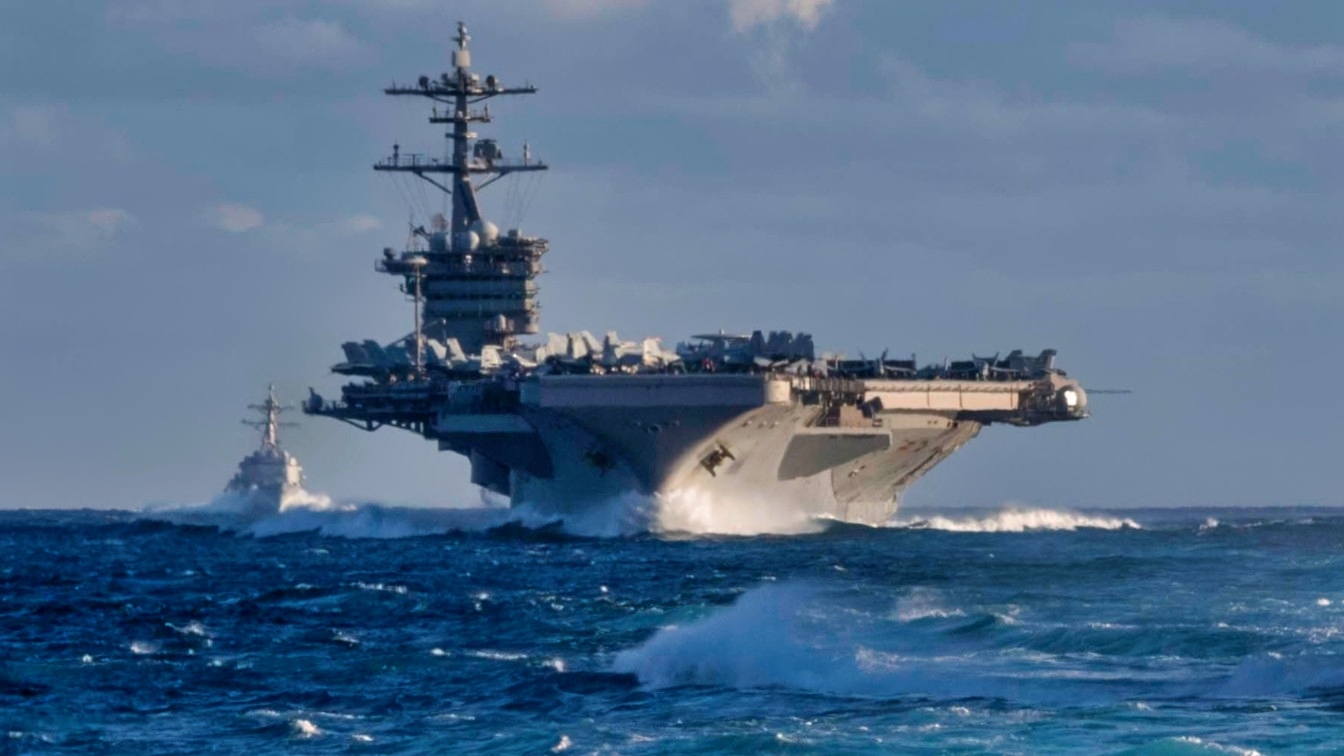
PACIFIC OCEAN (Nov. 27, 2019) The Arleigh Burke-class guided-missile destroyer USS Russel (DDG 59) and the aircraft carrier USS Theodore Roosevelt (CVN 71) transit the Eastern Pacific Ocean Nov. 27, 2019. Paul Hamilton is underway conducting routine training in the Eastern Pacific Ocean. (U.S. Navy photo by Mass Communication Specialist 3rd Class Matthew F. Jackson)
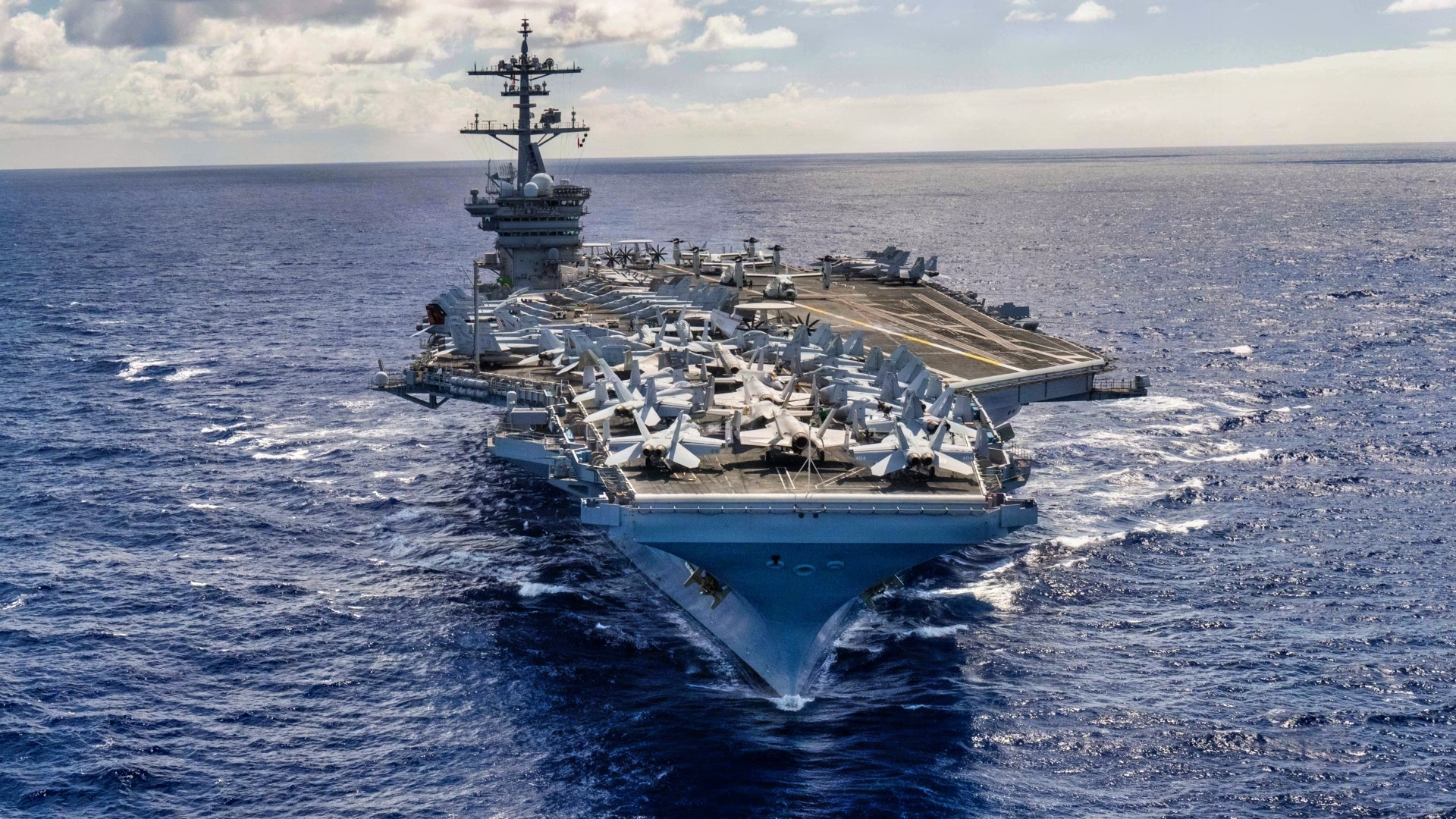
PACIFIC OCEAN (June 22, 2026) –The Nimitz-class aircraft carrier USS Theodore Roosevelt (CVN 71), transits the Pacific Ocean, June 22, 2026. Theodore Roosevelt, flagship of Carrier Strike Group (CSG) 9, is underway conducting exercises to bolster strike group readiness and capability in the U.S. 3rd Fleet area of operations. (U.S. Navy photo by Mass Communication Specialist 3rd Class Aaron Haro Gonzalez)
The Strait is the waterway where 20 percent of the world’s oil passes through, at least it did, prior to the beginning of the US/Iraeli bombing of Iran. When the Strait was closed during the conflict, it had a profound effect on the world’s economy.
This leverage by Tehran was cited by many analysts as a significant factor in the US’s quick agreement to the Memorandum of Understanding (MoU), whose terms are widely considered to greatly favor Iran.
But that leverage may be very fleeting.
Iran May Cause Less Dependence On Hormuz Traffic
As the piece in the Times has noted, just a few years ago, the Germans bought most of their gas from Russia. Japan purchased nearly all of its rare-earth minerals from China.
The Strait of Hormuz was the route through which most of the Middle Eastern oil and gas passed.
But times and circumstances changed, and the events that followed were a cautionary tale about overplaying one’s hand.
After Putin invaded Ukraine, he tried to leverage Russia’s role as the main natural gas supplier to Europe. The Germans now do business with Norway.
After China cut off rare earth minerals to Japan in a power play move over territory, Japan is now purchasing them elsewhere.
Iran is attempting to blackmail the world, creating a new Persian Gulf Strait Authority (PGSA) to charge tolls in the Strait, where there were none before.
Despite the Strait being open for at least 60 days before further negotiations take place, they fired on a tanker that passed on the Omani side of the Strait.
The Iranians are banking on the world caving to their blackmail, but the fact that they are showing their intent to close it again if they choose to is simply filling the rest of the world with the intent of investing in alternatives to Iran’s blackmail attempts.
This will only make the Strait of Hormuz less vital and less valuable in the very near future.
Vidya Mani, an expert on global supply chains at the University of Virginia, told the Times that she expects to see countries turn more toward renewable energy and other oil sources outside the Middle East to reduce risk and increase stockpiles.
The Plan To Eliminate Iran’s Leverage
The U.S. and its allies and partners are accelerating the construction of pipelines, export terminals, and overland trade corridors to reduce global dependence on the Strait of Hormuz and weaken Iran’s ability to disrupt oil markets.
The United Arab Emirates, which already has one pipeline that allows it to bypass the strait, is building a new one that will double capacity by 2027. Saudi Arabia is following suit with its own pipeline to the Red Sea.
Abu Dhabi believes that Iran will ultimately threaten to close the Strait to traffic in the future and is ensuring that their oil will flow free from Iranian interference.
New Iraqi export routes to Turkish and Syrian ports and the fast-tracked India–Middle East–Europe Economic Corridor (IMEC), designed to bypass the Strait of Hormuz. That would divert 60 percent of the container traffic in the Strait.
The weaponization of a narrow (albeit vital) waterway will only result in alternative sources being sought, and there are plenty of oil-producing nations; the United States, Brazil, Argentina, Canada, Kazakhstan, and Venezuela are already increasing their oil production to allow Middle East customers to bypass the region altogether, without the risk of further disruptions.
The Trump administration’s plan is to bypass up to 50 percent of the oil that flows through the Strait in the short term, using existing pipelines, overland routes, and new construction.
The Gulf Nations Will Work To Weaken Iran’s Leverage
The Gulf nations are under no illusions about the prospect of a lasting peace with Iran.
A look at the history of the Islamic Republic and its insistence on maintaining its grip on power and its bellicose actions toward its neighbors doesn’t bode well for a peaceful coexistence.
Gulf nations are curbing Iranian leverage in the Strait of Hormuz by rejecting Iranian-imposed tolls and bypassing the waterway altogether.
The Gulf Cooperation Council (GCC) is utilizing targeted strategies to counter Tehran’s control and maritime influence.
Bahrain, Kuwait, Qatar, Saudi Arabia, and the UAE formally rejected Tehran’s creation of the “Persian Gulf Strait Authority” and advised international ships to ignore Iran’s designated maritime routes.
Gulf nations have pressed the UN Security Council to demand that Iran halt seizures, disclose mine locations, and cease interference with merchant shipping traffic.
Even among ordinary Iranian citizens, they are skeptical about any lasting peace agreement with Israel.
Elsewhere, South Korea has wasted little time and is already in negotiations with Canada, Malaysia, and Kazakhstan to secure its future oil and gas needs.
South Koreans and Japanese are already planning to jointly develop oil storage facilities to protect themselves against future shortages.
This will lessen each country’s dependence on oil from the Gulf.
One outlier to this is Qatar, which must ship its liquefied natural gas (LNG) through the Strait. This, according to the International Monetary Fund, will cause its economy to contract by as much as nine percent.
Iran is planning to leverage 20 percent of the world’s oil traffic to secure a $40 billion payday. That may end up being not much leverage at all. The events from this year showed the world what the regime is all about. And it won’t sit idly by waiting for the Iranians to do it again.
About the Author: Steve Balestrieri
Steve Balestrieri is a National Security Columnist. He served as a US Army Special Forces NCO and Warrant Officer. In addition to writing on defense, he covers the NFL for PatsFans.com and is a member of the Pro Football Writers of America (PFWA). His work was regularly featured in many military publications.


Rick
July 6, 2026 at 9:08 pm
But Iran can still bomb their oil terminals
Dr. Hujjathullah M.H.B. Sahib
July 7, 2026 at 2:49 am
While the development of various alternatives to lessen the dependence on chokepoints such as the Hormuz by various countries must be whole-heartedly welcome, one must also acknowledge that these are taking shape within the context of robust geopolitics in a world simultaneously and earnestly in pursuit of multi-polarity. Viewed in this lens, yes the Iranians, Russians and Chinese on the one hand and the Gulf states, India, Japan, east Asia and others on the other, are self-interestedly if also unwittingly working to widen the gulf in the Persian Gulf, making what has been literally explicit also figuratively so. The obvious eventually reduction of Iranian leverage via Hormuz has already figured in their calculas under this slowly unfurling overarching geostrategy !
Fred T Adams
July 9, 2026 at 2:35 pm
Iran is sealing it’s own fate. It has been unreliable in negotiation and so will not be trusted for future negotiations, lessening it’s influence. Cutting off the Strait unavoidably cuts Iran’s own throat – it now cannot export oil via the Strait and will not be allowed to export oil via the alternative routes now being developed. An increasingly rapid economic strangulation of Iran follows accompanied by improving circumstances for the rest of the world.
That leaves Iran’s apparent ability to attack it’s neighbors or US facilities based on it’s neighbor’s soil. By doing this, Iran seeks to force these neighbors to pressure the US into ceasing it’s war on Iran. If it succeeds in doing so, the neighboring countries will be de facto aligning with Iran against the US and committing to a gulf-region future of continued Iranian hegemony. I don’t think that is an acceptable outcome for them as long as the US remains firm in today’s policy.
In continuing these attacks, Iran is simply increasing the odds of it’s own total destruction, something that can be accomplished by the combination of US whack-a-mole air attacks (hopefully effectively targeted) and damaging economic embargo by it’s neighbors. In the near past, Iran has proven that economic consequences of a sudden Strait closure will not stop the US. The passage of time can serve only to further weakening of the power of that weapon.
As time goes on, the Iranian regime’s options narrow unto extinction.