


With the war in Iran ramping up once again, the prospects of traffic through the Strait of Hormuz returning to pre-war levels by the end of the year have been all but dashed. Just a few weeks ago, transit through the narrow corridor was starting to pick up as the United States and Iran continued diplomatic talks under the Memorandum of Understanding (MOU). After Iran targeted several civilian tankers, however, the situation is once again tense; traffic through the Strait has slowed to a crawl.
The markets are now reacting to the bombshell President Trump dropped when he announced that the ceasefire in the Middle East is now effectively over.

(March 7, 2016) An F/A-18E Super Hornet assigned to the Warhawks of Strike Fighter Squadron (VFA) 97 performs a flyby during an aerial change of command ceremony above USS John C. Stennis (CVN 74). Providing a ready force supporting security and stability in the Indo-Asia-Pacific, Stennis is operating as part of the Great Green Fleet on a regularly scheduled 7th Fleet deployment. (U.S. Navy photo by Mass Communication Specialist Seaman Tomas Compian/Released)
Traffic Through Hormuz is Not Returning to Normal
Traders on the prediction market Kalshi recently revised their predictions on when traffic through the Strait of Hormuz might return to normal.
The odds of traffic returning to pre-war levels peaked in June, at around 88%. Over the past few days, however, these odds have dropped significantly, with speculators now pricing in around 52%.
Polymarket was slightly more optimistic, with a 59% chance that traffic would return to normal in the vital maritime passageway.
Currently, the market is most confident that traffic will fully resume sometime before April 2027, which has a 68% chance.
Traffic through the Strait of Hormuz had been gradually increasing after tensions seemed to cool down. When the Memorandum of Understanding was signed on June 17th, traffic through the waterway increased significantly, reaching its highest level since the beginning of the war.
Although the number of ships transiting through the Strait paled in comparison to pre-war levels, around 20-40 ships were entering and exiting Hormuz per day, a significant improvement compared to previous months. Under the MOU, the U.S. and Iran agreed to temporarily lift their respective blockades on the valuable trade route.
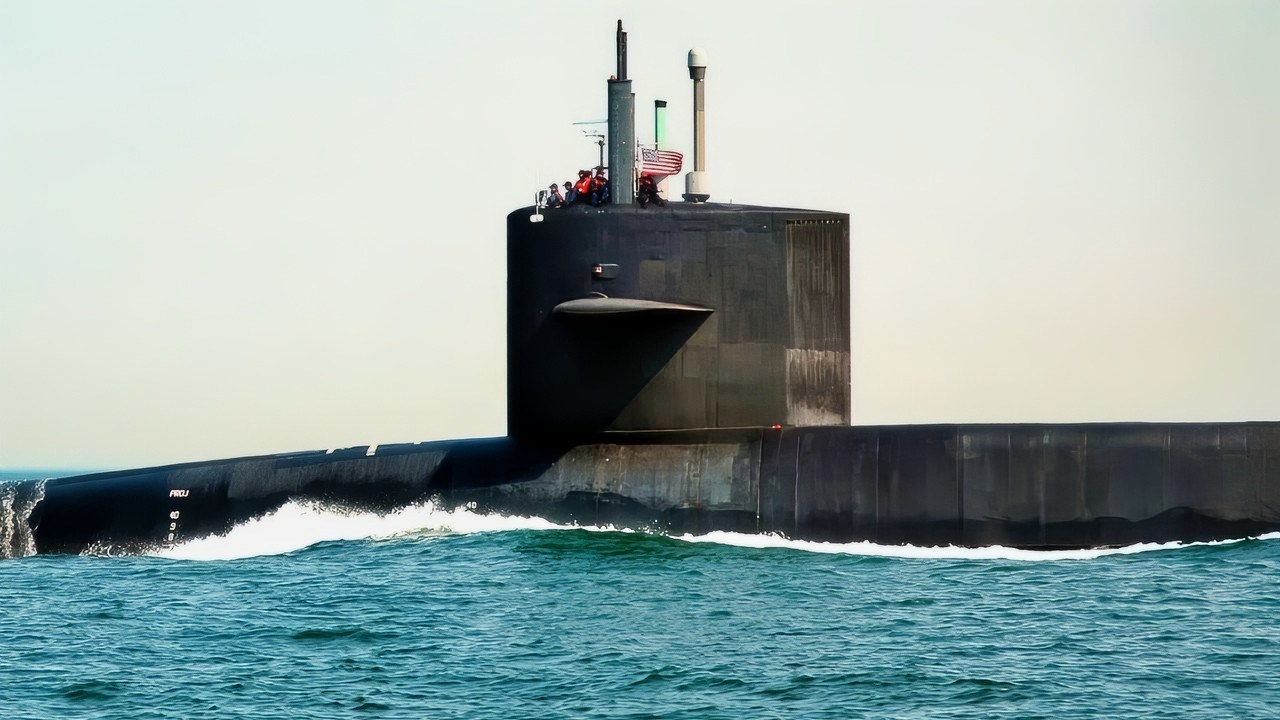
(March 31, 2006) – The guided missile submarine USS Florida (SSGN 728) conducts sea trials off the coast of Virginia. Florida will be delivered to the Fleet in April, and a Return To Service ceremony is scheduled for May 25 in Mayport, Fla. As the second of four SSBN submarines to be converted to SSGN, this nuclear-powered submarine will have the capability to: launch up to 154 Tomahawk cruise missiles; conduct sustained special warfare operations with up to 102 Special Operations Forces (SOF) personnel for short durations or 66 SOF personnel for sustained operations; and provide approximately 70 percent operational availability forward deployed in support of combatant mission requirements. U.S. Navy photo by Chief Journalist (SW/AW) Dave Fliesen.
Although it would take months to reach pre-war traffic levels, the brief peace brought by the MOU was interpreted as a sign that things would soon return to normal.
The Iran War is Heating Up Again
Such hopes were, unfortunately, premature. On July 5-6, the IRGC carried out attacks against several civilian tankers, which it claimed were not following the Iranian-approved transit routes.
The United Kingdom Maritime Trade Operations Centre (UKMTOC) reported three cases of attacks on shipping vessels, although some reports indicated that as many as five vessels may have been struck by Iran over the last few days.
The attacks drew considerable anger from Qatar when it was revealed that a Qatari tanker, the Al-Rekayyat, was among the damaged vessels. As part of the MOU, both parties agreed not to launch any attacks against each other (this was broken a couple of times, but the sentiment remained) or against civilian vessels.
The incidents in Hormuz also enraged the United States, which recently launched a large attack against IRGC targets across Iran.
According to U.S. CENTCOM, the attacks were in response to the “unjustified aggression against commercial shipping and civilian crews freely navigating a vital international waterway.”
On the evening of July 8th, the U.S. again carried out a round of retaliatory strikes against several targets across Iran. According to one U.S. official, the new round of strikes “won’t be over for a bit,” suggesting that the war is expected to continue for a while longer.
Iran likewise carried out retaliatory strikes against U.S. military installations located in Bahrain and Kuwait.
As of yet, there is no confirmation that any American facilities were damaged by any of the strikes.
Iranian leadership also threatened continued retaliatory strikes if the U.S. continued its attacks. The Deputy Foreign Minister of Iran, Kazem Gharibabadi, added that the recent comments from President Trump “are not a sign of strength, but rather an admission of the failure of a policy built on brute force, sanctions, and threats for years, which could not bring the Iranian nation to its knees.”
The Ceasefire is Dead
The main takeaway from this most recent round of strikes is that the MOU is most likely dead.
Trump basically admitted that in a recent round of interviews. When asked about the status of a deal with Iran, the President responded: “I think it’s over.” He continued, “I don’t want to deal with them anymore… as far as I’m concerned, it’s over.”
Whether this is actually the case or more Trump rhetoric remains to be seen. Regardless, the war is once again heating up. Oil prices are already on the rise as WTI Crude hits $74 per gallon, and traffic through the Strait of Hormuz has slowed to a crawl once again.
Trump’s strategy is likely to force the Iranians to capitulate by using force. Despite the recent drawdowns in CENTCOM’s area of operation, the U.S. still maintains a large naval presence in the region, capable of inflicting harm on Iran at the President’s discretion.
Although Trump has denied any desire to send U.S. ground troops, the amphibious assault ship USS Boxer was repositioned to the region with a Marine detachment aboard. The situation in the Middle East is currently ambiguous and rapidly developing.
One can only hope that this newest round of strikes will result in a lasting peace, or at least in renewed diplomacy.
MORE – Trump Declares Ukraine Can Build Their Own Patriot Missiles
MORE – Russia Can Now Jam Starlink
About the Author: Isaac Seitz
Isaac Seitz, a Defense Columnist, graduated from Patrick Henry College’s Strategic Intelligence and National Security program. He has also studied Russian at Middlebury Language Schools and has worked as an intelligence Analyst in the private sector.


