
The United States launched a new barrage of strikes against Iran on Tuesday, July 7, after Iranian forces attacked three commercial vessels transiting the Strait of Hormuz.
The Iranian attacks came during week-long funeral ceremonies for the country’s late supreme leader, and after U.S. President Donald Trump committed to giving Tehran a “week off” – despite the memorandum of understanding (MOU) ceasefire agreement already being in place.
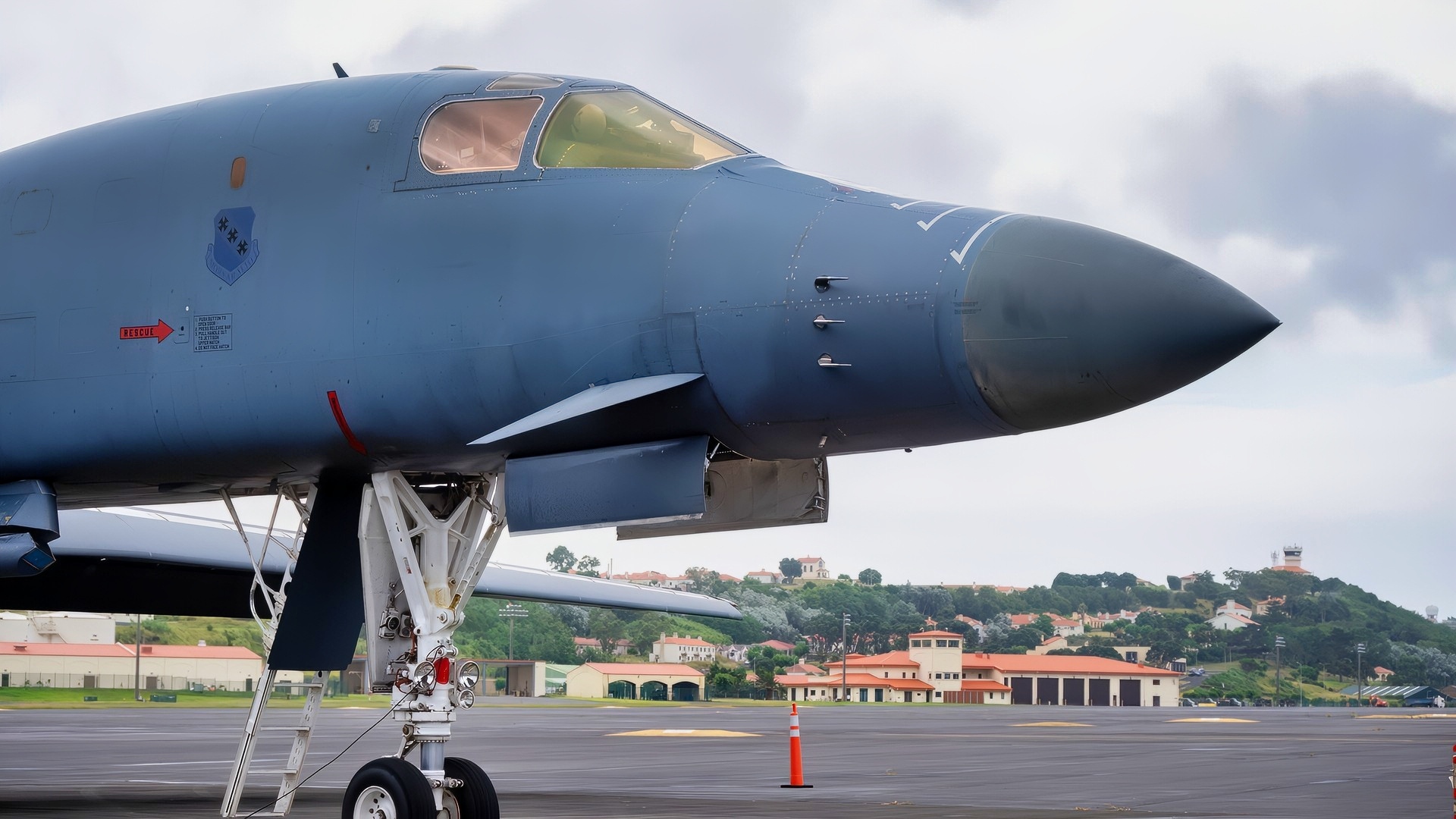
A U.S. Air Force B-1B Lancer sits on the flightline at Lajes Field, Azores, Aug. 22, 2025. The aircraft landed for a hot pit refuel during a Bomber Task Force Europe mission. (U.S. Air Force photo by Cristina Oliveira)
What Happened Last Night
U.S. Central Command announced the new strikes at 5:25 pm ET Tuesday, confirming that American forces had started a “series of powerful strikes” intended to punish Iran for attacking commercial ships passing through the Strait of Hormuz.
By 5:41 pm ET, Iranian state media was confirming explosions on Qeshm Island and in Sirik, near the Strait of Hormuz.
“U.S. Central Command forces have begun launching a series of powerful strikes against Iran to impose heavy costs for targeting and attacking commercial shipping crewed by innocent civilians in an international waterway.
The U.S. strikes are in response to Iranian attacks on three commercial vessels that were transiting the Strait of Hormuz.
Iran’s demonstrated aggression was unwarranted, dangerous, and a clear violation of the ceasefire,” a CENTCOM statement issued on X reads.
CENTCOM confirmed that it struck more than 80 Iranian targets, including air defenses, radar sites, anti-ship missile sites, and more than 60 IRGC small boats.
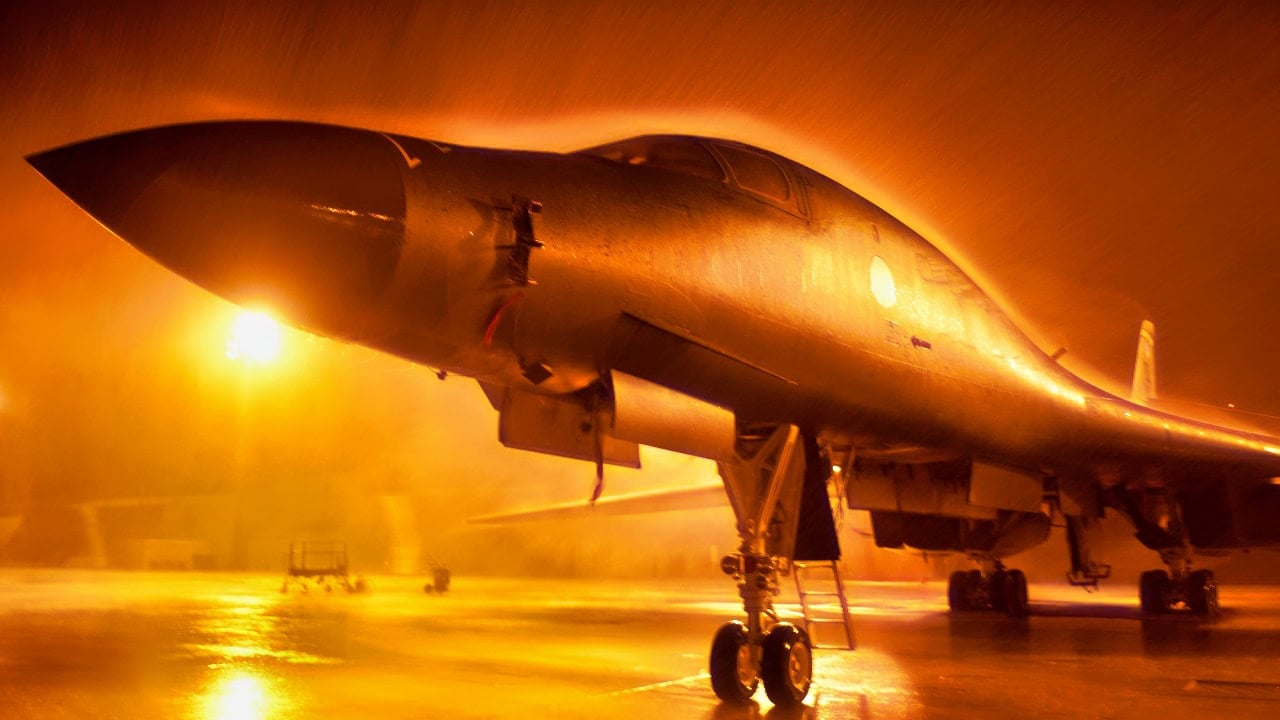
B-1B Lancer Bomber. Image Credit: Creative Commons.
“U.S. forces struck Iranian air defense systems, command and control networks, coastal radar sites, anti-ship missile capabilities, and more than 60 Islamic Revolutionary Guard Corps small boats in and near the strait (of Hormuz) to degrade Iran’s ability to continue attacking international commerce flowing through the international trade corridor,” another statement confirmed.
Why Washington Had to Respond
Speaking at the NATO summit in Ankara on Wednesday, July 8, President Trump suggested that the MOU was “over” and that Iran had destroyed the ceasefire itself by attacking commercial shipping.
“I think it’s over. I don’t want to deal with them anymore,” Trump told reporters, referring to the agreement signed by both countries in June.
The president added that Iran’s leadership had repeatedly broken its commitments and warned that the United States was prepared to continue military operations if Tehran launched any further attacks.
“We’ll probably hit them hard again tonight,” Trump said, once again reiterating that Iran “cannot have a nuclear weapon.”
The Attacks That Preceded It
Iranian forces launched surprise attacks on the night of Monday, July 6. Iran’s Islamic Revolutionary Guard Corps (IRGC) launched at least two missiles at merchant vessels passing through the Strait of Hormuz, damaging multiple ships and once again raising the risk of ships attempting to pass through the vital waterway.
The first publicly reported incident occurred at 2119 UTC, when the United Kingdom Maritime Trade Operations (UKMTO) received a distress signal from a tanker sailing roughly 8 nautical miles east of Limah, Oman.
According to the agency, the vessel was struck on its port side by a projectile, igniting a fire in the engine room. UKMTO confirmed that there were no reported casualties or pollution, but warned other vessels transiting the area to exercise extreme caution.
By Tuesday, reports had confirmed that three commercial vessels had been targeted within roughly 24 hours. Among them was the Qatari liquefied natural gas tanker Al Rekayyat, the Saudi-flagged tanker Wedyan, and the Liberia-flagged Cyprus Prosperity.
Although none of the vessels were sunk and no crew members were killed, the threat level in the Strait of Hormuz was still raised to “severe” as a result. In the wake of the strikes, commercial shipping companies began rerouting vessels away from the area.
Qatar quickly responded to the strikes, stating that it held Iran “fully legally responsible” for the strike on Al Rekayyat.
The Deal Is Over
Iran responded to the U.S. strikes by declaring the end of the MOU and accusing Washington of repeatedly violating the ceasefire agreement through its most recent military action and the revocation of its oil sanctions waiver in recent days.
Iran also took umbrage with U.S. efforts to interfere with what the regime believes is its sole right to control shipping through the Strait of Hormuz.
Iran’s Foreign Ministry said that the United States had rendered “important and fundamental parts” of the agreement “ineffective” and warned that responsibility for the latest escalation rested with Washington, not Tehran.
Deputy Foreign Minister Kazem Gharibabadi described the strikes and reinstated sanctions as “serious violations” of the agreement and insisted that Iran will now take actions to “safeguard its national interests and security.”
Iran responded militarily, launching missile and drone attacks against U.S. military facilities in Bahrain and Kuwait. The Islamic Revolutionary Guard Corps also claimed to have downed an American MQ-9 Reaper drone over southern Iran.
Tehran also renewed warnings to neighboring Gulf states against allowing their territory to be used by any future U.S. operations, threatening to strike neighboring countries if they participate in whatever comes next.
About the Author: Jack Buckby
Jack Buckby is a British researcher and analyst specializing in defense and national security, based in New York. His work focuses on military capability, procurement, and strategic competition, producing and editing analysis for policy and defense audiences. He brings extensive editorial experience, with a career output spanning over 1,000 articles at 19FortyFive and National Security Journal, and has previously authored books and papers on extremism and deradicalization.


