

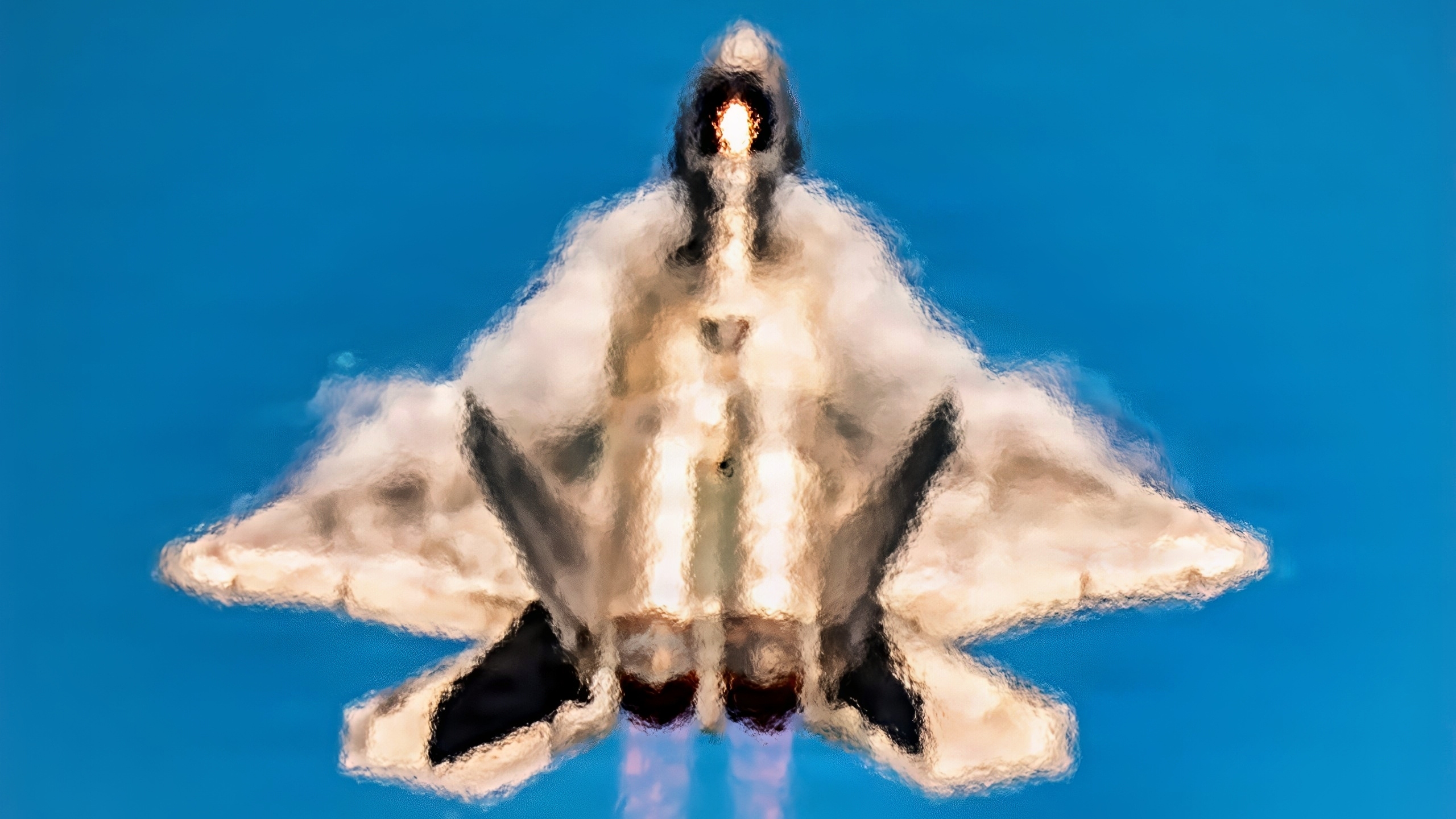
The war between the United States and Iran appears to have restarted, this time mostly taking the form of a standoff over the Strait of Hormuz.
According to Fox News, the U.S. has launched new strikes on Iran, while also launching a blockade on the Strait of Hormuz. Iran’s IRGC, in turn, has threatened to shut down other waterways.
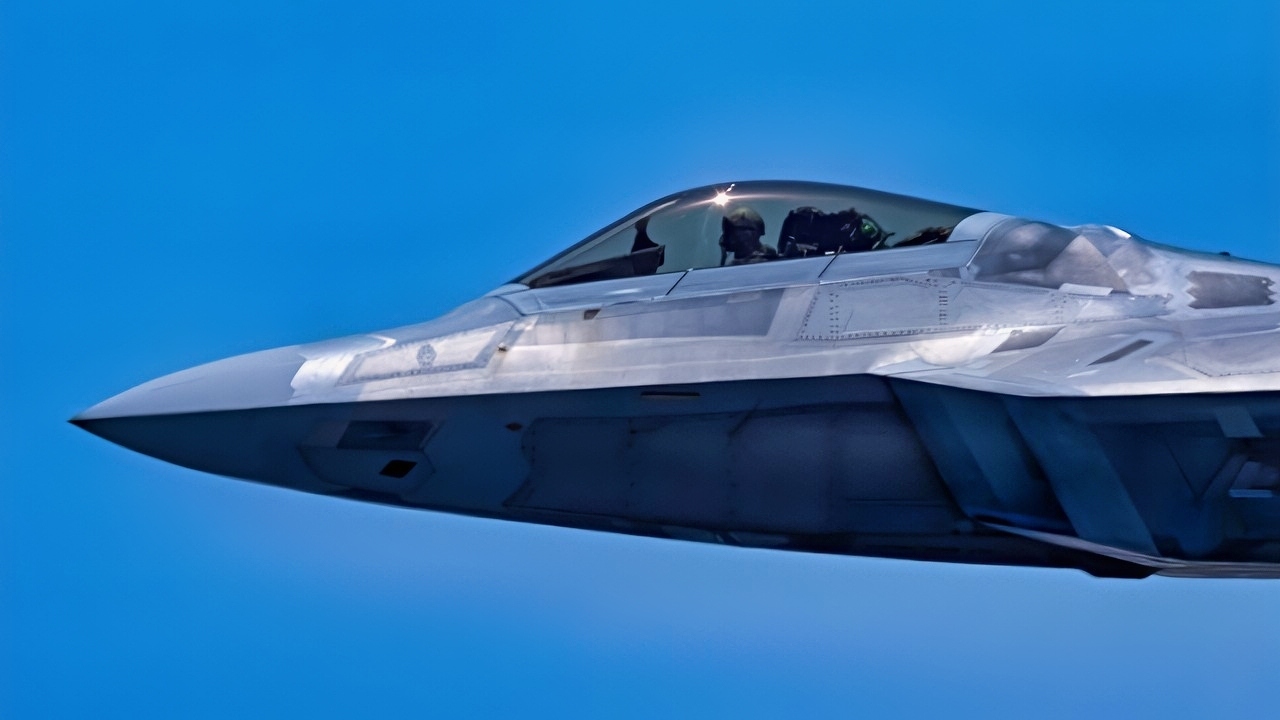
Air Force Chief of Staff Gen. Ken Wilsbach takes off in an F-22 Raptor from Joint Base Pearl Harbor-Hickam, Hawaii, May 13, 2026. Wilsbach flew an F-22 sortie, experiencing the total force integration among active-duty Airman and Hawaii Air National Guard counterparts. (U.S. Air Force photo Senior Airman Aden Brown)
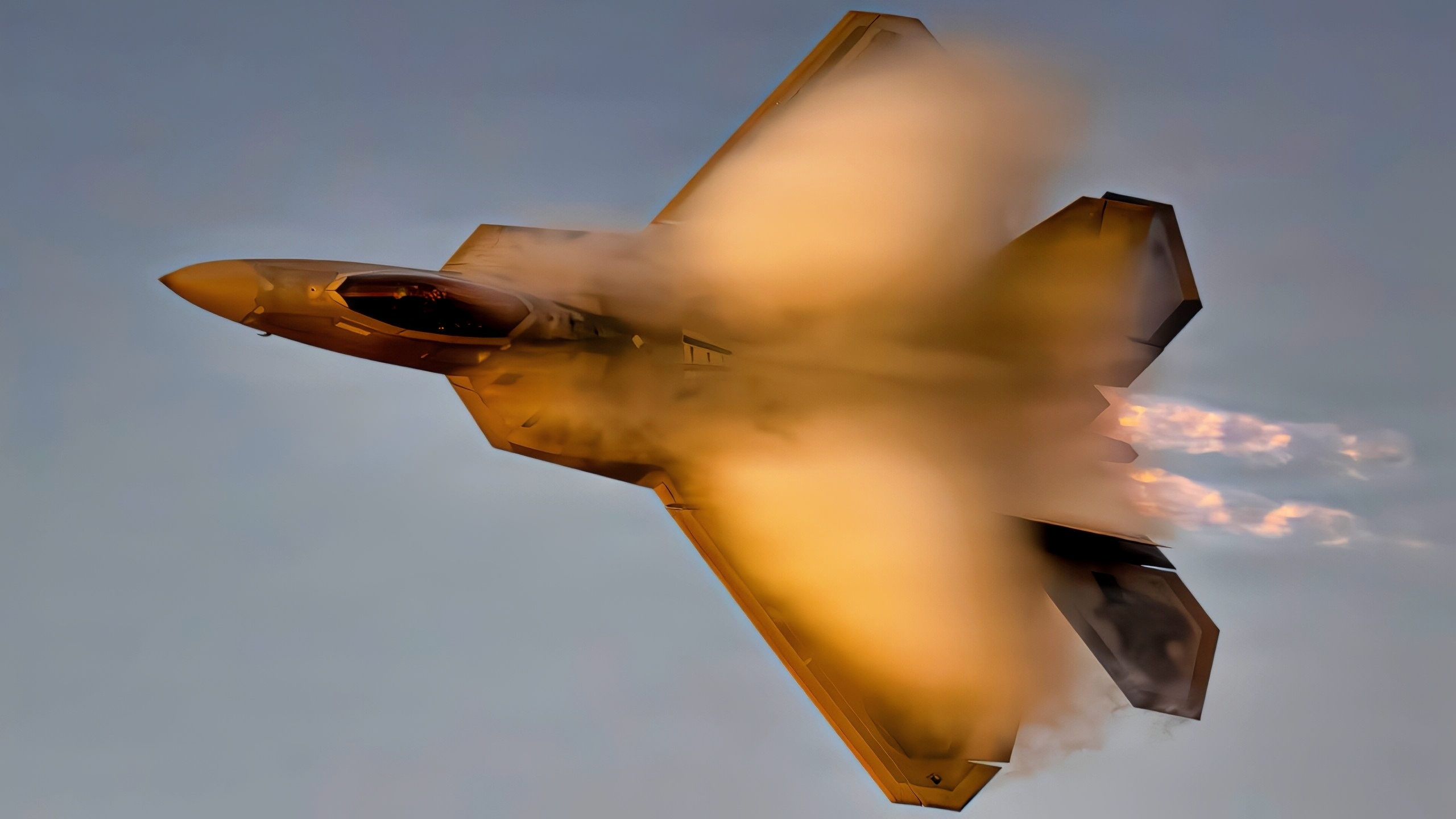
U.S. Air Force Capt. Nick “Laz” Le Tourneau, F-22 Raptor Aerial Demonstration Team pilot and commander, practices at Joint Base Langley-Eustis, VA, November 12th, 2025. The F-22 Raptor Aerial Demonstration showcases the unmatched maneuverability of the airframe by executing a series of combat maneuvers to inspire Americans and their allies, and deter foreign adversaries. (U.S. Air Force video by Staff Sgt. Michael Bowman)
The U.S. “must brace for the closure of all other export corridors that benefit the U.S. and its allies,” the IRGC said. “Regional energy exports are either shared by all or denied to all.” The Iran-backed Houthi militia, on Wednesday, fired missiles into Saudi Arabia.
Meanwhile, CENTCOM announced that since the launch of the blockade, they “ have redirected 2 commercial vessels attempting to run the blockade.
“The U.S. military remains vigilant and prepared to ensure full compliance,” CENTCOM said in a social media post. Shortly before that, CENTCOM had posted a video of what it called “a precision strike on an Iranian military target.”
“CENTCOM launched precision munitions against coastal defense systems and cruise missile storage and launch sites on Greater Tunb Island during the 90-minute wave. The strikes further degraded Iran’s ability to attack commercial shipping in the Strait of Hormuz,” the Central Command said in its post.
Plan B?
The U.S. launched the campaign after President Donald Trump announced earlier in the week a toll for shipping traffic passing through the Strait, but that plan was abandoned within 24 hours. However, according to an NBC News analysis, that plan was not only unpopular but also probably unenforceable.
“Based on highly productive conversations with Middle East leadership, I have decided to replace the 20% United States Reimbursement Fee with Trade and Investment Deals that the various Gulf States will be making with the United States,” Trump had said on Truth Social, as a way of backing down from the “toll” proposal.
He later told the press, per the New York Times, that “kings and emirs” in the Middle East had reached out, offering to invest rather pay the toll. CNN, indeed, published a timeline of those 24 hours in which Trump was ultimately convinced to drop the toll demand.
During that time, CNN said, “aides rushed to flesh out the logistics for creating such an unprecedented tolling system, including determining who would pay the fees and how they would be collected. Many officials and outside analysts initially assumed shippers would foot the bill, but the effort was further complicated by another Trump declaration later on Monday that US allies in the Gulf would be paying instead.”
Who Will Blink First?
Meanwhile, the Wall Street Journal, in an analysis published Wednesday, said the two sides have “shrinking options” when it comes to ending the war, because “rising oil prices constrain Trump while Tehran is gambling that it can outlast [the] painful naval blockade.”
The president, the Journal said, “would prefer a resolution before the November midterm elections and before oil prices surge back to painful levels for Americans.
Tehran is hoping it can outlast Trump before a reimposed U.S. naval blockade cripples its already reeling economy.” However, it doesn’t look like either side has any easy way out.
Alternative Routes?
Meanwhile, other Middle Eastern countries are seeking alternative routes to the Strait of Hormuz, including new pipelines and ports.
According to the New York Post, such projects are underway in both Saudi Arabia and Iraq, with Dubai looking to build a new port.
“Given that pipeline projects can move quickly in the Middle East, the bank estimates that output bypassing the strait could reach 7.3 million barrels by the end of 2028 — making 60% of the Gulf’s oil strait-proof,” the Post said. “The UAE’s much-touted West-East Pipeline project is about 50% complete, with Crown Prince Sheik Khaled bin Mohamed bin Zayed ordering its completion by 2027.”
“Right now, too much of the world’s energy still moves through too few choke points.
That is exactly why the UAE made the decision more than a decade ago to invest in infrastructure that bypasses the Strait of Hormuz,” Sultan Al Jaber, the head of the Abu Dhabi National Oil Company, had said in May.
Per the Financial Times, DP World is planning to build a new port on the United Arab Emirates’ east coast, meant to “reduce Dubai’s dependence on its flagship Jebel Ali hub and bypass the Strait of Hormuz.”
About the Author: Stephen Silver
Stephen Silver is an award-winning journalist, essayist, and film critic, and a contributor to the Philadelphia Inquirer, the Jewish Telegraphic Agency, Broad Street Review, and Splice Today. Stephen, the co-founder of the Philadelphia Film Critics Circle, lives in suburban Philadelphia with his wife and two sons. For over a decade, Stephen has authored thousands of articles that focus on politics, national security, technology, and the economy. Follow him on X (formerly Twitter) at @StephenSilver and subscribe to his Substack newsletter.


