

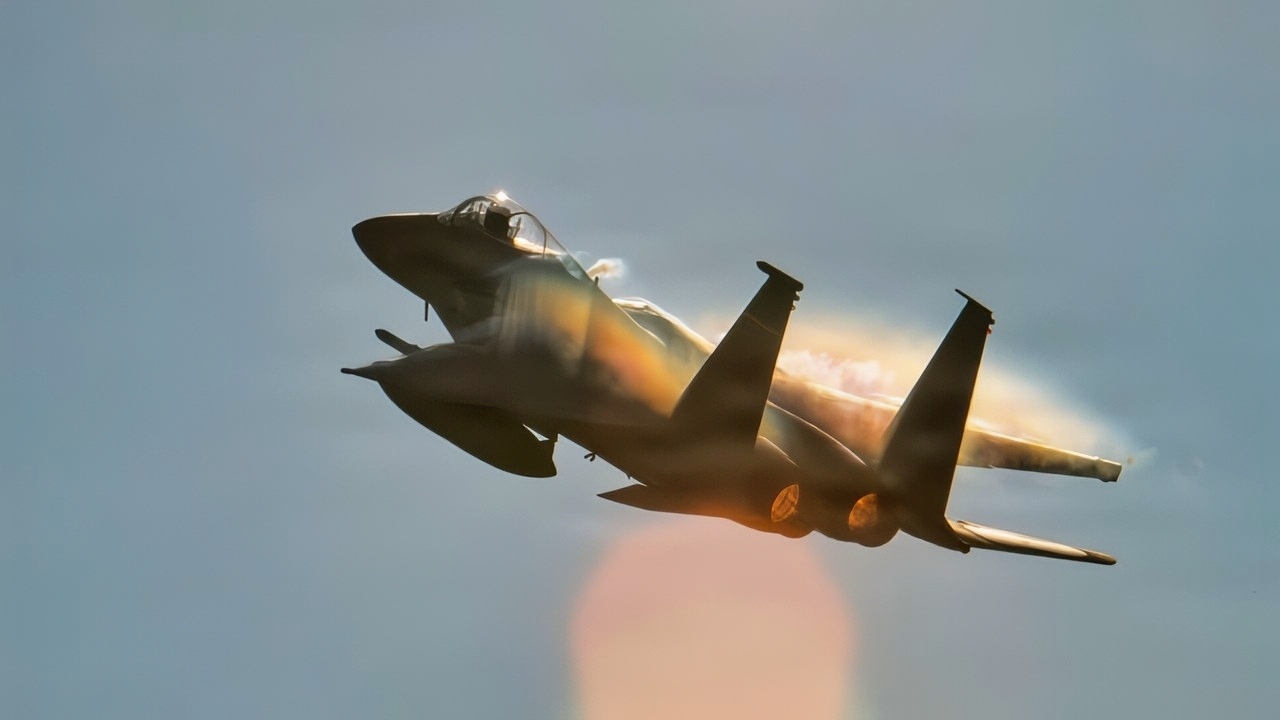
Iran calls the Strait of Hormuz a “red line”: The United States and Iran have continued to trade shots in their resumed conflict. And on Thursday, the Iranian side made a threat about the Strait of Hormuz, on which the U.S. has imposed a blockade.
According to NPR, the U.S. and Iran have now once again been firing at each other for six days, essentially putting an end to the ceasefire that was agreed to in the “memorandum of understanding” in mid-June.
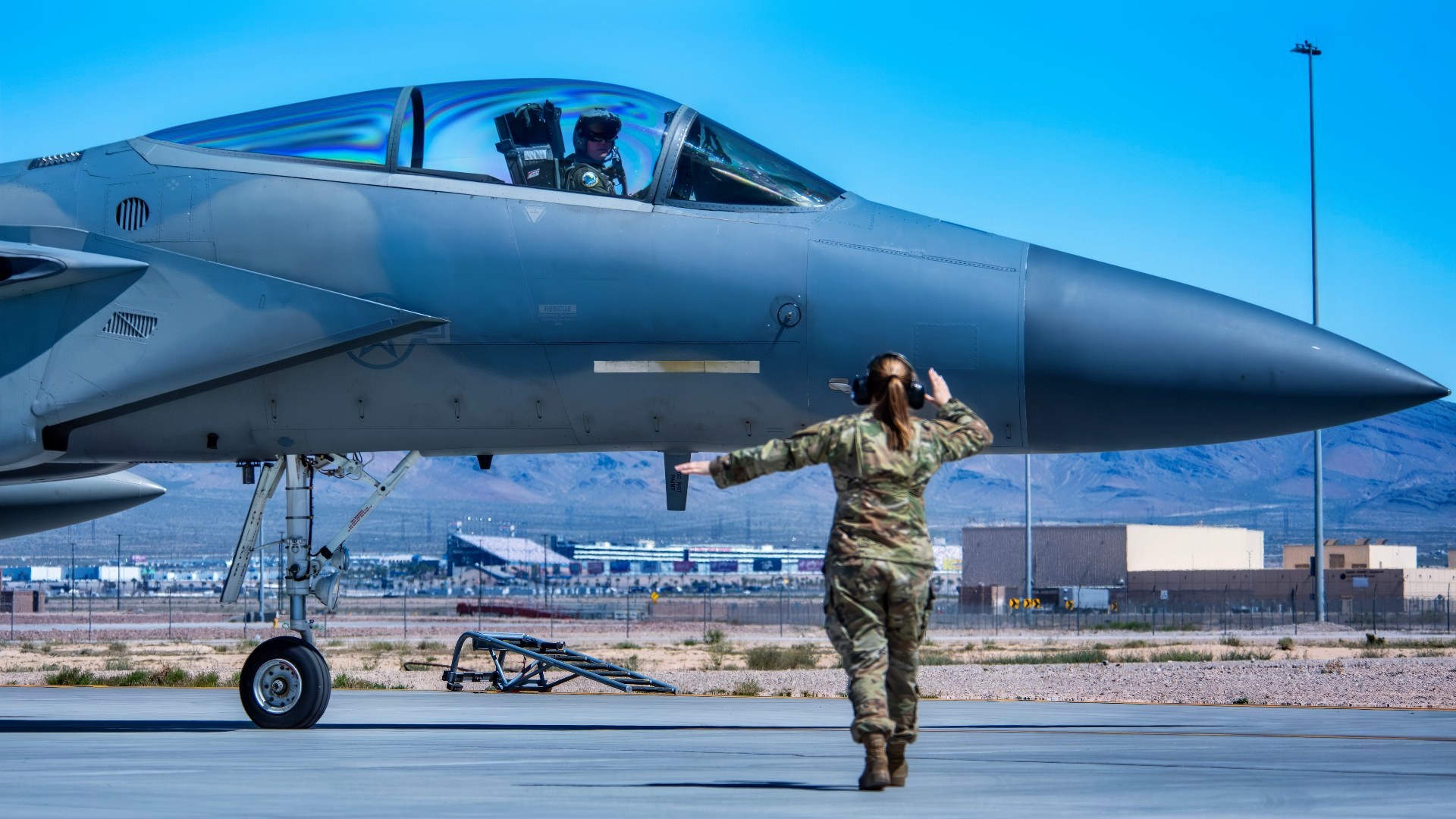
U.S. Air Force Senior Airman Marydith Stidham, a 125th Aircraft Maintenance Squadron crew chief, marshals Capt. Steven Fleming, a 125th Fighter Squadron F-15C Eagle pilot, while taxiing on the flightline at Nellis Air Force Base, Nevada, April 16, 2024. Units assigned to the 125th Fighter Wing participated a two-week exercise in support of the USAF Weapons School. During the exercise, the wing operated in both daytime and nighttime vulnerability periods in a contested degraded environment, preparing students for real-world conditions. (U.S. Air Force photo by Senior Airman Jose Miguel T. Tamondong)
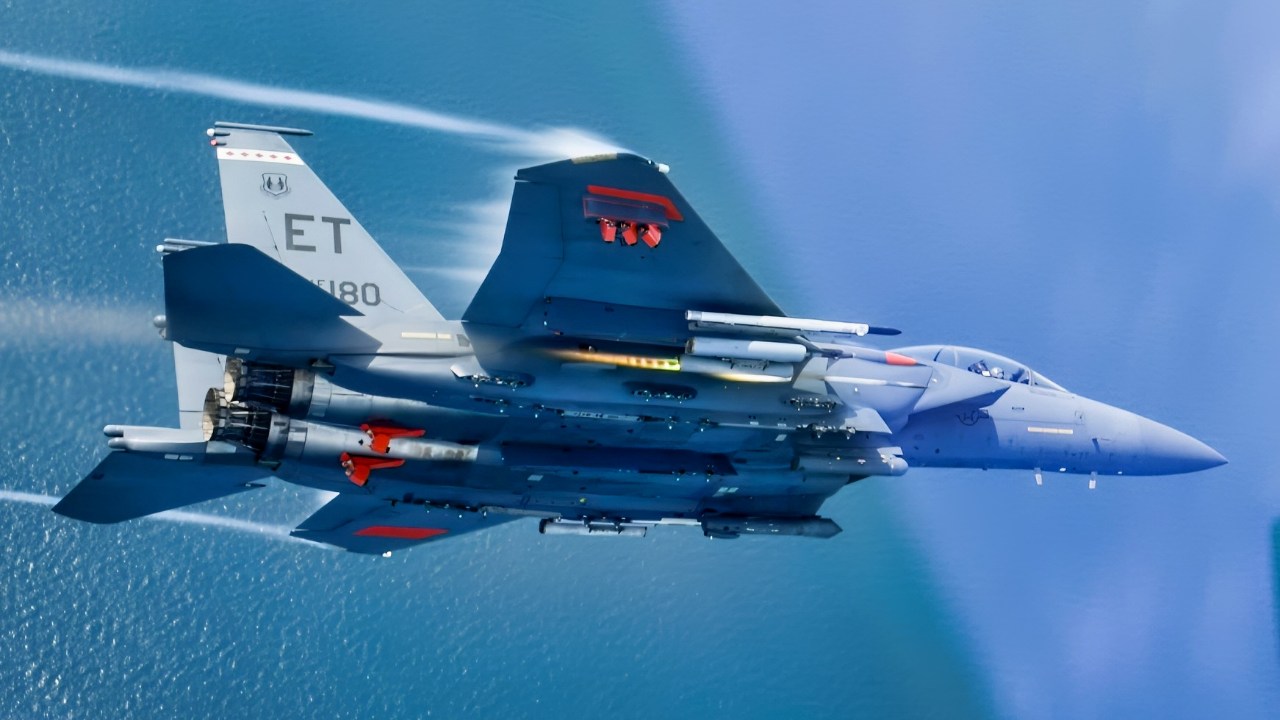
A 96th Test Wing F-15E Strike Eagle flies during a test mission May 22, 2025 over Eglin Air Force Base, Florida. The 96 TW and the 53rd Wing teamed up to test AGR-20F Advanced Precision Kill Weapon System II laser-guided rockets on the F-15E in May in an effort to get the capability to the warfighter as quickly as possible. (U.S. Air Force photo by Staff Sgt. Thomas Barley)
US Central Command announced in a social media post that it had “completed” a new series of strikes.
“U.S. forces struck Iranian command centers, air defense sites, missile and drone capabilities, and coastal surveillance facilities to further degrade Iran’s ability to threaten innocent mariners crewing commercial vessels transiting the Strait of Hormuz,” the post said. “CENTCOM used precision munitions to hit targets in multiple locations, including Bandar Abbas.”
The post added that U.S. forces had “struck coastal defense and cruise missile sites on Greater Tunb Island during a 90-minute wave,’ and that “The U.S. military is holding Iran accountable at the Commander in Chief’s direction.”
Iran responded by talking tough in response.
“All the Infrastructure in the Region Will be Crushed”
In a statement Thursday, Col. Ebrahim Zolfaghari, who speaks for the Iranian military’s Khatam al-Anbiya Central Headquarters, threatened further attacks on the region if the U.S. went through with widespread strikes on Iranian infrastructure or “interfered” with the Strait of Hormuz.
“All the infrastructure in the region will be crushed under the steel blows of the powerful armed forces of the Islamic Republic of Iran,” the spokesman said.
“Under no circumstances and in no way will we allow America, as a foreign and extra-regional country, to interfere in the Strait of Hormuz,” the spokesman said. “This is Iran’s invincible red line.”
Per Mehr News, the spokesman added that “the foolish enemy should know that the moment of epic for us is not a moment of avoidance. What comes from the armed forces of Iran is not an equal strike; it is a superior strike — a strike that will be more severe, more extensive, and more devastating than ever.”
Tanker Traffic is Affected
According to the New York Times, only 13 ships passed through the Strait of Hormuz during the first full day of the U.S. blockade. This was down from 21 ships that passed through the day before, the Times said, citing the shipping data firm Kpler.
“But the U.S. naval blockade was likely to severely diminish Iran’s hold over the strait and its ability to act as a gatekeeper of traffic and bring in revenue through sales of its oil,” the Times said.
“Of the ships that transited the strait on Wednesday, five were sanctioned, according to Kpler. Some ships sail with their tracking devices turned off, obscuring their precise routes and making it hard to have a complete picture of shipping activity.”
There had previously been a blockade of the Strait of Hormuz during the war’s initial phase, between April and June. However, per the Times, this one could have a greater effect on oil prices than the initial one in the spring, which sent pump prices soaring. Indeed, diesel prices in the United States have once again surpassed $5, and the average gas price is beginning to rise as well.
That’s because the Times said, “after months of fighting, global oil reserves are even lower as national and commercial stockpiles were tapped to minimize shortages.”
Ben May, the director of global macroeconomic research at Oxford Economics, told the newspaper that neither side in the conflict wants to completely close the Strait, while “neither side appears willing to make significant concessions.”
“As a result, shipping firms will limit or stop voyages through the strait, and Gulf states will redouble efforts to diversify routes, eventually reducing the strait’s strategic importance,” May told the Times.
Indeed, some Gulf States are taking steps to alleviate the bottleneck, with the United Arab Emirates moving to build a new port in Dubai.
About the Author: Stephen Silver
Stephen Silver is an award-winning journalist, essayist, and film critic, and a contributor to the Philadelphia Inquirer, the Jewish Telegraphic Agency, Broad Street Review, and Splice Today. The co-founder of the Philadelphia Film Critics Circle, Stephen lives in suburban Philadelphia with his wife and two sons. For over a decade, Stephen has authored thousands of articles that focus on politics, national security, technology, and the economy. Follow him on X (formerly Twitter) at @StephenSilver, and subscribe to his Substack newsletter.


