


As the current war in the Middle East continues to heat up, other parties are starting to get involved.
In a somewhat unusual episode, Saudi Arabia has exchanged fire with the Houthi rebels in Yemen, rekindling old fires that have been calm for several years now.
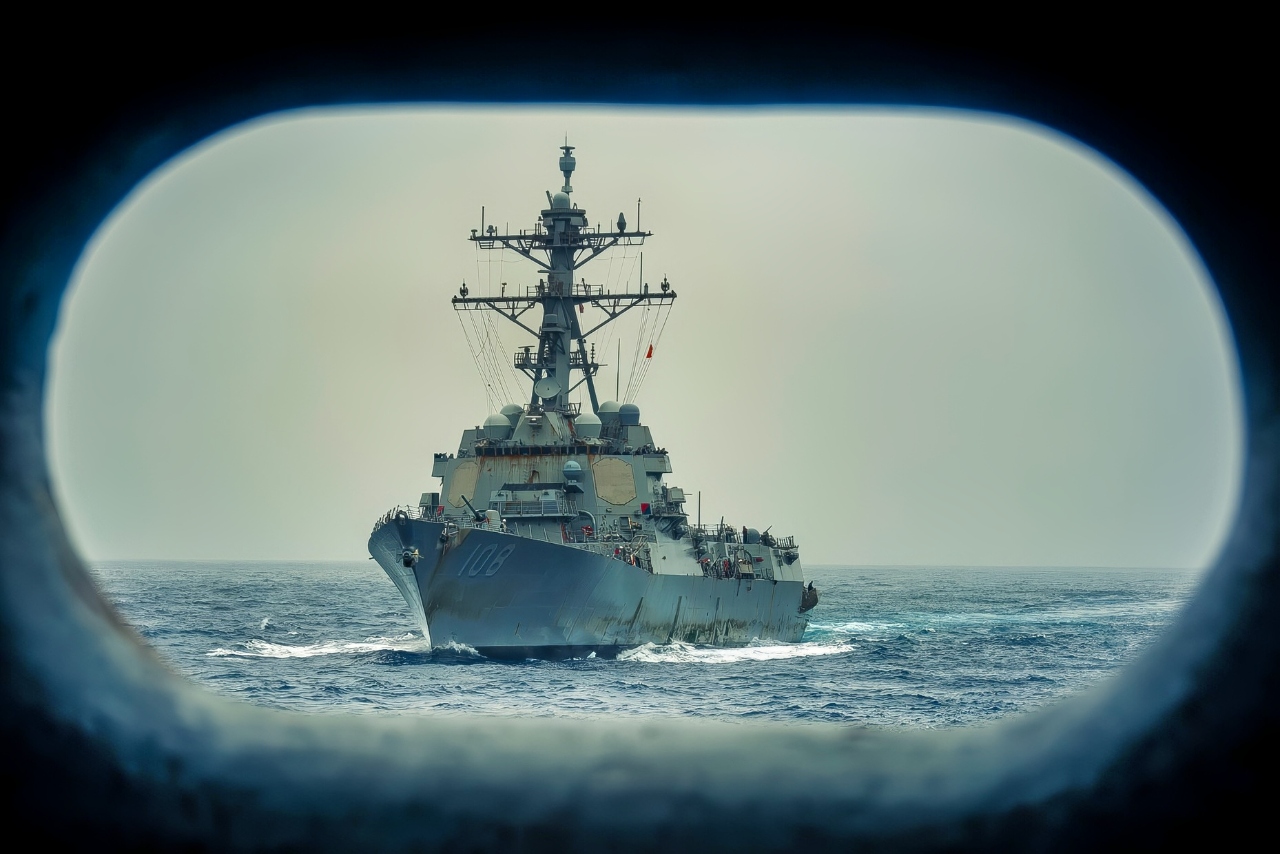
(August 1, 2025) The Arleigh Burke-class guided-missile destroyer USS Wayne E. Meyer (DDG 108) approaches the Nimitz-class aircraft carrier USS Nimitz (CVN 68) for a replenishment-at-sea in the U.S. Central Command area of responsibility. (Official U.S. Navy photo)

(July 28, 2017) An F/A-18F Super Hornet assigned to Air Test and Evaluation Squadron (VX) 23 approaches the aircraft carrier USS Gerald R. Ford (CVN 78) for an arrested landing. The aircraft carrier is underway conducting test and evaluation operations.(U.S. Navy photo by Erik Hildebrandt/Released) 170728-N-UZ648-161
The Houthis reportedly launched a ballistic missile at Saudi Arabia following a Yemeni government attack on a Houthi-controlled airport.
Saudi Arabia agreed to a truce with the Houthis back in 2022, which was largely maintained by both sides. Now, however, the current conflict has reignited tensions between the two, threatening to escalate into a much wider conflict.
It all started with an airplane. About a week ago, an airplane carrying several representatives from Iran attempted to make a landing at the Sanaa International Airport in Houthi-controlled territory in Northern Yemen.
The official government attempted to stop the plane by any means necessary, even targeting the airstrip at Sanaa Airport.
“The Houthi terrorist militia, supported by the Iranian regime, prevented Yemeni national aircraft from landing at the capital’s airport, Sanaa, and insisted that the Iranian aircraft violate Yemeni airspace. Therefore, the airport runway was targeted,” the government claimed in an official statement.
According to the Yemeni Ministry of Defense, the Iranian plane landed at the Hodeidah airport in Houthi-controlled territory, though some sources claim it still managed to land in Sanaa.
Outraged by the attack, the Houthis blamed Saudi Arabia for the attack, despite the official Yemeni government taking responsibility, and launched a ballistic missile attack towards Saudi airspace.
According to the country’s Ministry of Defense, the attack was successfully intercepted by air defenses. The Saudi Government has yet to respond to the Houthis’ claims that it was involved in the attack on Sanaa.
The Houthis stated that they had successfully carried out an attack on the Abha International Airport in the Southern region of Saudi Arabia and warned all airlines against flying in Saudi airspace.
The conflict between Saudi Arabia and the Houthis officially began in 2015, when the Houthis first seized the Yemeni capital of Sanaa and expelled the government.
Saudi Arabia intervened in the civil war at the behest of the then-president Abdrabbuh Mansur Hadi.
Leading a multi-national coalition comprised of several nations from West Asia and North Africa, the Saudi’s launched Operation Decisive Storm, leading to a protracted conflict in Yemen.
The coalition remained active in Yemen for 11 years until peace talks began between the Houthis and the Saudis, mediated by Oman. In 2022, a ceasefire was declared, following years of stalemate. Fighting officially ceased in 2023, and most restrictions on goods to Yemen were lifted.
The ceasefire between the Houthis and Saudi Arabia largely held firm, despite several near misses.
One near-escalation occurred in 2023, when the Houthis began attacking commercial shipping vessels in the Red Sea.
This threatened to reignite tensions between the two as the U.S. Navy attempted to stop the attacks during Operation Prosperity Garden and Operation Rough Rider.
The result was a ceasefire between the U.S. and the Houthis, which went into effect in 2025.
Although the Houthis fired subsequent attacks on Israel in 2026, relations between the rebels and Saudi Arabia remained relatively stable until recently.
With tensions rising across the Middle East, the four-year truce between the Houthis and Saudi Arabia is at risk of falling apart.
Hans Grundberg, the U.N. special envoy for Yemen, stated recently that the U.N. was concerned about the rising violence in Yemen and was currently in touch with both parties to prevent further escalation.
“We are urging them to de-escalate and refrain from any actions that would risk a new cycle of violence in Yemen… Any step that risks widening the confrontation would only deepen Yemen’s suffering and undermine the calm that Yemenis urgently need preserved.” Recently, clashes between Houthi insurgents and government forces in Yemen have increased in the province of Hodeidah, threatening to reignite the war all over again.
Currently, Saudi Arabia has yet to respond to the most recent attacks from the Houthis. It is likely that the Saudis also want to avoid escalating the conflict if at all possible.
The previous war in Yemen ended in a standstill, despite wide international support.
This time, with Iran striking targets across the region, it is in Saudi Arabia’s best interests to stay out of the ring for as long as possible, lest Iran or the Houthis begin targeting the country’s oil infrastructure.
Meanwhile, the Houthis have threatened to close the Bab el-Mandeb Strait. The Bab el-Mandeb Strait is a narrow waterway between Yemen and Djibouti that connects the Red Sea to the Gulf of Aden.
This closure would threaten billions of dollars of the Middle East’s oil exports and would have serious implications for the global economy.
The last confrontation between the United States and the Houthis ended in a ceasefire. Now, the U.S. faces the possibility of a combined confrontation between two adversaries highly experienced in asymmetric warfare.
It is too early to say anything definitive (the Houthis might still back down), but needless to say, this is an undesirable outcome for the U.S.
About the Author: Isaac Seitz
Isaac Seitz, a Defense Columnist, graduated from Patrick Henry College’s Strategic Intelligence and National Security program. He has also studied Russian at Middlebury Language Schools and has worked as an intelligence Analyst in the private sector.


