

The Russian Economy “Is An Illusion” Built On Debt: With the current energy crisis already wreaking havoc on Russia’s economy, a banking crisis may soon erupt as a mountain of debt weighs on consumers and businesses due to bad lending practices.
Fortune magazine wrote that the Kremlin urged banks to approve and even encouraged millions of Russians to take out three or more loans simultaneously.
But lenders are now vulnerable amid soaring indebtedness and deteriorating loan quality, while consumers buckle under high inflation.

Tim Murry, a foreign threats compound contractor, drives a T-72 battle tank into position to serve as adversary targets for a joint service exercise, Emerald Flag, at Eglin Air Force Base, Fla., Nov. 30. Emerald Flag is a multi-service exercise aimed to unify information sharing across joint domain platforms. (U.S. Air Force photo/1st Lt Karissa Rodriguez)
More than 500,000 Russian citizens declared bankruptcy in 2025, up 33 percent from 2024, as Russian President Vladimir Putin risks an “explosive” banking crisis, an intelligence report from an unnamed European country has warned.
Deteriorating business loans and rising household debt mean Russia is moving closer to a potential financial meltdown, according to a bombshell European intelligence report prepared for European officials ahead of a new round of sanctions.
As Newsweek pointed out, even before the disastrous 2022 invasion of Ukraine, Russia’s economy was roughly the size of Italy’s or Canada’s. Neither of whom is thought to be an economic superpower. And now the situation is far worse.
State Intelligence Reports Russia’s Banking Crisis
Reuters was given access to this report, which they titled “Note on the probability of a banking crisis in Russia in 2026”, said banks have been pushed by Kremlin officials to give subsidized loans to defense companies, homebuyers, and others, in an attempt to boost the economy and fund the war effort.
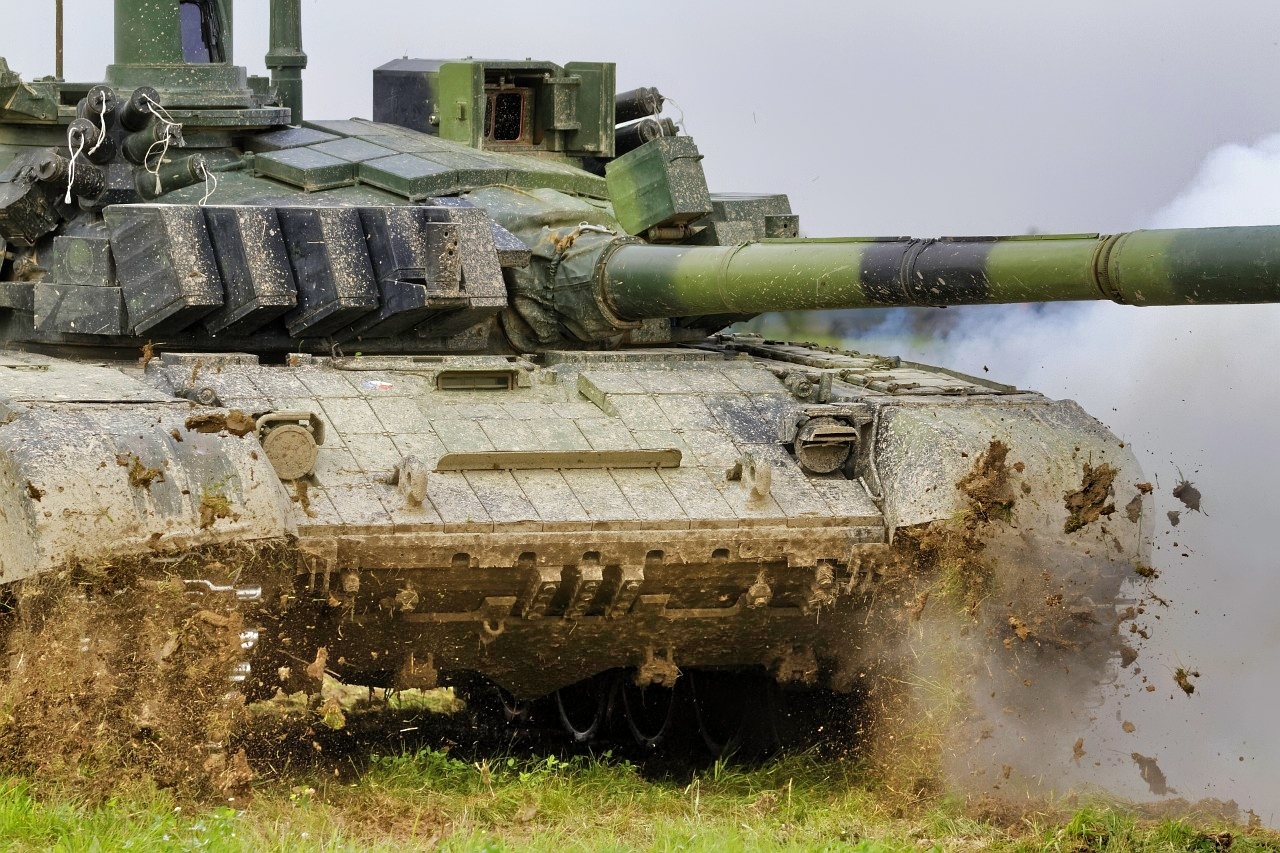
T-72 Tank. Image Credit: Creative Commons.
It also cited state-backed credit programs, loan restructurings, and government support that masked the banks’ vulnerability.
“The situation creates the illusion of a dynamic economy that, in reality, conceals an explosive situation which an economic shock, such as an ambitious package of sanctions against banks … could trigger,” said the report.
With Russia’s economy teetering, its banks are now encumbered with bad debts. However, state-backed credit programs, loan restructurings and government aid are obscuring how bad conditions are.
The June report estimated that 10 percent of corporate loans may end up in default, up sharply from 2024, while 15 percent of retail loans at some top banks may be non-performing.
Russia’s Poor Battlefield Performance Has Exacerbated Its Woes
Russia’s economic issues mirror its declining performance on the battlefield. New Ukrainian drone attacks have decimated the country’s oil infrastructure, while the Russian military has suffered catastrophic casualties of nearly 1.5 million, with 30,000 to 35,000 casualties a month.
The Ukrainian attacks on Russian gas and oil refineries have created fuel shortages across the country. Meanwhile, lower oil prices and the cessation of fuel exports have slashed the Kremlin’s energy revenue, which has always served as an economic cushion.
As a direct result, Russia’s federal budget deficit ballooned to 6 trillion rubles ($83 billion) by the end of May, more than double 2025’s level, far exceeding the 3.8 trillion rubles that were projected for all of this year.
The government has been drawing down reserves in its sovereign wealth fund to close the gap, but that well is almost dry.
With the economy already teetering, a Communist leader wants to seize the general population’s retirement nest eggs.
Communist Leader Wants To Seize Private Bank Accounts
The Moscow Times reported that Russian Communist Party leader Gennady Zyuganov suggested seizing part of the trillions of rubles held in bank accounts by households and businesses to support the economy.
The finance ministry is preparing legislation that could allow it to access $40 billion in pension savings held in privately managed funds. Zyuganov’s suggestion unleashed criticism from senior lawmakers and renewed debate over the security of private savings.
Speaking at the Communist Party’s election congress, Zyuganov said Russian citizens held 67 trillion rubles ($904.5 billion) in bank deposits, while businesses had another 63 trillion rubles ($850.5 billion), for a combined total of 130 trillion rubles ($1.76 trillion).
“That is three state budgets,” Zyuganov was quoted as saying by the newspapers Vedomosti and the broadcaster RTVI. “They are sitting there and enriching bankers.”
His suggestion caused panic in Russia’s business community, which is already grappling with onerous interest rates and expansive Western sanctions.
“The government could try to take money by any means,” a Moscow executive told the Washington Post. “Everyone is thinking about how to get their money out and leave.”
New Sanctions Target Russian Banks And Cryptocurrency Networks
With all the bad news surrounding Russian banks, the situation worsened as the EU prepares another package of sanctions slated for release in July, targeting banks and cryptocurrency networks.
Other sanctions may be levied on drone producers, oil traders, and refiners. Adding 90 banks to the sanctioned entities would mean over half of the country’s internationally connected banks would be on the blackball list.
According to an article in The Moscow Times, which predicted back in December that Russia could face a banking crisis in late 2026, cash circulating outside the banking system increased by nearly 1.9 trillion rubles, about $24.5 billion, between February and June, averaging approximately 380.7 billion rubles per month, as Russian citizens were pulling money out of banks for the first time since the mobilization panic in 2022.
June reports saw an additional 449.7 billion rubles added to cash circulation, while April recorded the largest monthly increase at more than 607 billion rubles.
The European intelligence report states that Russia’s banks could become increasingly susceptible to external economic shocks as lenders continue to finance the country’s wartime economy while absorbing significant financial risks.
Fortune reported that 60 percent of Russian citizens say their economic situation is worsening.
About the Author: Steve Balestrieri
Steve Balestrieri is a National Security Columnist. He served as a US Army Special Forces NCO and Warrant Officer. In addition to writing on defense, he covers the NFL for PatsFans.com and is a member of the Pro Football Writers of America (PFWA). His work was regularly featured in many military publications.


