
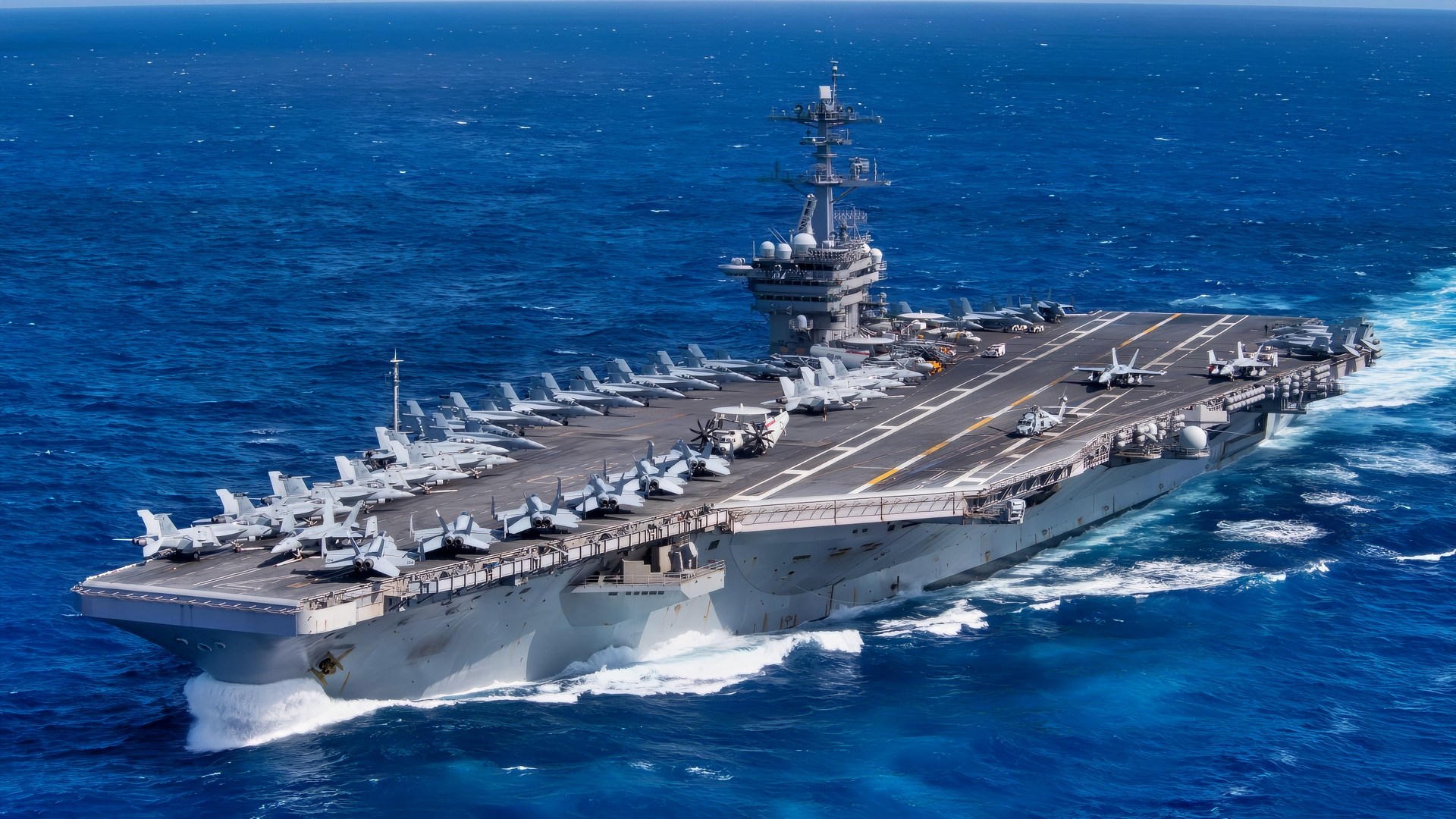
The United States is moving more troops, aircraft, medical personnel, military equipment, and related assets towards the Middle East as U.S. President Donald Trump considers a massive new strike against Iran.
According to the president, the United States’ next move could be bigger than any strike against the country so far – including last year’s Operation Midnight Hammer.
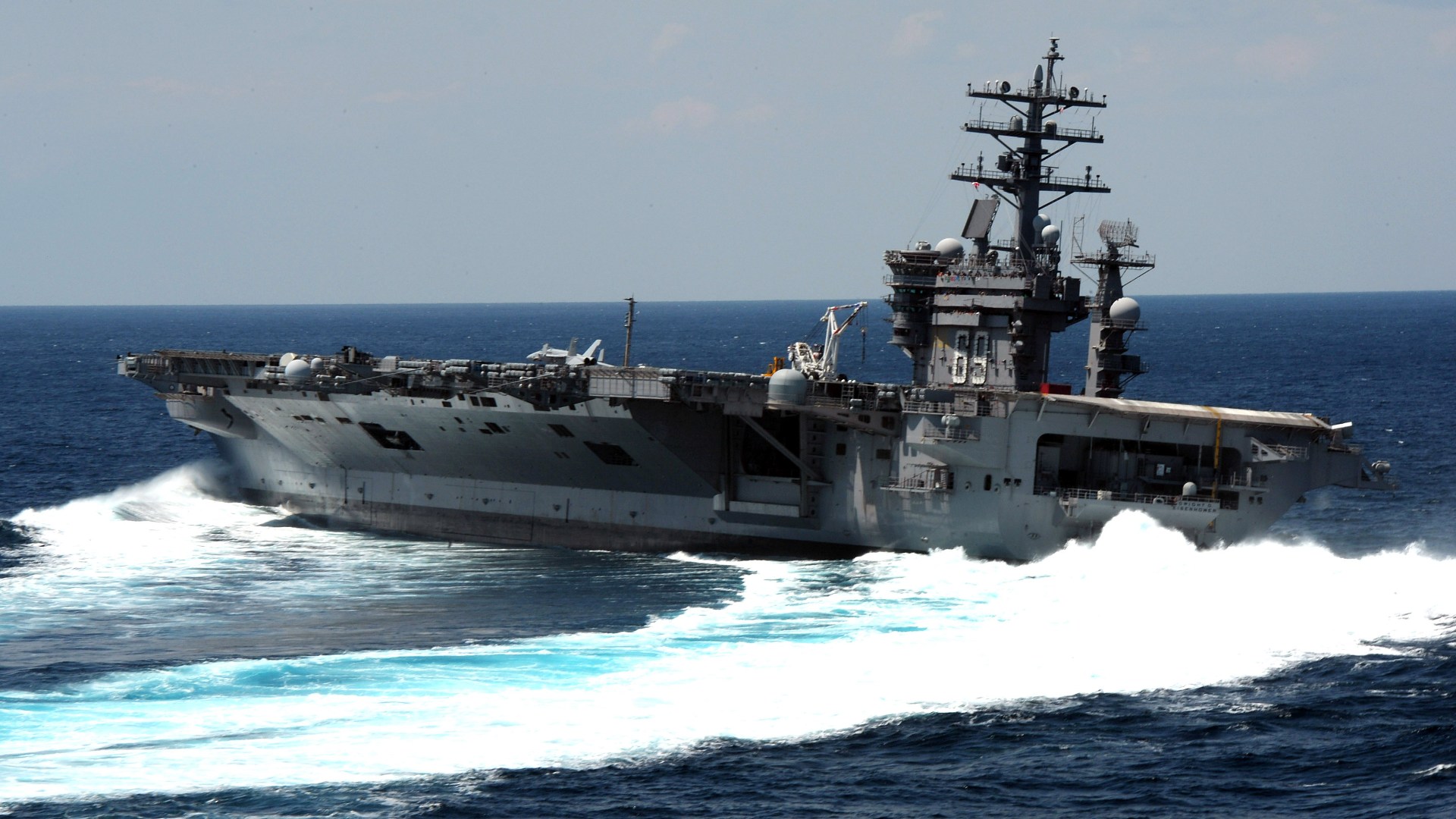
The Nimitz-class aircraft carrier USS Dwight D. Eisenhower conducts rudder turns during sea trials. Dwight D. Eisenhower completed a nine-month planned incremental availability at Norfolk Naval Ship Yard on June 10, 2011.
Over the past week, U.S. special operations forces have been deployed from bases in the United States, and fighter squadrons have been positioned across the Middle East.
American bombers in both the United States and Britain have also been placed on heightened alert, according to U.S. officials and analyses of flight-tracking data, per The Wall Street Journal.
The preparations intensified after three American soldiers were killed during an Iranian attack on a U.S. base in Jordan over the weekend, and a fourth U.S. service member was subsequently killed in northern Iraq during the controlled detonation of an unexploded Iranian drone.
The buildup does not necessarily mean that the United States is definitively preparing to launch an immediate strike, but it does mean that U.S. forces are ready when and if President Trump approves it.
U.S. Bombers Launch From Britain
A U.S. Air Force B-1B Lancer bomber departed RAF Fairford in Gloucestershire on Wednesday, July 22, and flew a strike mission against targets in Iran, according to open-source aircraft tracking data and U.S. officials.
It was the first publicly reported use of a B-1B against Iran since the latest round of fighting began 12 days ago. Online flight trackers followed the bomber after it left the British base.
Specialist aviation outlet Itamilradar also reported that two B-1Bs were supported during the mission by two U.S. KC-135 aerial-refueling aircraft operating from Bucharest, Romania.
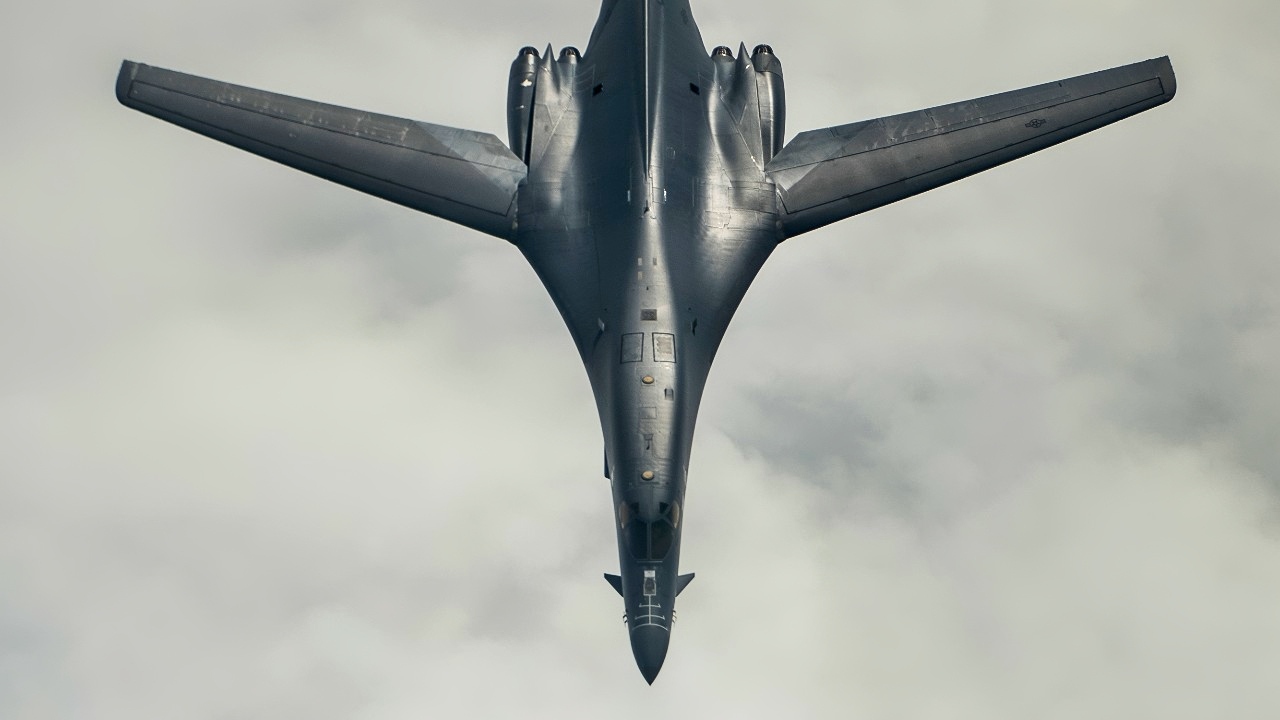
A U.S. Air Force B-1B Lancer, assigned to the 37th Expeditionary Bomb Squadron, Ellsworth Air Force Base, S.D., flies over the East China Sea, Jan. 9, 2018. The Lancer serves as premier platform for America’s long-range bomber force, carrying the largest conventional payload of guided and unguided weapons in the Air Force inventory. (U.S. Air Force photo by Staff Sgt. Peter Reft)

A B-1B Lancer aircraft from the 34th Bomb Squadron departs from Al Udeid Air Base, Qatar, April 8, 2017. This departure marks the airframe’s first mission in the U.S. Air Force Central Command’s area of operations in more than two years. (U.S. Air Force photo by Staff Sgt. Joshua Horton)
“Last night, a new aerial refueling mission was carried out over the Eastern Mediterranean, with several USAF KC-135 supporting at least one B-1B Lancer en route to Iran for a bombing mission.
It remains unclear, however, as reported by @DefenceGeek , whether the strike was ultimately carried out.
The only confirmed part of the operation remains the refueling activity over the Eastern Mediterranean,” Itamilradar wrote on July 22.
Iran’s Islamic Revolutionary Guard Corps (IRGC) subsequently confirmed that it had detected the use of the aircraft and proceeded to warn the United Kingdom against continuing to support U.S. attacks on Iran.
What Iran Said
The IRGC-linked Tasnim news outlet announced in a Telegram post that the U.S. had begun flying B-1B bombers from the United Kingdom, and warned that the base would now be deemed a legitimate target for the IRGC.
“The American aggressor army, which used to launch cruise missiles from its vessels in the Indian Ocean in its aggression after the official resumption of the war, with the end of the missile reserves of the aforementioned vessels, yesterday switched to using B1 planes flying from Fairford Air Base, England,” the post reads.
“As the officials of the Ministry of Foreign Affairs also stated, any base that is used to invade Iran’s territory is our legitimate goal,” it continued.
Britain previously authorized the United States to use British bases for strikes against Iranian missile facilities involved in attacks on commercial shipping in the Strait of Hormuz, though former British Prime Minister Keir Starmer did initially refuse to give U.S. forces access to British bases to support the first round of strikes.
RAF Fairford has hosted U.S. bombers during the conflict since March, when B-1Bs began arriving at the Gloucestershire installation.
The B-1B can carry as much as 75,000 pounds of conventional weapons, giving it the capacity to attack large numbers of sites during a single operation. Given the extensive nature of ongoing U.S. strikes against Iran, it is the ideal platform.
The aircraft’s deployment from Britain also allows the United States to conduct long-range strikes without relying exclusively on bombers departing the continental United States.
Why the Buildup Makes Sense
The movement of additional aircraft and troops gives Trump significantly more military options than were available even just a week ago.
Additional fighter squadrons can escort bombers and suppress Iranian air defenses while defending U.S. forces across the region from retaliation – a threat that we know exists based on the events of the last week and a half.
Tanker aircraft also extend the range and endurance of strike packages – the coordinated groups of aircraft launched together as part of a single mission.
Transport aircraft can move munitions, spare parts, and personnel that are all required to sustain high-tempo operations.
And by deploying medical personnel, as reports suggest is the case, the Pentagon also looks to be preparing for the possibility of a prolonged campaign that could incur higher casualty rates than a single round of strikes.
The buildup, therefore, makes it clear that the United States is more prepared now than it has at any time during the war to initiate a larger and more sustained operation against Iran.
Whether Trump ultimately authorizes those attacks is obviously unclear, and likely depends on whether Iran is simply willing to return to the negotiating table.
About the Author: Jack Buckby
Jack Buckby is a British researcher and analyst specializing in defense and national security, based in New York. His work focuses on military capability, procurement, and strategic competition, producing and editing analysis for policy and defense audiences. He brings extensive editorial experience, with a career output spanning over 1,000 articles at 19FortyFive and National Security Journal, and has previously authored books and papers on extremism and deradicalization.


