

Trump Says Every Iranian Ship Attack Will Cost Tehran a Bridge or Power Plant: US President J. Donald Trump has announced a fixed retaliation rule for the Strait of Hormuz.
Each time Iran fires on a ship with a missile, rocket, drone, or another weapon, the United States will destroy one Iranian bridge or power plant, including infrastructure in or near Tehran. Trump announced the policy in a July 22 Truth Social post.
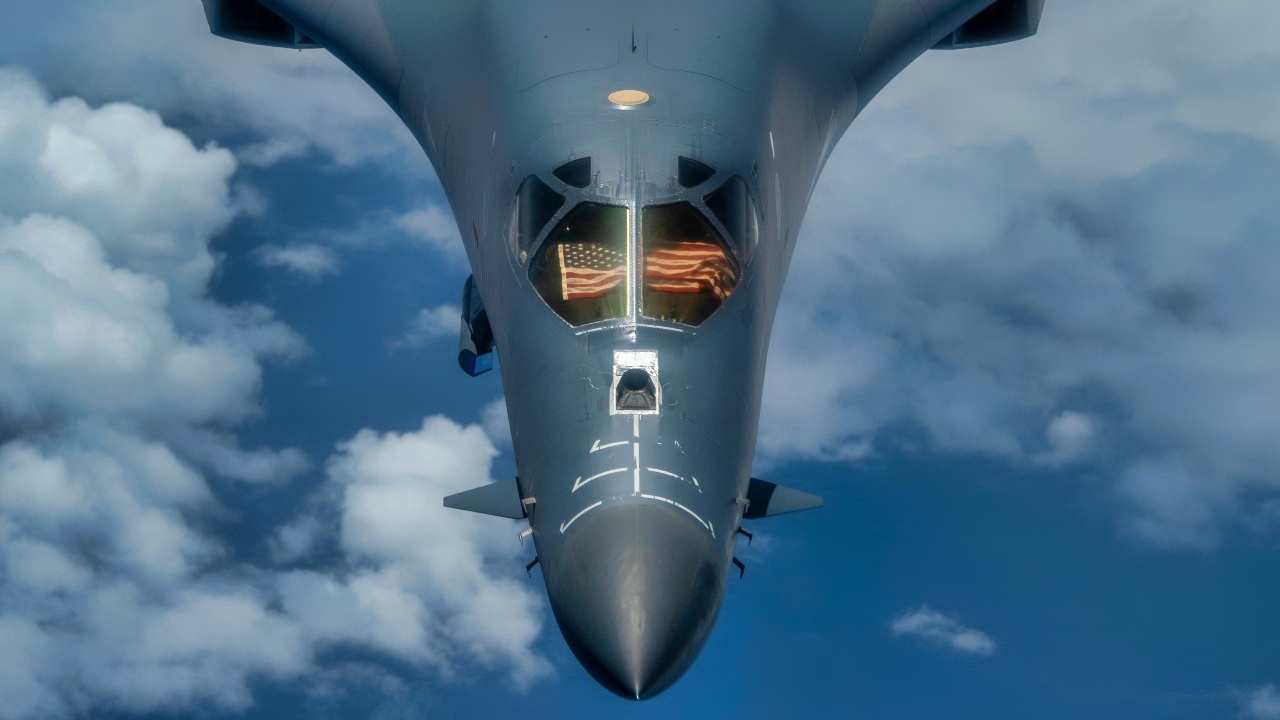
A 9th Expeditionary Bomb Squadron B-1B Lancer flies over the East China Sea May 6, 2020, during a training mission. The 9th EBS is deployed to Andersen Air Force Base, Guam, as part of a Bomber Task Force supporting Pacific Air Forces’ strategic deterrence missions and commitment to the security and stability of the Indo-Pacific region. (U.S. Air Force photo by Senior Airman River Bruce)
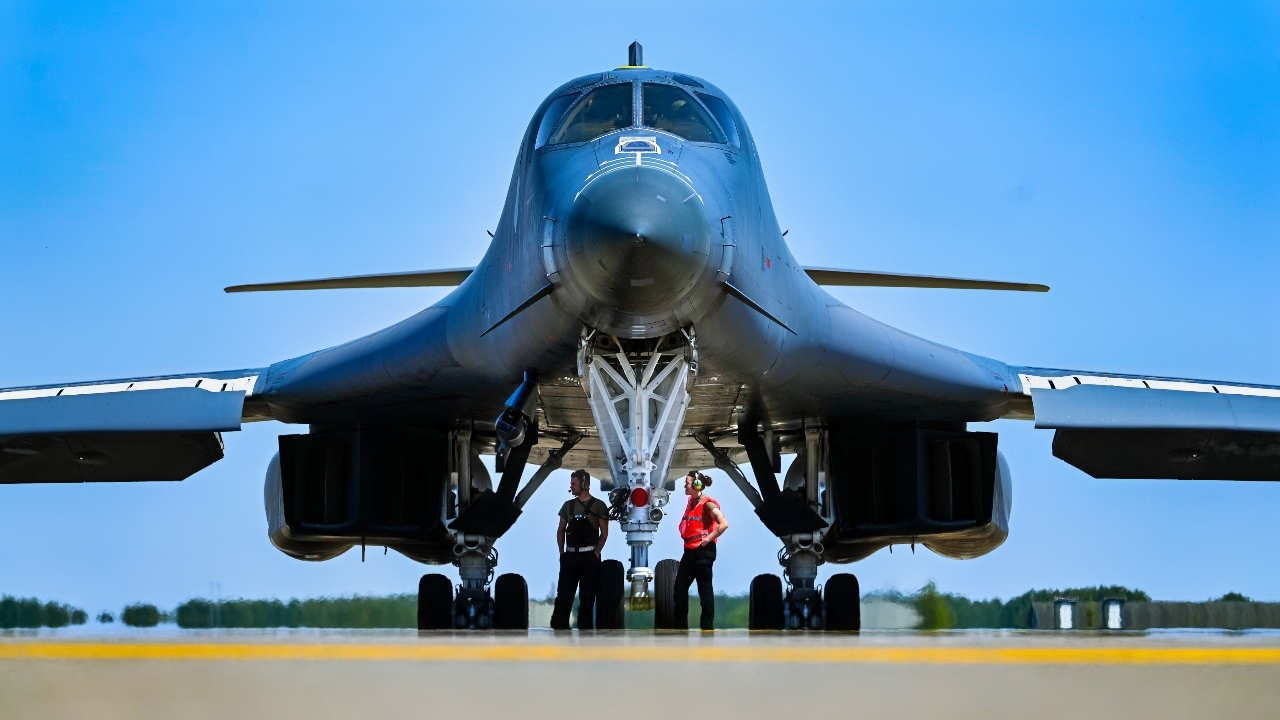
U.S. Air Force Senior Airman Colby Delia, 9th Expeditionary Bomb Squadron crew chief, and Airman 1st Class Olivia Ward, 9th Expeditionary Bomb Squadron crew chief, prepare for a B-1B Lancer to take off for a mission at Misawa Air Base, May 9, 2025. BTF missions provide opportunities to train and work with our allies and partners in joint and combined operations and exercises. (U.S. Air Force photo by Airman 1st Class Mattison Cole)
Donald Trump’s New Iran Warning
The warning follows 11 consecutive nights of American strikes intended to reduce Iran’s ability to threaten commercial shipping. U.S. Central Command says Iran has attacked more than 30 commercial vessels during the conflict.
Ship traffic nevertheless remains severely reduced, with only three commodity vessels crossing Hormuz on July 21 and no large crude or liquefied natural gas carriers recorded.
The policy could strengthen deterrence by removing uncertainty about the American response. Iran now knows that another maritime attack would trigger a strike against infrastructure with economic and political value. The same clarity also creates a commitment problem for Washington.
Bridges and power plants do not become lawful targets simply because Iran attacked a ship. The law of armed conflict requires each object to qualify as a military objective, and planners must assess expected civilian harm before every strike. A blanket one-for-one formula cannot replace those target-specific judgments.
Trump’s Rule Could Make Escalation Automatic
The largest strategic risk is that the policy converts each incident at sea into a required American strike. Attribution around Hormuz can be difficult when an attack involves a drone, mine, small vessel, or projectile recovered after impact. A mistaken assessment, an unauthorized Iranian action, or a deliberately ambiguous attack could activate an escalation schedule Washington publicly committed itself to follow.
The United States has already found that repeated bombing does not guarantee normal transit through the strait. The current campaign has damaged Iranian launchers, radars, command sites, bridges, and maritime assets while tanker operators continue avoiding the route. Washington has not restored normal shipping through military pressure, and the available exit options remain costly.
Iranian Power Strikes Would Carry Civilian Costs
Some bridges support military logistics, and some power facilities directly supply military operations. Those uses can make them lawful targets under specific conditions. A nationwide electricity network also supports hospitals, water systems, refrigeration, communications, and ordinary households.
Earlier infrastructure strikes have already interrupted transportation, electricity, and water in southern Iran. A systematic retaliation policy could expand those effects into Tehran and other densely populated areas. Iran could answer by attacking power, desalination, port, or transportation infrastructure in Gulf states hosting American forces.
That pattern would broaden a maritime dispute into a campaign against regional infrastructure. It would also place greater pressure on U.S. air defenses, partners, and military bases while increasing the humanitarian cost inside Iran.
Destroying Infrastructure Will Not Reopen Hormuz by Itself
The Strait of Hormuz remains the world’s most important oil transit chokepoint. Commercial access depends on shipowners, crews, insurers, and charterers believing that a passage can be completed safely. Destroying a bridge after an attack punishes Iran, but it does not remove every mine, mobile launcher, drone team, or small maritime unit along the coast.
The new threat may create bargaining leverage for ceasefire negotiations. It may also make an agreement harder if Tehran treats each infrastructure strike as requiring another response. The United States still needs enforceable terms covering attacks on shipping, mine clearance, nondiscriminatory passage, and the conditions under which American strikes end. Airpower alone cannot remove Iran’s geographic leverage.
The measure of success will not be the number of Iranian bridges or power plants destroyed. It will be whether attacks stop and large tankers resume routine crossings without continuous American protection.
About the Author: Harry J. Kazianis
Harry J. Kazianis (@Grecianformula) was the former Senior Director of National Security Affairs at the Center for the National Interest (CFTNI), a foreign policy think tank founded by Richard Nixon based in Washington, DC. Harry has over a decade of experience in think tanks and national security publishing. His ideas have been published in the NY Times, The Washington Post, The Wall Street Journal, CNN, and many other outlets worldwide. He has held positions at CSIS, the Heritage Foundation, the University of Nottingham, and several other institutions related to national security research and studies. He is the former Executive Editor of the National Interest and the Diplomat. He holds a Master’s degree focusing on international affairs from Harvard University.


Jobardu
July 22, 2026 at 7:40 pm
“The law of armed conflict requires each object to qualify as a military objective, and planners must assess expected civilian harm before every strike.” Does this law apply to Iran too, or do they get a pass because of neo-Woke policies?
Iran has crowed about how it bombs desalination plants, power plants, critical infrastructure and other civilian targets in the Gulf States. Yet the undead content generators in the national media applaud Iran with their usual stiff-armed clapping, fixed gazes, and frozen-faced stares. Not only that, but Iran has violated the International Genocide Convention (which specifically focuses on intent), the Law of the Sea, and the NPT.
Cristo
July 22, 2026 at 8:30 pm
Fight Fire with Fire.! If Iran wants a dirty fight, we should give them one. I’m pretty sure we could accommodate… otherwise can we please just stone age these MFers and get it over with.