

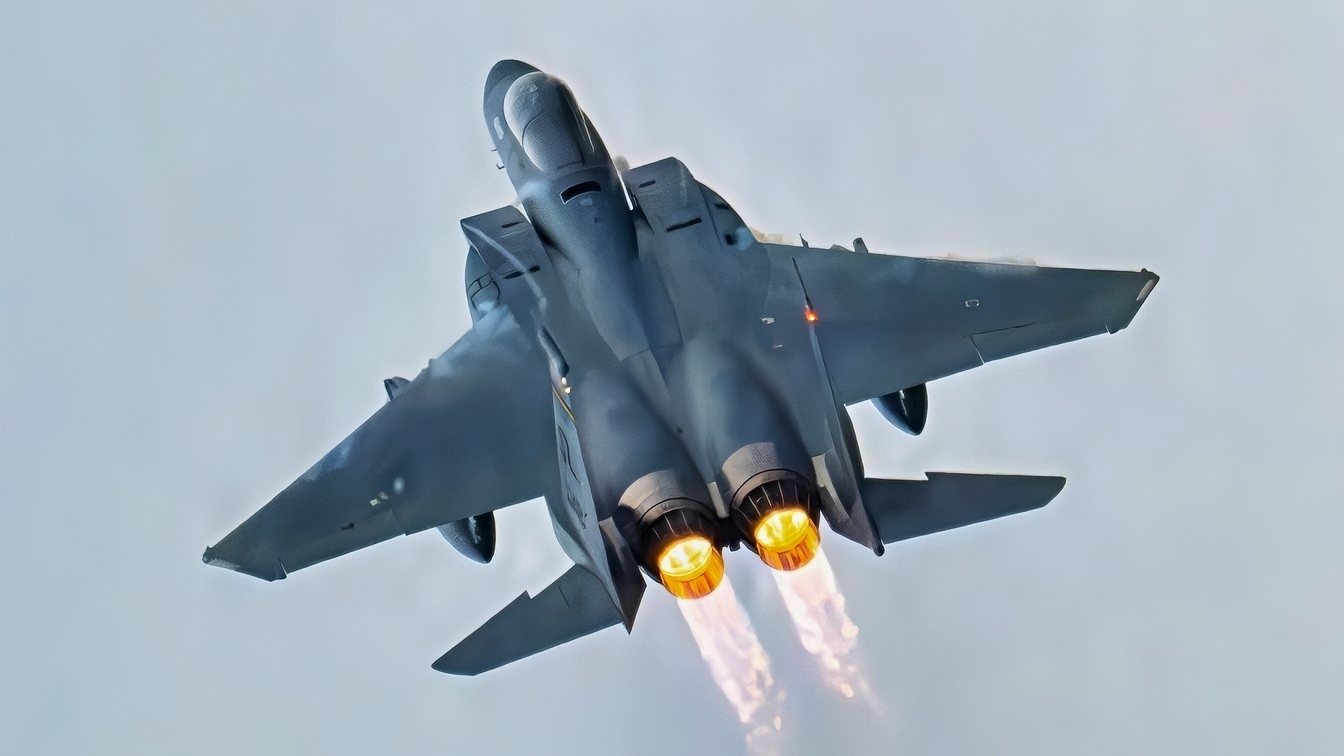
A drone strike on ships at Damietta, an Egyptian port on the Mediterranean Sea, may signal a new opening front in the ongoing war in Iran — but the attack also threatens one of the last safe passageways for oil from Saudi Arabia out to the outside world.
Reporting indicates that the explosive-laden drones set off at least two fires in the vicinity of the Suez Canal, a key waterway linking the Red Sea and the Mediterranean Sea. The drones caused a fire on Energos Winter, an American-flagged gas tanker.

A U.S. Navy EA-18G Growler prepares to refuel from a U.S. Air Force KC-135 Stratotanker over the U.S. Central Command area of responsibility, March 29, 2025. The Growlers are assigned to the Harry S. Truman Carrier Strike Group supporting maritime security operations in the CENTCOM AOR. (U.S. Air Force photo by Staff Sgt. Gerald R. Willis)
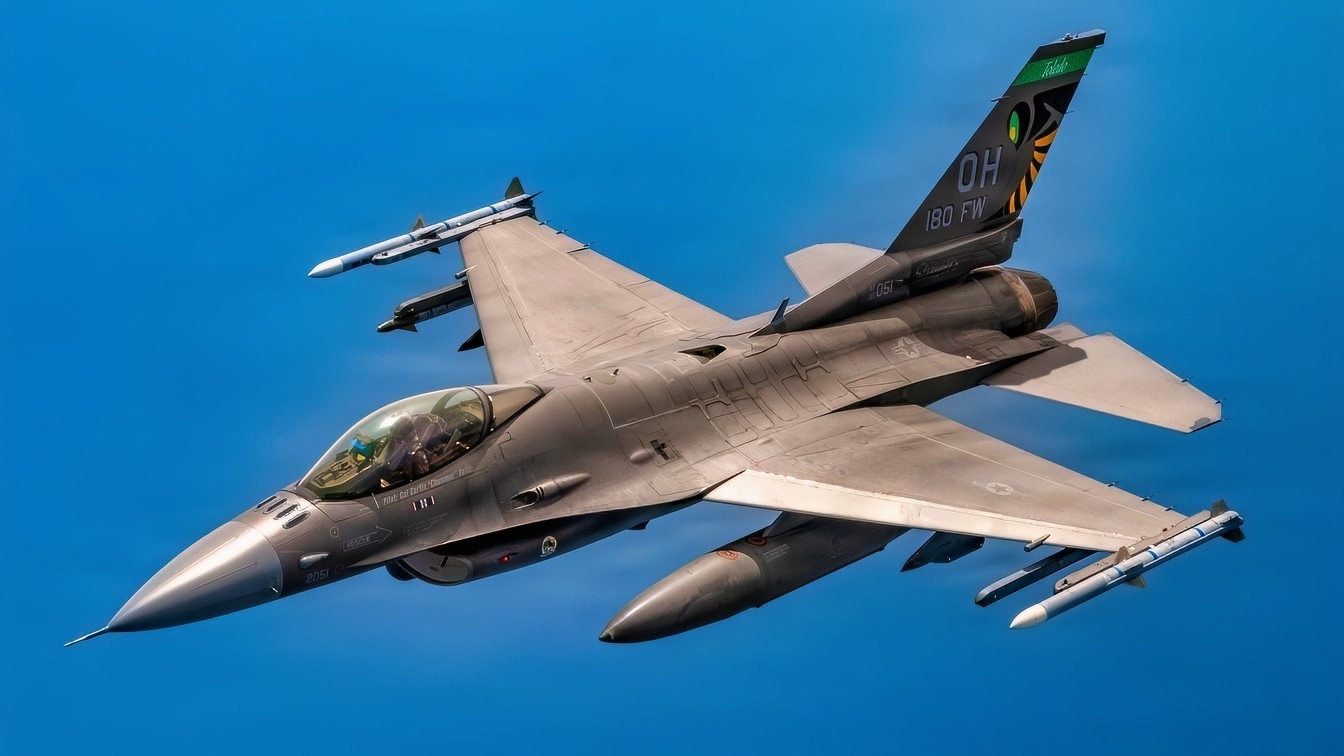
An F-16 Fighting Falcon, assigned to the 180th Fighter Wing, flies alongside a KC-135 Stratotanker with the 121st Air Refueling Wing over the skies of Canada, May 20, 2026. The F-16 Fighting Falcon can fly more than 500 miles, but the KC-135 can extend its radius beyond that and deliver airpower anywhere, anytime, globally. (U.S. Air National Guard photo by Airman 1st Class Taylor Warehime)
The War’s Expanding Dimensions
Until recently, Riyadh has managed to keep some of its oil flowing to the wider world thanks to the port of Yanbu, a Saudi facility on the Red Sea. Reached by the East-West pipeline that bisects the country, Saudi oil flows from Yanbu have helped mitigate the anticipated oil pinch caused by the war in Iran. But the war’s expanding scope threatens to broaden the conflagration that was heretofore localized around the Strait of Hormuz.
Insurance costs for vessels transiting the Red Sea increased Thursday, following an advisory published by the Joint War Committee, which comprises underwriters from several insurance organizations. Citing Houthi attacks, the advisory designated more of the Red Sea as high risk, a move that will raise costs to Saudi energy products as insurance premiums increase.
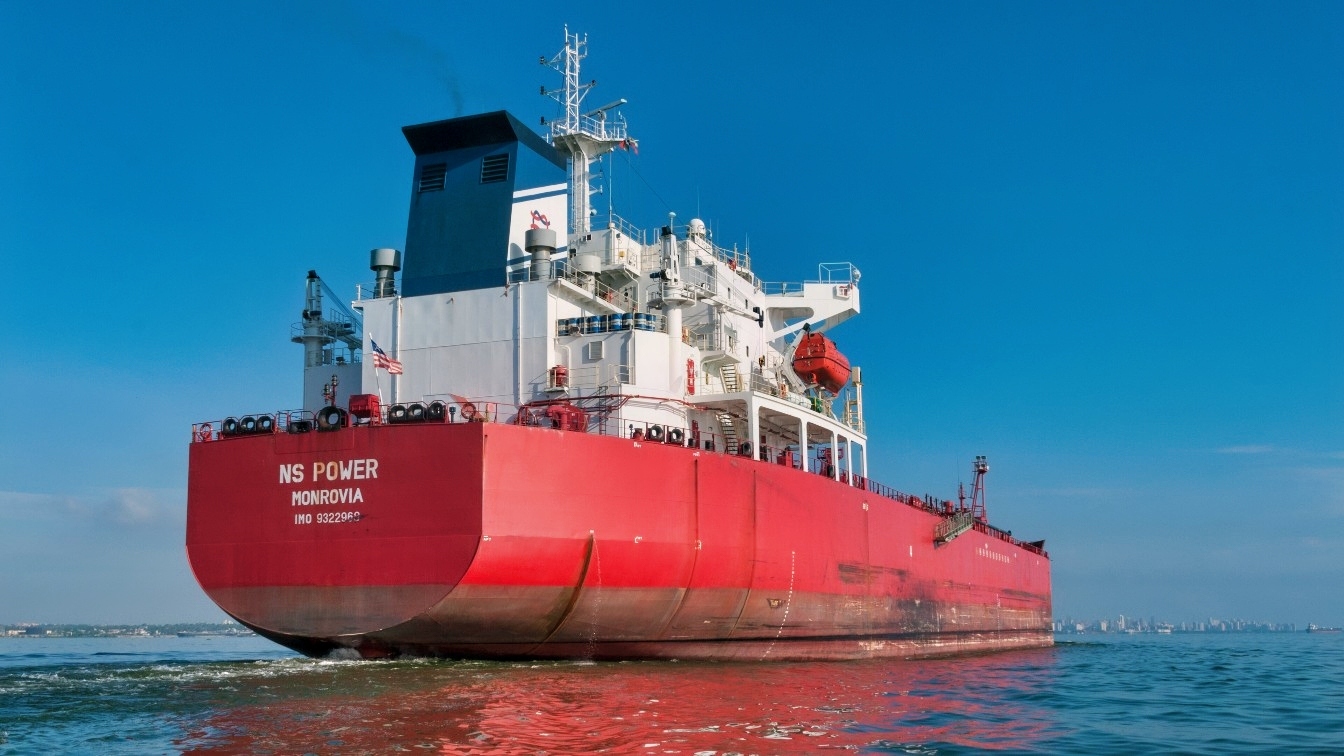
Oil Tanker. Image Credit: Creative Commons.
While Saudi oil embarking from Yanbu had enjoyed relative safety during its transit to energy facilities around the world, that route is no longer safe, thanks to an embargo declared by the Houthis last week. While the Iranian-backed rebel group refrained from joining the fray since the eruption of hostilities marked by the opening salvoes of Operation Epic Fury, the group’s choice to do so now reflects perhaps Iranian desperation — but also a potential opening for the Houthis as well.
The Houthi Angle
Saudi involvement in the Yemeni civil war on the side of the internationally recognized government there pitted Riyadh’s airpower against the Houthis for years. And while a provisional ceasefire had been agreed between the two, that would have eventually paved a route forward for the Houthis gaining access to some oil-derived funds as well as a longer-term prospective peace plan. But those plans were shattered by the Houthi declaration of an embargo.
The terms of the embargo are simple: tankers ferrying Saudi energy products would not be allowed to transit the Bab al-Mandab Strait, a narrow bottleneck that separates Yemen, in the east, from Djibouti and Eritrea in the west.
But that passageway also facilitates maritime traffic into and out of the southern Red Sea, and with the closure of the Strait of Hormuz, the Bab al-Mandeb Strait’s importance has made the Houthi embargo untenable.
Saudi Arabia Jumps into the Fray
On Wednesday, Saudi Arabia jumped into the war in Iran despite holding back from joining that fight on the side of the United States and Israel initially, seemingly in hopes of avoiding the Iranian backlash that has whipped across the region in retaliation. Riyadh’s actions were small but significant, and struck Iran-backed fighters in Iraq, militias that the kingdom holds responsible for strikes on Saudi oil infrastructure earlier during the week.
“Air defenses intercepted and destroyed several drones that attempted to target petroleum facilities in the Eastern Province and Riyadh regions,” the Saudi Arabian defense ministry wrote in a post on X. “These terrorist attacks were launched from Iraqi territory and carried out by Iran-aligned terrorist militias. This reaffirms the Kingdom’s legitimate right to defend itself and its capabilities, while reserving the right to respond at the appropriate time and place.”
Seemingly loath to let its burgeoning involvement spiral out of control and join the larger conflagration burning across Iran and parts of the Middle East, the Saudi ministry quoted the Quran, a move aimed at framing the calibrated response as retaliation in kind for what it had suffered. “The Kingdom emphasizes that it does not seek escalation but will respond to any aggression it faces,” it added.
Still, it was not the first time that Saudi Arabia had taken offensive action against Iran — but it was the first time it had done so openly.
Charting a Course Ahead
Against the backdrop of open Saudi involvement in the war against Iran is recent economic data, released by the kingdom earlier Thursday. Its figures painted a grim picture. According to preliminary economic data, the Saudi economy contracted by nearly five percent in the second quarter of 2026, hampered by the inability to export energy safely and reliably. It is the worst contraction since the COVID-19 pandemic.
About the Author: Caleb Larson
Caleb Larson is an American multiformat journalist based in Berlin, Germany. His work covers the intersection of conflict and society, focusing on American foreign policy and European security. He has reported from Germany, Russia, and the United States. Most recently, he covered the war in Ukraine, reporting extensively on the war’s shifting battle lines from Donbas and writing on the war’s civilian and humanitarian toll. Previously, he worked as a Defense Reporter for POLITICO Europe. You can follow his latest work on X.


