

It’s now been a full week since the Iran-backed Houthi militia in Yemen launched a blockade aimed at Saudi oil shipping in the Red Sea, and according to a new report, ship traffic has slowed to its lowest level in months.
Reuters reported Monday, citing Kpler, that ship traffic on Sunday at Bab el-Mandeb fell after the Houthis “attacked Saudi oil installations along the Red Sea coast,” while traffic remains slow coming through the Strait of Hormuz as well.

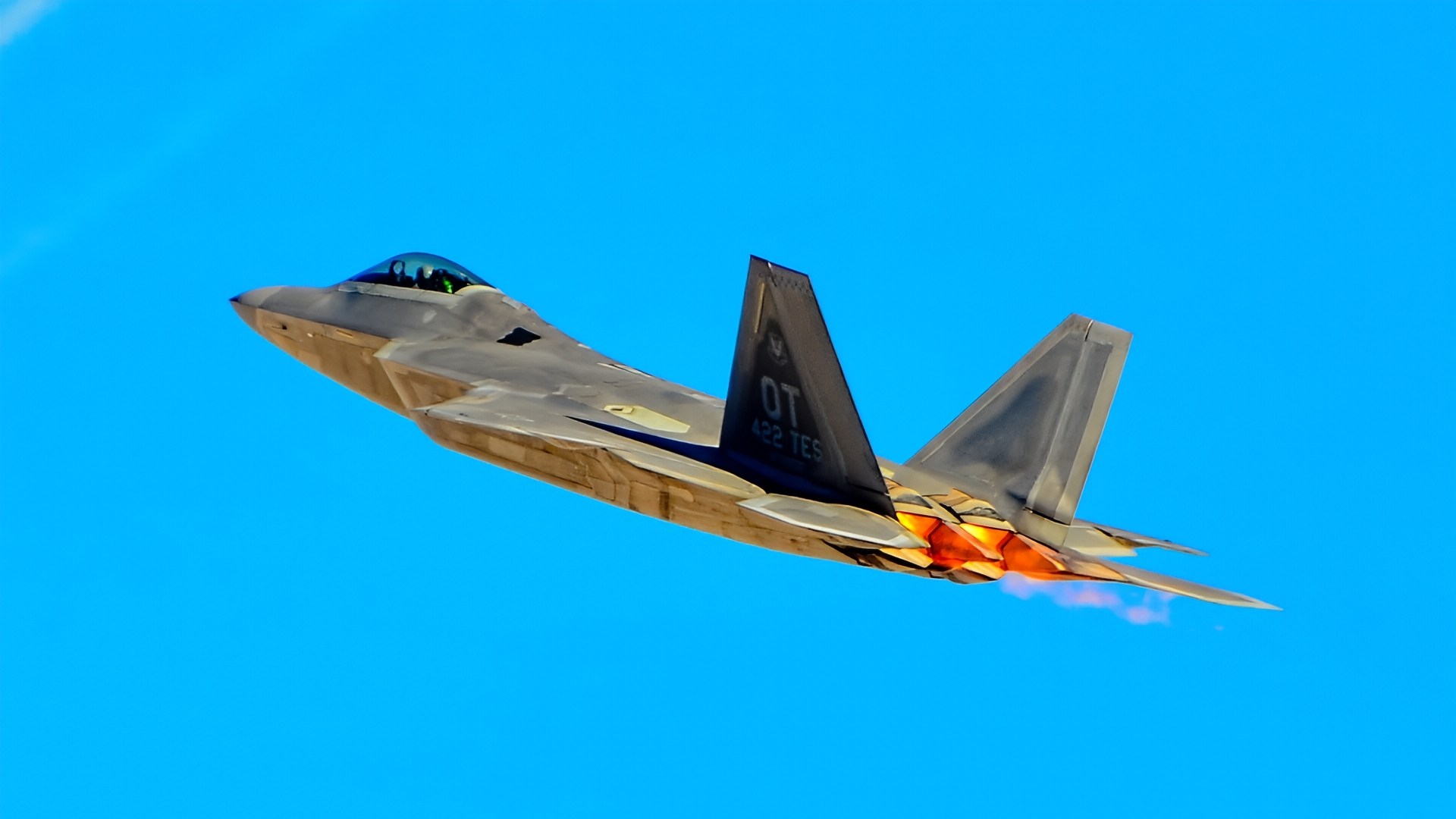
Image Credit: US Air Force.

The F-15EX, the Air Force’s newest fighter aircraft, arrives to Eglin Air Force Base, Florida March 11. The aircraft will be the first Air Force aircraft to be tested and fielded from beginning to end through combined developmental and operational tests. The 40th Flight Test Squadron and the 85th Test and Evaluation Squadron personnel are responsible for testing the aircraft. (U.S. Air Force photo/Samuel King Jr.)
The Houthis stated that they struck vessels belonging to Saudi Aramco in Jizan and Yanbu, both on Saturday.
The report added that only 11 commodity vessels passed through Bab el-Mandeb on Sunday, the lowest level in months.
“Seven of the vessels that passed through Bab el-Mandeb were oil tankers with three of them entering the Red Sea,” Reuters reported of Sunday’s ship traffic. “Two of them are very large crude carriers (VLCCs) heading to the port of Yanbu to load Saudi crude while the third is a Russian-linked ship, the data showed.”
Among the ships that did make it through were the VLCC New Explorer, a Hong Kong-flagged tanker carrying “2 million barrels of Saudi and Emirati crude” to China, as well as a different tanker bringing 1 million barrels of Russian crude, also to China’s Ningbo port, Reuters said.
Origins of the Conflict
The New York Times also published an analysis over the weekend of how the current phase of the Saudi-Yemen conflict began.
The Houthi militia, a Shiite group from the northern part of Yemen, launched a civil war in 2014 with Iran’s backing, taking Yemen’s capital, and has been at varying degrees of war with Saudi Arabia in the more than decade since. The international community backs the non-Houthi government, but the Houthis control the capital and large swathes of Yemen.
After four years of a “fragile truce” in Yemen between the Saudi-backed military coalition and the Houthis, peace talks stalled, and then the conflict again broke into open hostilities once the U.S. went to war with Iran.
“Over the past few weeks, the Houthis and Saudi Arabia have rapidly spiraled into a conflict that could expand into a full-blown war,” the Times said. “Saudi officials express little interest in another clash with the Houthis. Their previous bombing campaign became a decade-long quagmire that depleted the kingdom’s finances, damaged its reputation and contributed to the deaths of hundreds of thousands of Yemenis from violence, hunger and disease.”
The Houthis, the Times added, “apparently believe they have little to lose” in confronting the Saudis once again.
“The Houthis have one solution for every problem in the world, which is to go to war,” Farea al-Muslimi, a fellow at the research group Chatham House, told the Times. “The Saudis solve every problem by trying to shower it with money… and the Houthis by shooting at it.”
And it could get worse.
“There is a real concern that the internal Yemeni war could reignite,” April Alley, who has worked on Yemen peace negotiations at the United Nations and now works for the Washington Institute, told the newspaper.
“The Houthis are good at smelling blood in the water,” Alley added. “What they want is to consolidate their control in Yemen and to gain resources internally and unfettered access to the outside world.”
The U.S. launched a bombing campaign against the Houthis in early 2025, one possibly best known in the U.S. for the Signalgate affair.
“Caught in the Middle”
The Times analysis also examined the plight of everyday people in Yemen, tens of millions of people who are “suffering from widespread deprivation.”
“We’ve had enough of this hardship, and we needed a way out, whether through dialogue or war,” Ayman Abdulhaq, a Taxi driver in Yemen’s capital, told the Times. “People are always looking for a breakthrough, no matter the consequences,” he added.
The Times added that the Saudi ambassador to Yemen, Mohammed al-Jaber, said in a social media post this week that the Saudis would prefer to de-escalate. He also attacked the Houthis for “insisting on a path of escalation and violence.”
About the Author: Stephen Silver
Stephen Silver is an award-winning journalist, essayist, and film critic, and contributor to the Philadelphia Inquirer, the Jewish Telegraphic Agency, Broad Street Review, and Splice Today. The co-founder of the Philadelphia Film Critics Circle, Stephen lives in suburban Philadelphia with his wife and two sons. For over a decade, Stephen has authored thousands of articles that focus on politics, national security, technology, and the economy. Follow him on X (formerly Twitter) at @StephenSilver, and subscribe to his Substack newsletter.


