


The Houthi rebels are considering imposing fees on commercial ships sailing through the narrow Bab el-Mandeb Strait, whose name means “Gate of Tears” in Arabic, which links the southern Red Sea with the Gulf of Aden, a week after declaring a naval blockade on Saudi Arabia, regional sources told Reuters.
The Iranian-proxy group on July 20 declared a maritime embargo against Saudi Arabia and its ports, opening a new front against the U.S. and its allies in the Iran war and expanding attacks on tankers carrying global energy and other supplies to waters beyond the Gulf.
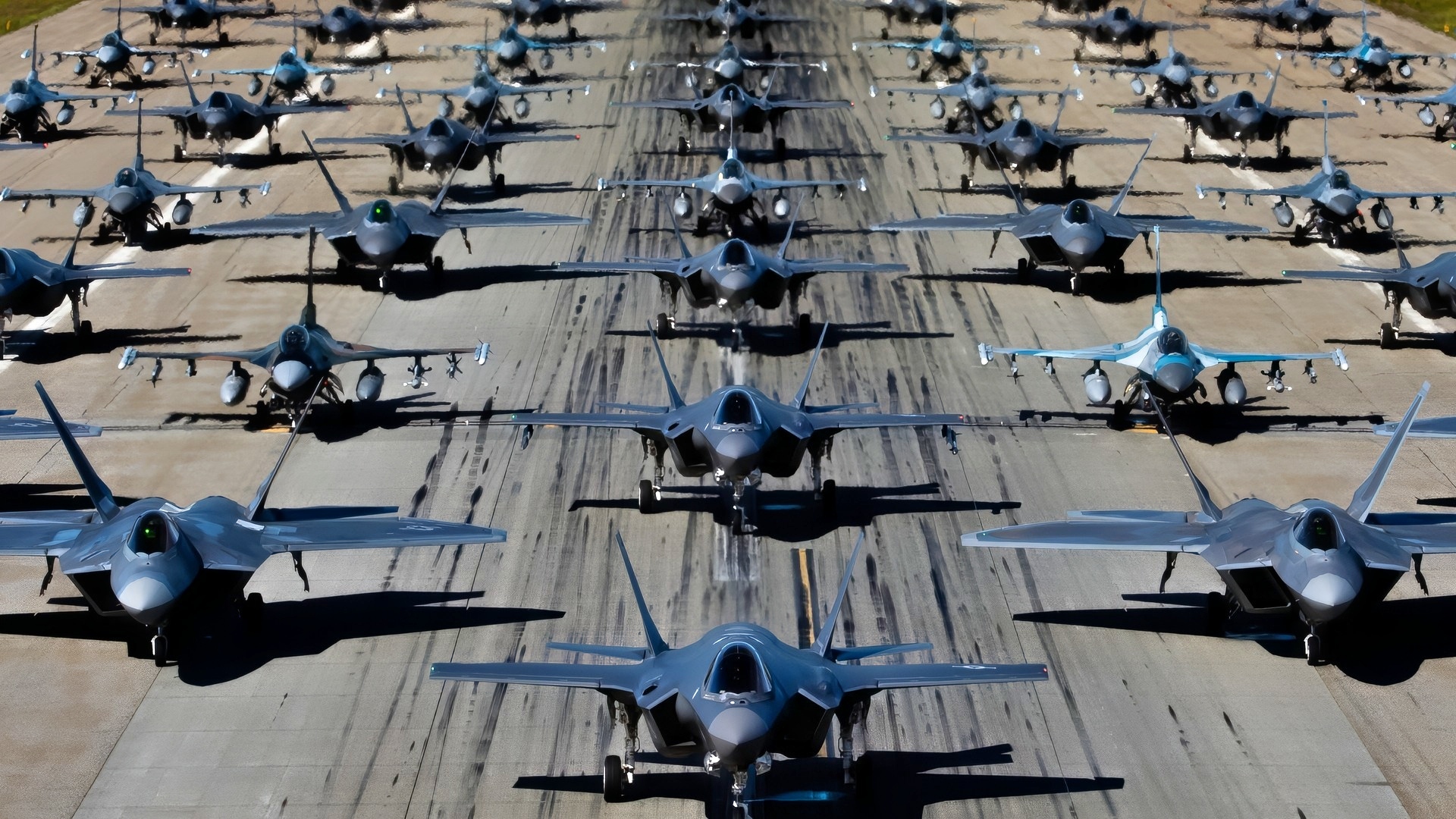
The 354th Fighter Wing conducts a 75-fighter jet formation at Eielson Air Force Base, Alaska, Aug. 12, 2022, in honor of the U.S. Air Force’s 75th Anniversary. This capabilities demonstration included F-35A Lightning II, F-16 Fighting Falcon and F-22 Raptor aircraft from across Pacific Air Forces. (U.S. Air Force photo by Senior Airman Gary Hilton)

F-22 Raptor Firing Missile. Image Credit: Creative Commons.
However, they have allowed oil tankers bound for China to pass safely through the area without incident.
Iranian IRGC Officials Planned This At The Funeral In Tehran
When Houthi officials traveled to Iran earlier in July for the funeral of supreme leader Ayatollah Ali Khamenei, their Iranian counterparts discussed imposing fees on Bab el-Mandeb transits, two regional officials briefed by Tehran told Reuters.
On their return, intelligence reports and other sources confirmed that Islamic Revolutionary Guard Corps (IRGC) commanders and missile advisers were aboard the July 13 Mahan Air flight from Tehran that the Saudi-backed Yemeni government targeted to prevent it from landing in Sanaa.
The airstrike forced the aircraft to divert and land safely in Houthi-controlled Hodeidah instead. The IRGC advisers were there to train Houthi rebels on advanced missile and drone systems. The source also stated that Iran shipped gold on the aircraft to help finance Houthi activities.
Iran denied this, while the Houthis called the allegations “lies and fabrications,” and they have repeatedly maintained that they develop their own weapons and are not acting as an Iranian proxy.
Yemen’s Information Minister Moammar al-Iryani confirmed to Reuters that IRGC personnel and military equipment had been transferred to Yemen, citing intelligence reports.
“Their mission is to strengthen the militias’ military capabilities and prepare them to threaten international maritime security in the Red Sea and the Bab al-Mandab Strait,” he said.
Regional security analyst Mzahem Alsaloum also confirmed the arrival of the Iranian advisers, saying the cargo included components for short- and medium-range missiles and drones similar to systems previously used in attacks on Saudi Arabia and the United Arab Emirates.
Iran Guides Their Proxies On The Planned Fees
The Iranian advisers who were on the aircraft on July 13 were on the ground to guide them in setting up a potential authority to regulate fees through the Bab el-Mandeb, an Arab official told the Times of Israel.
“The Houthis will try to gain access over the Red Sea, and they will try to charge ships if they do,” Afrah al-Zouba, foreign minister-designate with Yemen’s internationally recognized government, said to Reuters.
The Houthis had previously collected fees from some shipping companies transiting the Red Sea and Gulf of Aden during the height of their maritime campaign in 2024 in exchange for safe passage, according to a 2024 U.N. Panel of Experts report, which said it was unable to independently verify the information.
China Is Exempt From The Houthis’ Embargo Of Saudi Ports
However, Chinese ships would be exempt from such fees as they have already passed through the Strait, and the Houthis were supportive of the arrangement, they added.
Reuters added that China has already held direct talks with the Houthis to enable its tankers to sail through the southern Red Sea without being attacked.
China was among the first countries to contact the Houthis directly to request permission for its tankers to safely pass through the Bab el-Mandeb Strait at the southern end of the Red Sea, which runs through Yemen, said the sources.
China is the world’s biggest buyer of Saudi Arabian oil.
China’s Foreign Ministry said it is closely following developments in the Red Sea, adding that the sovereignty and security of countries in the region should be respected, and that the safety and free flow of international shipping routes should be jointly maintained.
“China calls on all relevant parties to continue to properly resolve conflicts and differences through dialogue and consultation, and to de-escalate the situation in the Red Sea,” spokesperson Mao Ning told a regular press briefing on Wednesday.
Insurance costs for ships transiting the Red Sea have reportedly already risen in the wake of the Houthis’ announcement.
Western and Gulf nations are expected to strongly oppose any Houthi transit fees in the Bab el-Mandeb Strait, viewing them as an illegal violation of international maritime law.
However, a lack of political appetite and overstretched naval forces limit immediate options to stop them
About the Author: Steve Balestrieri
Steve Balestrieri is a National Security Columnist. He served as a US Army Special Forces NCO and Warrant Officer. In addition to writing on defense, he covers the NFL for PatsFans.com and is a member of the Pro Football Writers of America (PFWA). His work was regularly featured in many military publications.


