

During the last four years, a period of relative calm reigned over Yemen, a peaceful time in a country that had been rent asunder by war between Saudi Arabia, which backed the Yemeni government, and the Houthis.
Originally a small Shia group of rebels in Yemen’s rugged northern area, the Houthis captured Sanaa, the Yemeni capital, in 2014 with the backing of Iran, triggering Saudi intervention into what was initially a civil war. But the Saudi intervention in Yemen was far from a success.
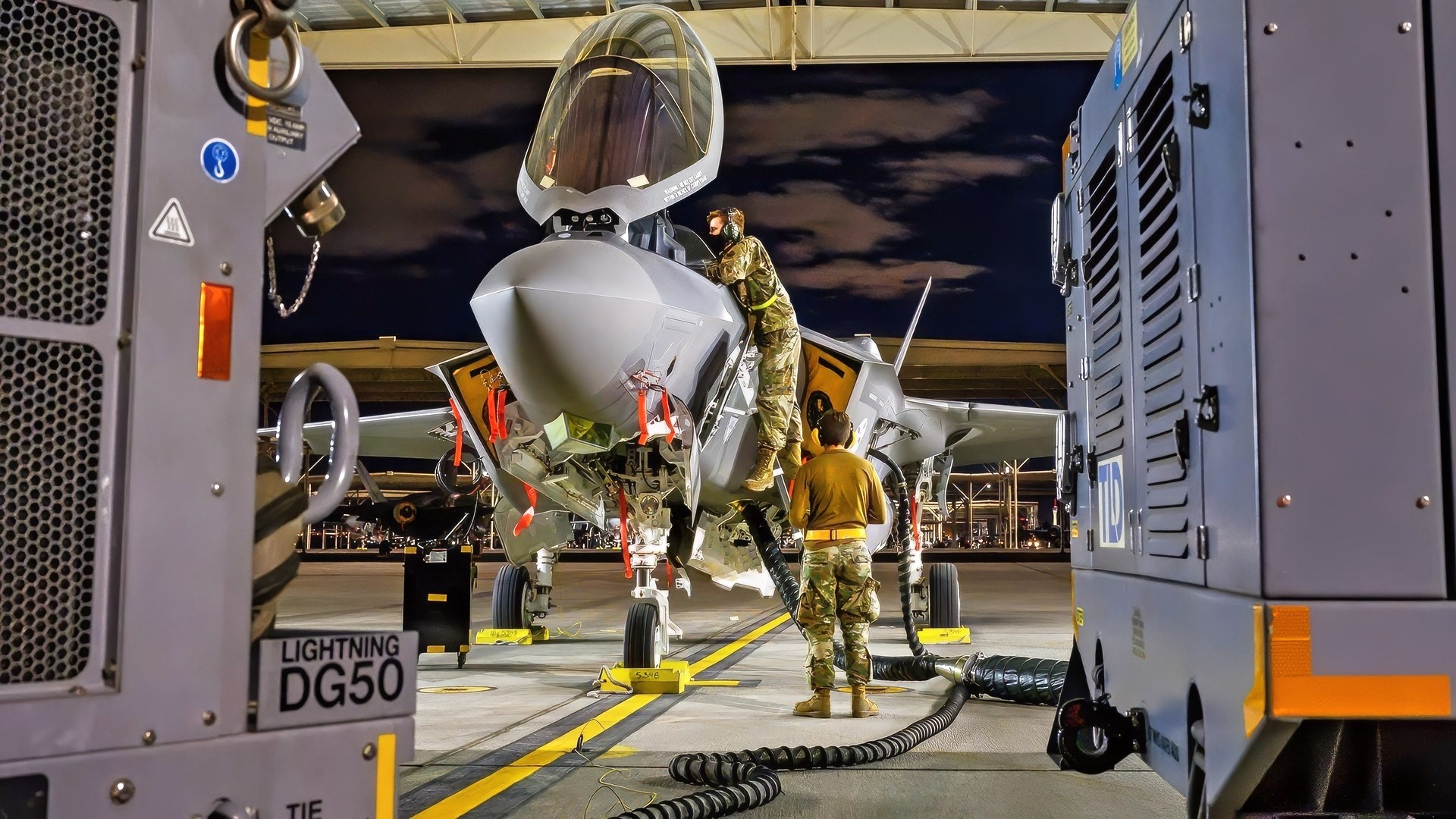
F-35 Fighters Ready. Image Credit: Creative Commons.

Two Dutch F-35 Lightnings patiently wait for their opportunity to maneuver into position to receive more fuel mid-air from a KC-135 Stratotanker over the Arctic Circle, May 31, 2023. The 101st ARW is taking part in Arctic Challenge Exercise 2023, a live fly exercise that serves to advance arctic security initiatives and enhance interoperability in the increasingly dynamic and contested region.
Though the kingdom poured an immense amount of resources into uprooting the Houthis from Yemen, primarily via a concerted aerial bombing campaign, the rebel group would prove particularly hardy, managing to hold on to wide swaths of the country and ultimately tarnishing Saudi standing in the region.
Posting to Truth Social, a social media platform, American President Donald Trump denounced the Houthis. “A year ago the United States of America attacked, very powerfully, the Houthis, for their interference with commerce and trade, by shooting at ships,” the president wrote. “Since that time, and during our conflict with Iran, they have acted very responsibly. Unfortunately, now they are starting up again, shooting at two Saudi Arabian ships last night.”
“Please let this TRUTH serve to represent that if they do this again, the U.S. will hold Iran responsible, in that the Houthis are a Surrogate and/or Proxy of Iran, and major military punishment will be inflicted upon Iran,” the president added, including “of course, the Houthis, themselves, who I am very disappointed with in that they have, until now, acted very professionally and smart.”
The ceasefire between Riyadh and the Houthis now shattered, the Houthis are primed to exact concessions from the kingdom. While the blockade of Saudi oil tankers is certainly a boon to Iran, the Houthis’ main backer in the region, the rebel group would like to expand their authority over one of the poorest countries in the region. Securing access to steady, reliable revenue from oil would greatly aid and legitimize Houthi leadership. The Houthis’ blockade is a crucial part of that calculation.
The Bab el-Mandeb Strait
The focal point of the Houthis’ blockade is the Bab el-Mandeb Strait, a narrow body of water that links the Red Sea and the Gulf of Aden. Though overshadowed by the Strait of Hormuz, Bab el-Mandeb has increased in importance since the outbreak of the war in Iran.
During more peaceful times, much of Saudi Arabia’s oil was transported by tanker through the Strait of Hormuz. But thanks to Iranian stoppering of that key maritime passageway, Saudi oil has instead reached the outside world via a different route: the Yanbu Commercial Port on the Red Sea. Accessed via the East-West pipeline, which roughly bisects the country, the port has provided an alternative to Saudi oil terminals in the east.
Though Yanbu does not entirely offset shipments that would otherwise transit Hormuz, it has helped put a damper on global oil prices.
Yemen’s Oil
Aided by the United Nations, the Houthis and Saudis agreed in principle to a tentative peace agreement that appeared ripe for a long-term deal to end the fighting. But the brutal October 7th attacks in Israel by Hamas, backed by Iran, derailed that peace process after the Houthis joined the fray against Israel.
The crux of the Houthi predicament is oil. Like many neighboring countries in the region, Yemen has substantial energy reserves, which have historically been the country’s most significant export and source of revenue. However, much of Yemen’s oil is in territory held by the internationally recognized and Saudi-backed government.
The Look Ahead
With the war in Iran seemingly far from resolved, the Houthis’ involvement in the Iran war heralds the opening of a new front, one that could prove particularly harmful not only for Saudi Arabia, but for global energy markets too. Under pressure from Iran thanks to the war, Riyadh is perhaps less prepared to deal with the Houthis’ embargo than it would otherwise have been.
And while the Houthi involvement dovetails with Iran’s objectives for the war, there is also an opportunity for the Houthis to extract concessions from their neighbor to the north — an opportunity that has otherwise been elusive: the ability to export oil and generate revenue. Whether that goal can be realized remains speculative, but it will likely need Washington’s approval. And though the American president has expressed his disapproval of the Houthi embargo, his mercurial statements tend to change, preempting predictions. What the future holds — for Saudi Arabia, for the Houthis, and for Iran — remains, for now, guesswork at best.
About the Author: Caleb Larson
Caleb Larson is an American multiformat journalist based in Berlin, Germany. His work covers the intersection of conflict and society, focusing on American foreign policy and European security. He has reported from Germany, Russia, and the United States. Most recently, he covered the war in Ukraine, reporting extensively on the war’s shifting battle lines from Donbas and writing on the war’s civilian and humanitarian toll. Previously, he worked as a Defense Reporter for POLITICO Europe. You can follow his latest work on X.


