
Iran Responds: Iran has continued its retaliation against the United States, launching new attacks on American military facilities in Kuwait and Bahrain. The strikes come as Gulf states intensify their efforts to restore diplomatic talks, while Tehran appears unwilling to engage in negotiations that would hinder its ability to develop nuclear weapons.
The attacks came only hours after the United States carried out another major round of airstrikes against Islamic Revolutionary Guard Corps (IRGC) facilities across Iran, hitting dozens of military targets in what Washington described as retaliation for recent Iranian attacks on U.S. personnel.
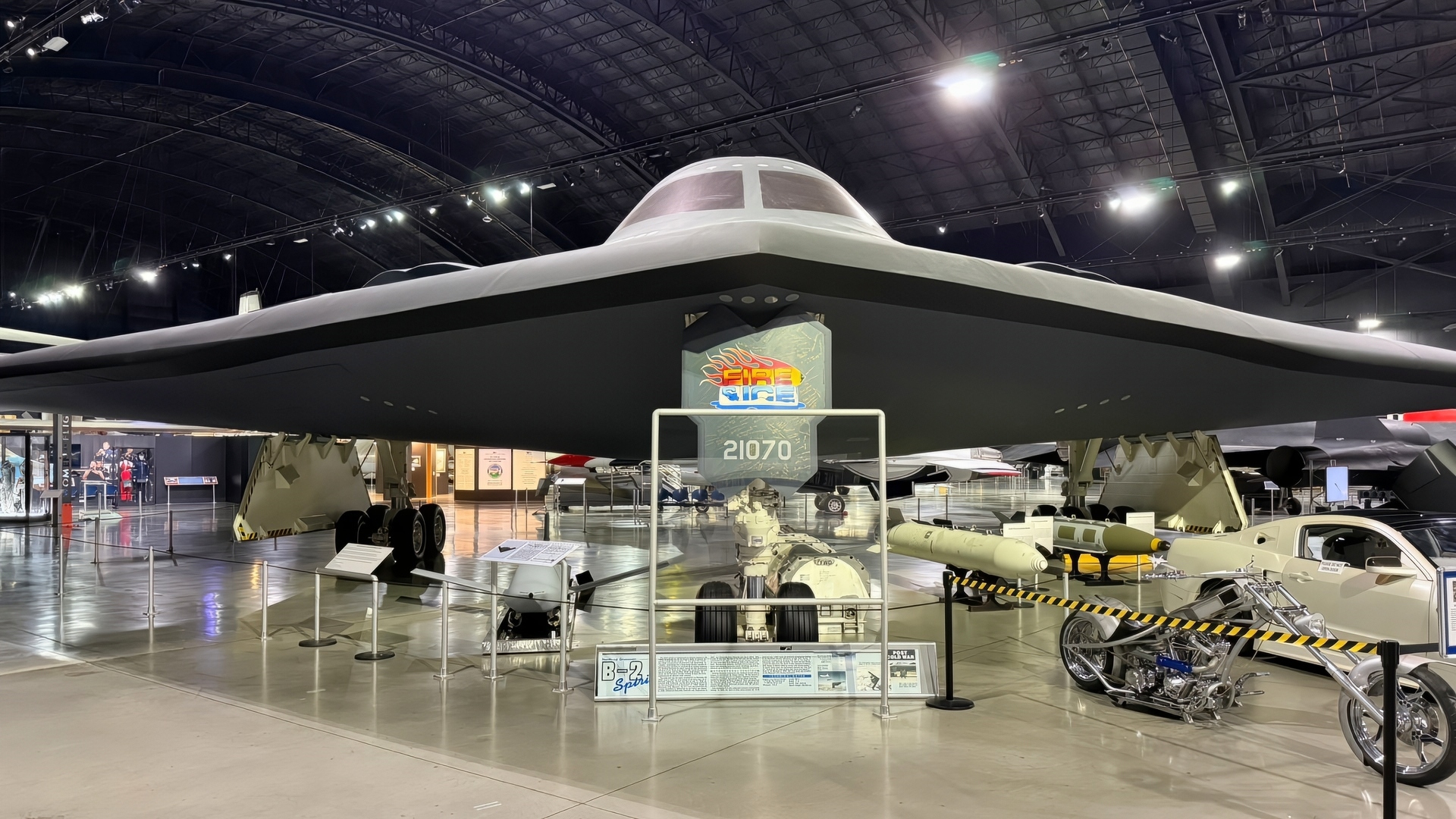
B-2A Spirit On Display. Image by Editor Harry J. Kazianis/National Security Journal.
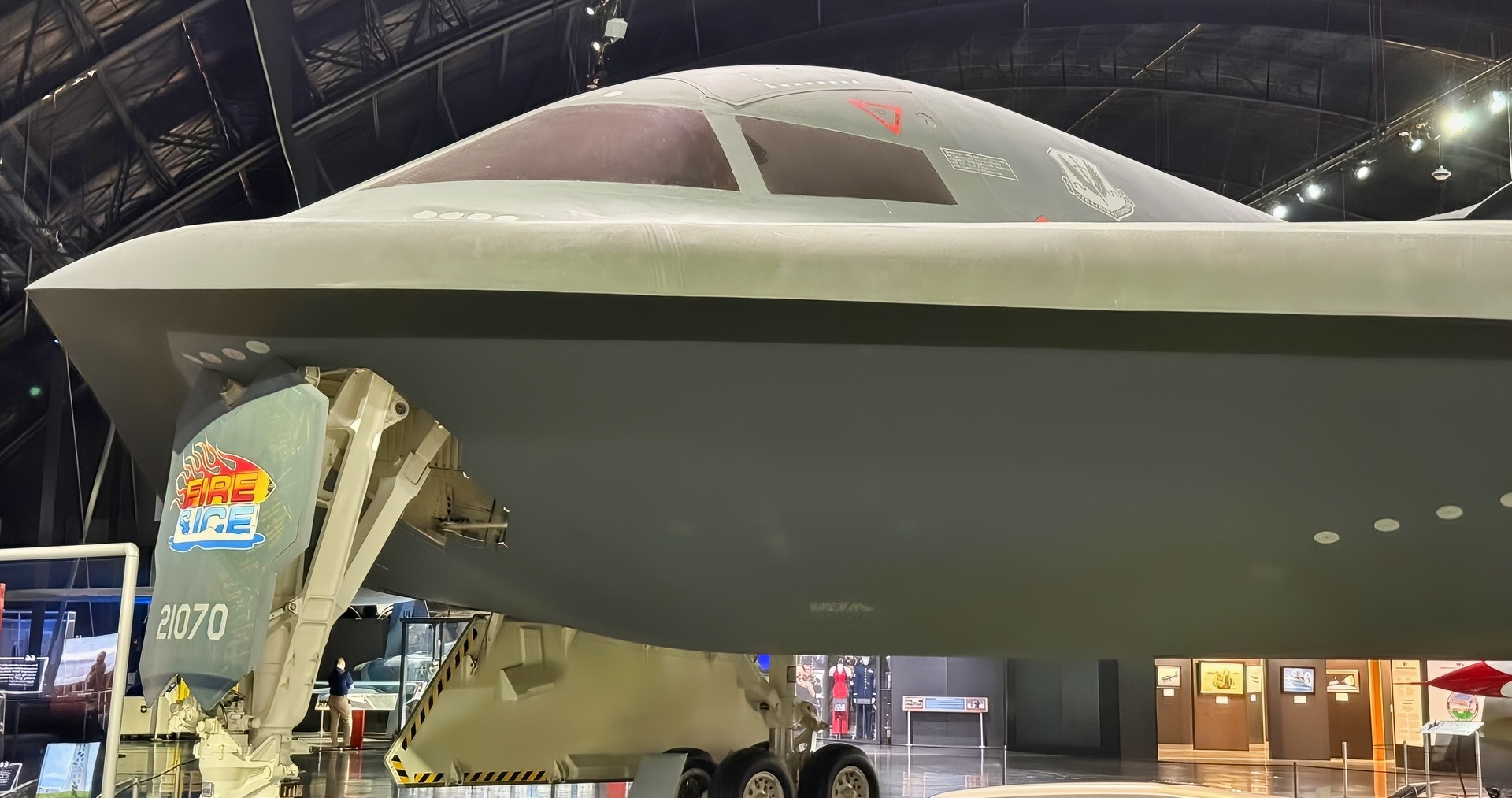
B-2A Spirit Stealth Bomber USAF Museum. Image Credit: Harry J. Kazianis/National Security Journal.
Iran Says It Targeted U.S. Military Infrastructure
Iran announced the latest attacks early on July 31 through the state-run Islamic Republic News Agency (IRNA), claiming its forces had carried out coordinated drone attacks against American military installations in Kuwait and Bahrain in response to the latest U.S. airstrikes.
Drones targeted Ahmad al-Jaber Air Base in Kuwait, where Iran claimed to have hit aircraft shelters, logistics facilities, and satellite communications equipment used by U.S. forces. The semi-official Fars News Agency later reported that Ali Al Salem Air Base, another major U.S. Air Force installation northwest of Kuwait City, was also among Iran’s targets. Iranian state media also claimed that drones struck Sheikh Isa Air Base in Bahrain, alleging that power generation systems, navigation equipment, and support buildings were hit.
Ahmad al-Jaber Air Base hosts both the Kuwaiti Air Force and U.S. military personnel, while Ali Al Salem has long served as one of the U.S. Air Force’s principal operating locations in the Gulf. Sheikh Isa Air Base is regularly used by both the Royal Bahraini Air Force and American aircraft supporting regional operations. Neither Kuwait nor Bahrain immediately confirmed Iran’s claims, and there was no independent confirmation that the reported strikes caused significant damage to any of the installations by Friday morning.
Kuwait Intercepts Drones
Kuwaiti authorities confirmed that Iranian drones had entered the country’s airspace, although officials also disputed any suggestion that the attacks achieved their intended objectives. In a statement published by the Kuwaiti Armed Forces, military spokesman Col. Saud Abdulaziz Al-Atwan said air defense units detected multiple “hostile drones” shortly after dawn and successfully intercepted and destroyed them before they could reach several vital military facilities. He acknowledged that falling debris caused some material damage on the ground but said no casualties were reported.
The statement was the first official acknowledgment from Kuwait that Iranian drones had entered its airspace.
The attacks also prompted a response from Beijing after China’s Foreign Ministry said that a building belonging to a Chinese company in Kuwait had been damaged during the strikes. Foreign Ministry spokesperson Mao Ning told reporters that no Chinese citizens were injured, but urged Kuwaiti authorities to take measures to ensure the safety of Chinese nationals and businesses operating in the country.
Iran Explains Attacks
Iran described the latest strikes as a retaliation for recent U.S. attacks on Qeshm Island, where American airstrikes allegedly killed three members of the same family earlier this week.
In a statement published by IRNA and later published by Fars and Tasnim, the Iranian military said that the operation was launched “in response to the recent aggression by the terrorist U.S. military against our country and its brutal attack on a residential home on Qeshm Island.”
Hormuz Crisis Escalates: America Can’t Bomb Its Way to Winning
The attacks on Kuwait and Bahrain come as Washington and Tehran continue to dispute control over the Strait of Hormuz, with both sides issuing competing accounts of commercial shipping through the waterway on July 31.
In a statement carried by Iranian state television and media and the Islamic Revolutionary Guard Corps (IRGC), Iran claimed its naval forces intercepted two oil tankers after they entered what Tehran described as an “undeclared route” under U.S. military escort.
The IRGC said the vessels ignored repeated warnings from Iranian naval units before they were hit and stopped, while four additional tankers turned back after receiving Iranian warnings.
The claims followed a statement issued by CENTCOM on July 30, saying American naval forces had redirected 24 commercial vessels through the Strait of Hormuz as part of their operations to restrict Iranian-linked vessels from transiting the waterway while maintaining freedom of navigation for all other ships. CENTCOM also rejected previous Iranian claims that commercial shipping could safely transit only with Tehran’s permission.
Trump Convenes Cabinet at Camp David: Iran Crisis Gets Worse
In response to the rapidly escalating military strikes, as well as worsening conditions in the Persian Gulf more generally, President Donald Trump traveled to Camp David on July 31 to convene senior national security officials. According to the White House, the meeting focused on the latest Iranian attacks against U.S. military facilities and ongoing operations in the Strait of Hormuz.
About the Author: Jack Buckby
Jack Buckby is a British researcher and analyst specializing in defense and national security, based in New York. His work focuses on military capability, procurement, and strategic competition, producing and editing analysis for policy and defense audiences. He brings extensive editorial experience, with a career output spanning over 1,000 articles at 19FortyFive and National Security Journal, and has previously authored books and papers on extremism and deradicalization.


Fred T Adams
July 31, 2026 at 2:45 pm
I’m amazed by the inane prophesying about the Iran war.
Statement: you can’t bomb your way into control of the Strait. This is often asserted but it is a prediction of the future based on only one rail of the US’s many-railed attacks. The statement has no validity in the context of this war.
Statement: Iran is winning because the US hasn’t won the war in a fortnight. Disingenuous and utterly untrue. The US can lose only if it loses it’s will to win.
None of this rot will survive the passage of time. Why it is put up, I don’t know, unless purely for anti-US propaganda purposes. Something the Brits should care about, because if the US founders, they will inexorably sink beneath the waves.