

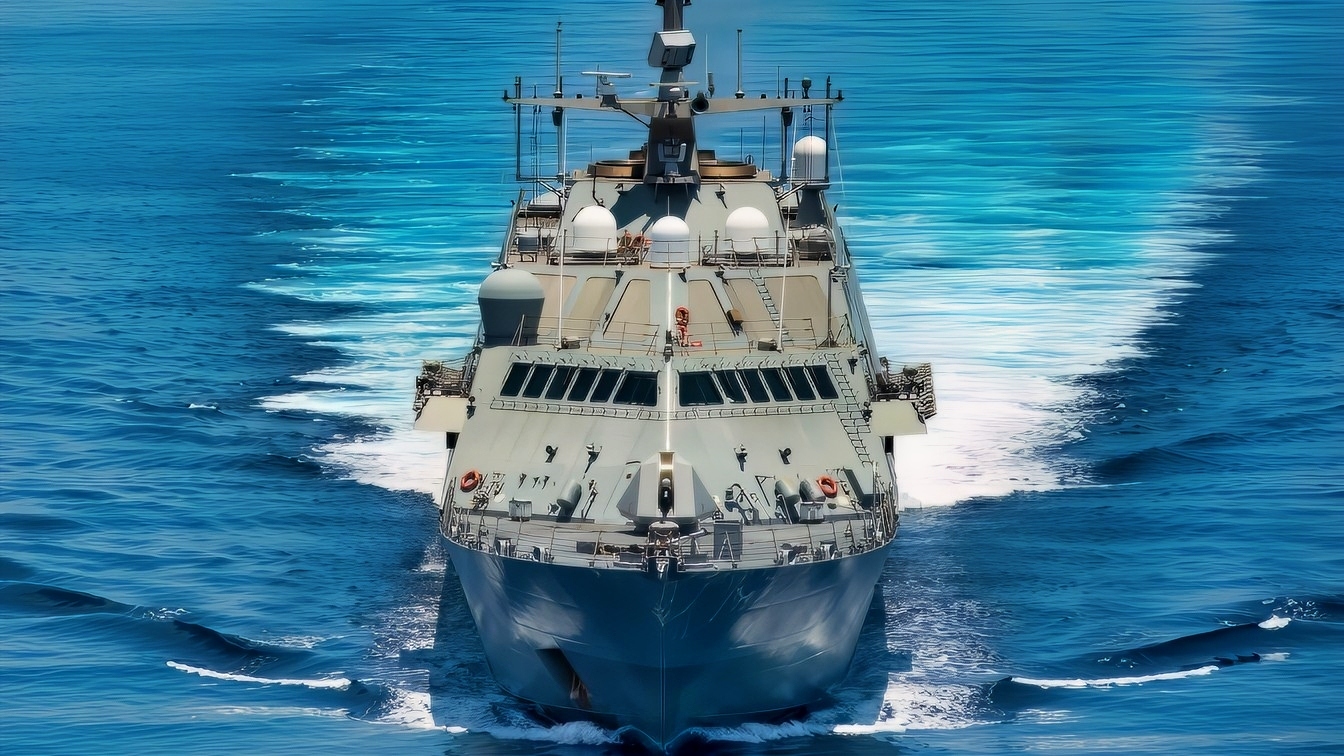
The U.S. Navy officially decommissioned the Freedom-variant littoral combat ship USS Fort Worth (LCS 3) on July 29, 2026, during a ceremony at Naval Base San Diego after nearly 14 years of service.
Commissioned on September 22, 2012, the ship served for nearly 14 years—roughly 56 percent of its intended 25-year lifespan—before being retired early to redirect funds toward fleet upgrades.
The Fort Worth is one of 14 warships that will be decommissioned or inactivated in Fiscal Year 2026 (FY26). The ship didn’t have a stellar reputation with the sailors that served on it. Many of them opined that the LCS stood for “Little Crappy Ship.”
The USS Fort Worth’s career heavily emphasized its role as a test platform for refining LCS capabilities.
What Are The Freedom Variants Of The Littoral Combat Ships?
The LCS was designed to serve as a fast, agile, shallow-draft surface combatant that operates in near-shore (littoral) environments to defeat “anti-access” threats, such as mines, quiet diesel submarines, and fast surface craft.
As a Freedom-class Littoral Combat Ship, it was designed for flexibility using interchangeable “mission packages” (surface warfare, anti-submarine warfare, and mine countermeasures) to address specific threats.
The LCS class consists of two variants, Freedom and Independence, designed and built by two industry teams. USS Fort Worth is a Freedom-class LCS, built in Marinette, Wisconsin.

Littoral Combat Ship Deck National Security Journal Image by Stephen Silver.
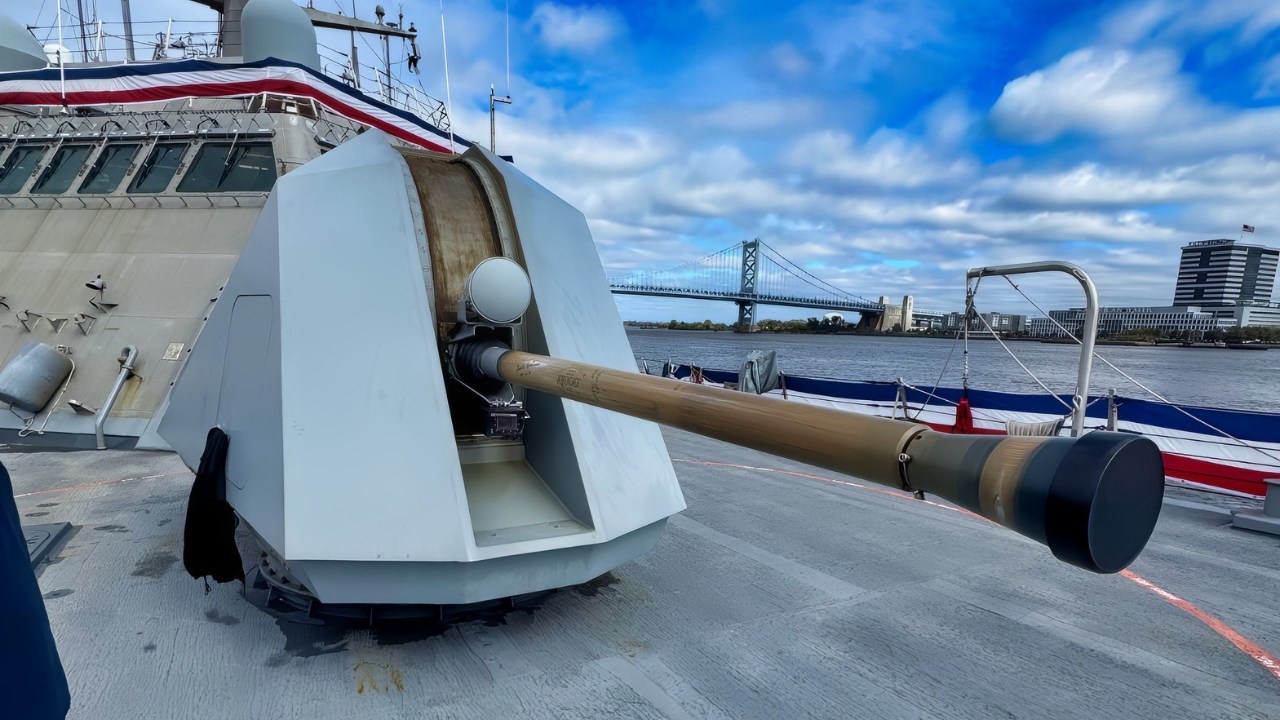
Littoral Combat Ship Deck Gun U.S. Navy. Image Taken by National Security Journal on October 14, 2025.
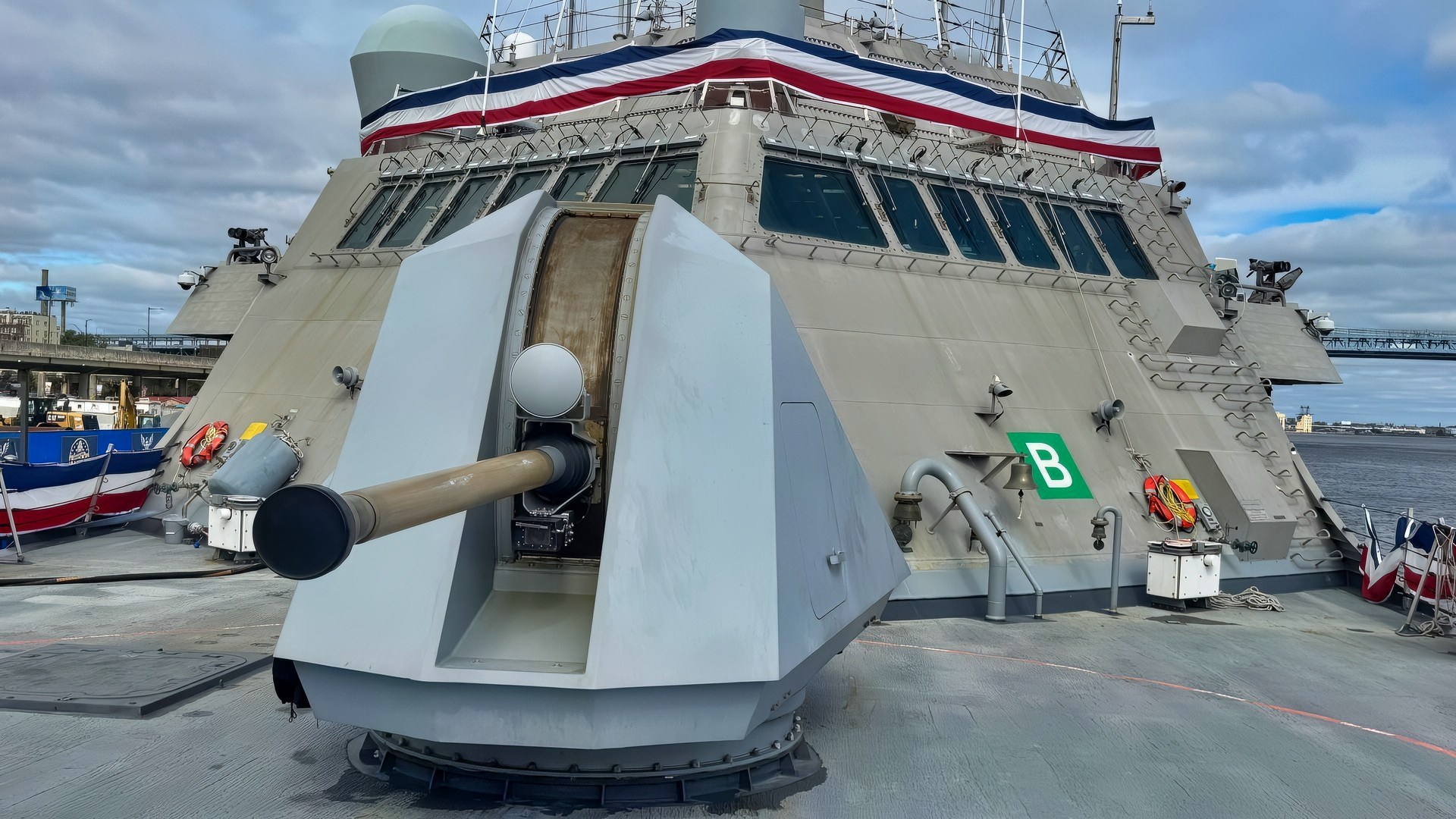
Littoral Combat Ship USS Cooperstown. Image Taken By National Security Journal October 14, 2025.
Austal USA leads the Independence-variant team in Mobile, Alabama, for LCS 6 and the subsequent even-numbered hulls.
The Fort Worth Was Expensive, And Costly To Maintain
The ship, which cost $400 million to build, entered service in 2012. It was originally meant to serve until the late 2030s, but was retired early due to persistent mechanical, design, and cost issues.
Propulsion system failures were constant. The vessel suffered from chronic failures in its gearbox, which connects the diesel engines and gas turbines to the water-jet shafts.
The combining gear was critically damaged back in 2016 when crew members failed to follow proper procedures while testing its engines, rendering the boat functionally unusable.
The Fort Worth was plagued by excessive maintenance burdens and high operating costs, leading to the decision to “cannibalize” parts to support other ships in the fleet.
The Navy initially scheduled the USS Fort Worth’s retirement for 2022, after only ten years of service. However, the Navy repurposed the ship instead, using it to test new technologies at a port in San Diego.
“By retiring early-hull test platforms like Fort Worth, the Navy redirects investments toward upgrading the remaining LCS inventory with enhanced capabilities,” the Navy said in a statement this week. Its retirement helps ensure “the active ships remain relevant, combat-credible, and reliable throughout their service lives.”
Due to the persistent maintenance issues, the ship spent significant time in port rather than on operational deployment, leading to its later role as a mostly pier-side test platform in San Diego.
The LCS Was The “Wrong Ship, At The Wrong Time
The LCS concept came about while the United States was deeply involved in the Global War on Terror. The threat environment that existed for US troops is far different than what they will face in the modern war environment.
The Littoral Combat Ship is not the type of warship that will be needed if the US were to go to war against China in the Pacific.
Whether it would survive is another question. And the cost for an underperforming weapons system was astronomical.
The program is pegged at $60 billion, but a 2023 report from the investigative site ProPublica said the eventual cost could top $100 billion.
“One of the worst boondoggles in the military’s long history of buying overpriced and underperforming weapons systems,” the ProPublica report stated.
The LCS ships are too lightly armored and too lightly armed to survive a shooting war with China or even in the Middle East.
“The Whole Littoral Combat Ship Concept Has Failed”
DanGrazier, the director of the Stimson Center’s National Security reform program, told Responsible Statecraft that the Littoral Combat Ship concept was a complete failure.
The Navy originally had great plans for the Littoral Combat Ship, planning to buy 55 of them. But that number got cut back to 32 after questions arose about the combat viability of the ships. There are now 27.
“It’s a poorly designed ship that [has an] excessive maintenance burden,” Grazier said. Grazier’s point was driven home by a 2022 Government Accountability Office (GAO) report that found the Navy “hasn’t demonstrated that this type of ship can perform its intended missions,” and that it was less likely than its counterparts to withstand combat.
Grazier pointed out the Navy’s penchant for designing elaborate ships and putting all kinds of technology on them only to find that they don’t work as hoped.
“The Navy’s now feeling the real consequences of years of bad policy,” Grazier said to RS. “The size of the fleet is shrinking.”
The Navy Is Investing In the Constellation-Class Of Frigates
The early retirement of the USS Fort Worth was part of a broader Navy effort to shed the early-hull Freedom-class vessels—seven of which were removed from service—to redirect funding toward more capable ships, such as the Constellation-class frigates.
The Constellation class of multi-mission guided-missile frigates of the United States Navy is based on the Italian Navy’s version of the European multipurpose frigate, or FREMM.
The vessel’s 14-year service, while short, earned it two Battle “E” awards in 2013 and 2019.
MORE – How to Make Putin Pay for the Ukraine War
About the Author: Steve Balestrieri
Steve Balestrieri is a National Security Columnist. He served as a US Army Special Forces NCO and Warrant Officer. In addition to writing on defense, he covers the NFL for PatsFans.com and is a member of the Pro Football Writers of America (PFWA). His work was regularly featured in many military publications


