


The Littoral Combat Ship (LCS) program was intended to usher in a new type of lightweight, affordable ship for the U.S. Navy that could operate in shallow waters and combat small-scale threats. We visited an LCS last year and were impressed, but these warships are not exactly loved in naval circles. Nonetheless, we have pictures of our visit below.
However, the program suffered from a multitude of issues, including cost overruns, requirement creep, shifting priorities, and mechanical reliability issues. Consequently, the intended procurement number was lowered, and over time, several LCS boats have been retired to cut costs.

Littoral Combat Ship Deck National Security Journal Image by Stephen Silver.
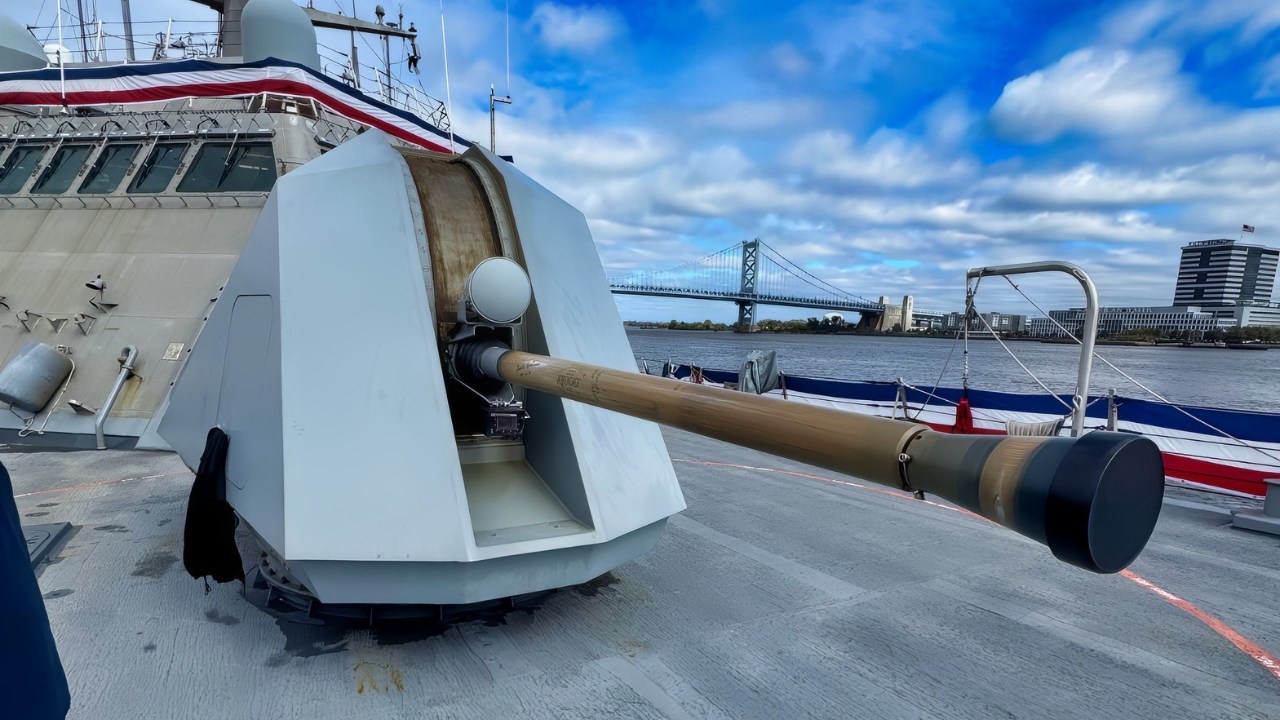
Littoral Combat Ship Deck Gun U.S. Navy. Image Taken by National Security Journal on October 14, 2025.
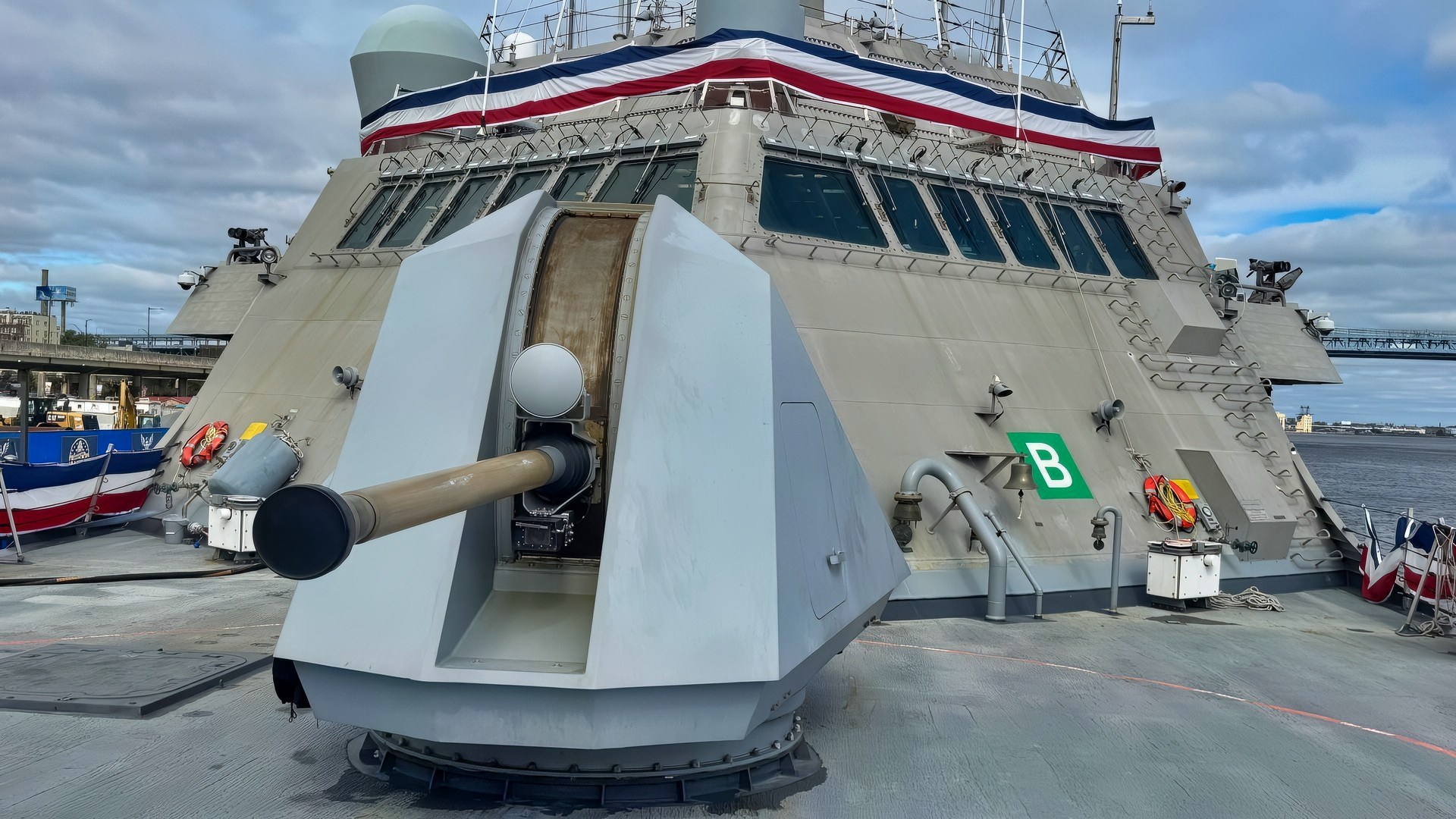
Littoral Combat Ship USS Cooperstown. Image Taken By National Security Journal October 14, 2025.

Littoral Combat Ship USS Cooperstown NSJ Photo Taken On October 14, 2025.
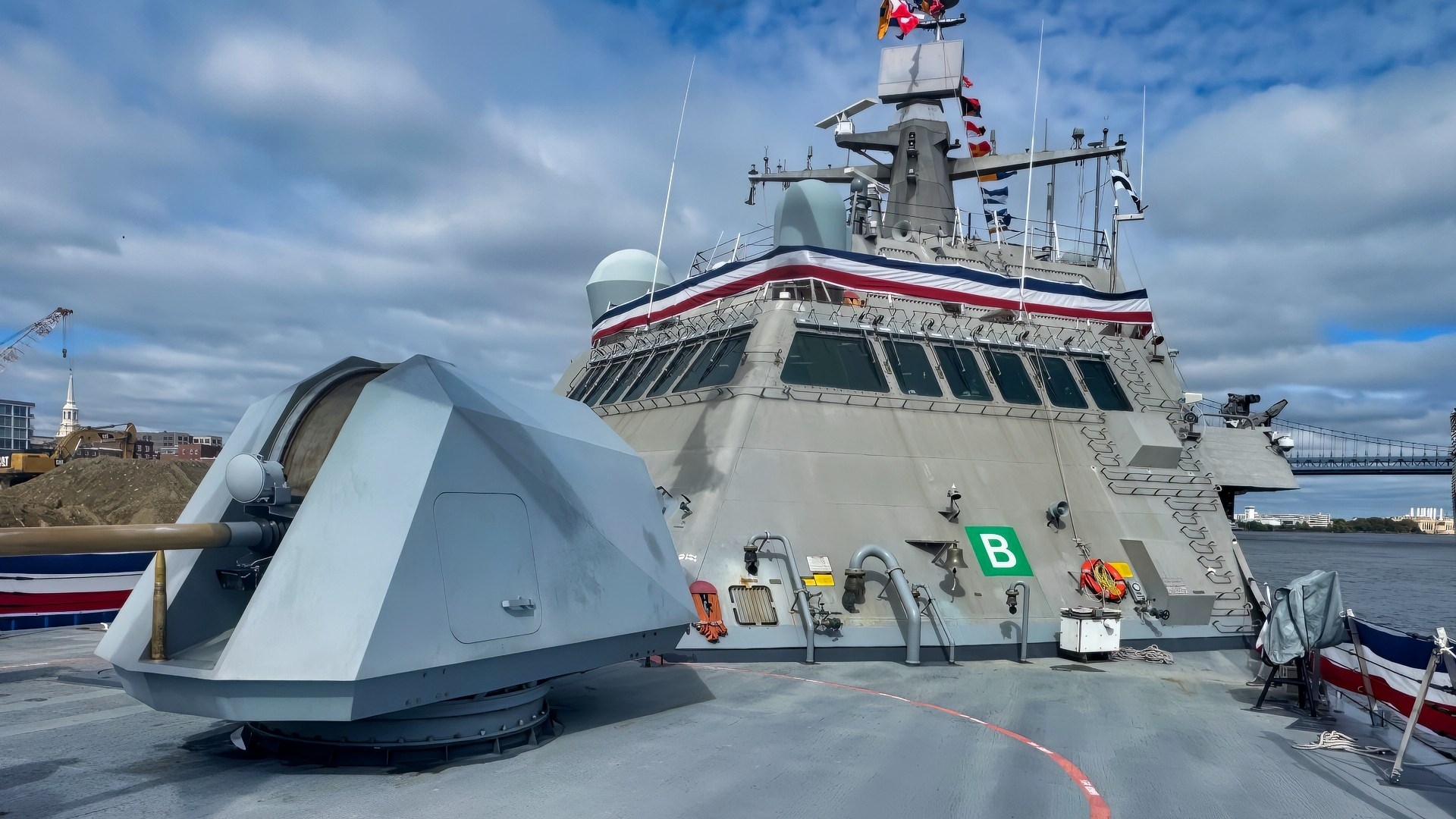
Top of USS Cooperstown Littoral Combat Ship. Taken by National Security Journal on October 14, 2025.
However, a number of ships have been saved from the chopping block to bolster the Navy’s numbers in the event of a potential conflict with China, a task for which the LCS is utterly unprepared.
Development of the LCS Project
After the fall of the USSR, the U.S. Navy found itself in a completely different environment. No longer threatened by the Soviet Navy, the USN now focused on dealing with smaller-scale conflicts against regional powers whose navies were usually larger than a couple of speedboats.
As a result, the Navy sought to develop a new type of warship that could operate effectively in shallow waters near shorelines, known as littoral zones, while remaining flexible enough to handle a range of missions. After the 9/11 attacks, the Navy doubled down on these efforts and developed several new designs, one of which became the LCS.
The LCS was intended to fulfill this need through a combination of speed, modularity, and reduced crew requirements.
The ships were designed to be fast, with speeds exceeding 40 knots, and to operate in shallow waters that were difficult for larger ships to access.
A central feature of the design was the concept of interchangeable mission packages. These packages would allow a single ship to be configured for different roles, including mine countermeasures, surface warfare, and anti-submarine warfare, theoretically allowing the Navy to swap capabilities based on operational requirements.
This idea promised to create a highly versatile fleet without the need for multiple specialized ship classes.
Too Expensive to Maintain
In practice, the LCS was plagued with a number of problems from the very outset. One of the earliest issues was cost growth. The LCS had been intended as an affordable platform, but costs escalated significantly over time.
When factoring in procurement, maintenance, and long-term support, the overall investment reached tens of billions of dollars. Originally, the Navy planned to acquire 52 LCS ships, but that number was later reduced to 40. Furthermore, the cost of operating these ships prompted the Navy to prematurely retire several ships.
Another major challenge was the failure of the modular mission concept, which had been the defining feature of the LCS design. The development of mission modules experienced significant delays, technical problems, and in some cases outright cancellation.
The anti-submarine warfare package, for example, did not mature as planned, leaving a gap in the ship’s intended capabilities.
A Government Accountability Office (GAO) report found that the LCS fleet had not demonstrated the operational capabilities required to perform its missions and that testing of mission systems revealed a range of shortcomings. The ships rarely switched modules as originally envisioned, and many operated with limited or incomplete mission capabilities.
Unreliable and Unfit for Combat
Reliability issues further compounded these problems. The LCS experienced recurring mechanical failures, including propulsion system failures and software malfunctions. Crews often reported spending significant time addressing maintenance issues rather than performing operational tasks.
The Freedom-class ships, in particular, experienced defects in their combining gear transmissions, requiring expensive repairs and reducing operational availability. These technical issues diminished confidence in the platform and increased the overall cost of sustaining the fleet.
In addition to these technical challenges, the LCS faced criticism regarding its combat effectiveness. The ships were lightly armed and had limited defensive capabilities, as the design had prioritized speed and mission flexibility over survivability.
In an internal report conducted in 2012, the Navy concluded that the LCS was ill-suited to combat any naval threats beyond small, lightly armed boats. These concerns have become more exacerbated as the U.S. now faces the possibility of a naval confrontation with China.
As the Navy pivoted its focus to the Indo-Pacific, it became even clearer that the LCS would be more of a liability than an asset in a large-scale naval confrontation with a near-peer adversary.
Gradual Retirement
As a result of these concerns, the Navy gradually curtailed the LCS program through a series of decisions. Procurement was reduced, and attention shifted toward the development of the Constellation-class frigate, a new type of ship designed to provide greater firepower, survivability, and versatility.
The introduction of this new program effectively replaced the LCS as the Navy’s primary small surface combatant, although this project would ultimately be canceled before even a single ship could be built.
At the same time, the Navy began retiring or repurposing existing LCS ships, further reducing their role in the fleet.
Ultimately, the Littoral Combat Ship program failed due to a combination of ambitious design goals, evolving requirements, and shifting strategic priorities.
The modular mission concept did not function as planned, costs exceeded expectations, and reliability issues affected operational performance.
As a result, the Navy concluded that it was more effective to limit further investment in the program and focus on more capable platforms.
In recent times, however, the Navy deemed the LCS a suitable replacement for the Avenger-class minesweepers thanks to its stealth-oriented hull.
About the Author: Isaac Seitz
Isaac Seitz, a Defense Columnist, graduated from Patrick Henry College’s Strategic Intelligence and National Security program. He has also studied Russian at Middlebury Language Schools and has worked as an intelligence Analyst in the private sector.


