


An Iran Deal Is Reportedly Close; What Do We Know About It: There is a supposed deal between Iran and Oman to reopen the Strait of Hormuz that is “on the verge of being finalized” after both countries confirmed they had agreed on coordinates for shipping routes through the critical waterway.
There is, in several places, a growing sense of optimism that a peace deal will be reached and the current conflict will end. But as always, the devil is in the details.
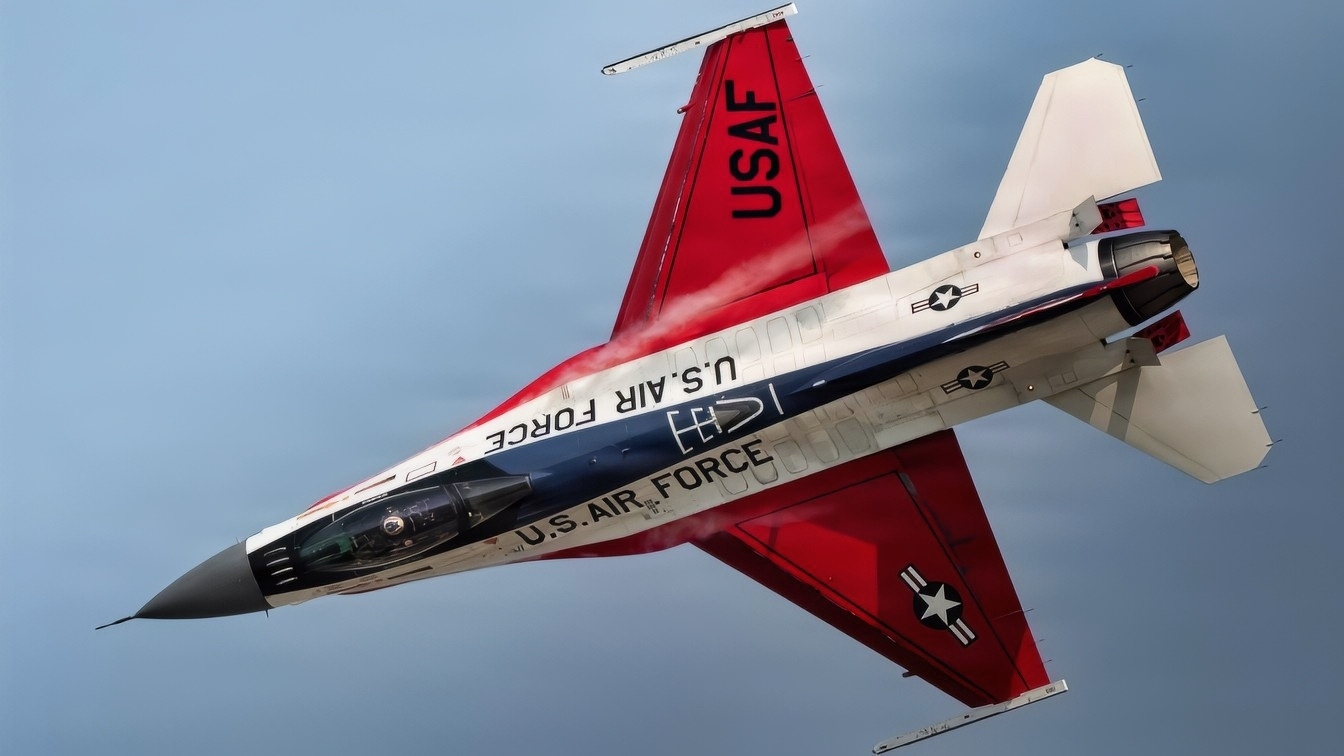
U.S. Air Force Maj. Taylor “FEMA” Hiester, F-16 Viper Demonstration Team commander and pilot, performs aerial maneuvers in a U.S. Air Force F-16C Fighting Falcon during AirVenture at Oshkosh, Wisconsin, July 24, 2026. The F-16, a multi-role fighter aircraft capable of both air-to-air and air-to-ground combat, demonstrates its versatility through dynamic aerial demonstrations across the U.S. and abroad. (U.S. Air Force photo by Staff Sgt. Steven Cardo)
The Strait of Hormuz is where 20 percent of the world’s oil and liquefied natural gas (LNG) flowed through prior to the current conflict. It links the Gulf to the Gulf of Oman with Oman and the United Arab Emirates on one side and Iran on the other.
The narrowest part of the Strait of Hormuz is only about 29 miles wide, lying between Iran and the Omani Musandam Peninsula. However, the navigable channels at this point are only 2 miles wide for inbound and outbound shipping, with a 2-mile buffer zone.
Iran/Oman Deal In “Final Stages,” Tehran Says
Esmaeil Baghaei, the spokesperson for Iran’s foreign ministry, said an agreement is in its “final stages”, while US President Donald Trump said an “all-day negotiation” had taken place with Tehran on Tuesday and added that negotiations were “moving along very nicely”.
“We’ll find out. We’ll know in 48 hours,” he said after being asked if a deal was imminent. “The Strait is going to be open very soon, or they’re going to get hit very hard, and then the Strait is going to be open.”
The Trump administration has been stating that a deal has been “imminent” for several days. However, as of Thursday morning, it has yet to be announced.
The US and Iran had agreed in mid-June to a Memorandum of Understanding (MoU) that would have opened the Strait for 60 days, during which a lasting peace deal would be negotiated.

F/A-18 Hornets and an F-22 Raptor fly in formation during the HUGE 1 flyover practice over the National Mall as part of the America 250 celebration in Washington, D.C., July 3, 2026. The formation showcased current U.S. military airpower during the nation’s 250th anniversary celebration. The flyover highlighted the joint capabilities of America’s armed forces in recognition of Independence Day. (U.S. Air Force photo by Staff Sgt. Lauren Diaz)
Iran, however, had insisted that shipping transiting the Strait coordinate with its new Persian Gulf Strait Authority and that ships must pass through on the Iranian (northern) side of the Strait. And they began firing on ships that did not. On Tuesday, the United Kingdom Maritime Trade Operations (UKMTO) agency reported that a cargo ship had been struck by an unidentified projectile off Oman.
The Deal Does NOT Reopen The Strait Immediately
Baghaei has stated that the agreement with Oman would not automatically lead to the reopening of the Strait of Hormuz.
A deal with Oman, he said, “cannot in itself be interpreted as meaning the waterway has become safe for passing vessels”, arguing that the main source of instability remained the US and its naval deployments, maritime blockade of Iranian ports, and other “hostile measures against the country [Iran] and its interests.”
Iran has indicated it will cease attacks on shipping and reopen the Strait, but insists on control over shipping routes, which Washington has rejected as “unacceptable.” The US has stated that all traffic through the Strait should be free of permits, tolls, or fees. Iran has stated that traffic will not return to the pre-conflict state of free passage.
Iran insists that the mechanism for reopening the waterway must include maritime service fees and broader security arrangements, and that Iran and Oman should jointly manage the strait within their respective territorial waters and retain control of navigation there.
Tolls And Fees Are Still Central To Iran’s Position
Iran has clearly stated that it plans to introduce a fee system for ships passing through the Strait. Under international maritime law, tolls for passage cannot be levied on international straits such as Hormuz.
However, coastal states may charge for services they provide, such as navigational assistance, pilotage, and environmental protection, such as in the Malacca Strait. But those fees are voluntary, and Iran has rejected them.
The US wants free commercial navigation through the waterway without Iranian tolls or any requirement for ships to obtain Tehran’s approval before transiting the strait.
A U.S. official stated that any temporary arrangement for shipping routes through the Strait of Hormuz will not involve permits, approvals, or transit fees from Iran. Washington remains committed to the status quo where no single party controls navigation or transit lanes.
Al Jazeera reported that eight of the world’s largest shipping associations have also urged the United Nations to oppose tolls in the Strait of Hormuz.
In a letter to UN Secretary-General Antonio Guterres and the head of the International Maritime Organization on Monday, and made public on Wednesday, the groups said that allowing authorities to charge vessels to transit the strait would violate international norms and harm the global economy.
Analysts Doubtful That The Strait Returns To The Norm
Sina Azodi, assistant professor of Middle East Politics at George Washington University, said he doubts the status of the Strait of Hormuz will ever return to how it was before the current conflict began.
“The Iranians have learned that by blockading the Strait of Hormuz, they can make the global economy scream,” he said to Al Jazeera. “This is a strategic asset, and I don’t think they will let go of it easily.”
While the US has rejected this, they also want the flow of oil to restart, thereby lowering costs across the board.
“But I think the Iranians have got the upper hand. If they’re able to get the blockade lifted, then they’re in a very, very strong position,” he added.
The other Gulf States and other countries would have to agree to any sort of control over the Strait. And they also know that ceding any control to Iran now just opens up the prospect that they can shut down the Strait at any time in the future.
About the Author: Steve Balestrieri
Steve Balestrieri is a National Security Columnist. He served as a US Army Special Forces NCO and Warrant Officer. In addition to writing on defense, he covers the NFL for PatsFans.com and is a member of the Pro Football Writers of America (PFWA). His work was regularly featured in many military publications.


