

How Trump Plans to “Win” the Iran War and Prepare for the Next One – U.S. President Donald Trump promised that the war with Iran would end with nothing less than total surrender, but as the Iran war approaches the six-month mark, it is becoming more likely that the president will make concessions to the Islamic regime in the hopes of ending the war and opening the Strait of Hormuz.
The Wall Street Journal reported on Sunday, citing U.S. officials, that the president has privately told senior aides he is willing to end the war without a nuclear agreement if Iran fully opens the Strait of Hormuz, ceases its attacks on commercial vessels, and therefore stabilizes the global oil market. The newspaper claimed that Trump is now “laying the groundwork” for a deal with Iran that would see major concessions granted in favor of simply opening the strait that has become the central focus of the war.
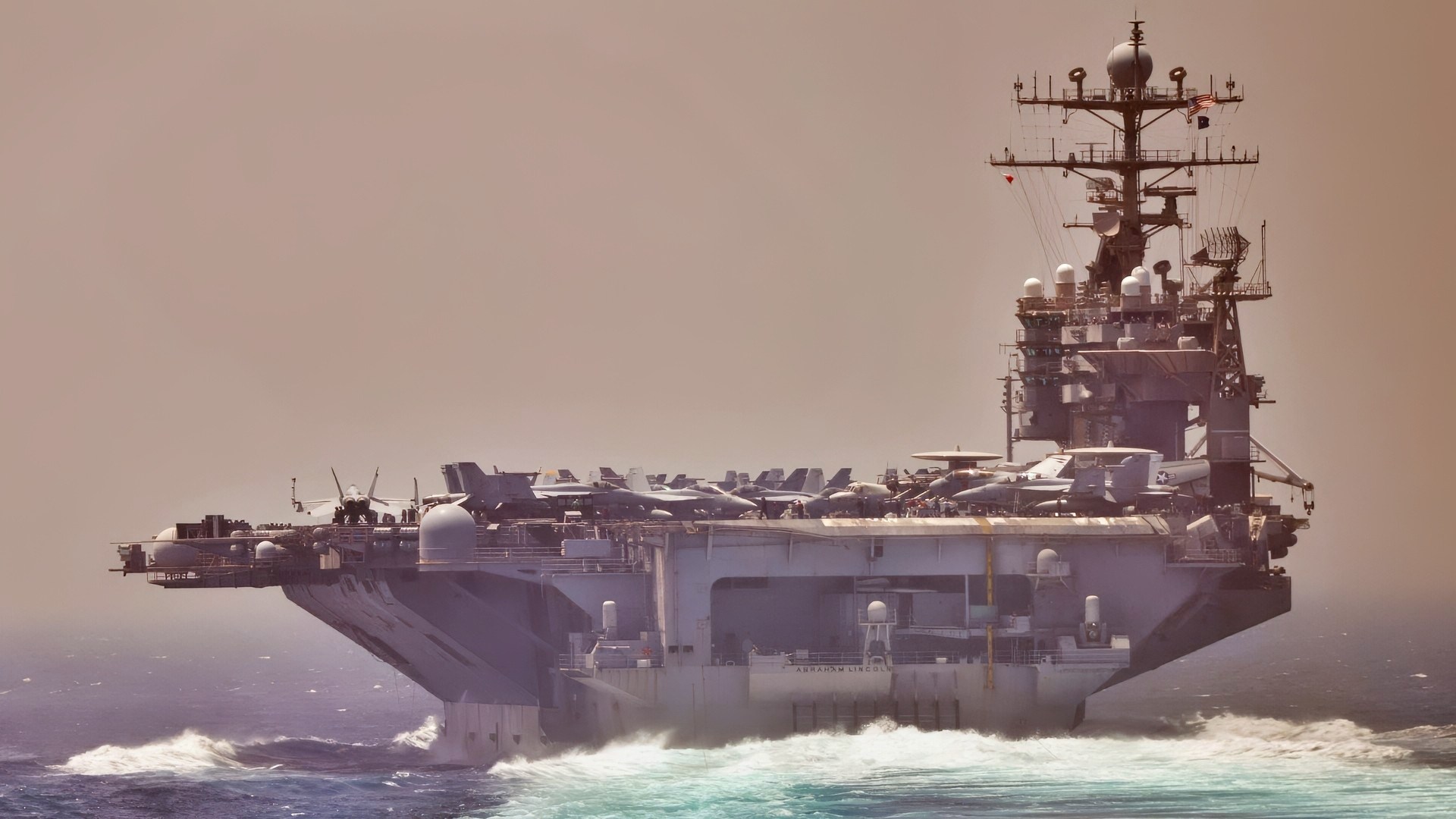
STRAIT OF HORMUZ (May 1, 2012) The aircraft carrier USS Abraham Lincoln (CVN 72), left, and the guided-missile cruiser USS Cape St. George (CG 71) transit the Strait of Hormuz. Abraham Lincoln and Cape St. George are deployed to the U.S. 5th Fleet area of responsibility conducting maritime security operations, theater security cooperation efforts and support missions as part of Operation Enduring Freedom. (U.S. Navy photo by Mass Communication Specialist 3rd Class Alex R. Forster/Released)
Doing so, however, would substantially narrow Washington’s idea of victory – but it comes after months of fighting have severely depleted several categories of U.S. missiles, leaving the administration stuck with no other option than to de-escalate and allow economic pressure on Iran to mount.
But Tehran is calling Trump’s bluff, and the demands for concessions are coming in thick and fast.
Trump Was Preparing to Declare Victory
According to an August 9 report by the Wall Street Journal, Trump had expected an agreement between Iran and Oman to provide the breakthrough he needed, open the strait, and give him a chance to declare victory.
But Iran has made it abundantly clear over the last week that the Iran-Oman deal, if it arrives, does not mean that the strait will be reopened, with Mohammad Bagher Zolghadr, secretary of Iran’s Supreme National Security Council, listing six demands on Saturday, August 8, that Washington must meet before the strait is reopened.
Those demands include a permanent end to U.S. military threats and operations against Iran and its allies, the withdrawal of U.S. forces from around Iran, an end to the U.S. naval blockade, compensation for wartime damage, the lifting of sanctions, and the unconditional release of frozen Iranian assets.
If Trump were to accept those demands—and given the circumstances, he may well do so—it would represent a significant retreat from the conditions he set far earlier in the conflict.
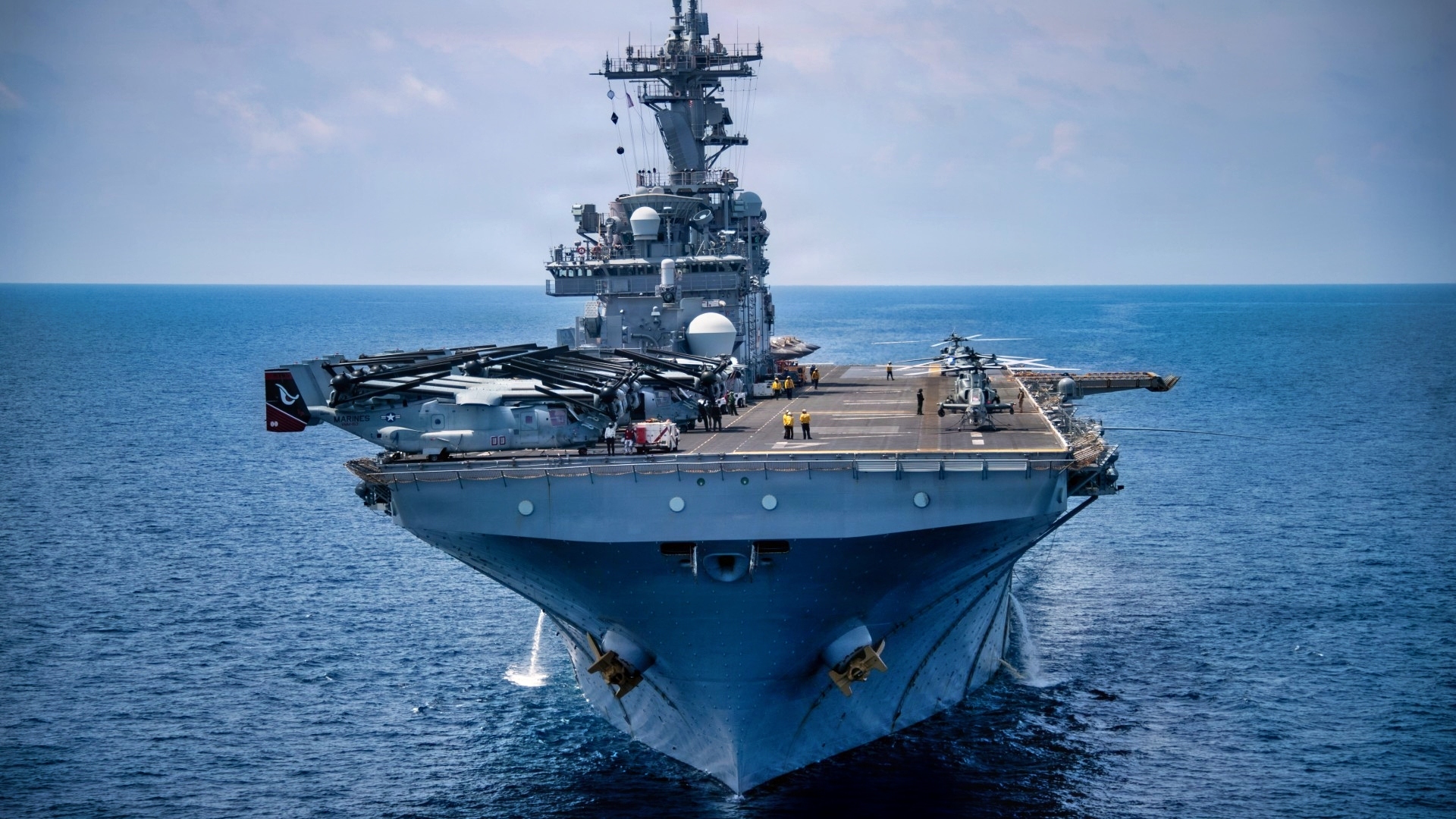
Wasp-class amphibious assault ship USS Boxer (LHD 4) transits the South China Sea, June 8, 2026. Boxer, flagship of the Boxer Amphibious Ready Group, is underway with the 11th Marine Expeditionary Unit in the U.S. 7th Fleet area of operations. U.S. 7th Fleet, the Navy’s largest forward-deployed numbered fleet, routinely interacts and operates with allies and partners to preserve a free and open Indo-Pacific. (U.S. Navy photo by Mass Communication Specialist Seaman Eliora Sims)
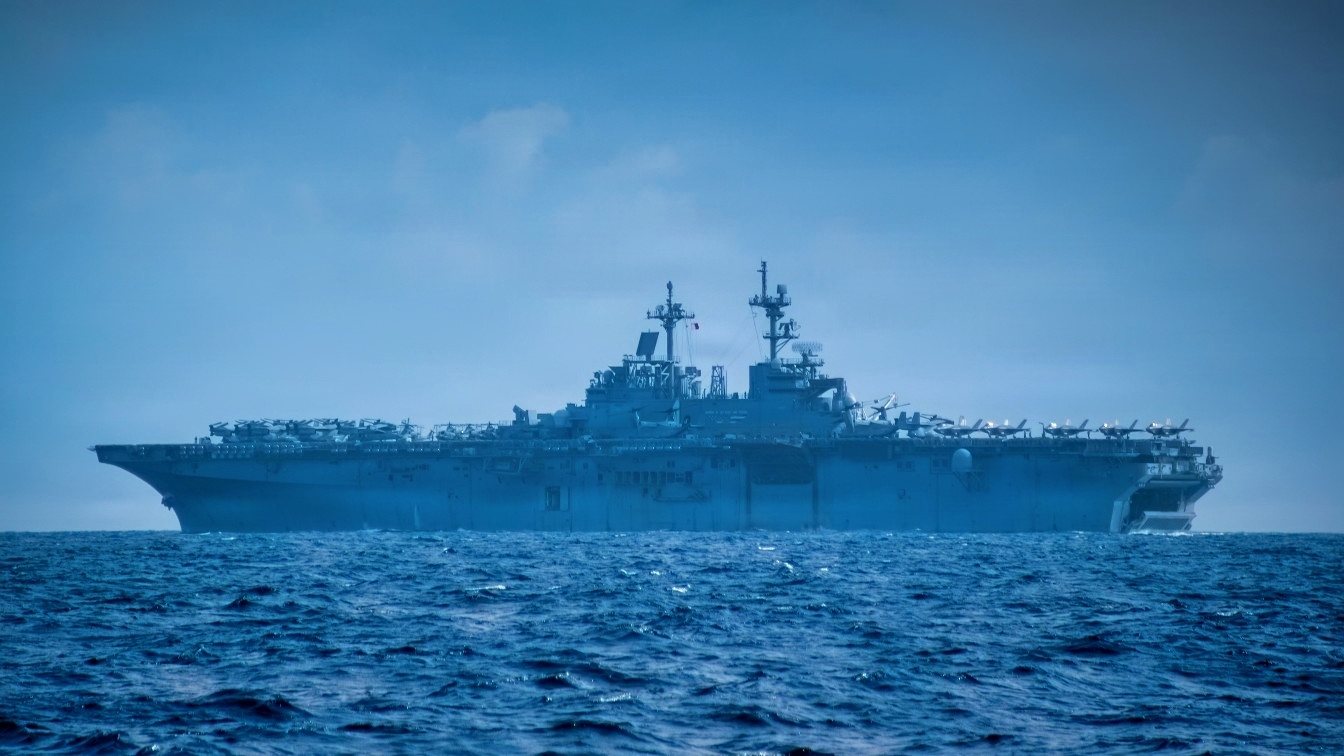
Wasp-class amphibious assault ship USS Boxer (LHD 4) transits the South China Sea, June 4, 2026. Boxer, flagship of the Boxer Amphibious Ready Group, is underway with the 11th Marine Expeditionary Unit in the U.S. 7th Fleet area of operations. U.S. 7th Fleet, the Navy’s largest forward-deployed numbered fleet, routinely interacts and operates with allies and partners to preserve a free and open Indo-Pacific (U.S. Navy photo by Mass Communication Specialist Seaman Eliora Sims)
The Journal reported that the president is now prepared to leave unresolved some of the issues that once defined a U.S. victory, including a comprehensive agreement over Iran’s nuclear program.
Instead, Trump may now accept assurances that Tehran’s nuclear capabilities remain sufficiently degraded to prevent an immediate threat, while leaving negotiations over a longer-term nuclear settlement for later. The administration could then point to the damage inflicted on the Iranian military and its nuclear infrastructure during the war as evidence that the campaign achieved its objectives, rather than forcing Tehran to surrender or permanently dismantle its nuclear program, which is clearly unlikely to happen at this stage.
Trump “Low-Keying It” on Iran
Speaking to Axios on Sunday, the president talked about the situation with Iran and suggested that the United States is now “low-keying it” rather than immediately returning to large-scale military operations.
“We are only semi-negotiating with them,” Trump also said during a brief phone call, adding that Washington is watching Iran struggle with “huge inflation” and a lack of revenue. Trump argued that Tehran is “in very bad shape” economically and is struggling to pay its troops, with the continuing U.S. naval blockade adding to the pressure.
The comments mark a notable and remarkable change from only a week ago, when the president was reportedly close to ordering a return to major combat operations. The president’s assertion that Iran has “no money” is curious, however, because if Iran’s demands are met, Tehran could be looking at investments in the hundreds of billions of dollars.
Preparing for the Future
As the president prepares to redefine victory, the Trump administration is attempting to repair the damage to U.S. weapons inventories incurred so far in the war.
The Washington Post reported this weekend that Deputy Defense Secretary Stephen Feinberg sent defense industry executives a memo on Wednesday, giving them 21 days to submit plans to dramatically accelerate production and delivery of critical weapons.
“Years-long development cycles are not acceptable,” he said, addressing a long-standing problem with the U.S. defense industry. “We must dramatically accelerate our program schedules and expand our production capacity now.”
The problem for Washington is that those orders cannot quickly replace what has already been fired, even as Feinberg calls on defense contractors to speed up timelines. Estimates from the Center for Strategic and International Studies suggest that rebuilding Patriot inventories to pre-war levels could take until around mid-2029, with THAAD stocks recovering later that year and Tomahawk inventories potentially not returning to their previous level until late 2030 or early 2031.
Ending the war in Iran, then, would do more than relieve pressure on global oil markets – it would also stop Washington burning through weapons it may need for the next conflict. And if there is anything good that comes from the months-long ordeal, besides destroying much of Iran’s nuclear infrastructure, it could be that the United States takes defense planning far more seriously and dramatically ramps up missile production.
About the Author: Jack Buckby
Jack Buckby is a British researcher and analyst specializing in defense and national security, based in New York. His work focuses on military capability, procurement, and strategic competition, producing and editing analysis for policy and defense audiences. He brings extensive editorial experience, with a career output spanning over 1,000 articles at 19FortyFive and National Security Journal, and has previously authored books and papers on extremism and deradicalization.


