

On Saturday, 8 August, Ukrainian President Volodymyr Zelenskiy announced that updated intelligence reports on Russia’s preparations for its next offensive indicate that as many as 50,000 soldiers from the Democratic People’s Republic of Korea (DPRK) could now be deployed in theatre.
“A decision has been made for 30,000 to 50,000 North Koreans to be deployed on the territory of Russia”, he said.

North Korean ICBM. Image Credit: KCNA/North Korean State Media.
This is a higher figure than the initial estimate in July that 30,000 Korean People’s Army (KPA) soldiers would be dispatched to the front lines in Ukraine.
The Ukrainian President made the announcement on his X page, but did not elaborate on the sources for this intelligence data.
In the past, however, the Ukrainian secret services have been, as they say, “punching well above their weight” in their efficiency and adaptability.
A recent assessment in Forbes, one of the outlets that has been covering the war in Ukraine in granular detail, describes them as “one of Kyiv’s most effective weapons.”
One of the former CIA operations officers who worked with Kyiv’s services from the early days of the war described the Ukrainians in the Forbes piece as having “approached the challenge [of the Russian invasion] with the same sense of determination many Americans felt after 9/11. There was an understanding that the stakes were existential and the only option was to keep moving forward.”
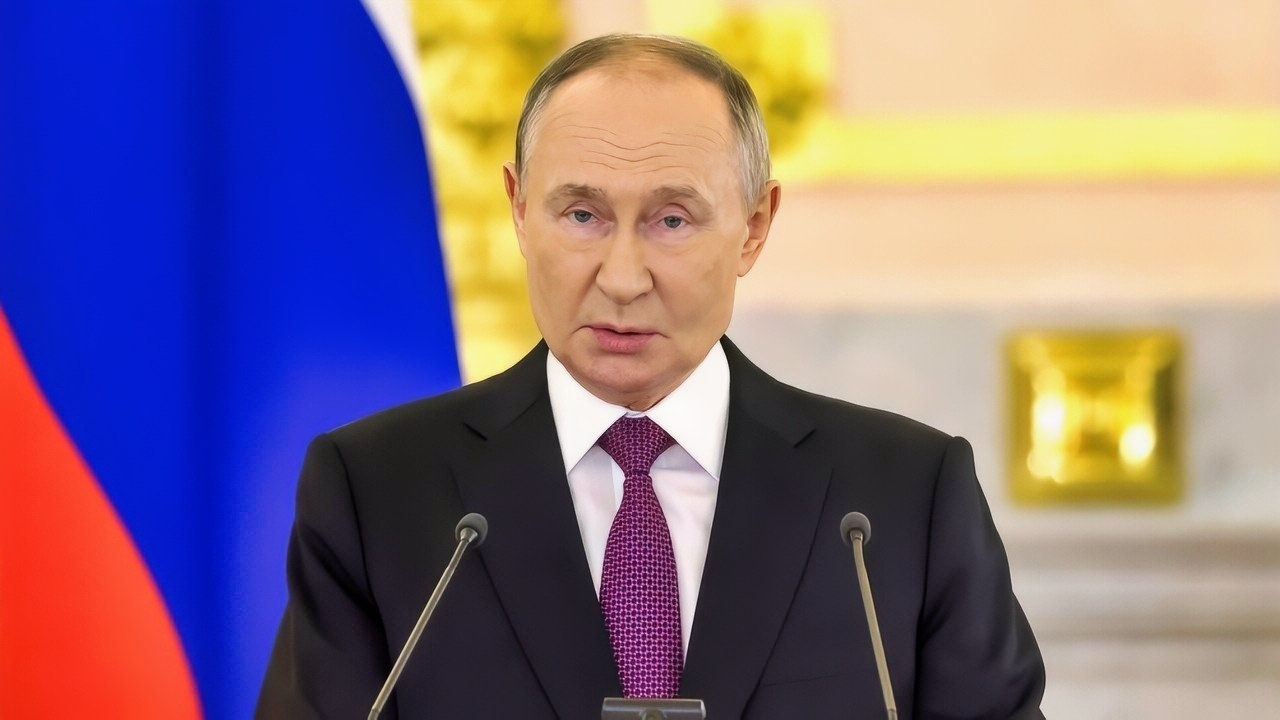
Kremlin Speech by Putin. Image Credit: Creative Commons.
Zelenskiy also expressed his pronounced concerns about the increasing military cooperation between the DPRK and Russia.
He warned that Pyongyang’s troops, which have little to no combat experience, are now gaining significant knowledge of battlefield operations.
Russian President Vladimir Putin and North Korean leader Kim Jong Un signed a comprehensive strategic partnership treaty during Putin’s June 2024 visit to the capital Pyongyang. That pact includes a mutual assistance provision that, should either country face external aggression, obligates the DPRK to assist a treaty partner, which the DPRK cites as justification for its deployment.
Increasing Missile Performance and Transfer of Technology
But the greater concern, from his perspective, is the invaluable insights the DPRK is gaining from its exposure to, and Moscow’s active transfer of, advanced defense industrial technology to Pyongyang.
Last month it was revealed that Russian engineers and missile design specialists have been able to improve the accuracy of the DPRK’s KN-23 and KN-24 short-range ballistic missiles (SRBM) on an order of up to as much as 3000 percent.
Zelenskiy was explicit about the degree to which these missile improvements present a dramatically increased danger from missile attack to Ukraine, as well as to other nations.
“All of this poses a threat to every country in Asia that lies within range of North Korean missiles,” he said. The Russians’ design improvements to the DPRK weapons were developed in such a manner that this cooperation between Moscow and Pyongyang has led the Ukrainians and others to describe the Ukraine theatre of war as “a ballistic missile lab” that will cause problems for many years to come.
Zelenskiy revealed that his country’s own design analysis specialists had discovered the design changes that Russia had made to the North Korean missiles when some of the DPRK’s Russian-improved models had been discovered – presumably either partially or completely unexploded after they had been fired and then soft-landed on Ukrainian territory – but he did not disclose the locations they were retrieved from.
“It is absolutely clear that North Korea will continue to build its experience in modern warfare, receive licenses from Russia, and receive all kinds of military tools from them,” he said.
Potential Exchange of Intelligence Data
Zelenskiy used the opportunity to call on Seoul to engage in closer cooperation with Kyiv. He appeared to propose that Kyiv offer its insights into the improvements that the DPRK is making to its weaponry with Russian assistance.
This would be in exchange for the Republic of Korea (ROK) supporting Ukraine’s need for more air and missile defense capabilities – a discipline in which Seoul’s defense industry is well-versed.
Zelensky said that Ukraine “would very much like to receive support from South Korea in an area where we have a shortage”, referring to Ukraine’s deepening crisis in a shortage of air defense system missiles.
“We are ready to work on the Drone Deal and other areas as well,” he said, and he added that Ukrainian diplomats “are in contact” with Seoul to push potential deals.
This month, a representative from the HUR, Ukraine’s military intelligence service, told the Reuters news service that the DPRK missile unit has begun deploying to western Russia and will be equipped with 120 ballistic missiles and six launchers for strikes against Ukrainian units.
About the Author: Reuben F. Johnson
Reuben F. Johnson has thirty-six years of experience analyzing and reporting on foreign weapons systems, defense technologies, and international arms export policy. Johnson is the Director of Research at the Casimir Pulaski Foundation. He is also a survivor of the Russian invasion of Ukraine in February 2022. He worked for years in the American defense industry as a foreign technology analyst and later as a consultant for the U.S. Department of Defense, the Departments of the Navy and Air Force, and the governments of the United Kingdom and Australia. In 2022-2023, he won two awards in a row for his defense reporting. He holds a bachelor’s degree from DePauw University and a master’s degree from Miami University in Ohio, specializing in Soviet and Russian studies. He lives in Warsaw.


