
Ukraine struck another major Russian oil refinery overnight, this time over 900 miles from the Ukrainian border.
The strikes, which took place overnight into August 11, are just the latest in a long string of attacks on Russian infrastructure deep behind the front lines.
Artillery Test Creative Commons Photo
The Ukrainian General Staff announced that its forces struck the Orsknefteorgsintez refinery in Orsk, in Russia’s Orenburg region near the border with Kazakhstan.
A fire was reported at the facility following the attack, though the full extent of the damage was not immediately clear.
The strike is significant, marking another major blow to Russia’s fragile but critical energy industry.
The refinery has an annual processing capacity of roughly 6 million metric tons of crude oil and produces gasoline, diesel, aviation fuel, fuel oil, and other petroleum products.
Ukraine Hits 43 Russian Targets
The Orsk attack formed part of a much larger overnight operation by Ukrainian forces.
Ukraine’s Unmanned Systems Forces said its units struck 43 locations across Russia and Russian-occupied territory, including military logistics facilities, ammunition and supply depots, and energy infrastructure.
Commander Robert “Magyar” Brovdi, who leads Ukraine’s drone force, said that strikes also destroyed a Russian Buk-M3 air defense system and hit a Wildberries logistics facility in Russia’s Voronezh region. Russian authorities also said one person was killed and two others were injured in an attack on the logistics center.
Ukraine also claimed to have struck a vessel belonging to Russia’s shadow fleet in the Black Sea – another example of Kyiv targeting vessels and infrastructure connected to the network that Russia uses to transport oil and circumvent Western sanctions.

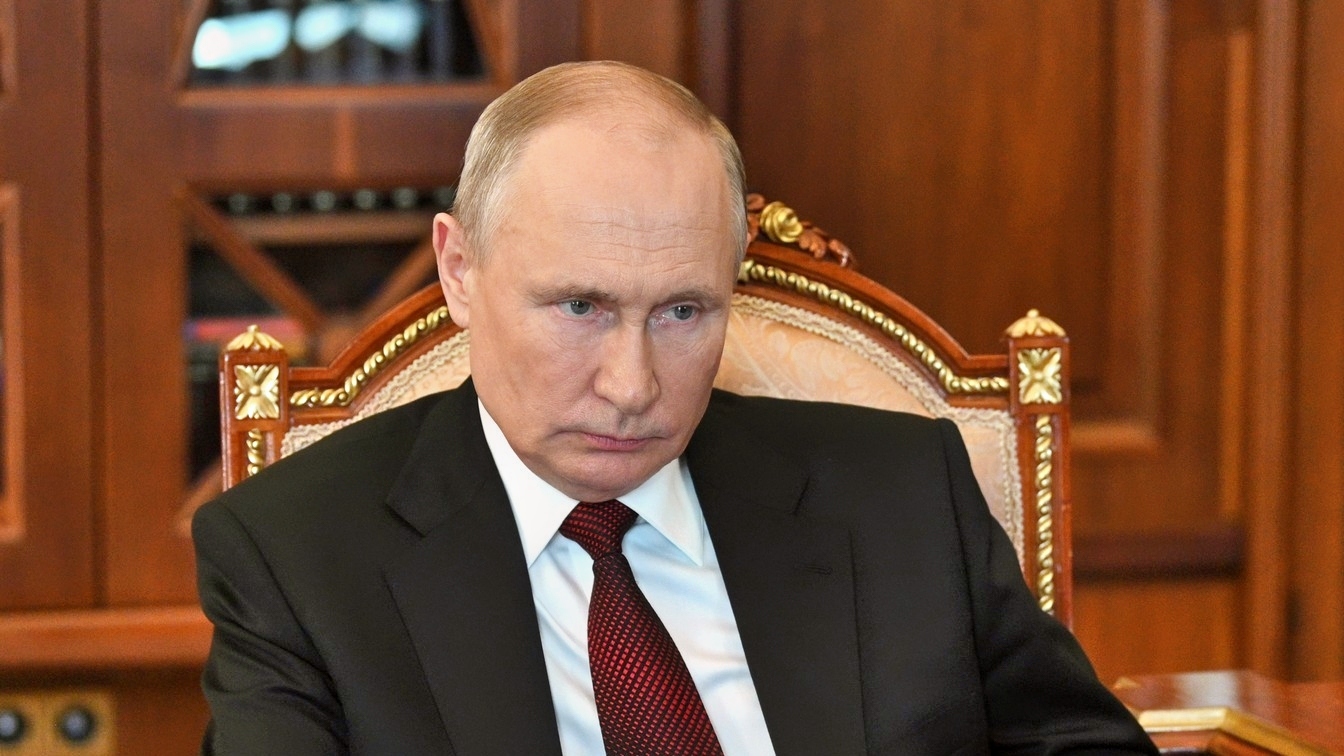
Putin Speaking With Leader of Belarus Russian Federation Photo.
The strikes are part of an ongoing campaign that has now gone beyond its originally planned 40 days of strikes against Russian assets that support its military and wartime economy.
The strikes have so far degraded Russia’s oil and petroleum product industry, and its logistics facilities that support both civilian commercial operations and the military.
Ukraine’s Oil Campaign Expands
The Orsk attack came a day after Ukraine hit headlines for striking the TANECO refinery in Nizhnekamsk, Tatarstan, roughly 800 miles from Ukrainian territory.
Russian authorities said that 13 people, including a child, were killed in the attack. Seven Uzbek citizens were among those killed, according to Uzbekistan’s consulate. At least 39 people were injured.
Video footage and images shared on social media showed the site in the aftermath of the strikes, with large plumes of smoke rising into the air.
The strikes are just the latest in a long string of attacks that have intensified in size and frequency over recent months.
On August 6, Ukrainian forces confirmed attacks on the Slavneft-YANOS refinery in Yaroslavl and the Bashneft-Novoil facility in Ufa.
The strategy has forced Moscow to respond and has prompted Russian President Vladimir Putin and Kremlin spokesman Dmitry Peskov to admit that Ukrainian strikes are affecting the Russian economy.
In response, Moscow has authorized new distribution measures designed to move oil to the country’s most vital hubs of industry and commerce, while other, more rural parts of the country face major fuel shortages that now risk the country’s crops as autumn approaches.
Ukraine Takes the War Deeper Into Russia
Compare the Orsk attack to some of Ukraine’s earliest cross-border strikes, and it’s striking just how far its forces and capabilities have come.
Some of Ukraine’s earliest attacks inside Russia were concentrated relatively close to the border, particularly around Belgorod and Kursk.
But by December 2022, drones were reaching Engels air base in Russia’s Saratov region, hundreds of miles from Ukrainian-controlled territory.
Engels is particularly important because Russia has used the base to operate strategic bombers involved in long-range missile attacks against Ukraine.
Geographical reach has expanded steadily since 2023.
In August of that year, drones struck an airport in Pskov located in northwestern Russia.
The strike damaged military transport aircraft and proved that targets far from both Ukraine and the immediate front lines may now be vulnerable.
Ukraine Went Further
Then, on April 2, 2024, Ukraine went even further. Drones struck Russia’s heavily industrialized Tatarstan region, roughly 800 miles from the front lines.
One drone struck the Alabuga Special Economic Zone, where Russia produces versions of the Iranian-designed Shahed attack drones, which have become a fixture in the war in Ukraine.
Another drone struck the TANECO refinery in Nizhnekamsk.
At the time, the Tatarstan operation was seen as one of Ukraine’s deepest strikes of the war – and since then, those exceptional long-distance missions have become a regular part of the defense campaign.
The result of this campaign is a new problem for Moscow: that Russia must now defend critical infrastructure across enormous territory rather than concentrating air defenses around the battlefield and its major cities.
Every refinery or weapons factory is now within range, and the Kremlin’s response so far has been to expend ballistic missiles against Ukrainian forces as they grapple with an interceptor shortage that makes every strike on Kyiv and other cities utterly devastating.
About the Author: Jack Buckby
Jack Buckby is a British researcher and analyst specializing in defense and national security, based in New York. His work focuses on military capability, procurement, and strategic competition, producing and editing analysis for policy and defense audiences. He brings extensive editorial experience, with a career output spanning over 1,000 articles at 19FortyFive and National Security Journal, and has previously authored books and papers on extremism and deradicalization.


