

NATO fighter jets shot down an unidentified drone over Latvia on Friday amid a growing number of incursions along the alliance’s eastern border.
The news raises questions about whether Europe has the technology or the money to fully defend its airspace against the enormous number of relatively cheap unmanned aircraft that are now operating around Russia and Ukraine.
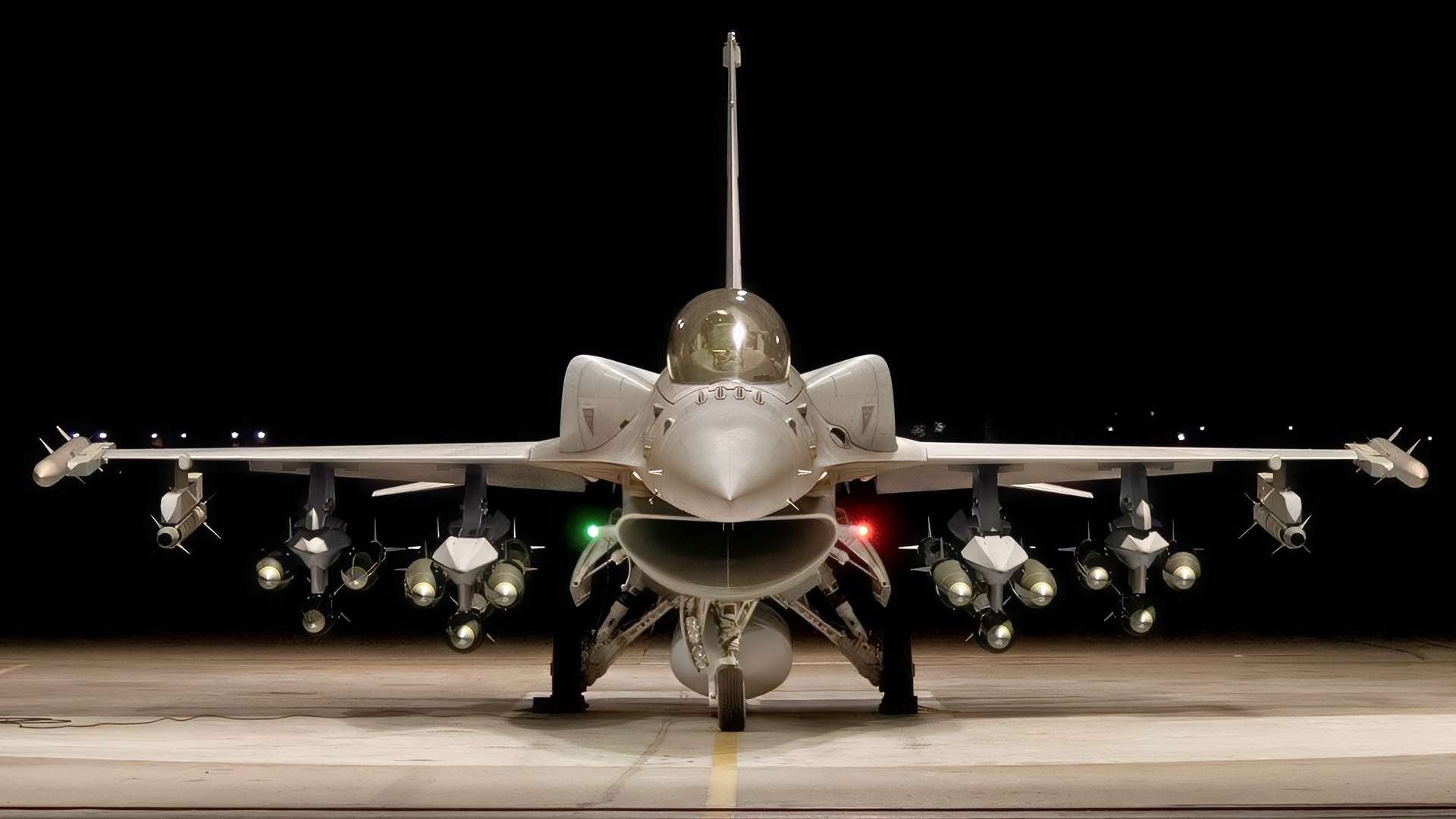
F-16V Viper Lockheed Martin Image.
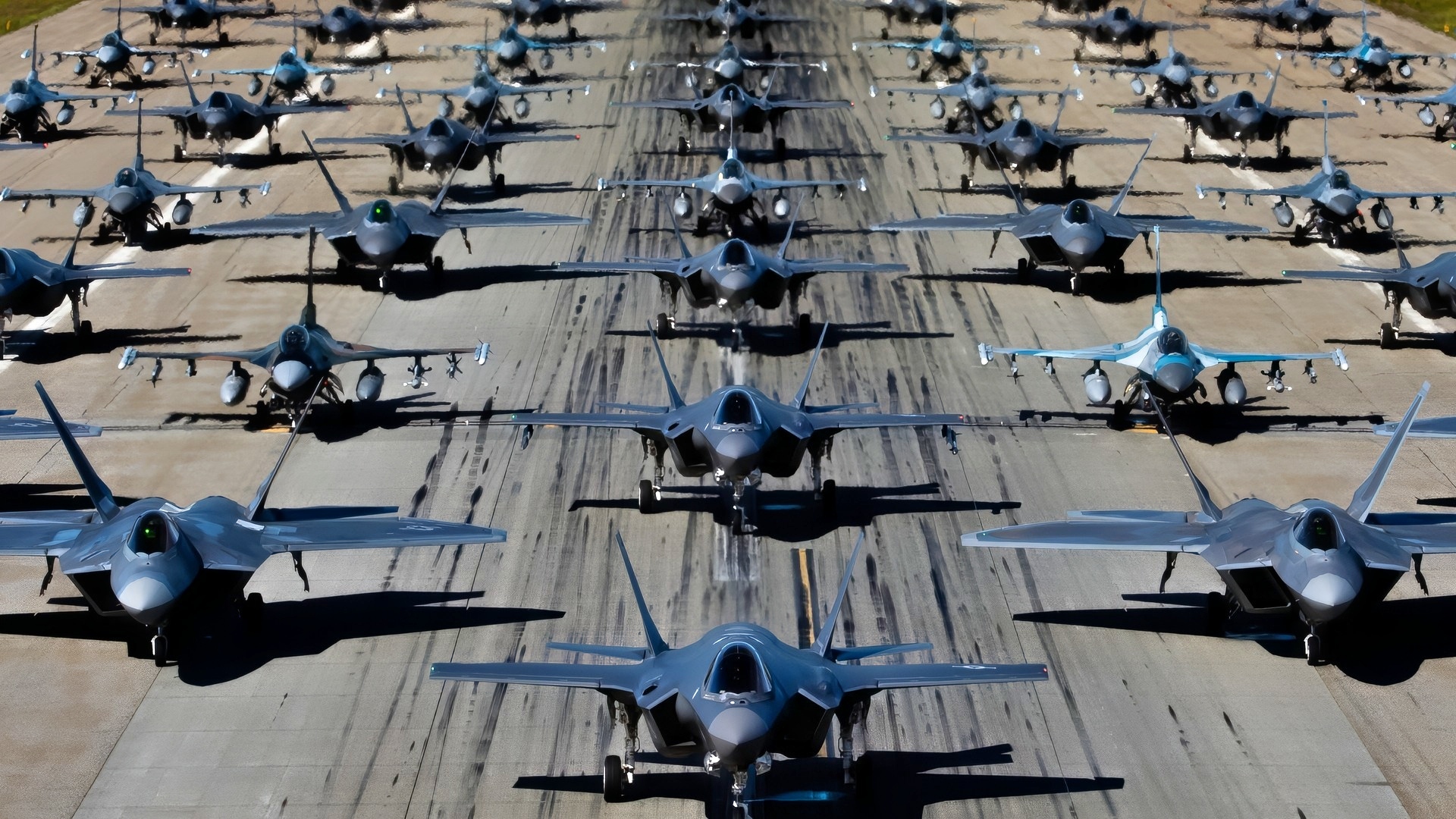
The 354th Fighter Wing conducts a 75-fighter jet formation at Eielson Air Force Base, Alaska, Aug. 12, 2022, in honor of the U.S. Air Force’s 75th Anniversary. This capabilities demonstration included F-35A Lightning II, F-16 Fighting Falcon and F-22 Raptor aircraft from across Pacific Air Forces. (U.S. Air Force photo by Senior Airman Gary Hilton)
The drone incident occurred in Rugāji, eastern Latvia, about 22 miles from the Russian border. Two Italian Eurofighters were scrambled from Lithuania, and two Turkish F-16s took off from Estonia after the aircraft was detected, according to NATO. One of the Italian jets then identified and destroyed the drone.
Latvian forces were reportedly still searching for the wreckage in forests on Friday, meaning authorities have not yet established where it came from or who launched it.
Latvia’s military did, however, say that Russian electronic warfare was responsible for pushing the aircraft into Latvian airspace.
The fact that this was not an isolated incident makes the story particularly significant. Another drone crashed inside Romania on Friday, while Finland temporarily restricted aviation and maritime traffic in parts of the eastern Gulf of Finland as a precaution.
Another Drone Slips Through NATO Defenses
In an August 14 press release, Romania’s Ministry of National Defense said it was informed of the drone crash after someone called the country’s 112 emergency number. The aircraft reportedly came down in a woodland area near Luncavița in Tulcea County, around three miles from the Ukrainian border.
The ministry said its own radar surveillance systems never detected the aircraft because it was flying at a very low altitude. An investigative team using an IAR 330 Puma SOCAT military helicopter was sent to the site.
No casualties or property damage were initially reported.
The failure to stop the drone is a good example of how much trouble these small drones can cause. Aircraft flying extremely close to the ground can exploit both terrain and the curvature of the Earth to remain below radar coverage until they are already deep inside defended territory.
NATO Is Seriously Discussing Recent Incursions
On August 12, NATO announced that ambassadors from all 32 members had met that morning in the North Atlantic Council, the alliance’s main political decision-making body, to discuss a number of recent airspace violations in Poland and Romania, and a series of other drone incidents.
In a statement issued after the meeting, the alliance condemned what it described as dangerous patterns of Russian activity around NATO territory and expressed support for Poland and Romania following the recent incidents.
“NATO Allies met this morning in the North Atlantic Council (Wednesday 12 August) to discuss the recent airspace violations in Poland and Romania, as well as recent drone incidents. They expressed their full solidarity with and support for the affected Allies,” the statement reads.
“Allies reiterated that Russia bears full responsibility for the airspace violations, which are dangerous and unacceptable, and demonstrate Russia’s increasing tolerance for risk,” it continued.
Russian Electronic Warfare Creates New Problem
Not every drone entering NATO airspace in recent years has been Russian.
Ukraine’s massive drone industry has seen its forces use huge numbers of long-range drones against Russian military facilities, oil refineries, and other major infrastructure.
Russia also operates its own electronic warfare systems intended to disrupt the satellite navigation systems that support Ukrainian drones.
Latvia’s National Armed Forces said in a statement on Friday that its preliminary assessment was that the one drone intercepted near Rugāji entered Latvian airspace as a result of “Russian electromagnetic warfare.” With the aircraft still unidentified, however, it’s unclear whether the drone originated in Russia or Ukraine.
Drone incursions like this have precedent.
In March, Ukraine apologized to Finland after two Ukrainian drones crossed the border and crashed in southeastern Finland, with Ukrainian authorities attributing the incidents to Russian electronic interference.
Europe Needs Cheaper Ways to Stop Drones
The growing frequency of these incursions is pushing Europe to take action and determine more affordable ways to protect against the drone threat.
At present, drone incursions are met with expensive countermeasures, including scrambling Eurofighters and F-16s to intercept them.
It is effective, but also costly—especially if these incidents become routine. NATO is, therefore, experimenting with cheaper counter-drone technologies.
That work is also underway in Latvia. NATO’s Allied Command Transformation said its Baltic Trust 2026 exercise, which began on August 3 and concludes on August 14, is testing technologies designed to detect and defeat large numbers of unmanned aircraft.
The exercise brings together defense companies and military personnel to test counter-drone systems under operational conditions, focusing on integrating various kinds of sensors and defensive technologies.
Friday’s interception, on the final day of Baltic Trust 2026, provided a real-world demonstration of precisely why NATO is now urgently seeking cheaper, scalable ways to defend its airspace.
About the Author: Jack Buckby
Jack Buckby is a British researcher and analyst specializing in defense and national security, based in New York. His work focuses on military capability, procurement, and strategic competition, producing and editing analysis for policy and defense audiences. He brings extensive editorial experience, with a career output spanning over 1,000 articles at 19FortyFive and National Security Journal, and has previously authored books and papers on extremism and deradicalization.


