
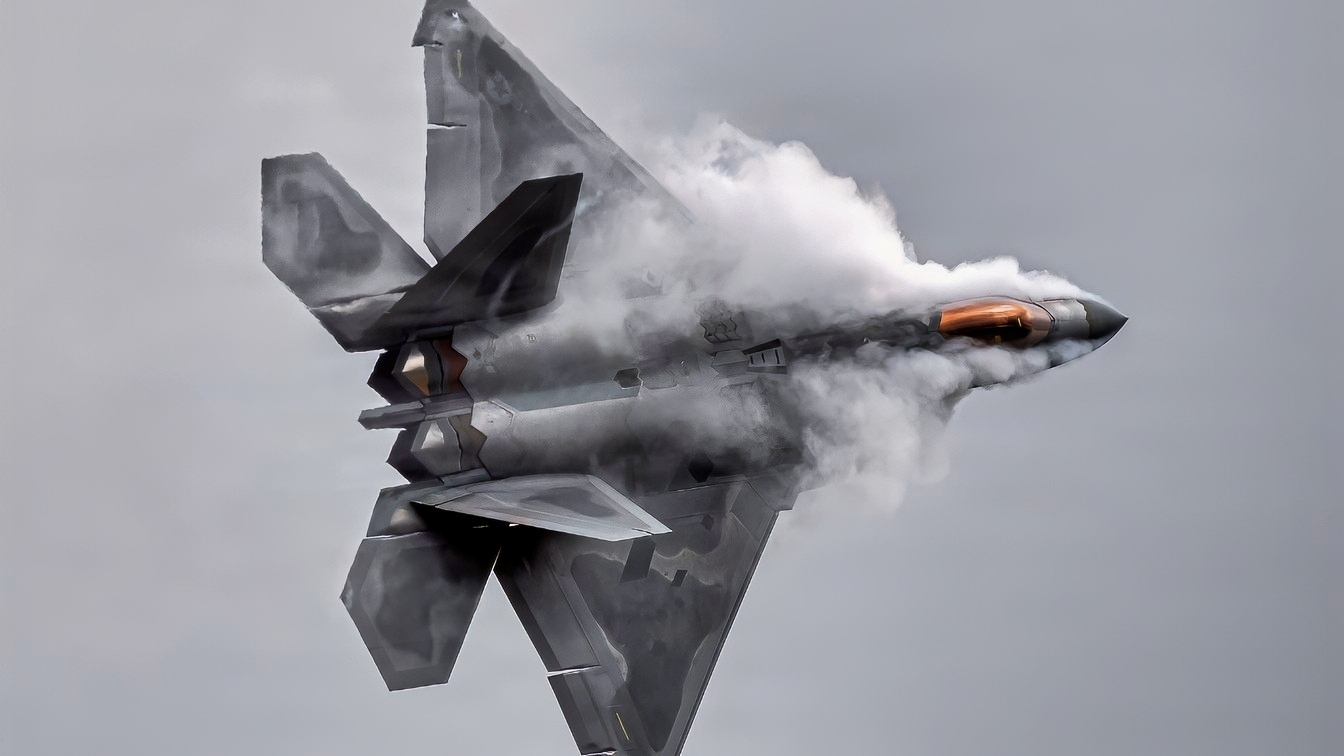
Iran is no longer simply defending itself against the United States — its military leadership is now preparing to escalate, shifting to a “fully offensive” strategy that could see attacks expand beyond the Strait of Hormuz and across the Middle East.
On August 17, Reuters cited a senior Iranian official who said the change is coming because Tehran has lost faith in any diplomatic efforts to end the war.
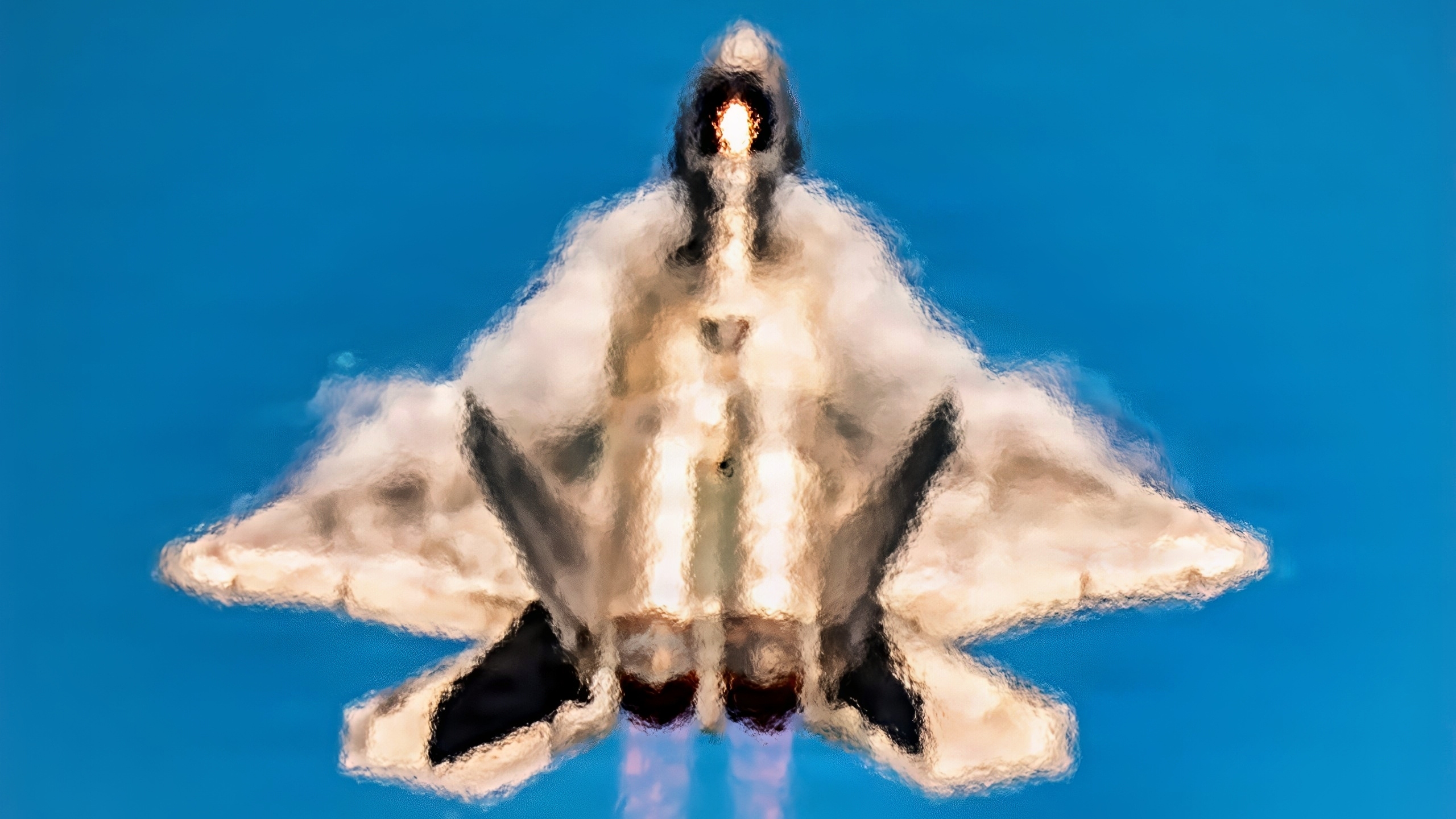
U.S. Air Force Capt. Nick “Laz” Le Tourneau, pilot and commander of the F-22 Raptor Aerial Demonstration Team, performs an aerial demonstration at Air Dot Show Tour Fort Lauderdale, Florida, May 9, 2026. Capt. Le Tourneau showcased the unmatched capabilities of the F-22 by performing a series of combat maneuvers. (U.S. Air Force photo by Staff Sgt. Mary Bowers)
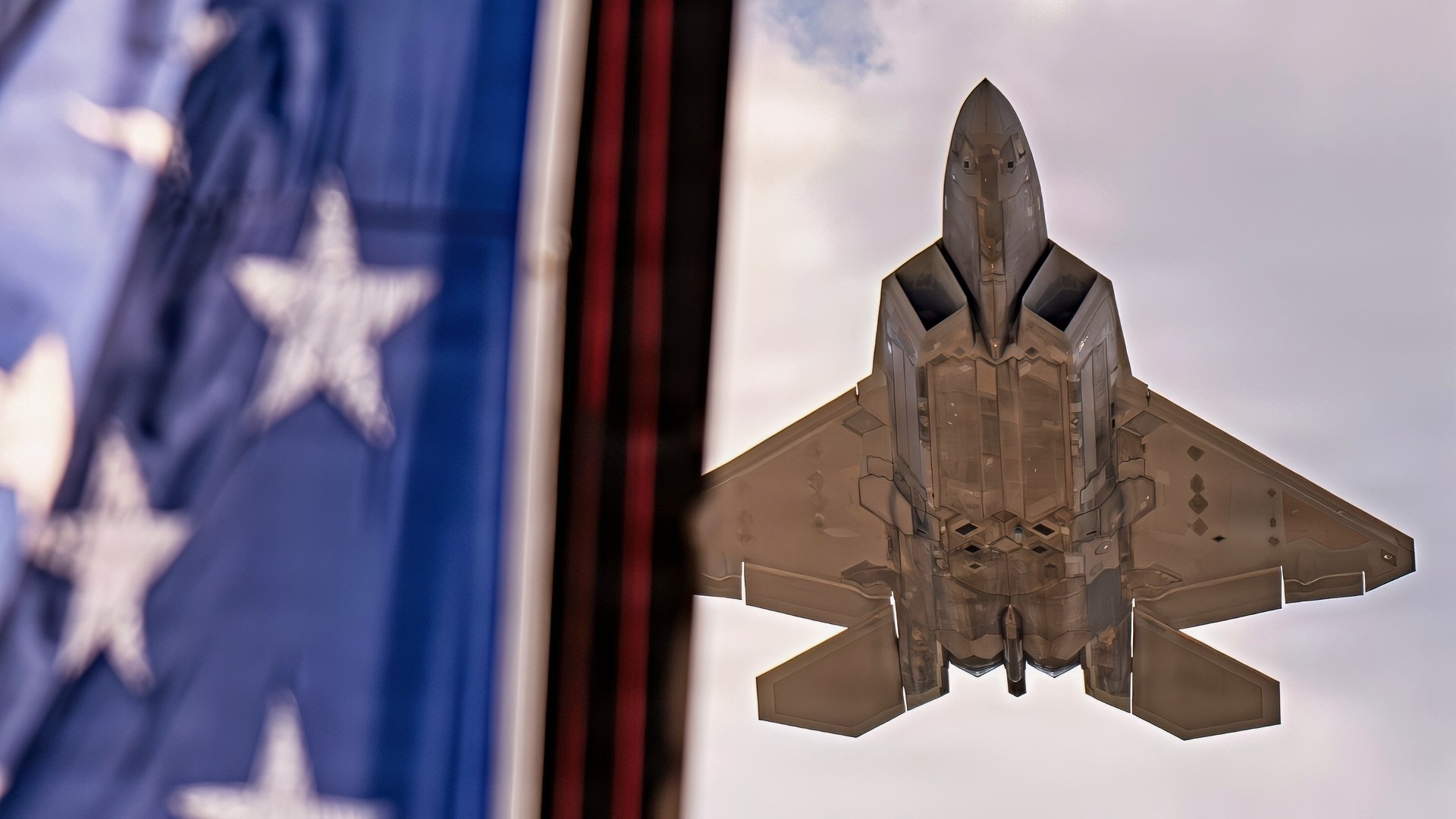
U.S. Air Force Capt. Nick “Laz” Le Tourneau, pilot and commander of the F-22 Raptor Aerial Demonstration Team, performs an aerial demonstration during the 52nd Annual SUN ‘n FUN Aerospace Expo in Lakeland, Florida, April 18, 2026. Capt. Le Tourneau showcased the unmatched capabilities of the F-22 to the SUN ‘n FUN crowds by performing multiple series of combat maneuvers. (U.S. Air Force photo by Staff Sgt. Mary Bowers)
The official warned that Iran would take “timely and precise” military action to break the U.S. naval blockade if Washington does not take steps to comply with a series of major demands from Tehran, including the lifting of all U.S. sanctions and ending the naval blockade.
Iran Says It Is Going on the Offensive
According to the Reuters source, Tehran is preparing to escalate in the Strait of Hormuz “and beyond” if the United States does not honor the terms of the June agreement and said that mediators would communicate Iran’s deadline to Washington and other regional governments.
The warning marks a significant change in how Tehran describes its military actions.
Until now, Iranian leaders have generally presented attacks on U.S. forces or U.S.-linked sites and commercial vessels as retaliation for U.S. and Israeli military action.
The latest threat suggests that Tehran is now prepared to initiate new operations as part of an effort to increase the economic and military costs of the war – the kind of strategy that Ukraine has successfully used against Russia.
The Wall Street Journal reported on August 16 that Iran’s leadership began to prepare for a wider confrontation shortly after the failed June memorandum of understanding with the United States.
Citing Iranian and Arab officials, as well as intelligence that included intercepted communications between Iran and allied militias, the Journal reported that Tehran used the relative lull in fighting to rebuild its forces and prepare options for expanding the conflict.
Those preparations have included the accelerated production of missiles and drones and the strengthening of the Islamic Revolutionary Guard Corps’ control over Iran’s conventional military and the coordination of potential attacks with Iranian-backed groups in Iraq and Yemen.
Iran is using any and all leverage it has, and every tool or ally at its disposal.
Iran Prepared For A Bigger War During the Truce
Iranian leaders were skeptical of the June memorandum of understanding from the beginning, and according to the Journal’s recent report, hard-line figures in Tehran concluded that Washington and Israel were using diplomacy to ease pressure on global energy markets while buying time to prepare for another large-scale attack on Iran.
And, rather than assuming that the agreement would produce a lasting settlement – which many analysts also never expected – the regime began preparing for renewed conflict.
Per the Journal, the IRGC used the period to send advisers to Iraq, Yemen, and Lebanon to coordinate with allied armed groups.
In Yemen, Guard commanders worked with the Houthis on preparations for a confrontation with Saudi Arabia and supervised the deployment of missiles, drones, and naval weapons near the Red Sea.
Iran also accelerated the production of weapons in its own factories.
“We took full advantage of the ceasefire period,” IRGC spokesman Brig. Gen. Hossein Mohebbi told the Guard-affiliated Tasnim news agency in July, according to the Journal. Mohebbi said Iran had accelerated missile production and improved the accuracy of its weapons.
“We enhanced our capabilities, accelerated our missile production rate and improved missile accuracy,” he continued.
Those preparations are now visible in combat. Iran resumed attacks on vessels in the Strait of Hormuz in July, while the Houthis also announced their own blockade against Saudi-linked ships and have begun launching strikes against commercial vessels.
Iran-backed Iraqi militias have also been accused by Saudi Arabia of attacking the kingdom’s oil infrastructure.
Mojtaba Khamenei Put Hard-Liners in Charge
Iran has also undergone a major reorganization of its military and security leadership under Supreme Leader Mojtaba Khamenei, with veteran IRGC figures now taking on key positions and fundamentally changing Iran’s posture.
Earlier this month, Mohsen Rezaei, who commanded the IRGC during much of the Iran-Iraq War, was appointed secretary of the Supreme National Security Council, the body at the center of Iran’s national security policy.
Ahmad Vahidi was also formally appointed commander-in-chief of the IRGC and tasked with conducting “powerful offensive operations against the enemy,” according to the Journal.
Khamenei also gave Hossein Taeb, a former head of IRGC intelligence, the leadership of the Basij militia.
The appointments make it clear that, at this stage, Iran’s aggressive strategy is not just rhetoric.
Khamenei is putting officials with decades of military and intelligence experience in charge as Tehran prepares for a far longer war than President Trump anticipated.
About the Author: Jack Buckby
Jack Buckby is a British researcher and analyst specializing in defense and national security, based in New York. His work focuses on military capability, procurement, and strategic competition, and he produces and edits analysis for policy and defense audiences. He brings extensive editorial experience, with a career output spanning over 1,000 articles at 19FortyFive and National Security Journal, and has previously authored books and papers on extremism and deradicalization.


