

The safest place on a Ukrainian battlefield may now be underground. As The Atlantic recently reported, the drone saturation over Ukraine has driven both armies beneath the bloody battlefields. On parts of the front today, the most valuable terrain may be a rusting Soviet gas pipe about four and a half feet across.
In four and a half years, this war has moved from the trenches of 1916 to the Cu Chi tunnels.
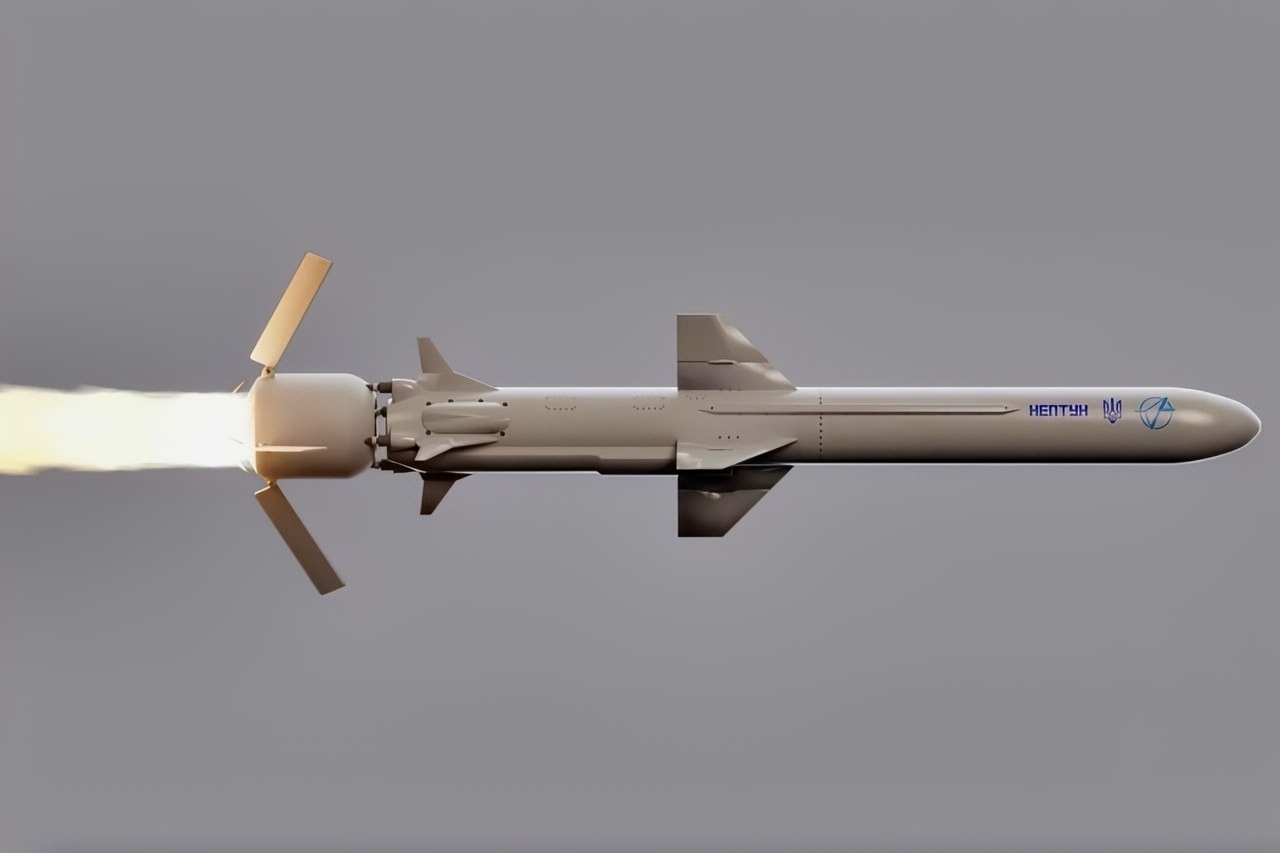
Neptune Missile. Image Credit: Government of Ukraine.
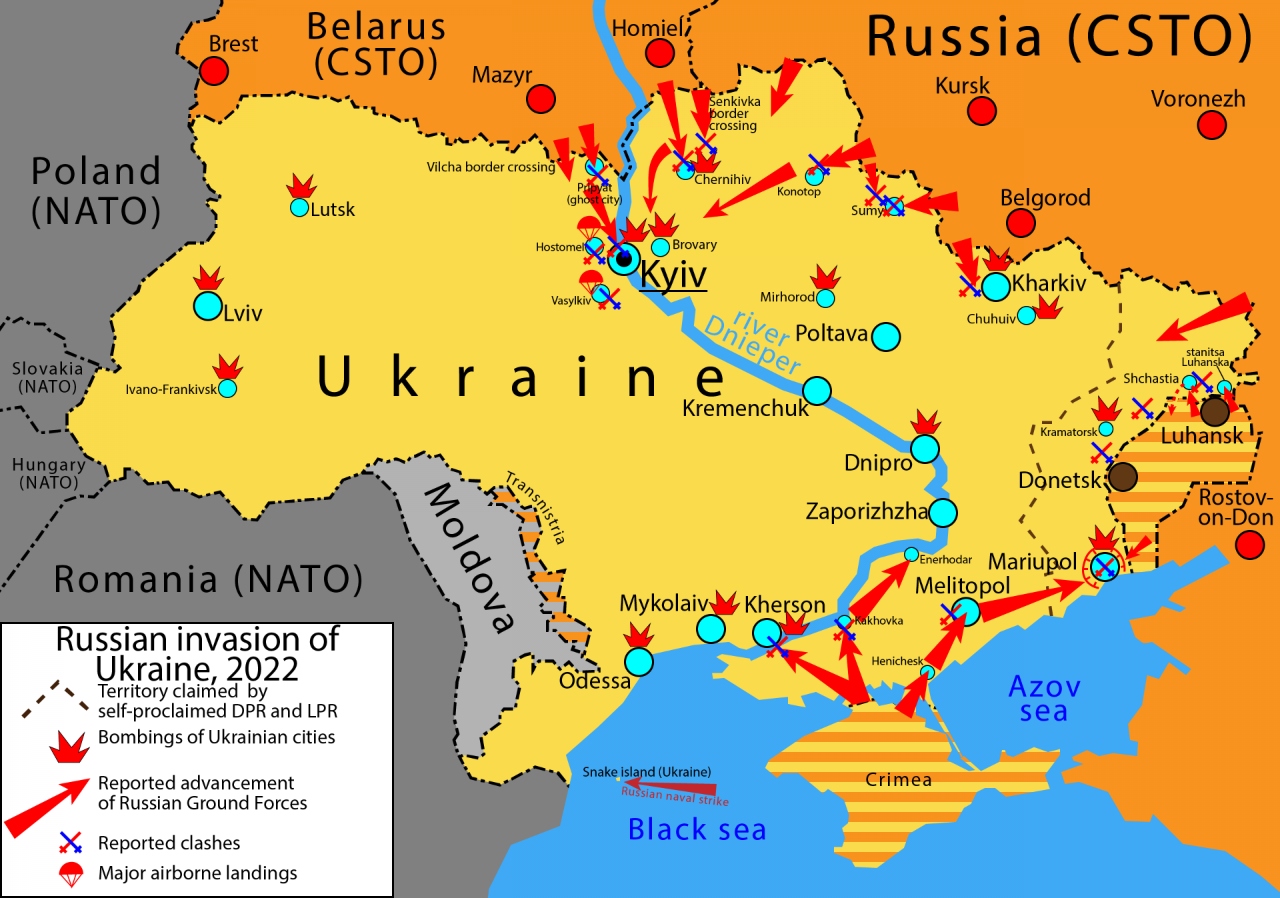
Ukraine War Map. Image Credit: Creative Commons.
Now the tunnels come pre-built, courtesy of Gazprom.
The Sky Is A Kill Zone
The number of battlefield casualties caused by drones is staggering.
A recent study from West Point’s Modern War Institute cited reporting that drones account for as many as 80 percent of battlefield casualties in some sectors around Pokrovsk.
The authors wrote, “Today’s battlefield is more lethal than at any time since World War I. Jam-proof, fiber-optic drones equipped with thermal cameras hover continuously over supply routes, trench lines, artillery positions, and troop concentrations.
“Satellite surveillance, persistent reconnaissance, acoustic detection systems, and AI-assisted targeting have dramatically shortened the kill chain, the time between detection and destruction.”
The response has been to dig. The same MWI piece describes multilevel underground command posts with fiber-optic communications, ventilation, reinforced concrete, and concealed corridors linking fighting positions.
Hospitals and drone workshops have also been moved underground. On the Kramatorsk front, troops from the 93rd Kholodnyi Yar Mechanized Brigade now walk to their positions through tunnels because anti-drone netting over the roads no longer guarantees anything. Ukrainian journalists have taken to calling it the Vietnamization of the front.
However, digging tunnels is time-consuming and requires engineers. Pipes are already there.
The Soviets Built The Infiltration Routes
For decades, Ukraine served as a transit corridor for Russian gas headed to Europe.
That left thousands of miles of buried steel crisscrossing the battlespace.
When Kyiv halted Russian gas transit on January 1, 2025, much of that steel went unused.
The Russians noticed. The first documented case came at Avdiivka in January 2024, when Russian troops used a partially flooded water outflow tunnel to slip quietly into a wooded district of the city.
Because of this infiltration technique, Russian forces captured Avdiivka weeks later.
Then came Sudzha. On March 8, 2025, about 100 Russian soldiers emerged from a branch of the Urengoy-Pomary-Uzhhorod pipeline near Ukrainian positions in Russia’s Kursk region.
The pipe was 1.4 meters in diameter.
Some of the men reportedly spent days inside before attacking. Ukrainian sources said they saw it coming and killed most of the assault group. However, Ukraine’s Kursk salient collapsed within days.
Infiltration via the pipeline didn’t win Kursk on its own.
Tens of thousands of Russian and North Korean troops grinding on the flanks did that.
The pipe delivered shock, and shock is a force multiplier you can’t discount.
Last September, the Russians tried this tactic again in Kupiansk.
Ukrainian analysts at DeepState reported that Russian troops crossed under the Oskil River using wheeled platforms and electric scooters inside the pipe.
“The pipeline entrances are located near Lyman Pershyi. They use specially designed wheeled platforms to move inside the pipeline, along with electric scooters in areas with sufficient height. The route to the outskirts of Kupiansk takes about four days, so they set up special resting places and food supplies.
“In this way, enemy groups can reach Radkivka without serious losses and from there move south into the forest, which they control. After that, they disperse in Kupiansk and reach the railway.”
A captured Russian soldier later claimed men who refused to go into the tunnel were tied up and beaten.
The Pipeline Is A Sword That Cuts Both Ways
A pipeline hides your troops from drones and lets assault troops infiltrate a rear area unseen.
However, it also has exactly two ends, and once the other side knows where they are, it can become a very long coffin.
Ukraine learned its lesson. Near Kupiansk, the 429th Achilles Unmanned Systems Regiment damaged and flooded the pipeline the Russians were using.
Later, by Ukrainian accounts, three tons of explosives finished the job.
Ukrainian troops have recaptured about 90 percent of Kupiansk, despite Russian claims that they now control the city.
Along the Sumy border, the 425th “Eyes” Battalion has mapped the entire pipeline network running out of Kursk and now watches for digging, cut access holes, or newly installed ventilation.
This surprise tactic has about worn out its usefulness. Now, the pipeline exits are pre-registered targets.
Now Ukraine Is Using The Pipelines
Which brings us to this week.
The National Guard’s 2nd Khartiia Corps announced Operation Veles, in which Ukrainian troops moved roughly 15 kilometers through underground gas pipelines to hit Russian positions from behind in the Kupiansk sector.
The corps claims more than 30 Russians were captured and over 100 casualties.
Those figures haven’t been independently verified.
The corps commander, Brig. Gen. Ihor Obolienskyi, put it simply: the Russians planned to use the pipes, “So we went underground ourselves.” He said, “We studied their experience, outplayed them on their own ground, and turned that threat into an advantage for our counteroffensive.”
“Veles proves that there is no positional deadlock for those who possess initiative and technology,” Obolienskyi said. “Our troops traveled 15 kilometers [9 miles] underground, where no army in the world has yet advanced, and we will continue driving the enemy from our land.”
According to the corps, the troops trained specifically for confined spaces and built their own communications, navigation, and life-support solutions.
The Achilles Brigade synchronized movement below ground with drone strikes above through a joint coordination center.
That’s the significant part of the operation.
This wasn’t a haphazard group of soldiers crawling blind.
It was a combined arms operation operating below, on, and over the ground.
Reporting relayed from The Wall Street Journal also describes Ukrainian ground robots carrying explosives and remote-controlled machine guns being sent into the pipes to flush out Russians.
At the same time, Moscow stands up units dedicated to underground combat.
So What Comes Next?
Infiltration is as old as warfare itself, even before the Trojan Horse. Every country’s militaries have taught it for generations.
What’s new is the reason.
The sensor layer overhead has become so dense that the only place left to hide is below it.
The drone threat makes every sewer, drainage culvert, mine shaft, and pipeline within reach of the front key terrain, and both sides will fight for the ends of those pipelines as hard as they fight for any hilltop.
NATO warplanners should be paying close attention. Europe has the same kind of buried infrastructure.
The next war on the continent won’t need to dig its tunnels either. A very similar situation unfolded in Gaza, where the Israeli Defense Forces had to deal with miles of subterranean tunnels of Hamas.
It is a situation that they are well aware of and are monitoring, searching for new infiltration routes into Israel. The US Army has been studying this as it could face a similar situation in the near future.
The Khartiia Corps summed it up best: “When the battlefield became transparent, the war went underground.”
About the Author: Steve Balestrieri
Steve Balestrieri is a National Security Columnist. He served as a US Army Special Forces NCO and Warrant Officer. In addition to writing on defense, he covers the NFL for PatsFans.com and is a member of the Pro Football Writers of America (PFWA). His work was regularly featured in many military publications.


