

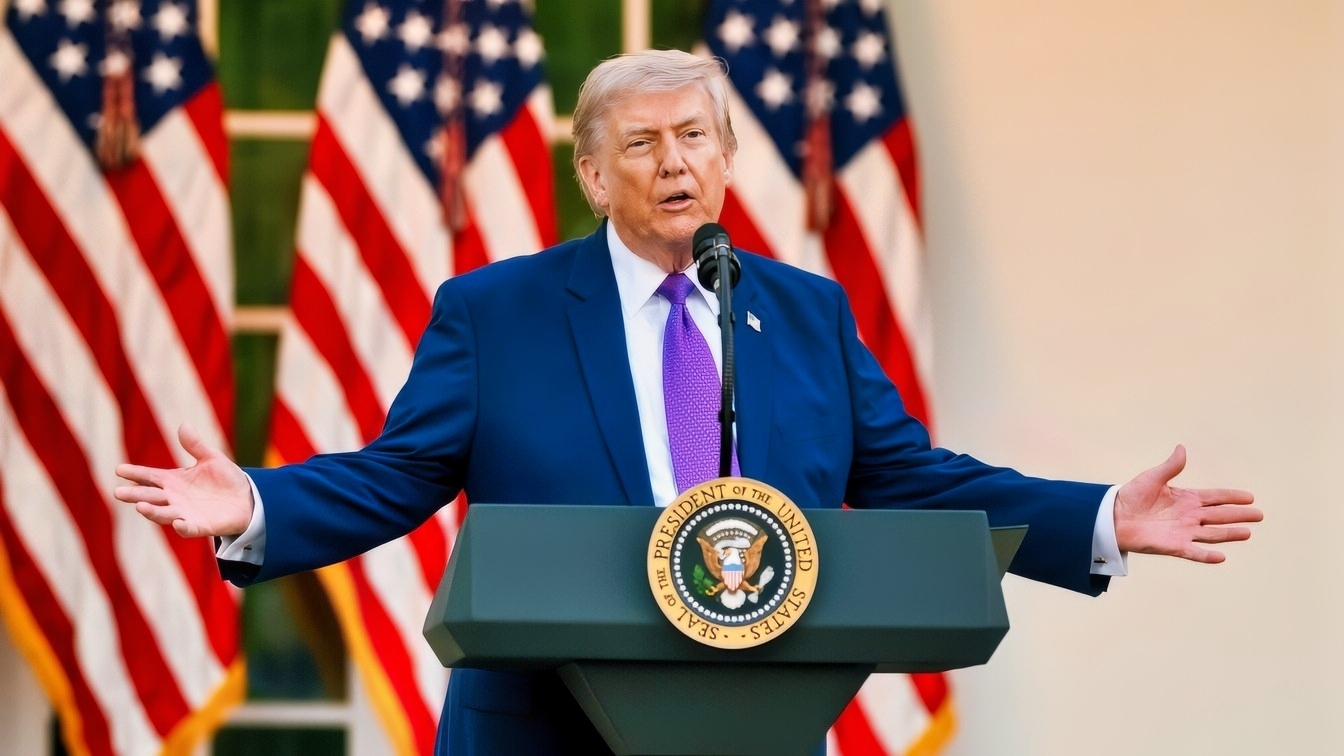
In a surprising move this week, President Donald Trump put some distance between the United States and longtime ally South Korea.
In a Sunday Truth Social post, Trump announced that, based on his “very good relationship” with North Korean dictator Kim Jong-Un, “I am not happy with the fact that the United States has, long ago, agreed to participate in Joint Military Exercises with South Korea.”

Russian President Vladimir Putin (R) meets with North Korea’s leader Kim Jong Un in Vladivostok, Russia April 25, 2019.
Citing the cost those exercises would impose on the United States, and saying North Korea has been “unthreatening and respectful” during his presidency, Trump said he had instructed the Pentagon to “substantially reduce” the upcoming military exercises between the U.S. and South Korea.
Trump went on to criticize South Korea for refusing a request to join the war in Iran.
Trump has praised the North Korean dictator more in recent days, declaring in a White House press availability Monday that “we get along great,” before chiding a CNN reporter for asking about it at all.
“We have 39,000 soldiers over there guarding you from Kim Jong-un, your next-door neighbor,” Trump told the press of his discussions with South Korea over getting involved in the Iran war. “And you’re not going to help us on a very easy military operation in Iran?”
Exercises Begin
PBS reported on Tuesday that the United States and South Korea’s planned Ulchi Freedom Shield war games began as scheduled on Monday. The exercises have taken place for about 50 years and have traditionally focused on deterring North Korea.
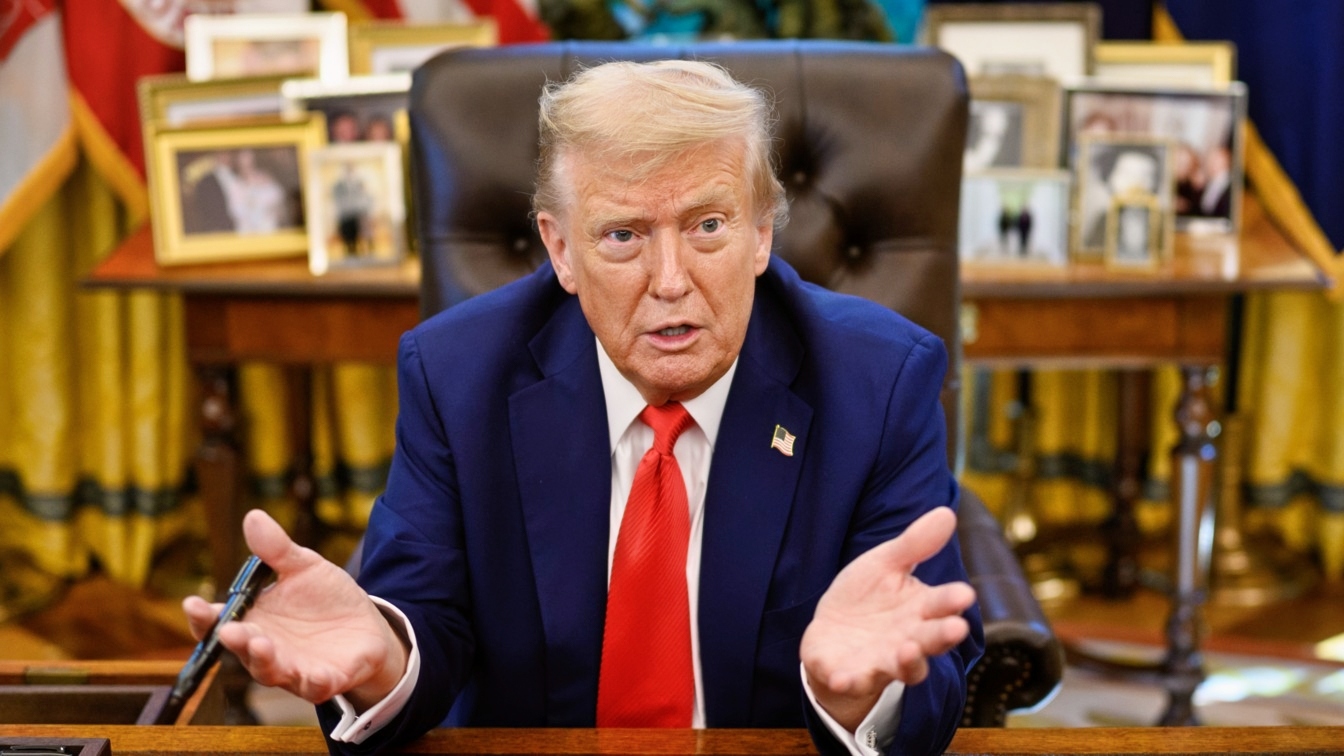
President Donald J. Trump visits with President Lee Jae-myung of the Republic of Korea, Monday, August 25, 2025, in the Oval Office. (Official White House Photo by Daniel Torok)
South Korea’s response to the Trump comments has been “muted,” the PBS report said.
“I think what is striking about what happened over the last 24 hours is that it appears to have been a move that took our South Korean allies by surprise,” Frank Jannuzi, President and CEO, Maureen and Mike Mansfield Foundation, told PBS. “And so these moves are always best when they are coordinated closely.”
Will There Be New Talks?
In his first term, Trump became the first U.S. president in decades to meet with a North Korean leader, holding three meetings with Kim Jong-Un.
However, those meetings did not lead to any diplomatic agreements, especially on the question of North Korea’s nuclear program.
And since Trump’s return to office, things have been quiet on the North Korean front, at least until this week.
Will Trump and Kim meet again?
Trump, per The Guardian, told the press that Kim had responded to the overture but did not provide further details.
“As far as we can tell, North Korea is not interested in talking, especially about denuclearization,” PBS’ Schifrin said.
The reporter also said that North Korea’s position in the world has improved, especially now that Russia and China are no longer adhering to U.N. sanctions on North Korea.
North Korea has even been contributing weapons and personnel to Russia’s war in Ukraine.
“This means that North Korea is going to play hard to get,” Jannuzi said in the PBS story. “And if Trump is serious about opening up channels to North Korea, he’s going to have to come bearing gifts.”
Criticism of the Move
Trump’s pivot this week on Korea has shocked the foreign policy establishment, most of whom have been sharply critical of it.
“There is no American interest that I can see in this,” Dan Fried, an assistant secretary of state for European affairs in the George W. Bush administration, told the AP. “On all levels it makes no sense. It undermines the South Koreans, undermines the Japanese, frightens the Taiwanese, unnerves NATO and emboldens the Chinese, not to mention the North Koreans.”
Sen. Mark Kelly (D-AZ), meanwhile, said this week that the president should “read some history.”
According to a story by CNN fact-checker Daniel Dale, “every single part of this Trump story about South Korea is wrong.”
Dale notes that Trump has told versions of the story before, but Washington does not pay the full cost of the U.S. military presence in South Korea.
Trump has also exaggerated how much South Korea has agreed to increase its payments, and his claim that his predecessor, Joe Biden, rescinded a deal Trump made on those costs is untrue.
About the Author: Stephen Silver
Stephen Silver is an award-winning journalist, essayist, and film critic, and contributor to the Philadelphia Inquirer, the Jewish Telegraphic Agency, Broad Street Review, and Splice Today. The co-founder of the Philadelphia Film Critics Circle, Stephen lives in suburban Philadelphia with his wife and two sons. For over a decade, Stephen has authored thousands of articles that focus on politics, national security, technology, and the economy. Follow him on X (formerly Twitter) at @StephenSilver, and subscribe to his Substack newsletter.


