


Trump Declares Strait of Hormuz ‘Open’ – President Donald Trump says the Strait of Hormuz is “open and operating.” On Tuesday, he went a step further, sharing a map that labeled the strategic waterway “NEW U.S. Territory.”
Only six commodity vessels crossed the strait on Tuesday, according to Kpler data reported by Reuters. That was down from nine a day earlier and well below normal pre-war traffic, when roughly 130 to 140 vessels passed through Hormuz each day.
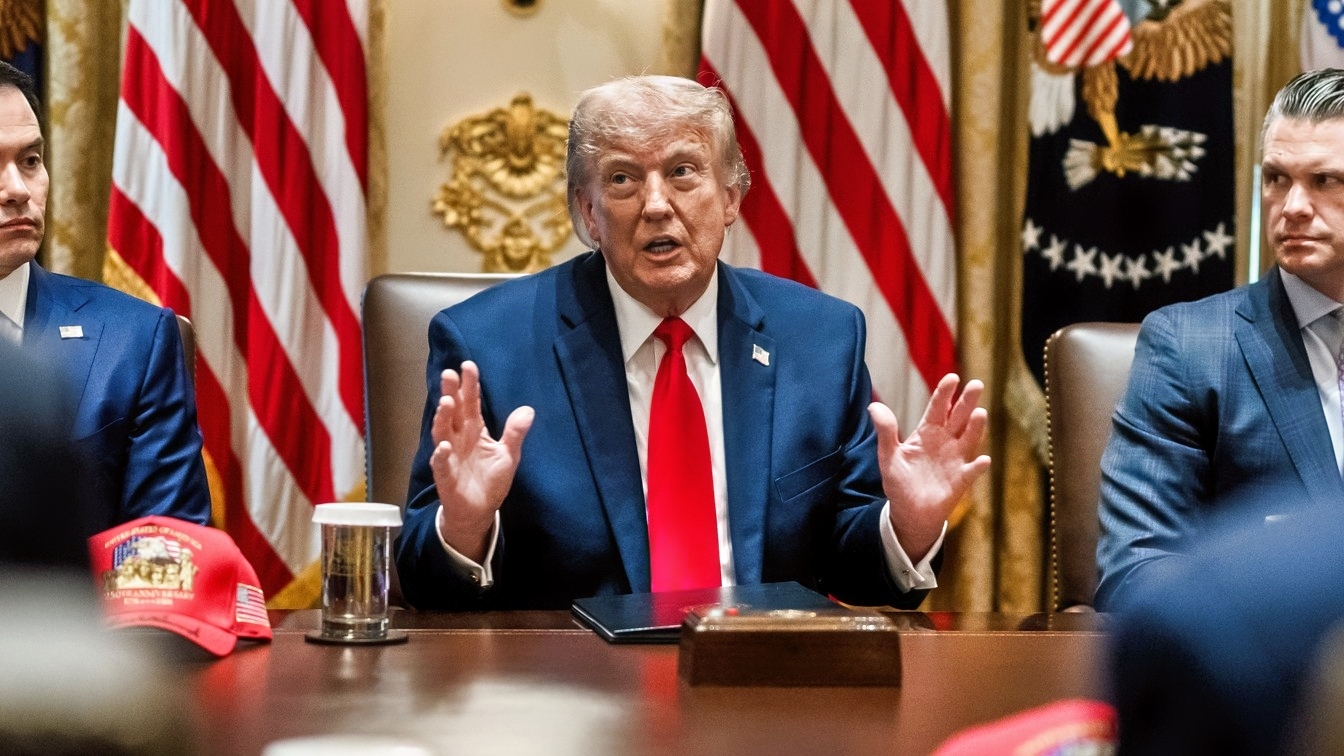
President Donald J. Trump holds a cabinet meeting in the Cabinet Room Wednesday, May 27, 2026. (Official White House Photo by Daniel Torok)
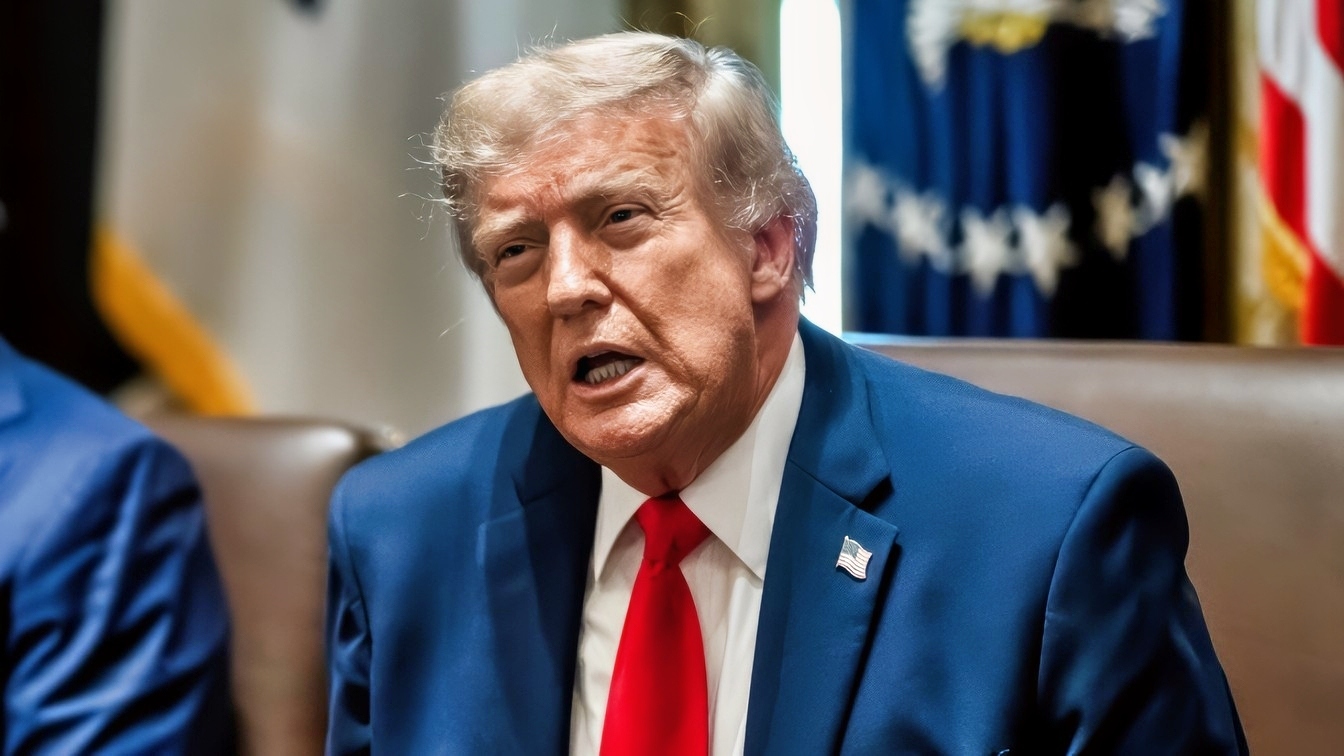
President Donald J. Trump holds a cabinet meeting in the Cabinet Room Wednesday, May 27, 2026. (Official White House Photo by Daniel Torok)
On Tuesday, Trump said there were no talks underway or scheduled with Iran. He also insisted the U.S. naval blockade remained in force and claimed all water mines in Hormuz had been removed or detonated.
Iran’s Stranglehold on the Strait?
Iran has stressed that the strait remains effectively closed. Mohammad Bagher Qalibaf, the Islamist regime’s parliamentary speaker, said last week that the Strait would remain closed, “until the blockade is lifted, frozen assets are released, oil sanctions are removed.”
The 60-day negotiating period established by the June memorandum expired on Monday, still without any broader agreement on the table.
Of the six commodity vessels recorded crossing on Tuesday, three entered the Gulf and three exited. One inbound vessel was an empty very large crude carrier traveling along the Omani side of the strait.
The figures do not capture every crossing. Some ships are moving with their transponders switched off to make them harder to track. But observable traffic remains a fraction of its pre-war level.
Three Ships Hit
Three ships passing through Hormuz have been struck in recent days, according to ABC News, citing British maritime officials. Two casualties were reported.
A sailor aboard the Liberian-flagged bulk carrier Minoan Dynasty was killed on Monday, according to cargo shipowners’ association INTERCARGO.
The United Kingdom Maritime Trade Operations agency subsequently reported that another vessel was struck by an unidentified projectile while traveling through Hormuz, damaging the ship and causing a crew casualty.
Still, Iran does not appear to enjoy uncontested control of the strait either.
Kpler data shows that over 80% of liquid cargo movements over the last fortnight took the Omani route or went “dark,” likely switching off their transponders to take the Omani route without detection. Homayoun Falakshahi, who heads up Kpler’s crude oil analysis, has admitted that Iran appeared to have “at least partially lost control of the strait.”
Saudi Arabia Gets Back to Business
Last week, Aramco, the state-owned Saudi oil firm, resumed oil loadings from terminals in the Strait of Hormuz. It had previously halted operations due to attacks on its tankers.
A trio of large crude carriers loaded some two million barrels from the Juaymah and Ras Tanura terminals from August 12 to 16, and others could soon follow.
Aramco is also offering Asian refiners oil delivered through ship-to-ship transfers off Fujairah on the east coast of the United Arab Emirates (UAE).
UAE Suspends Trade With Iran
According to the Financial Times, on Wednesday, the UAE said it had suspended any trade ties with Iran. The dramatic move comes after Abu Dhabi detected a pair of ballistic missiles launched from Iran toward maritime traffic.
No damage or casualties were reported, and the missiles reportedly fell into the sea. Tehran has denied launching the missiles.
Will Tehran Double Down?
Trump has already accused Iran of having lost this war, especially in light of the U.S. blockade on the latter’s ports.
On July 7, Trump said that the “memorandum of understanding” agreed in June was “over”, while Iran’s Foreign Ministry said it was “suspended” the following week.
“They [Iran] should put up the white flag of surrender,” Trump told Fox News, claiming that backchannel talks with the Islamic Revolutionary Guard Corps (IRGC) were ongoing.
On Tuesday, Trump sharply changed tack, stressing that no talks with Iran were ongoing, nor were any scheduled. He also heated up the rhetoric by quipping that the U.S. could bomb Oman, a U.S. partner in the region, if it “gets in the way” of Washington’s aims.
On Monday, The Wall Street Journal reported that Iran has ramped up missile and drone production during the negotiation window. The outlet said Arab intelligence officials had found a “strategic shift” among the Islamic Republic’s leadership to “get their forces ready to widen the war.”
About the Author: Georgia Gilholy
Georgia Gilholy is a journalist based in the United Kingdom who has been published in Newsweek, The Times of Israel, and the Spectator. Gilholy writes about international politics, culture, and education.


