
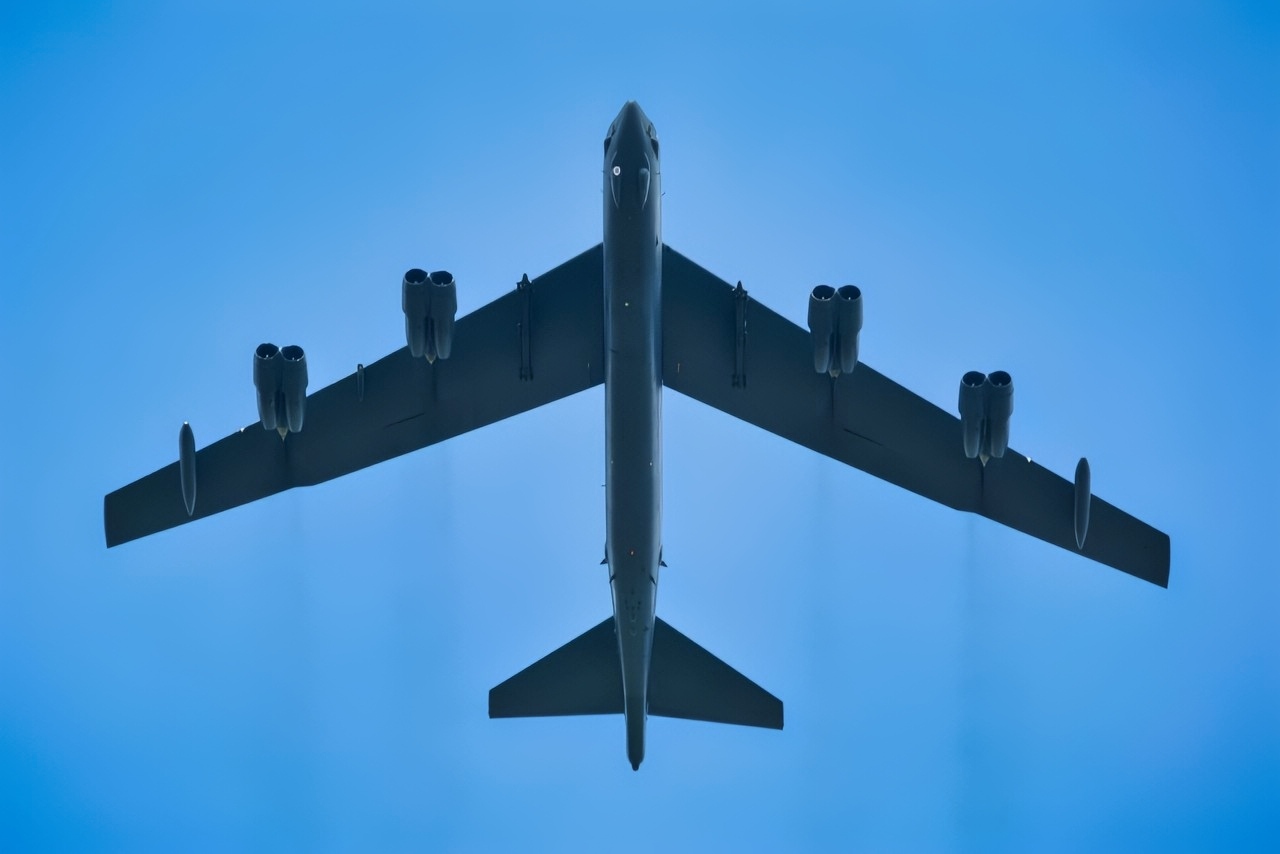
Iran appears to be preparing for a much larger military response if the United States launches another major round of strikes—and signs suggest Washington is preparing for it, too.
President Donald Trump continues to publicly hint at the likelihood that Iran will concede after the November midterm elections, and that the regime is close to giving up, but Tehran appears to be preparing contingency plans that could expand the conflict beyond direct attacks against American assets.
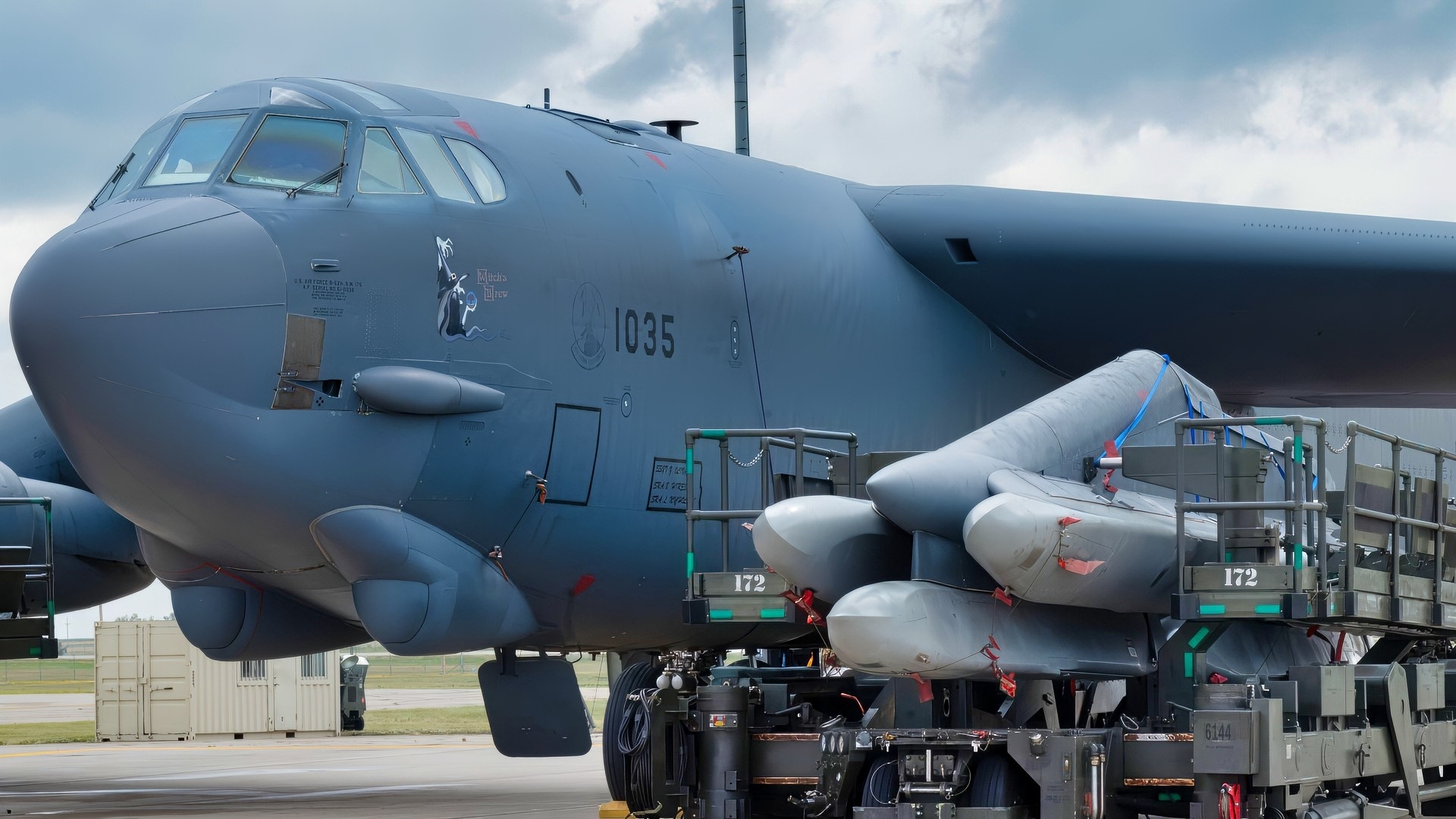
A B-52H Stratofortress sits on the flightline before a munitions load operation at Minot Air Force Base, North Dakota, Sept 5, 2025. The base-wide readiness exercise tested the wing’s ability to generate aircraft, conduct security operations and respond to challenging scenarios. (U.S. Air Force photo by Airman 1st Class Vincent Padilla)

A B-52H Stratofortress sit parked on the flight line at Minot Air Force Base, North Dakota, Aug. 8, 2022. The B-52 is capable of dropping or launching gravity bombs, cluster bombs, precision-guided missiles and joint direct attack munitions. (U.S. Air Force photo by Airman Alysa Knott)
According to an October 1 Reuters report, Iranian commanders are now actively considering attacks against countries supporting U.S. military operations, while also instructing proxy groups and allies in Lebanon, Iraq, and Yemen to engage in coordinated action.
Meanwhile, Washington is sending thousands more troops to the Middle East, another aircraft carrier to join the two already there, and additional air defense systems.
Senior Trump officials also met privately at Camp David on Friday, October 2, to discuss the Iran war and the conflict in Yemen.
Something is brewing, evidently — but importantly, those preparations don’t mean another round of fighting is inevitable.
Instead, it suggests both sides are preparing for the possibility and signaling the damage they could do if they don’t reach an agreement soon.
Iran Prepares for a Bigger Response
Iran can threaten the United States, and it can also clearly follow through — even without a strong conventional military.
Per recent reporting, Iranian military officials are planning a much stronger response if Washington goes ahead with a new round of strikes that President Donald Trump has publicly hinted at as a possibility for after the November midterm elections.
The reports cited Iranian officials who claimed that the current plan is to expand Iran’s target list.
Tehran could begin targeting countries that provide support for U.S. military operations against Iran — potentially including infrastructure outside of the Middle East.
That puts far more countries in Tehran’s sights, and attempted strikes could extend to Europe.
No final decision, however, has been made — and the plans that were described to Reuters are contingency options for responding to another major attack.
A lot could change between now and then, however, but the Pentagon must expect that the scale of U.S. strikes – or indeed the threat of them being launched imminently – could be enough to force Iran to concede its nuclear program.
Nonetheless, the region is expecting and preparing for an expanding crisis, too, with Saudi and Qatari officials warning in August that attacks on Iranian energy infrastructure could result in Tehran retaliating against its neighbors’ oil and gas facilities.
Washington Prepares
The United States is assembling significantly more offensive military power throughout the region, but still hasn’t returned to major rounds of strikes.
Reports revealed this week that roughly 9,000 additional American sailors and Marines are being sent to the Middle East as Trump considers another round of strikes against Iran.
The deployment includes the USS Theodore Roosevelt carrier strike group and the USS Makin Island amphibious ready group.
Once those deployments are complete, it could mean more than 20,000 American sailors and Marines in the region, supported by three aircraft carriers.
If the United States is willing to take the Iranian retaliation, and believes it can risk expending more precision-guided missiles and interceptors, then it could launch an extraordinarily large-scale attack on Iran.
On October 3, Axios reported that senior administration officials had held an unannounced meeting at Camp David the day earlier to discuss the next steps in the war, as well as the conflict between Saudi Arabia and the Houthis in Yemen.
Vice President JD Vance reportedly chaired the meeting, which lasted several hours and included Secretary of State Marco Rubio, Defense Secretary Pete Hegseth, CIA Director John Ratcliffe, special envoy Steve Witkoff, and Chairman of the Joint Chiefs of Staff Gen. Dan Caine.
The meeting followed President Trump’s public announcement that Washington had rejected Iran’s latest proposal, communicated to Washington via mediators while Iranian Foreign Minister Abbas Araghchi was in New York City.
A Dangerous Moment
But does it mean a return to bombing?
It’s hard to say.
Military preparations on both sides may partly aim to convince the other that escalation would be too costly—but Iran has less to lose.
Its economy is already severely weakened, its conventional military power has been weakened, but it still possesses immense missile power, and it is already under some of the harshest economic sanctions in history.
Escalation would simply make life worse for Iran, but for the United States, it could mean burning through its rapidly dwindling stockpile of missiles – and, in turn, risk American power globally.
About the Author: Jack Buckby
Jack Buckby is a British researcher and analyst specializing in defense and national security, based in New York. His work focuses on military capability, procurement, and strategic competition, and he produces and edits analysis for policy and defense audiences. He brings extensive editorial experience, with a career output spanning over 1,000 articles at National Security Journal, and has previously authored books and papers on extremism and deradicalization.


