

What’s coming next in the Middle East, and the next stage of the Iran War, is unclear. But indications suggest the U.S. is planning a “possible surge” of personnel to the Middle East, in which case up to three aircraft carrier groups could reach the region by the end of November.
According to the Washington Post, the planned surge doesn’t necessarily mean a ramp-up of the war is imminent, but rather gives the president and his commanders “flexibility” in what to do next.

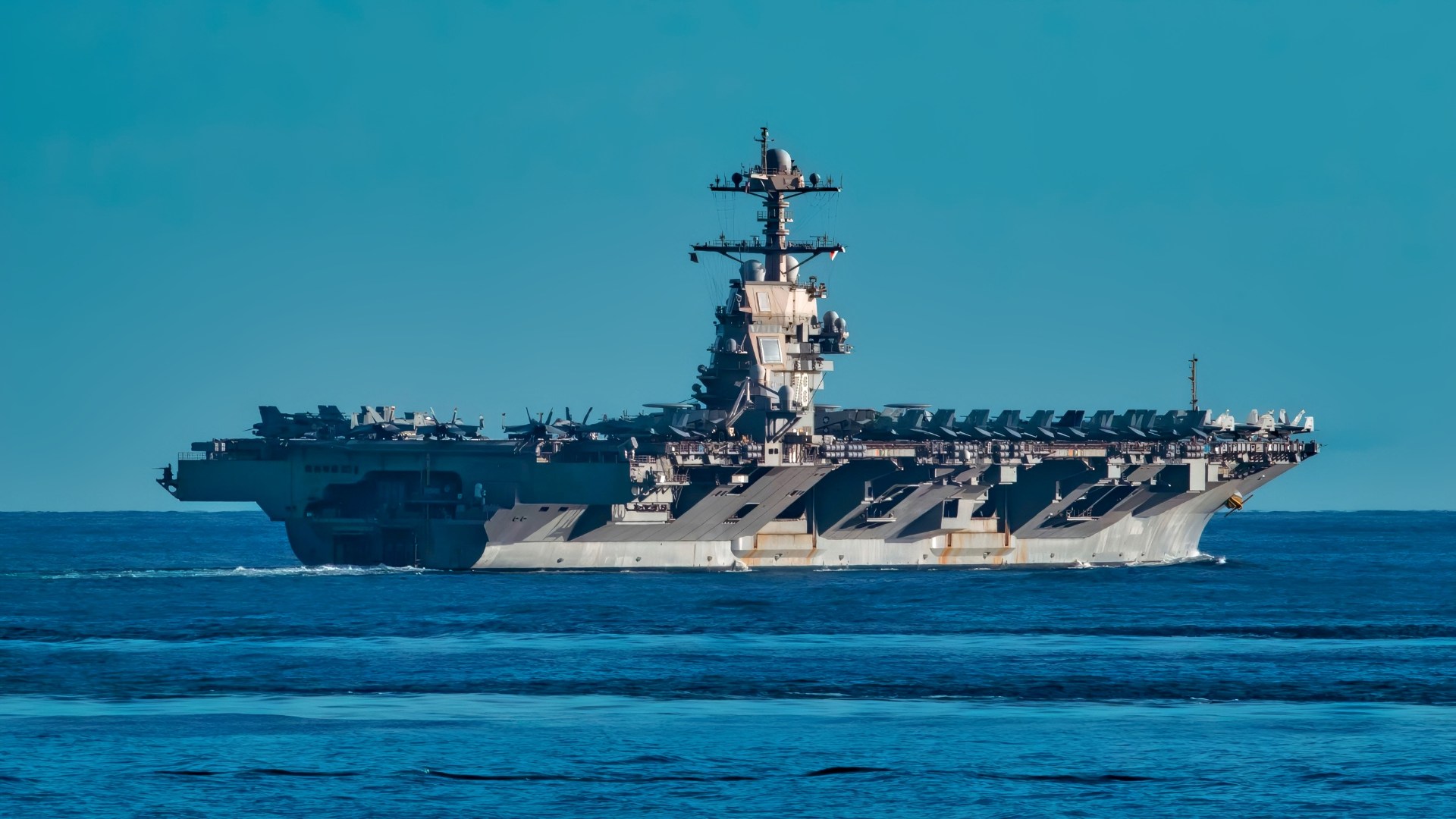
The aircraft carrier USS Nimitz (CVN 68) steams in the Pacific Ocean, Oct. 5, 2024. Nimitz is underway in 3rd Fleet conducting routine training operations. (U.S. Navy photo by Mass Communication Specialist Second Class Carson Croom)
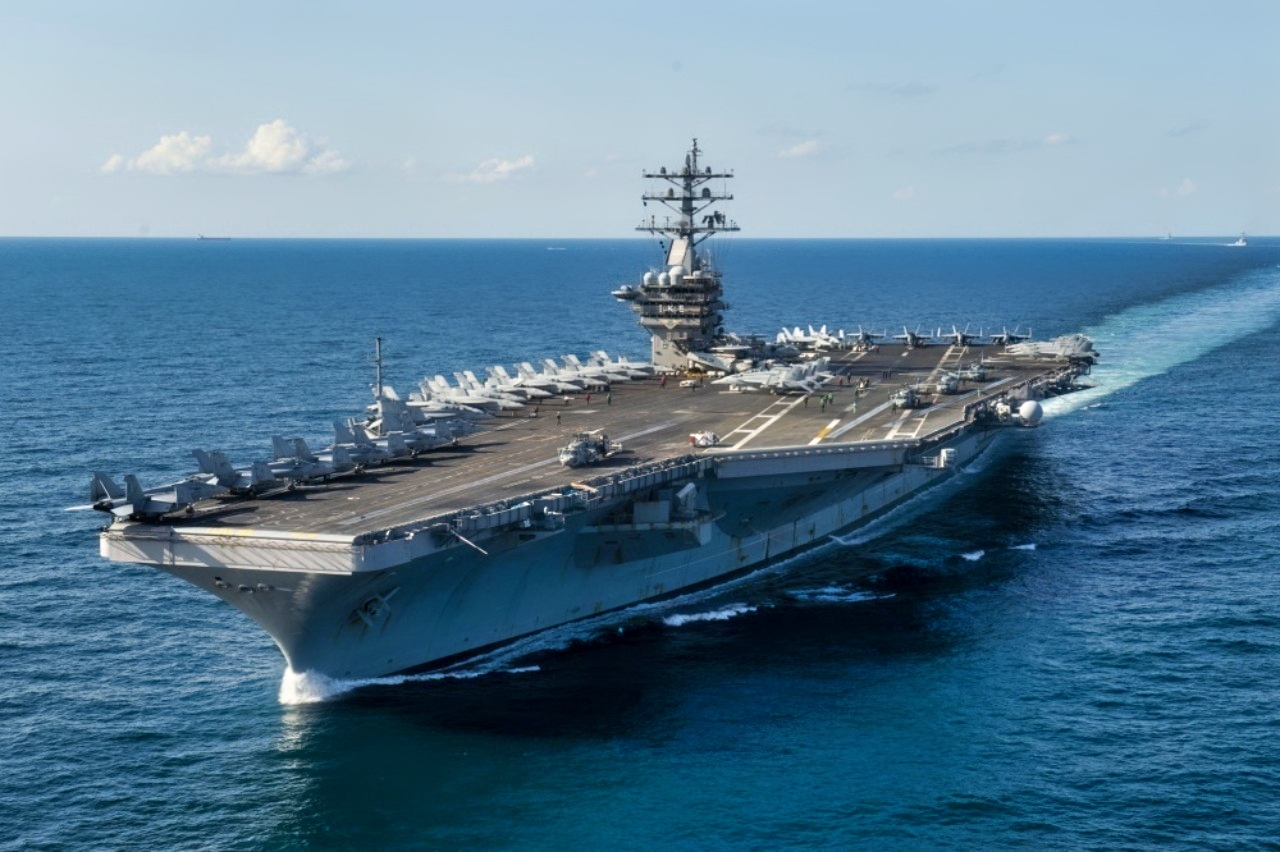
190928-N-YZ751-8022
ATLANTIC OCEAN (Sept. 28, 2019) The aircraft carrier USS Dwight D. Eisenhower (CVN 69) transits the Atlantic Ocean with ships assigned to Carrier Strike Group (CSG) 10 and aircraft assigned to Carrier Air Wing (CVW) 3 during a photo exercise to conclude Tailored Ship’s Training Availability (TSTA) and Final Evaluation Problem (FEP) as part of the basic phase of the Optimized Fleet Response Plan. (U.S. Navy photo by Mass Communication Specialist 1st Class Tony D. Curtis/Released)
The Wall Street Journal reported Thursday that the USS Theodore Roosevelt had left on its scheduled deployment from San Diego, and that the USS Makin Island Amphibious Ready Group had also departed earlier this week. Those groups, per the AP, include 7,000 sailors and 2,000 Marines.
They would join the USS George H.W. Bush and USS George Washington, who are already in the Middle East. The Journal noted that the George Washington could head back to its home port in Japan.
The Post said that if those deployments go to the Middle East and the carriers already there remain, U.S. forces would have 20,000 troops and as many as 150 fighter jets, in addition to the 50,000 troops already there.
The report said the Boxer Amphibious Ready Group is already in the Middle East.
A third carrier, the Journal reported, “would provide more options and firepower if Trump decides to attack.”
After the Election? Or Before?
There has been a lot of speculation, sometimes from the president himself, that the war in Iran could resume after the midterm elections next month. The late-November timeframe for the full complement of carriers would come after the election.
If the Republican Party loses control of one or both houses of Congress, Trump would face additional oversight and budget constraints starting in January, giving him limited time to take military action during the lame-duck period.
Trump was asked this week, per the AP, whether he thinks the increasingly unpopular Iran war would potentially hurt his party in the midterm elections.
“It’s possible,” Trump said, before adding, “it should help, because Iran will not have a nuclear weapon.” However, various polling data in recent weeks show that American voters don’t see that possibility as worth the high gas prices and other effects of the long war.
Ready to Fold?
Speaking in Texas on Thursday, Trump claimed that Iran is “ready to fold up” when it comes to the war. He added that he thinks the U.S. will win the war “right after the election,” then modified that to say “maybe before the election.” He also promised that the current high prices will be “rapidly, rapidly coming down.”
In his wide-ranging interview earlier this week with Time magazine, Trump painted a picture of the war in Iran that has gone swimmingly well when asked why the war has gone on this long, when he had originally promised it would last six to eight weeks after it launched in February.
“I took them out. I could have stopped then, but I wanted to go further,” Trump said of the Iranian regime. He then bragged about how much the U.S. has degraded Iran’s economy and military capabilities.
“Everything’s gone, and they want to make a deal, but I want to make the real deal,” Trump said of the Iranians in the interview with Time.
He also blamed the press for making Americans expect the war would be over quickly.
The president also defended his recent statement, in his United Nations General Assembly speech last week, that he might “annihilate” Iran, which followed numerous other threats in recent months that he would do great damage to Iran, or to specific locations within it.
Time asked him how he could square such threats with his calling himself the “President of Peace,” or his often-stated aspirations to win the Nobel Peace Prize.
“Because by annihilating Iran, we’ve created peace in the world. With Iran, I don’t think you could ever have peace,” Trump said of Iran.
About the Author: Stephen Silver
Stephen Silver is an award-winning journalist, essayist, and film critic, and contributor to the Philadelphia Inquirer, the Jewish Telegraphic Agency, Broad Street Review, and Splice Today. The co-founder of the Philadelphia Film Critics Circle, Stephen lives in suburban Philadelphia with his wife and two sons. For over a decade, Stephen has authored thousands of articles that focus on politics, national security, technology, and the economy. Follow him on X (formerly Twitter) at @StephenSilver, and subscribe to his Substack newsletter.


