

The U.S. has conducted military strikes on Iran for the first time in over a month.
Two missile launchers on Larak Island – a small Iranian island close to the Strait of Hormuz – were targeted in the attacks on Sunday, 30th August.

AGM-158 Extreme Range LRASM. Image Credit: Industry Handout.
It marks the first time military action has been taken against Iran since Wednesday, 29th July.
Strikes by the Strait
U.S. Central Command (CENTCOM) confirmed Sunday’s attacks in a statement to Time.
CENTCOM spokesperson Capt. Tim Hawkins said the strikes on Larak Island came after Iran’s Islamic Revolutionary Guard Corps (IRGC) “were observed preparing to launch rockets with sea mines” into the Strait of Hormuz.
Since the war began in February, Iran has used its ability to strike the Strait of Hormuz as leverage.
Struggling to respond militarily, the authoritarian regime has used its relatively newfound ability to control the passage of commercial shipping into and out of the Persian Gulf.
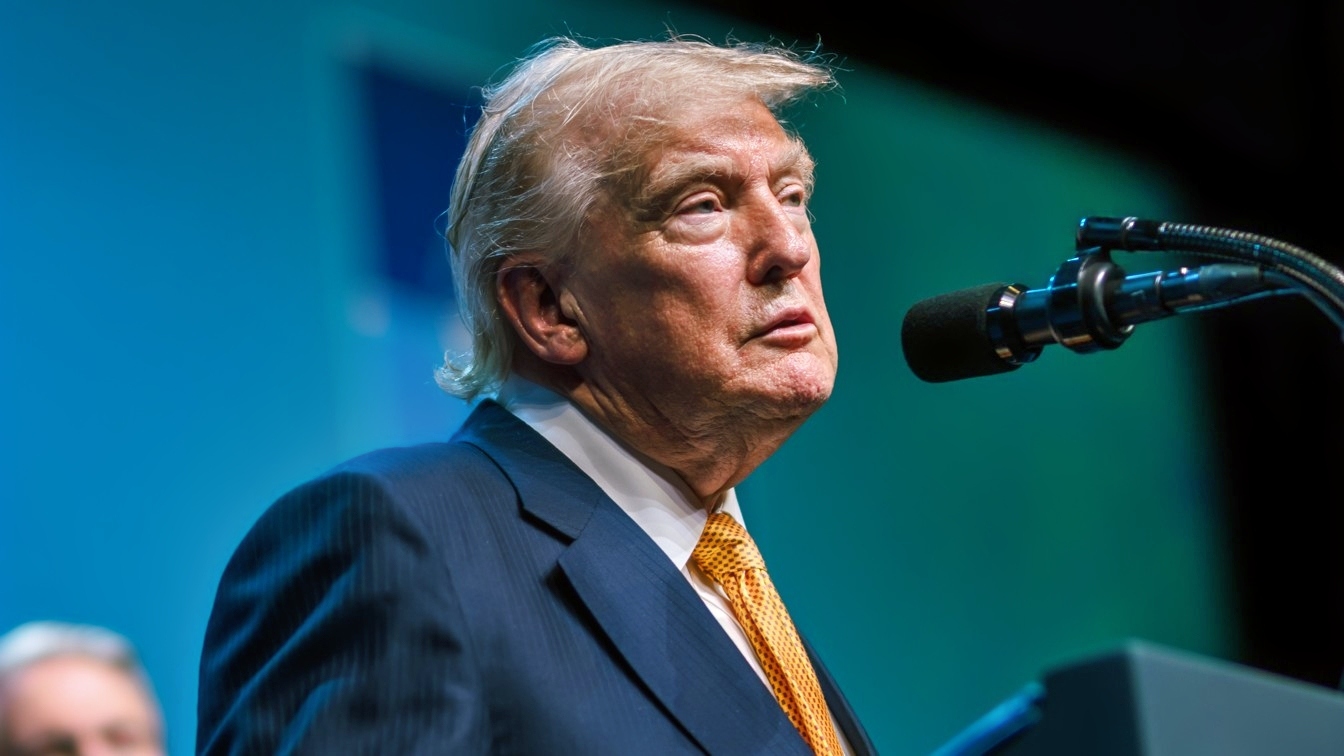
President Donald J. Trump holds a press conference at the 2026 NATO Summit, Wednesday, July 8, 2026, at the Bestepe Presidential Compound in Ankara, Turkey. (Official White House Photo by Daniel Torok)
Around 20% of the world’s oil formerly passed through the Strait of Hormuz, with countries such as Qatar, Kuwait and the UAE reliant on its opening to export oil to trading partners.
Although the strait largely remains closed, U.S. forces have undertaken efforts to prepare for reopening in recent weeks.
Sea mines have since been cleared from the strait amid ongoing discussions between Iran and Oman about a possible reopening, with traffic required to sail wholly or partly through Iranian waters depending on the direction of travel.
“U.S. forces are monitoring the area closely and remain prepared to protect the free flow of commerce through this essential waterway,” Hawkins added on Sunday.
Iran’s Response
In response to the strikes on Larak Island, Iran launched ballistic missiles towards a U.S. military base in Jordan.
The country’s armed forces confirmed it had intercepted eight missiles in the country’s airspace in the early hours of Monday morning.
Iranian news outlets reported a statement from the IRGC shortly after the U.S. strikes, threatening to respond “with punishment for the aggressor”. CENTCOM downplayed the claims, describing the strikes as “limited, precise action against IRGC minelaying forces posing an imminent threat” to the Strait of Hormuz.
Military Action Returns
Compared to the mass bombardment during the opening weeks of the war, military strikes have been minimal since April.
Retaliatory blows have been limited to hours rather than days at a time, even though the U.S.-Israeli firepower trumps that of the Iranian regime.
Since daily fighting paused earlier this year, President Donald Trump has waged an economic war on Tehran instead.
Trump has placed Iran under some of the world’s toughest economic sanctions, with threats being made to trading partners as well as the regime itself.
The strategy relies heavily on countries abiding by Trump’s sanctions, forcing Tehran to negotiate a compromise peace deal in the face of economic crisis. Iranian exports are heavily down, but China continues to import oil from the regime.
So far, no retaliatory sanctions have been placed on Iran’s trading partners.
What Will Trump Do Next?
The President’s economic strategy works for someone who is in no rush to find a permanent solution.
He can continue to sanction Iran and claim that the war is being won while Iran’s economy flounders, all while minimizing the risk to American lives.
That said, Trump’s public messaging has been mixed over the previous six months. Earlier in August, the President announced he would back down from a fresh wave of strikes following requests from regional allies.
Given their proximity to the conflict, America’s Middle Eastern allies prefer Trump’s economic strategy compared to military action, which, as Sunday showed, can lead to retaliatory action from Tehran on countries that harbor a U.S. base.
Many are already disgruntled by the conflict’s disruption to their economies, so Trump has been mindful to appease regional allies when he can.
That said, America’s most unpredictable president may soon decide that military action is the only way to win the war.
Much like they were during the conflict’s infancy, Iran has been resilient under economic pressure, and one must imagine that they will fight on to defy Trump’s sweeping sanctions.
If that strategy fails and Tehran fails to negotiate, the President may find himself with a dilemma over how the conflict concludes.
About the Author: Shay Bottomley
Shay Bottomley is a British journalist. He has written for the Western Standard, Business Insider, Maidenhead Advertiser, Slough Express, Windsor Express, Berkshire Live and Southend Echo.