

On Friday, Iran signaled that talks with the United States could still be revived. Long-term peace prospects are currently on ice, with Polymarket traders now estimating a mere 1% chance of traffic in the Strait of Hormuz returning to pre-war levels by September 15.
“Putting diplomacy back on track isn’t impossible,” Iranian Foreign Minister Abbas Araghchi said, following talks with Qatar’s prime minister and foreign minister in Tehran.
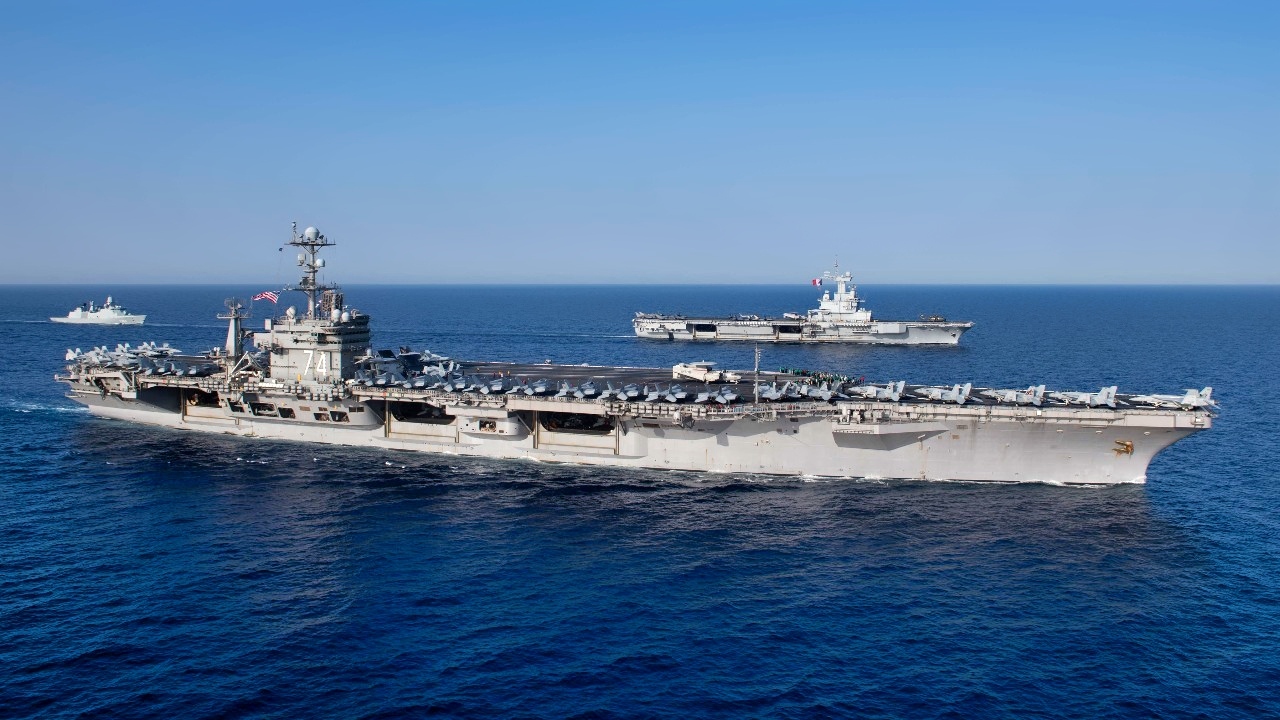
The French Marine Nationale aircraft carrier FS Charles De Gaulle (R91), and the aircraft carrier USS John C. Stennis (CVN 74) are underway in formation in the Red Sea, April 15, 2019. The John C. Stennis Carrier Strike Group is deployed to the U.S. 5th Fleet area of operations in support of naval operations to ensure maritime stability and security in the Central Region, connecting the Mediterranean and the Pacific through the western Indian Ocean and three strategic choke points. (U.S. Navy photo by Mass Communication Specialist Seaman Joshua L. Leonard)

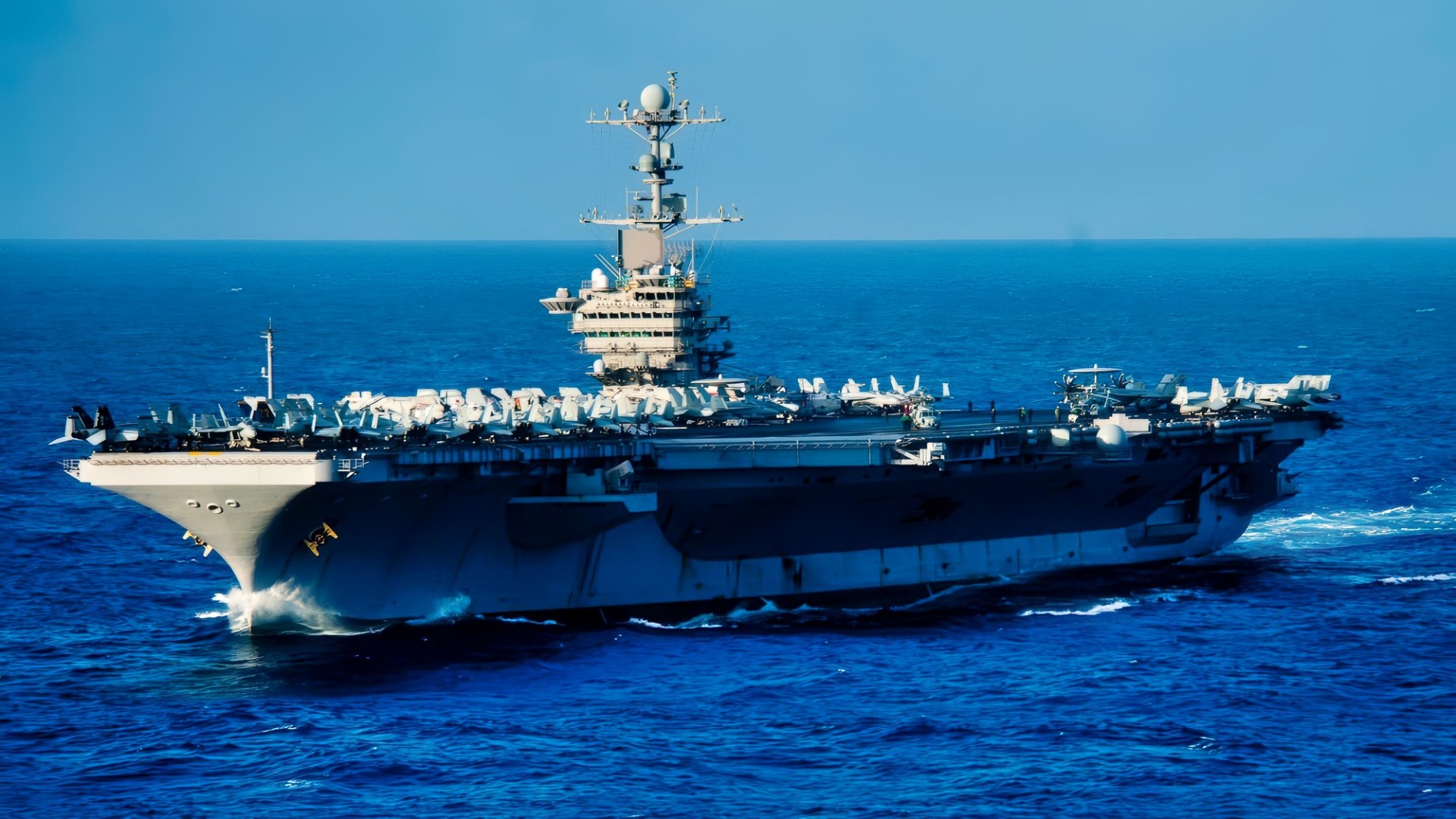
PHILIPPINE SEA(Feb. 22, 2016) USS John C. Stennis (CVN 74) sails through the Philippine Sea. Providing a ready force supporting security and stability in the Indo-Asia-Pacific region, Stennis is operating as part of the Great Green Fleet on a regularly scheduled 7th Fleet deployment. (U.S. Navy photo by Mass Communication Specialist Seaman Cole C. Pielop/Released) .
But Araghchi attached conditions. Washington, he said, must understand that “pressure doesn’t work.”
The Islamic Republic official’s comments came as Qatar, Oman and Pakistan continued to intensify efforts to break the six-month U.S.-Iran standoff.
Reuters reported Friday that Iran is preparing to normalize navigation through Hormuz, while Tehran says it has also reached an understanding with Oman on a shipping corridor through the waterway.
Iran Is Losing Leverage
Thomas O’Donnell, a Global Fellow at the Wilson Center who specializes in energy strategy, told The Jerusalem Post that the Strait of Hormuz is steadily losing value as a major economic weapon for the regime.
Before the war, around 14 million to 15 million barrels of oil traveled through the strait each day.
But six months of disruption now suggest the global economy can adapt more effectively than Tehran may have expected.
“There’s more production in other places,” O’Donnell explained, adding that the consequences have been nothing like they would have been “20 years ago.”
Saudi Arabia can bypass Hormuz through its East-West pipeline, while the United Arab Emirates has its own pipeline linking its oil fields to the port of Fujairah outside the strait.
More bypass capacity is planned, but it would take years to become fully functional.
Security threats also loom along Saudi Arabia’s western Red Sea coast, which hosts ports that ship fuel from the East-West pipeline through the Suez Canal and on to the Mediterranean.
The Houthis, an Iran-backed terror proxy based in Yemen, announced a blockade on vessels serving Saudi ports in July, and have since attacked various Saudi vessels in the waterway.
O’Donnell still stressed that Hormuz was set to become a less powerful “bargaining chip” as time passed. “If you have a diminishing lever, best to make what deal you can,” he noted.
Treasury Secretary Scott Bessent has made an even more dramatic prediction, saying earlier this month that Hormuz could become “just another body of water” within two years as Gulf producers build pipelines that bypass it.
Market Remains Resilient Amid Slow Traffic
Brent crude traded around $89 a barrel Friday, according to Reuters, despite over half a year of conflict and disruption in a waterway that previously handled roughly one-fifth of global energy flows.
Preliminary Kpler data cited by Reuters showed only seven commodity vessels transited Hormuz on Thursday, compared with 17 on Wednesday and a 10-day average of 15.
Gulf oil exports are running at an estimated 15 million to 16 million barrels per day, still below pre-war levels.
Obviously, Iran still holds leverage because of its geography, but its presence in Hormuz may grow less important as the months roll on.
At the same time, Washington is attempting to accelerate that decline via a slew of new sanctions.
The Treasury Department has now targeted the UAE branch of Egypt’s Banque Misr under the Trump administration’s new Operation Economic Outcast campaign.
It accuses the financial institution of processing billions of dollars in suspicious transactions benefiting Iran.
It proposed cutting the bank off from correspondent banking relationships with U.S. financial institutions and announced further Iran-related sanctions.
Bessent has described the broader objective as severing Iran’s remaining economic lifelines.
Will Sanctions Work?
Earlier this week, Iranian Economy Minister Ali Madanizadeh said his country was “fully prepared” for more sanctions, noting that a two-year plan to handle such pressures was in the works.
“We also have our own tools and know how to play the game,” he told Iranian state television.
Richard Goldberg, who worked on so-called “maximum pressure” policy during Trump’s first administration, told The Times of Israel that Iran’s depleted finances made now “the moment to seize on financial warfare.”
Saeid Golkar, an Iran expert at the University of Tennessee, was more skeptical that financial penalties could deliver Washington’s wider objectives, arguing that “sanctions alone are unlikely to force surrender.”
A comprehensive settlement covering Iran’s nuclear program, ballistic missiles and regional activities remains remote.
A narrower bargain over Hormuz is easier to imagine.
Tehran’s incentive is that its position may not improve if it waits.
According to Arab intelligence cited by The Wall Street Journal, Iran is preparing to ramp up the war again, having used the relative lull in fighting to increase missile and drone production.
About the Author: Georgia Gilholy
Georgia Gilholy is a journalist based in the United Kingdom who has been published in Newsweek, The Times of Israel, and the Spectator. Gilholy writes about international politics, culture, and education.


