
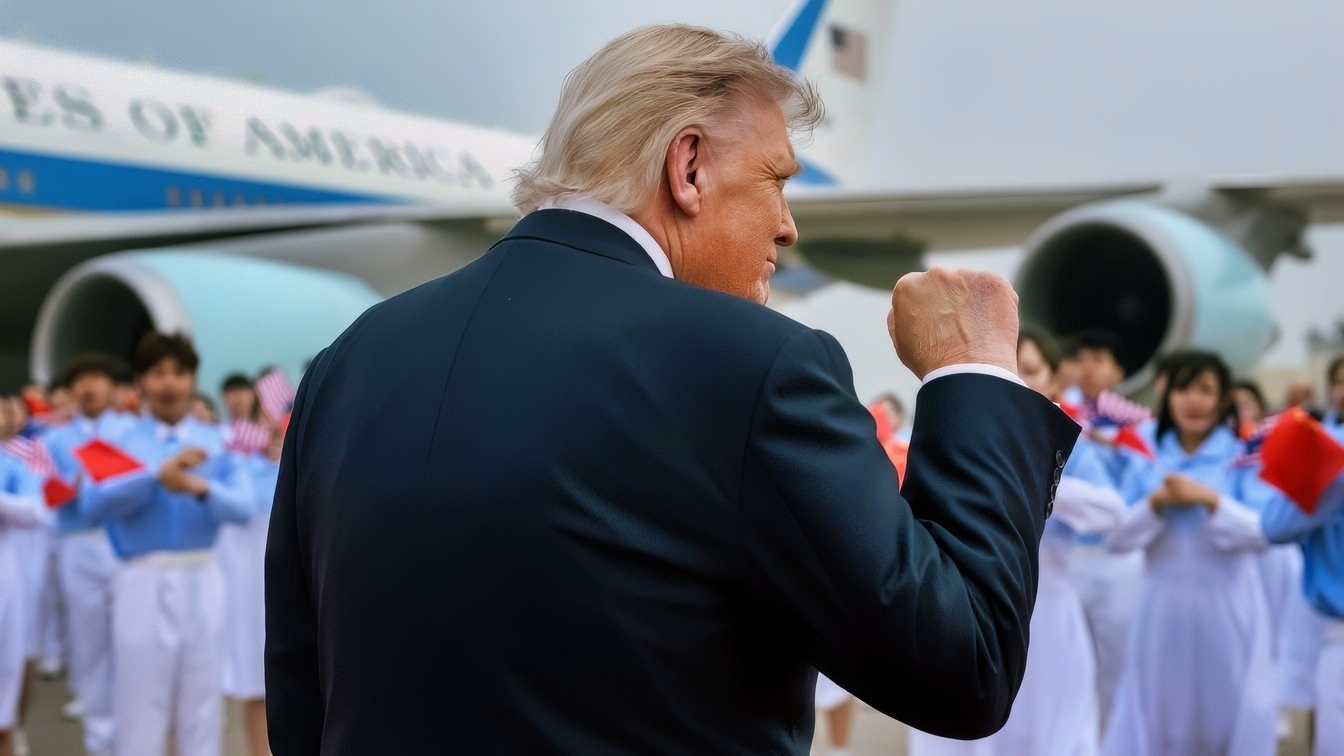
President Donald Trump repeatedly urged Americans throughout the recent election campaign to vote as though his name appeared on the midterm ballot.
After Democrats captured both chambers of Congress, he emphasized that they apparently didn’t.
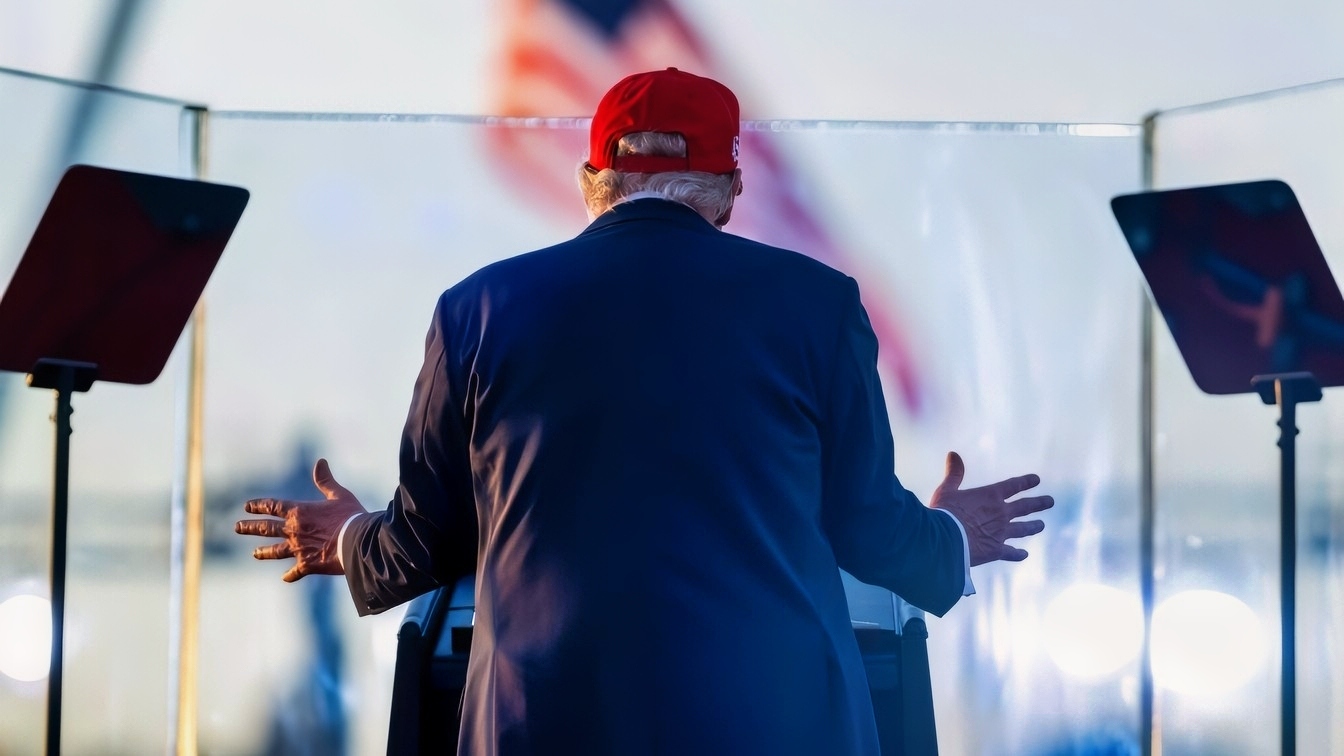
President Donald Trump delivers remarks at a Salute to America Celebration, Thursday, July 3, 2025, at the Iowa State Fairgrounds in Des Moines, Iowa. (Official White House Photo by Daniel Torok)
The reversal followed a campaign in which Trump made himself the central Republican messenger, promoted his administration’s record and appealed directly to supporters who had returned him to the White House in 2024.
The strategy backfired, as opposition to the president became a powerful driver of Democratic gains in traditional Republican strongholds that ultimately cost the GOP its congressional control.
A Trump-Centric Campaign
“You have to pretend I’m on the ballot,” Trump told rally-goers in Georgia in October.
The core message of the Trump-centric GOP campaign was reiterated in the lead-up to the election, including the night before Tuesday’s vote when the president again repeated it on Sean Hannity’s program.
According to White House spokesman Davis Ingle, the reason is that the president is “the unequivocal leader, best messenger, and unmatched motivator for the Republican Party.”
He added: “The choice has never been more clear: doubling down on President Trump’s winning, commonsense agenda, or the Democrats’ extreme liberal policies and obstruction.”
Republicans hoped his presence would mobilize voters for candidates who lacked his personal connection with the party’s base. Democrats sought to turn the same appearances into reminders of policies they argued were increasing costs.
Defeats in traditionally Republican South Carolina and Texas suggested the Trump-centric campaign also helped Democrats mobilize opposition to Trump.
A Congressional Check
While defeated Republicans are already under scrutiny from the president, the election produced more than isolated setbacks for Republican candidates.
As of January, both the Senate and the House will be under Democratic control.
Once the new Congress takes office, Democrats will control committees with the power to investigate the Trump administration and challenge its legislative agenda.
Senate control will also allow them to block presidential nominees.
Opposition to Trump was a significant factor in voters’ stated intentions. In an NPR/PBS News/Marist poll released one week before the election, 44% of likely voters said they would cast their ballot against Trump, compared with 21% who said they would cast it in favor of the president.
Affordability Matters
Economic frustration ran through the results.
Roughly half of voters said living costs and government corruption mattered most in their congressional vote, according to the AP Voter Poll released shortly before polling stations closed.
Democrats gained at least a small advantage in perceptions of which party could handle the economy.
Warning signs had appeared before voting began, too.
A September AP-NORC survey found that 65% of adults blamed Trump’s policies for higher-than-usual prices, while 69% believed the Iran war had not been worth fighting.
Trump himself acknowledged that his decision to go to war had affected the GOP’s performance as results came in.
The disconnect between Trump, who suffered his lowest-ever approval ratings last month, and the electorate may also be to blame.
In his final major public speech at the Lincoln Memorial Reflecting Pool, he spent considerable time discussing renovations, pipework and landscaping.
Democrats, meanwhile, campaigned on household costs, tariffs and the war’s consequences.
Their message placed responsibility on the party governing Washington.
A Personal Defeat
As the losses mounted, Trump argued that Republican candidates had failed to inspire voters. He claimed supporters would have turned out if he had been running.
At the same time, his advisors lambasted the “uninspiring, lazy, and thoroughly ineffective communicators” who had cost the GOP control of Congress.
Trump also backed some candidates heavily.
In Texas, he backed state attorney general Ken Paxton over incumbent Senator John Cornyn and encouraged Darline Graham’s campaign in South Carolina.
Both were defeated.
Although these results cannot show how alternative candidates would have performed, they do show how the president’s influence extended beyond campaign rallies and into the choices Republicans offered voters.
Trump has dominated the GOP for more than a decade, and his influence over the past ten years has been evident. He’s run in three presidential elections and won two.
It was understandable why placing the Republican Party’s first three-time presidential nominee since Richard Nixon at the center of its campaign was deemed a suitable strategy.
But Trump’s message to “pretend” he was on the ballot resonated more with an electorate that largely disapproves of his presidency than an immobilized supporter base.
As a result, the Democratic Party will play a major role in the swan song years of Trump’s presidential career.
About the Author: Shay Bottomley
Shay Bottomley is a British journalist. He has written for the Western Standard, Business Insider, Maidenhead Advertiser, Slough Express, Windsor Express, Berkshire Live and Southend Echo.