


Iran’s Economic Squeeze Gets Tighter – Six months into the U.S.-Iran war, inflation is accelerating, and Iran’s oil exports have collapsed.
Iran’s year-over-year inflation rate reached 84.4% in August, according to Central Bank figures reported by IranWire, while the rolling 12-month rate climbed to 65.1%. The rial has traded at around 2 million to the dollar on the open market, and food prices are rising considerably faster than the headline inflation rate.

F/A-18 Hornets and an F-22 Raptor fly in formation during the HUGE 1 flyover practice over the National Mall as part of the America 250 celebration in Washington, D.C., July 3, 2026. The formation showcased current U.S. military airpower during the nation’s 250th anniversary celebration. The flyover highlighted the joint capabilities of America’s armed forces in recognition of Independence Day. (U.S. Air Force photo by Staff Sgt. Lauren Diaz)
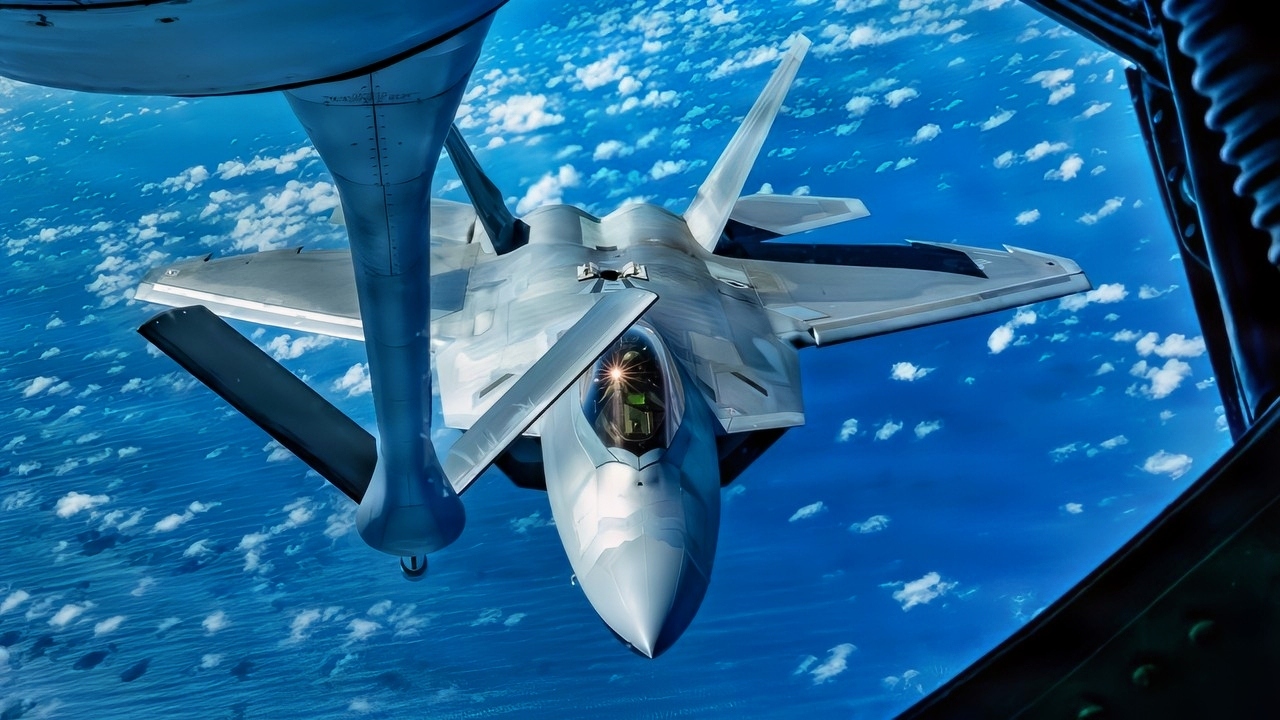
A U.S. Air Force F-22 Raptor assigned to the 27th Expeditionary Fighter Squadron, deployed to Kadena Air Base, Japan, approaches a KC-135 Stratotanker assigned to the 909th Air Refueling Squadron during a training flight over the Pacific Ocean, July 8, 2026. Aerial refueling capabilities extend airborne training time and combat radius, ensuring joint and allied aircraft are postured to maintain regional peace and stability within the Indo-Pacific. (U.S. Air Force photo by Staff Sgt. Erin Currie) 18 WG/PA
Washington just expanded the economic campaign it hopes will force Tehran back to the negotiating table. Last week, the Treasury Department launched “Operation Economic Outcast”, with Treasury Secretary Scott Bessent declaring that its objective was to “sever every economic lifeline” sustaining the Iranian government.
The question is whether the pressure is likely to force Iran’s theocratic regime to compromise.
Rising Food Prices
The figures emerging from Iran paint a miserable picture for ordinary people. Vegetable oil cost 383% more in August than a year earlier, according to the Guardian. Eggs were up 294%, chicken 177%, and red meat 148%. Demand for red meat had already fallen 50% year over year in April, according to Iran’s Mehr news agency.
“For part of the population, the issue is no longer buying a house or a car,” biomedical engineer Mohsen Zavaar told the Guardian. Instead, families are cutting back on meat, buying lower-quality food, and postponing medical treatment.
His verdict on the government’s response was shorter: “The people don’t want miracles – they want decisions.”
Long lines have also reportedly formed outside gas stations in Tehran and Mashhad, as officials consider changes to Iran’s heavily subsidized gasoline prices. A sudden 50% price increase in November 2019 helped trigger nationwide protests.
Foreign Currency Supplies Under Strain
Reuters reported Tuesday that Iran has gone roughly seven weeks without significant crude exports through the Strait of Hormuz, the first such interruption on record. Iranian crude loadings plunged from around 2 million barrels per day in March to just 220,000-255,000 barrels per day in August, according to industry estimates cited by Reuters.
Iran International, citing Kpler estimates, separately put August shipments to China at roughly 520,000 barrels per day, down from around 1.7 million barrels per day at the beginning of the conflict. Its figures also show that fuel-oil exports fell from about 220,000 barrels per day at the war’s outset to 61,000 barrels per day in August.
Iran’s non-oil exports are also being disrupted. Tehran exported about $15 billion in non-oil goods through August 16, nearly 30% below the comparable period last year. Imports fell to around $17 billion, roughly one-quarter lower.
“The channels for selling Iranian oil are drying up,” energy analyst Amirhossein Hashemi-Javid told the Guardian.
Iran is Used to Isolation
“It is bad, but it’s not the kind of pressure that’s going to lead to economic collapse,” Ali Vaez, who heads the Iran project at the International Crisis Group, told The Times. Iran’s size, long land borders, and decades of experience circumventing sanctions make it extraordinarily difficult to completely seal off its economy.
Raz Zimmt, director of the Iran and Shi’ite Axis Program at Israel’s Institute for National Security Studies, offered a similar warning. “We still don’t see anything that can be defined as a loss of control or a collapse,” Zimmt told The Jerusalem Post. But he argued that “economic pressure is bringing them very close to the point of decision.”
The International Monetary Fund (IMF) currently forecasts that Iran’s consumer-price inflation will average 68.9% this year. Meanwhile, real GDP is set to shrink by 5.4%. The IMF also puts the country’s population at just under 88 million.
Iranian Regime Claims to be Open to Talks
President Masoud Pezeshkian argued last week that “it is better that we bring the war to an end now” while Iran remains in a position of strength, according to The Times. The regime continues to demand that the U.S. accept its hardline demands, such as the lifting of all sanctions.
Washington is also facing its own issues, with the Federal Reserve putting the U.S. inflation measure at 3.7% in July. This is an increase from 2.9% when the U.S. and Israel launched joint strikes on Iran. Gasoline prices surged to more than $4 a gallon last August.
About the Author:
Georgia Gilholy is a journalist based in the United Kingdom who has been published in Newsweek, The Times of Israel, and the Spectator. Gilholy writes about international politics, culture, and education.


