

According to Tehran, at least five tankers have reportedly been struck by Iranian naval mines in the Strait of Hormuz over the past week, with the latest explosion taking place on Friday, November 13.
While such reports are nearly impossible to confirm coming out of Iran, we do know that whatever is happening for sure is having a negative impact on the environment.

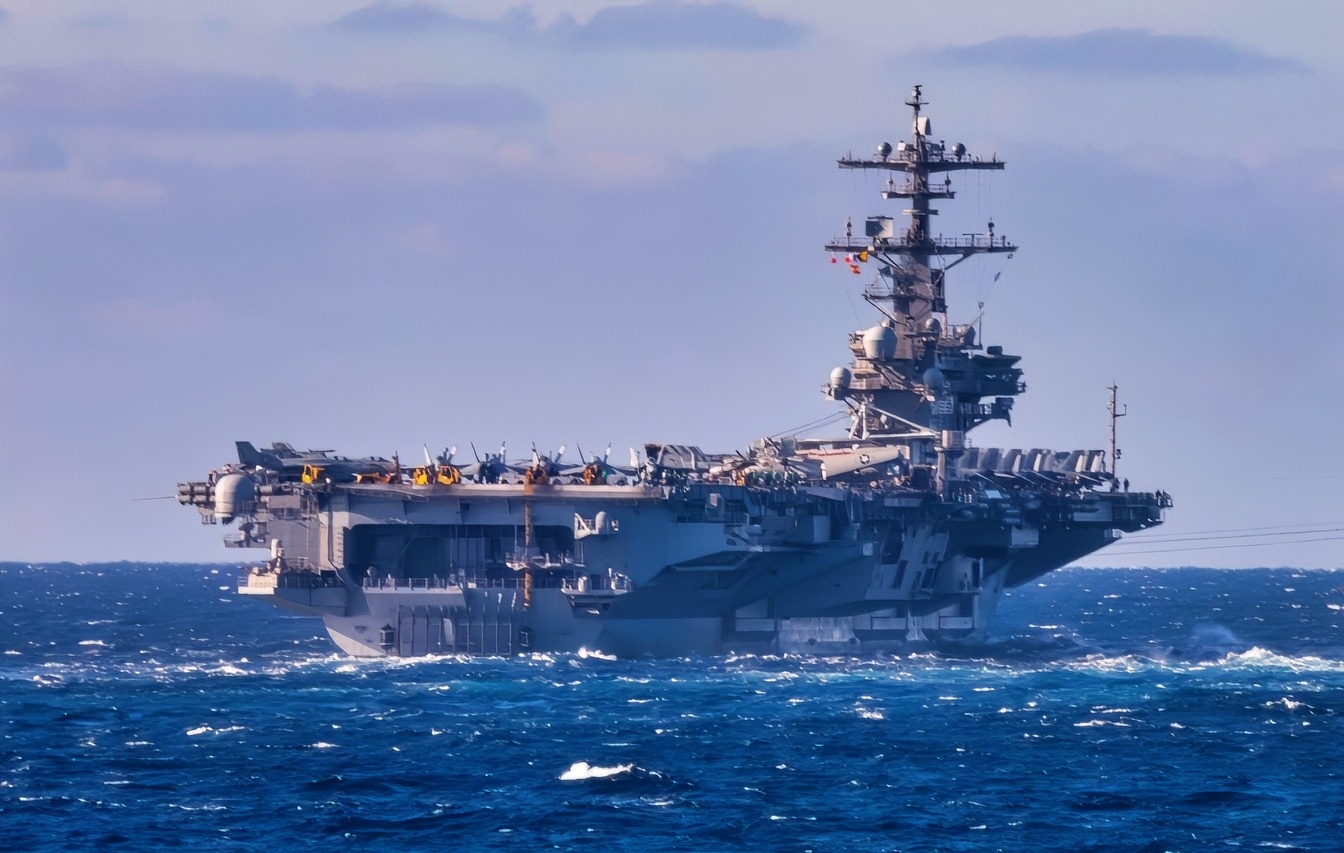
(Oct. 17, 2017) The aircraft carrier USS Nimitz (CVN 68) transits the Arabian Gulf, Oct 17, 2017. Nimitz is deployed in the U.S. 5th Fleet area of operations in support of Operation Inherent Resolve. While in this region, the ship and strike group are conducting maritime security operations to reassure allies and partners, preserve freedom of navigation, and maintain the free flow of commerce. (U.S. Navy photo by Mass Communication Specialist Seaman David Claypool/Released)
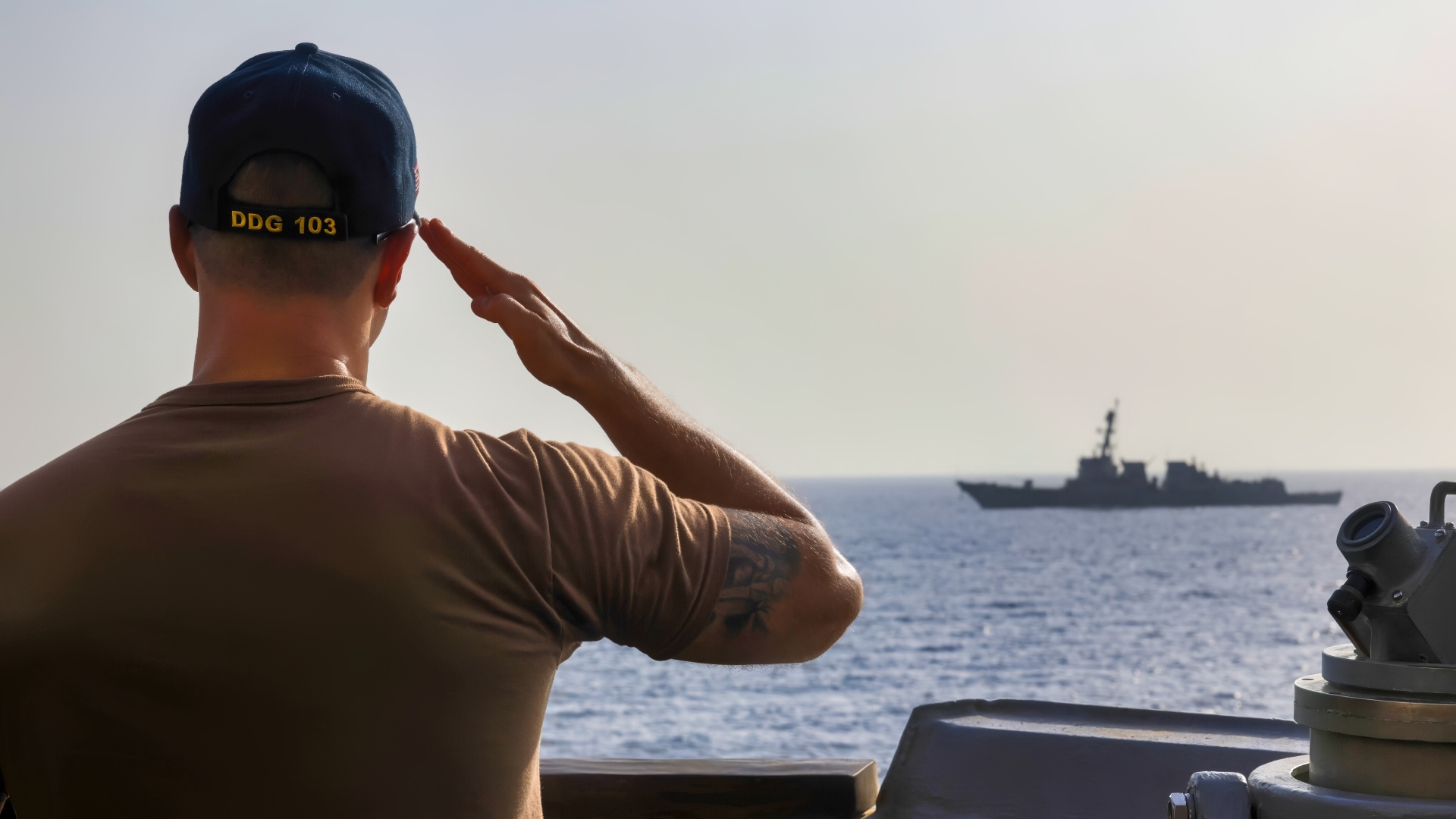
U.S. CENTRAL COMMAND AREA OF RESPONSIBILITY (Aug. 25, 2025) The executive officer of the Arleigh Burke-class guided-missile destroyer USS Truxtun (DDG 103) renders honors to the USS Forrest Sherman (DDG-98) aboard the USS Truxtun, in the U.S. Central Command area of responsibility. (Official U.S. Navy photo)
The Environment Is a Casualty in the Iran War
The attacks come as new satellite imagery reveals the enormous environmental cost of the war, with hundreds of oil spills detected across the Gulf and surrounding waters since the war began in February.
A report by The Guardian reveals that Greenpeace has identified more than 500 examples of oil spills since February 28.
The cumulative area of the detected slicks reached around 20,000 square kilometers.
The findings suggest long-term damage to marine ecosystems.
The findings also come as commercial traffic begins to recover.
Oil Spills Threaten Gulf Ecosystems
The Guardian reported on November 11 that satellite imagery has revealed oil pollution throughout the Strait of Hormuz, the Gulf, and the Arabian Sea, and that some individual spills cover hundreds of square kilometers.
One of the largest incidents took place in October.
An attack on the supertanker Gem No. 2 off the United Arab Emirates created an oil slick that stretched for more than 21 miles.
Greenpeace also identified a spill off Oman in June that covered more than 600 square kilometers.
The pollution has reached several environmentally sensitive locations, including Iran’s Qeshm Island and the Hara mangrove forests.
The environmental consequences of the tanker strikes could persist long after the conflict ends. Oil trapped in coastal waters and sediments can continue to threaten maritime ecosystems for years.
Vessels Continue to Ignore Warnings from the Iranian Military
The spills were identified amid rising traffic in the Strait of Hormuz and continued strikes.
Iranian officials also seem intent on ensuring vessels they deem unauthorized do not pass.
Many of the vessels hit by explosives over the last few months have been ignoring warnings issued by Iranian forces not to enter certain restricted areas of the Strait of Hormuz.
According to a report by the Islamic Republic News Agency (IRNA), the IRGC issued a statement claiming a tanker that exploded on Friday chose to take an “unauthorized” route while passing through the eastern part of the waterway.
The statement said the vessel had “failed” to learn from previous incidents where tankers were destroyed, and instead allowed US combat aircraft to try and escort them through the trade passage.
Again, it is hard to know exactly how many tankers have been hit and when, as Iran has clear incentives to embellish in its reports; however, the environment is clearly being impacted day after day.
The Iranian Navy Blames Trump and the Vessel Owners
Just a day earlier, on November 12, four tankers were struck in the waterway after failing to heed these warnings, as reported by IRNA. Of course, such reports from Tehran can’t be verified and must be taken with a grain of salt.
The Iranian outlet published a report on the first two explosions that morning.
Then the Iranian Army Navy announced two more tankers caught fire later that evening, claiming the vessels turned off their radars before attempting to travel through the waterway after ignoring several warnings.
The Navy laid the blame for the naval mine impacts on President Donald Trump first, calling the US leader a liar, and secondly on the vessels’ owners for trusting Trump.
The IRGC also revealed that the first two supertankers were carrying over four million barrels of oil between them when the explosions occurred.
Neither vessel was identified, and the extent of the damage has not been independently verified.
The UK Maritime Trade Operations (UKMTO) also reported that a tanker was struck by an unidentified projectile near Ras Al-Khaimah, UAE, on November 11, causing an engine room fire and forcing its crew to evacuate.
Over 130 Tanker Incidents in the Strait
Since the US-Israeli war against Iran began on February 28, reports show there have been between 130 and 144 confirmed incidents involving commercial vessels traveling through the vital waterway. That is, at least according to Iranian sources; however, other sources say the number of incidents is mounting, and the environmental impacts are as noted above.
Most of these incidents have been attacks using naval mines, missiles, drone strikes, or other projectiles. At least 37 of those attacks happened in October, marking it as the deadliest month since the conflict began.
Despite a recent rebound of commercial vessel traffic and signs of global oil market recovery, shipments through the Hormuz Strait remain heavily disrupted—about 65% below standard levels recorded before the war started.
Oil Spills Threaten Coastal Water Supplies
The pollution caused by recent strikes also threatens the desalination facilities that provide drinking water to communities throughout the Gulf.
Following October’s attack on the Gem No. 2, authorities in the United Arab Emirates began monitoring desalination plants to prevent oil contamination from affecting supplies.
About the Author: Georgia Gilholy
Georgia Gilholy is a journalist based in the United Kingdom who has been published in Newsweek, The Times of Israel, and the Spectator. Gilholy writes about international politics, culture, and education.


