

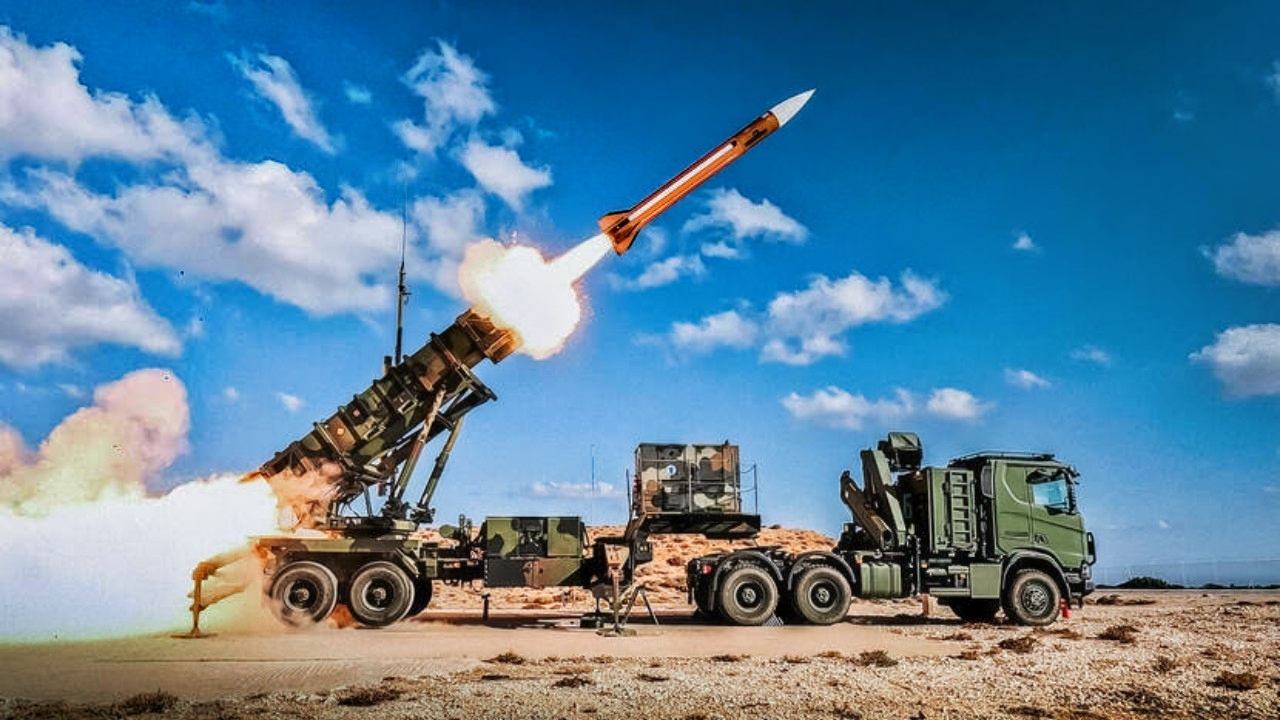
The war in Iran has escalated once again after the U.S. on Tuesday attacked a series of sites in Iran, and Iran retaliated by launching missiles at military bases in several U.S.-allied nations throughout the Middle East.
Iran and its IRGC, in particular, stated that they were retaliating for a U.S. strike on a wedding taking place at a home in Sirik, a town on the Strait of Hormuz.
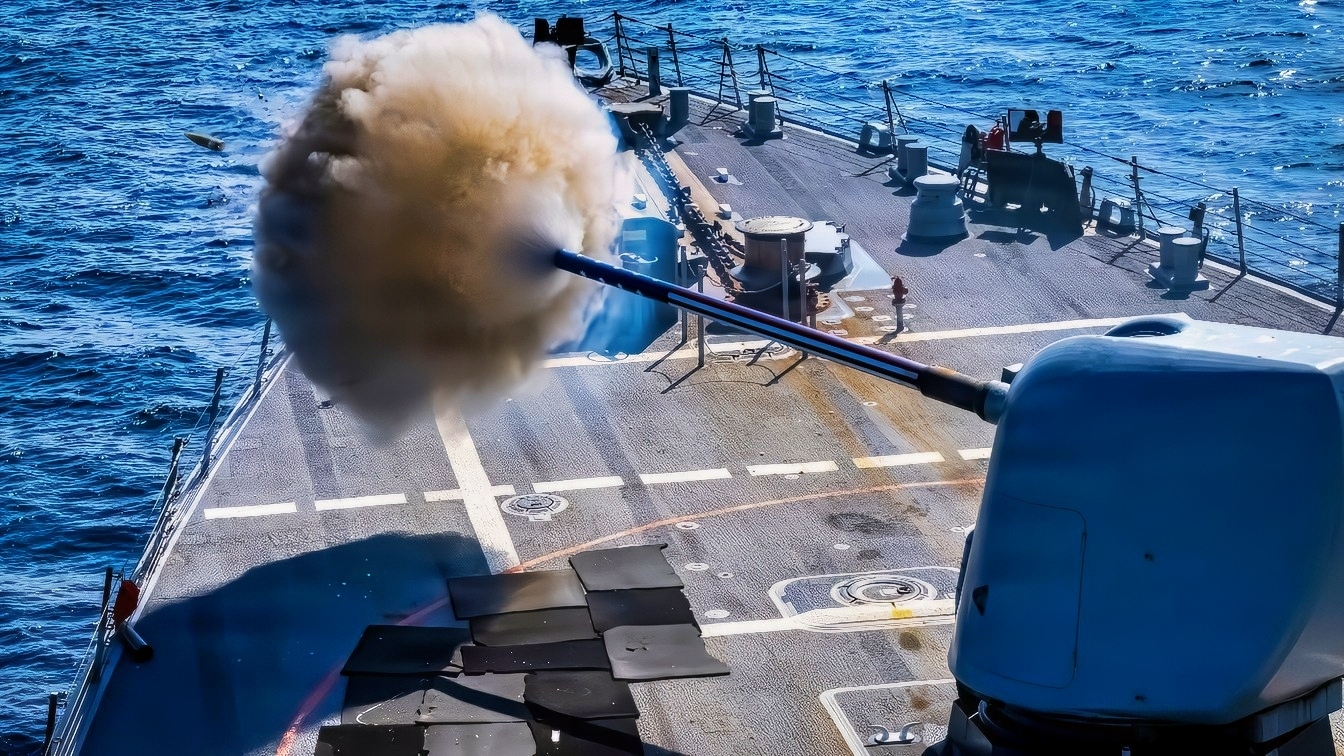
PACIFIC OCEAN (April 27, 2026) U.S. Navy Arleigh Burke-Class guided-missile destroyer USS John Paul Jones (DDG) 53, fires its Mk.45 5-inch deck cannon during a live fire exercise, April 27, 2026. John Paul Jones, part of the Theodore Roosevelt Carrier Strike Group, is underway in the U.S. 3rd Fleet area of operation conducting advanced training to bolster strike group readiness and capability. (U.S. Navy photo by Mass Communications Specialist 2nd Class Ryan Holloway)
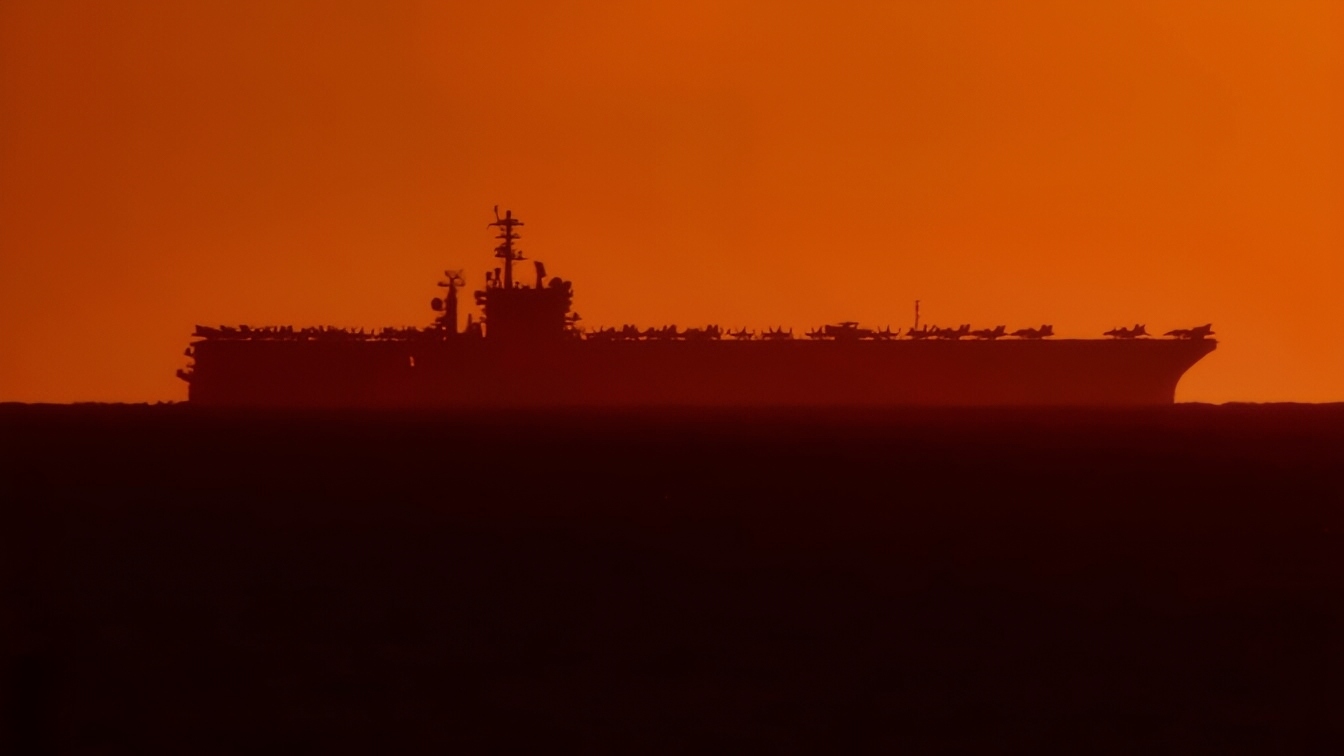
Indian Ocean (January 6th, 2021) The aircraft carrier USS Nimitz (CVN 68) steams in the Indian Ocean, Jan. 6. Nimitz is the flagship of the Nimitz Carrier Strike Group and is deployed to the U.S. 5th Fleet area of operations to ensure maritime stability and security in the Central Region, connecting the Mediterranean and Pacific through the Western Indian Ocean and three critical chokepoints to the free flow of global commerce. (U.S. Navy photo by Mass Communication Specialist Seaman Drace Wilson)
Four people, including a child, were reportedly killed in the wedding strike, along with dozens of injuries.
“Make no mistake: these crimes will not go unpunished,” Ebrahim Azizi, chairman of the Iranian parliament’s National Security and Foreign Policy Committee, said in a social media post after the wedding attack, which included video of the aftermath of the wedding attack. He went on to call it “the ultimate proof of the utter desperation of the fake defenders of human rights.”
“We’re aware of the reports, which originated from Iranian state media. The U.S. military never targets civilians, unlike the IRGC,” CENTCOM spokesman Capt. Tim Hawkins said in a statement to the media about the wedding strike.
Also, per NBC News, the IRGC has claimed that four members of its aerospace forces were killed in Kermanshah, a city near Iran’s border with Iraq. And Iran claimed that U.S. forces struck a fishmeal factory on Qeshm Island.
According to the BBC, Iran launched attacks at Jordan, Kuwait, Iraq, and Bahrain.
Those countries claimed they intercepted the missiles; the Jordanian Armed Forces in particular said they intercepted 13 ballistic missiles and suffered no casualties.
Kuwait’s army also stated that it was “responding to Iranian missile attacks,” while explosions were reported in Bahrain. The IRGC also claimed that it struck American bases in Iraqi Kurdistan, including a “ maintenance centre, warehouses and equipment,” the BBC reported.
Gulf Nations Condemn Attacks
The Gulf Cooperation Council, on Wednesday, called Iran’s latest attacks on Middle Eastern bases “heinous.”
“These Iranian attacks represent a blatant violation of the sovereignty of states and a direct threat to their security and stability,” GCC secretary-general Jasem Mohamed AlBudaiwi said.
GCC member states, the statement added, “stand firmly alongside the Kingdom of Bahrain, the State of Kuwait, and the Hashemite Kingdom of Jordan in all measures and actions taken to preserve their sovereignty, protect their security and stability, and ensure the safety of their peoples and residents.”
Meanwhile, Sky News reported that the IRGC is claiming that it killed pilots in an attack on an American airbase in Jordan.
“A number of pilots and flight maintenance crew members were killed,” the IRGC said of the overnight attack on the Prince Hassan Air Base in Jordan. If that story is true, it’s not clear if the pilots were American, and the Pentagon has not said that any Americans were killed in that attack.
A Pivot Back to Military Action
Less than a week ago, it appeared the U.S. chose to shift strategy away from military action and toward economic pressure, announcing the “Economic D-Day,” which threatened sanctions against countries that helped Iran in any way.
American military resources are reportedly depleted, even as the U.S. has been touting some success in getting oil through the “closed” Strait of Hormuz.
While that economic pressure certainly continues, the military phase in the war appears to have reignited, after a lull lasting over a month.
It’s not clear what might come next.
“I couldn’t care less if they sign a worthless, to them, agreement. I like our position now much better, with almost total control of the Hormuz Strait, and their economy totally collapsing,” President Donald Trump said in a Truth Social post on Tuesday, amid the renewed attacks.
“They are just playing out the inevitable. When are the Iranian people going to rise up and fight?”
Iran’s President Masoud Pezeshkian said earlier this week that Iran was willing to return to the conditions of the June Memorandum of Understanding if the U.S. agreed to do so as well, but that idea seems to be a non-starter.
Oil Rises Again
Brent crude oil has once again risen, reaching over $95 on Wednesday morning. That’s a daily change of just under $1, but a monthly increase of nearly 14 percent.
About the Author: Stephen Silver
Stephen Silver is an award-winning journalist, essayist, and film critic, and contributor to the Philadelphia Inquirer, the Jewish Telegraphic Agency, Broad Street Review, and Splice Today. The co-founder of the Philadelphia Film Critics Circle, Stephen lives in suburban Philadelphia with his wife and two sons. For over a decade, Stephen has authored thousands of articles that focus on politics, national security, technology, and the economy. Follow him on X (formerly Twitter) at @StephenSilver, and subscribe to his Substack newsletter.


