


Russia just had the worst month of its war in Ukraine. It wasn’t close. Worse still, they are losing ground despite massive efforts to punch a hole in Ukraine’s defenses. According to an article in Bloomberg, the Russian military suffered record casualties in October while also giving ground back to Kyiv’s forces, based on Western intelligence data and figures released by Ukrainian President Volodymyr Zelenskyy.
More than 54,000 Russian troops were killed or seriously wounded during the month, the highest total since the full-scale invasion began almost five years ago.
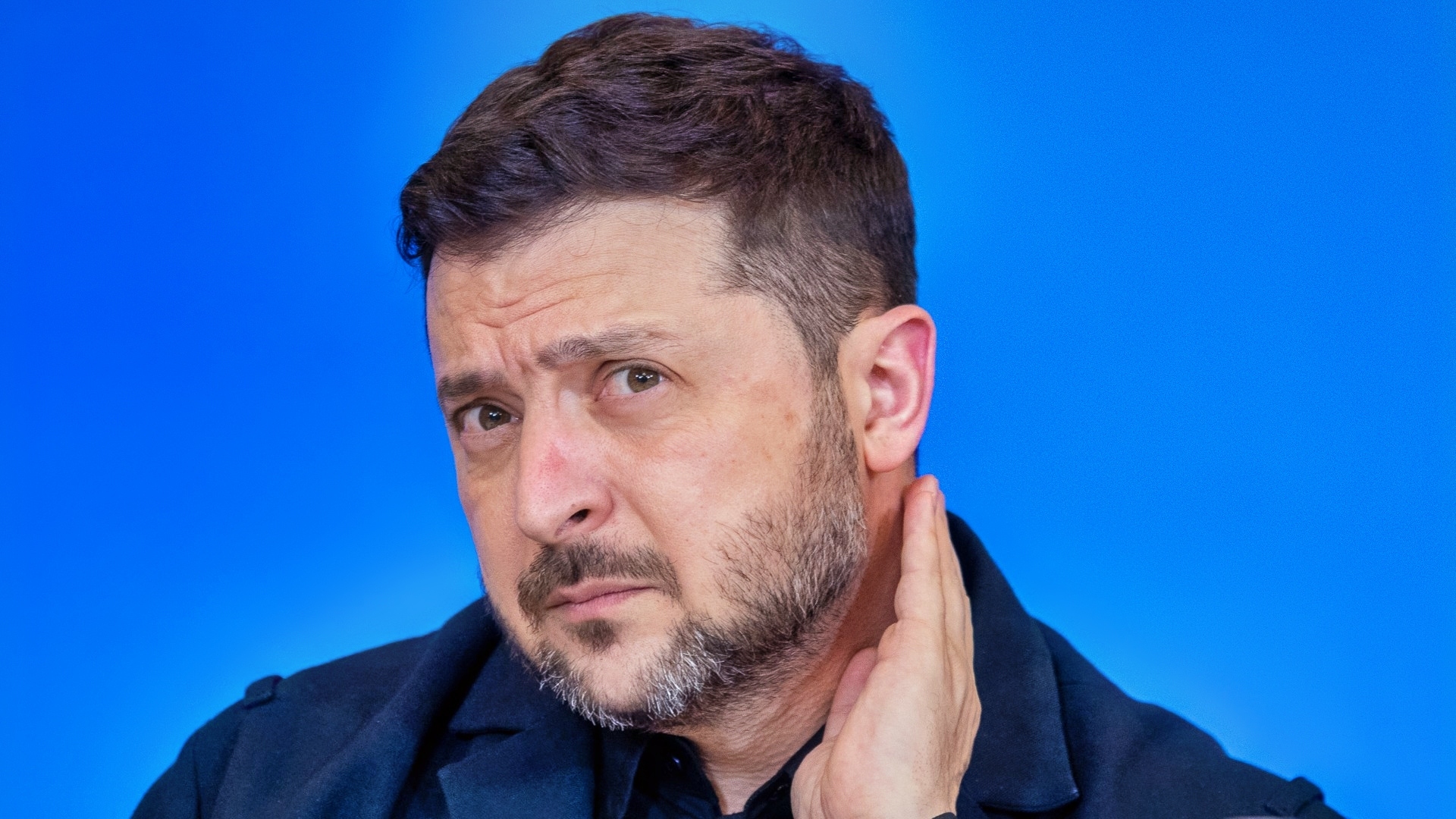
Ukraine President Zelensky 2026 Creative Commons Photo
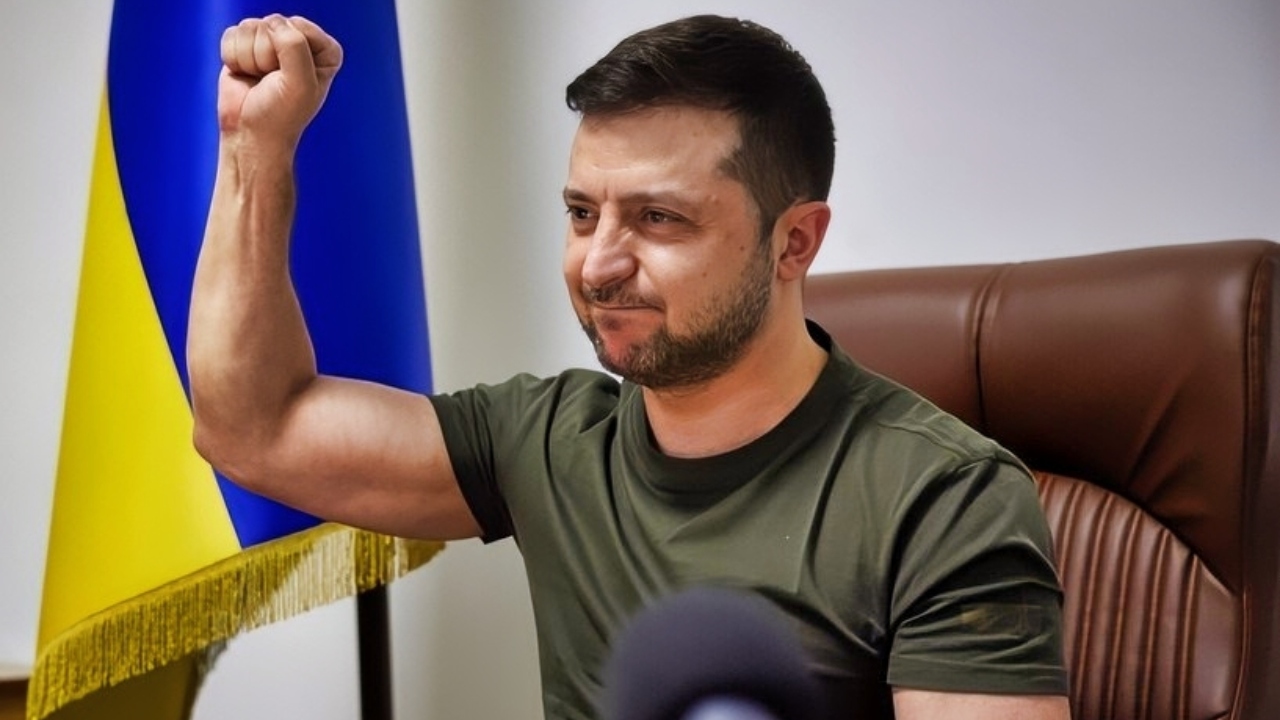
Zelensky Speaking in UK Ukraine Government Photo
Those numbers are staggering.
That’s roughly the population of a mid-sized American town erased from the Russian order of battle in 31 days.
And the Kremlin has very little to show for it.
The Numbers Keep Climbing
Ukraine’s Ministry of Defense put October’s total at 54,400, with a daily average above 1,750. Losses topped 2,000 on five separate days, and October 21 set a single-day record of 2,250.
That record didn’t last two weeks.
On November 1, Ukraine’s General Staff reported 2,500 Russian casualties in a single day.
One Russian soldier killed or seriously wounded every 35 seconds. And yet they keep feeding young, barely trained and equipped troops into the meat grinder.
The trend line is the real story.
The General Staff counted 42,020 Russian losses in August, 46,230 in September, and 54,400 in October.
Russian casualties have now topped 40,000 for four straight months, against a war-long monthly average of about 28,000. Put September and October together, and you’re north of 100,000.
And while some claim that Ukraine’s numbers are inflated, NATO’s numbers tell a similar story.
In October, Bloomberg reported that a NATO military official estimated Russia took more than 50,000 casualties in September, about 28,000 of them killed. The same reporting put Ukraine’s losses for that month at roughly 5,000.
Kyiv’s figures can’t be independently verified, and both sides guard their casualty counts like state secrets. Ukraine’s General Staff still hasn’t released its own losses.
Even so, independent Western analysts broadly agree Russia is bleeding far worse, with CSIS pegging the ratio at roughly 2.5 to 1 or 2 to 1.
Bloomberg also notes that Ukraine documents its kills with drone footage, which makes these numbers harder to wave away than the propaganda tallies of 2022.
The Drones Are Doing The Killing
The single biggest driver here is the drone. Ukraine’s Unmanned Systems Forces inflicted 16,796 Russian casualties in October, a record for the branch, and hit an enemy target every 41 seconds on average.
Nearly 70 percent of those losses came in the Dobropillia-Pokrovsk, Oleksandrivka, and Huliaipole sectors.
Since January, Ukrainian drones have killed or wounded more than 300,000 Russian troops.
Russian commanders keep feeding infantry into kill zones saturated with drones, mines, and artillery, hoping a few men survive long enough to plant a flag.
In this war, moving under observation is a recipe for disaster.
Nothing in this war has changed the infantryman’s life more than the cheap FPV drone.
The empty battlefield isn’t empty.
Something is always watching.
And much of the two armies are consistently moving underground out of necessity.
It changes the math on the wounded, too.
A soldier hit 10 kilometers behind the line, with no safe way to evacuate him, is far more likely to die than one hit in a conventional firefight.
Earlier Bloomberg reporting found that the share of Russians killed outright compared to wounded has climbed significantly.
The golden hour doesn’t exist when nobody can reach you safely or even try to evacuate you.
What Did Russia Buy With All That Blood?
Almost nothing. Zelenskyy claims that Ukrainian forces liberated 96.2 square kilometers in October, 10.4 more than Russia captured.
Institute for the Study of War (ISW) data, as summarized by Le Grand Continent, shows Russia losing net ground for a second consecutive month, 27.3 square kilometers in October after 81 in September.
Using the casualty figures, Russia paid about 630 casualties for every square kilometer it took in October.
For those keeping score at home, ISW calculated that in the fall of 2024, Russia was losing about 53 soldiers per square kilometer. That was considered grotesque at the time. It now looks almost efficient.
Putin’s Manpower Problem Is Real
The most important line in Bloomberg’s piece is the simplest.
Russian casualties now exceed the Kremlin’s monthly recruitment rate.
Western officials earlier this year put Russian recruitment at 30,000 to 35,000 a month.
You don’t need a staff college diploma to see the problem with losing 54,000.
That is the equivalent of losing three and a half US infantry divisions (typically about 15,000 troops) a month.
The Center for Strategic and International Studies (CSIS) wrote, “These rates (Russian casualties) are astounding.
Russian fatalities in Ukraine are more than four times greater than all U.S. fatalities in all wars combined since World War II, and more than nine times greater than all Soviet and Russian fatalities in all wars combined since World War II.”
Putin has avoided another mobilization because the 2022 call-up was deeply unpopular at home. However, the bill is coming due.
He can scale back offensive operations, buy more bodies with bigger signing bonuses and foreign recruits, or make the decision he has spent four years dodging.
Russia has historically had a high tolerance for casualties.
That’s because they control the press and the message. However, no army can lose more men than it recruits month after month and stay on the offensive forever.
This Doesn’t Mean Russia Has Lost…Yet
None of this means Russia is collapsing.
Its army is still large, its defense industry is still running, and its air campaign against Ukrainian cities and civilians exacts a brutal continuous toll each night.
Russian strikes killed roughly 2,400 Ukrainian civilians in 2025 alone, according to a European government report cited by Bloomberg.
The UN has said that Ukrainian civilian casualty rates are increasing in 2026.
Moscow still has the capacity to inflict enormous pain while its ground forces stall.
What has changed is the trajectory.
Russia is spending men faster than it can replace them, and it can’t hold.
About the Author: Steve Balestrieri
Steve Balestrieri is a National Security Columnist. He served as a US Army Special Forces NCO and Warrant Officer. In addition to writing on defense, he covers the NFL for PatsFans.com and is a member of the Pro Football Writers of America (PFWA). His work was regularly featured in many military publications.


