

WARSAW, POLAND – Ukraine’s drone army has conducted a systematic campaign with its long-range drones. The campaign is designed to dismember Russia’s oil industry piece by piece by systematically striking refineries. But some of the most distant facilities remain out of reach. The question now is whether Ukraine’s ever-advancing drone industry can devise a solution.
Experts on the subject all say yes and point to how far Ukraine’s drone industry has advanced in such a short period of time. Strikes on Russian refineries are also no longer one-off events as they were in the beginning of Ukraine’s war on Russian oil.

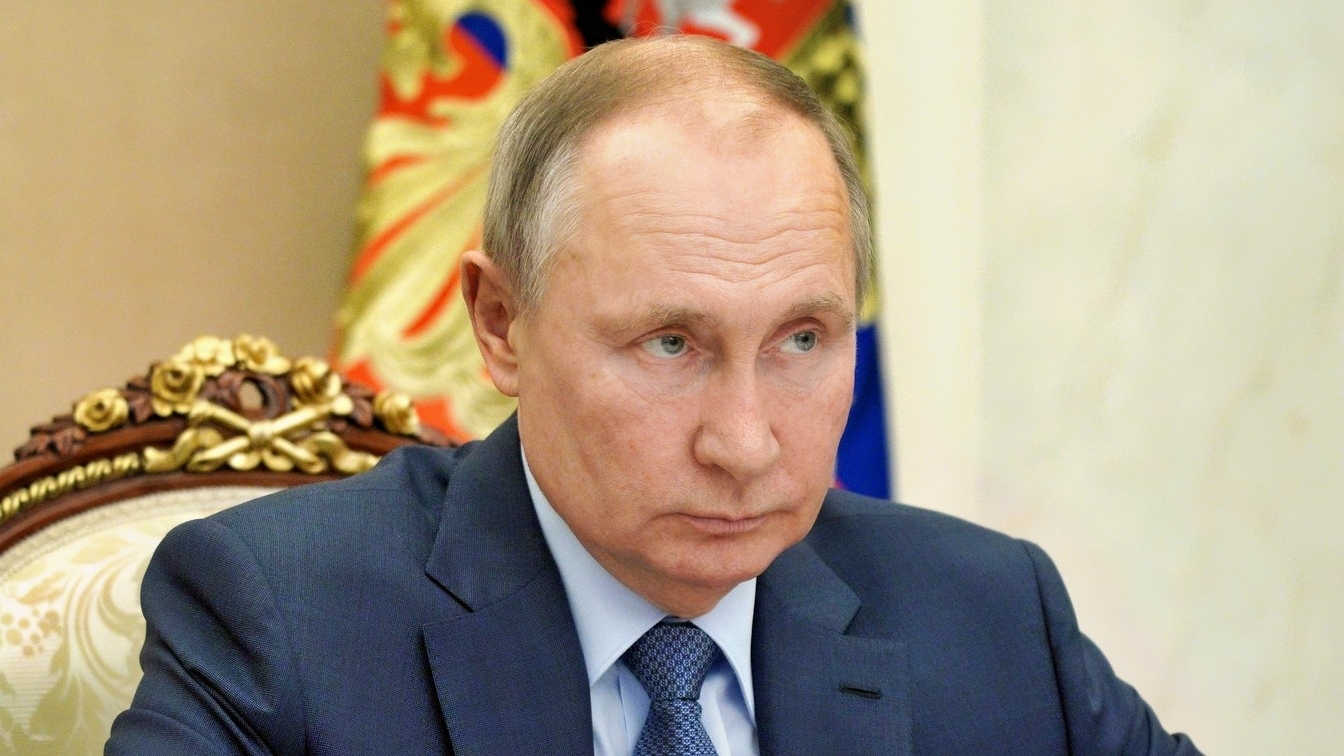
Vladimir Putin in Syria. Image Credit: Creative Commons.
Numerous facilities are being hit repeatedly.
This forces Russia to expend considerable resources to continually repair the damaged enterprises.
At the same time, Russia tries to maximize output at those production sites that have seen few to no attacks. However, Ukraine is now engaged in new drone design projects. They are projected to be even longer-range systems that could reach even these locations that have remained at least partially out of reach until now.
In the years since the 2022 Russian invasion, Ukraine’s long-range strike capabilities have improved dramatically. Military expert Oleksandr Kovalenko recalled that in 2022, the distances involved were considerably shorter.
As he explained in an interview with the Ukrainian UNN Independent News Service, “We started with strikes at the tactical level — within approximately 50 kilometers of the Ukrainian border… Over the following years, the capabilities of our long-range drones changed substantially.”
“Today, we can speak of systems capable of covering nearly 3,000 kilometers or even more. At the same time, not only the technical equipment but also the use of these systems has been scaled up. Systematic strikes take place almost every night, preventing Russia from fully restoring the operations of the enterprises and production facilities being targeted,” he noted.
Destroying Logistical Networks
Ukraine hitting targets deep inside Russia is no longer an isolated event designed to shock the Russian side with what amounts to technological surprise. It has instead become an everyday and systematic mechanism for grinding down the ability of Russia to wage war on a sustained basis.
Deep strikes are now aimed at destroying Russia’s means of maintaining the industrial and logistical infrastructure required to support its military operations. A critical element in the Ukrainian strategy, according to a long assessment from the end of July 2026, is that Ukraine’s targeting campaign planners analyze and adjust in response to Russia’s adaptations.
In one example, as Russia attempted to change its procedures to evade attacks, Ukrainian forces responded by shifting from targeting vehicles to breaking the entire network that carried them.
When it comes to destroying facilities in Russia’s oil sector, the Ukrainian forces have been particularly tenacious. In August 2026, Ukraine conducted 18 strikes on Russian oil refineries – demonstrating the increasing use of long-range drones.
On 28 August, Ukrainian forces employed the long-range Fire Point FP-1/2 UAV Systems to attack the Yaroslavl refinery. Measured by the volume of oil it processes, this facility is one of the five largest in all of Russia.
The Perm refinery Lukoil-Permnefteorgsintez was attacked at the end of July. This particular attack destroyed 86 percent of its refining capacity and forced the facility to shut down completely. FP-1 drones have also hit the Lukoil-Nizhegorodny Neftsintez facility in Kstovo, in the Nizhny Novgorod region. This plant ranks fourth in Russia in refining volume and was also forced to curtail its operations.
Moving Deeper into Rear Areas
Only two years ago, points out the Ukrainian military, there were no such capabilities to strike Russian sites at the ranges that are being hit now. Those strikes are now achieving strategically significant, long-lasting impact on the Russian side.
Stanislav Ihnatiev, one of Ukraine’s Energy experts and a professor at Poltava Polytechnic, analyzed the effects of the increasing deep strikes on Russian oil. His conclusion is that it is now “possible to speak of a systemic factor affecting the operation of Russia’s oil-refining industry as a whole.”
“Broadly speaking, we can identify three stages of this campaign. At first, the strikes created local problems for individual plants. Then they began to affect regional fuel balances. Now we are seeing the third stage, when problems arise simultaneously with refining, interregional logistics, fuel reserves, exports, and equipment repairs,” he explained.
According to him, the Russian oil-refining system is already losing its resilience reserve—each subsequent strike occurs while some of the other enterprises are already undergoing repairs or operating under an altered technological regime. The ability to repair these facilities multiple times and keep them functioning properly is constantly deteriorating.
And the day is coming when none of Russia’s strategic sites will be out of reach. “I will not be surprised if, by the end of 2026, we are talking about Ukrainian drones that have traveled about 4,000 kilometers from the Ukrainian border and struck some oil refinery deep in Russia’s rear,” said Oleksandr Kovalenko, a military and political economist.
“I also do not consider the possibility of eventually reaching Vladivostok to be something fantastic. This is an entirely realistic prospect in terms of the development of such systems’ capabilities. Especially if Siberia is taken into account. In fact, from the perspective of Russian air defense, it is a large blank spot.”
“Air defense density is significantly lower there, and there is no way to provide equally dense coverage of such a vast territory. Therefore, covering such a distance may not be as difficult as it seems — if the drone successfully passes through the main areas where Russian air defense assets are concentrated,” Kovalenko emphasized.
About the Author: Reuben F. Johnson
Reuben F. Johnson has thirty-six years of experience analyzing and reporting on foreign weapons systems, defense technologies, and international arms export policy. Johnson is the Director of Research at the Casimir Pulaski Foundation. He is also a survivor of the Russian invasion of Ukraine in February 2022. He worked for years in the American defense industry as a foreign technology analyst and later as a consultant for the U.S. Department of Defense, the Departments of the Navy and Air Force, and the governments of the United Kingdom and Australia. In 2022-2023, he won two awards in a row for his defense reporting. He holds a bachelor’s degree from DePauw University and a master’s degree from Miami University in Ohio, specializing in Soviet and Russian studies. He lives in Warsaw.


