

WARSAW, POLAND – In times of war, rival government agencies and organizations will normally try to paper over their differences – if not put them aside altogether – for the sake of the common good.
That kind of “we are all in this together” sentiment, as apparent, does not operate within the Ukrainian intelligence services.
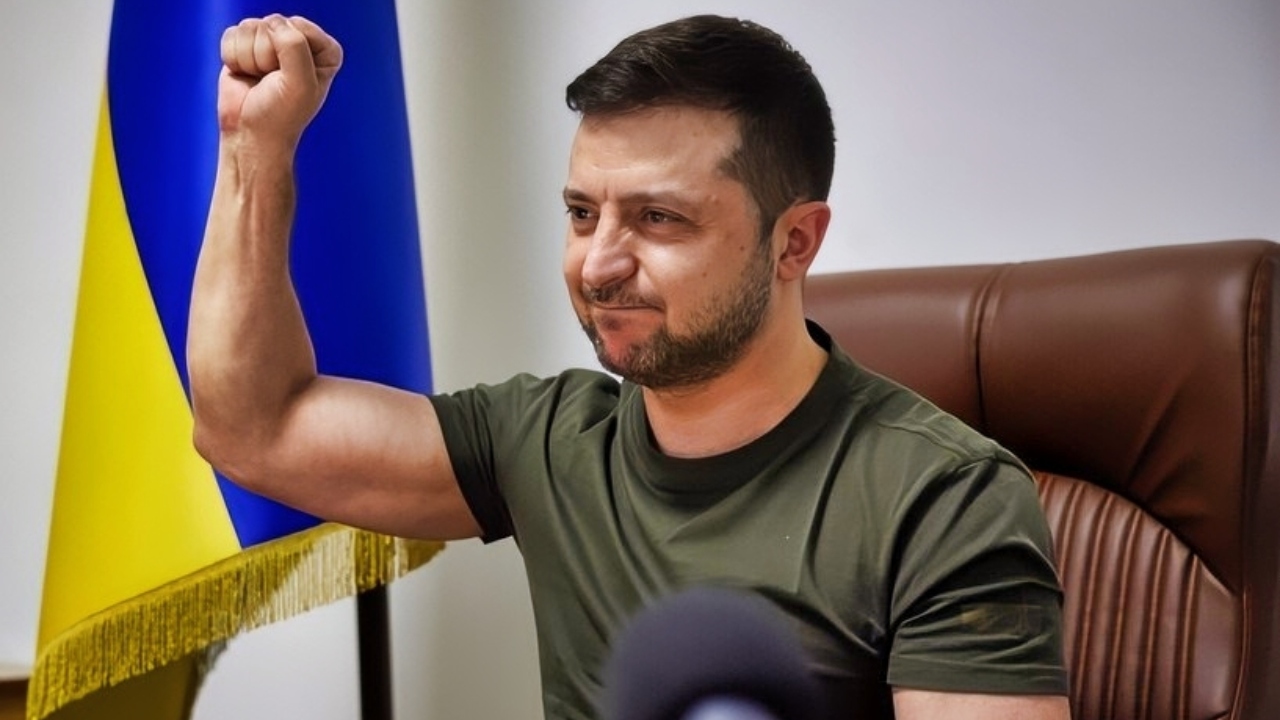
Zelensky Speaking in UK Ukraine Government Photo
On Wednesday morning, 2 September, a shootout between Ukraine’s two main intelligence services took place in broad daylight on the streets of Kyiv. The two agencies involved were the Ukraine Security Service (SBU) and the Ministry of Defense’s Main Intelligence Directorate (HUR).
Both services have been involved in some very high-profile and highly successful covert operations against the Russian military.
Among other well-known events, on 1 June 2025 the SBU carried out the now-famous Operation Spider Web.
This operation involved a complex plan for a simultaneous drone attack on four Russian strategic aviation airbases. The service used a large number of small attack drones that had been secretly smuggled into Russia. A remote signal released them from inside hidden compartments in the roofs of pre-fabricated, turnkey hunting lodges that were delivered to locations near these aerodromes
The operation put more than 40 high-value, irreplaceable aircraft—mostly strategic bombers (Tu-95MS, Tu-22M3) and A-50 AEWE&C aircraft—out of action. Many of them were damaged irreparably.
Old Habits Are Hard to Break
The difference between Ukraine and some other nations is the SBU-HUR rivalry that dates back to the days of the USSR.
On Wednesday morning, shots were exchanged between members of the State Security Service (SBU) and the Main Intelligence Directorate (HUR).
Video footage showed soldiers filling the streets in the aftermath of the clash that left three people wounded.
The cause of the dispute is unclear, but according to local media reports, it centered on Stepan Kaplunov, the deputy commander of the Russian Volunteer Corps.
The corps fights alongside Ukraine and draws its forces from dissident Russian citizens. On Tuesday, it said that Mr Kaplunov had been abducted by unknown individuals from outside his home.
Its leaders appealed for help from both the SBU, which handles domestic intelligence and counter-terrorism, and the HUR, which is part of the military and focuses on foreign intelligence.
On Wednesday morning, the SBU released a statement saying its officers had thwarted a Russian plot to kill “one of the leaders of the Russian opposition political movement”. This referred to Mr Kaplunov, Ukrainian media later reported.
The SBU released another statement a few hours later saying that its officers had come under attack during their investigation of the plot.
Armed men opened fire on the SBU investigative team as they attempted to conduct a search at a building in the capital, the agency said in a statement on Telegram.
The men had “attempted to obstruct the investigative actions” and “blocked the passage of law enforcement officers”, the agency said. They were later revealed to “belong to one of the units of the armed forces of Ukraine”, it added.
Dmytro Lytvyn, a communications adviser to Volodymyr Zelensky, the Ukrainian president, told journalists that the men were from the HUR. He added that the president had ordered both agencies to explain the cause of the incident to the public.
The whereabouts of Mr Kaplunov remain unclear.
“It’s important to ensure a thorough and impartial investigation,” said Kyrylo Budanov, the former HUR chief, who now serves as chief of staff to Mr Zelensky. “No one has the right to kidnap servicemen with impunity, open fire on the streets of our cities, give and carry out criminal orders.”
Clashes Have Occurred Before
The agencies have clashed in the past. In 2023, Mr Budanov – then head of the HUR – accused the SBU of killing Denys Kireyev, a banker who had been working with his agency and was credited with obtaining intelligence on Moscow’s initial plans to take Kyiv.
Kireyev was shot in the head and then thrown out of a van in central Kyiv. He had faced accusations of being a double agent.
A shootout in downtown Kyiv between rival Ukrainian units has exposed a festering feud between two powerful intelligence agencies that are competing for influence and resources in the war against Russia.
A special-forces unit of Ukraine’s domestic security service, the SBU, clashed with special forces under the command of the country’s military intelligence directorate, HUR, according to Ukrainian officials.
Three of the latter group were wounded in exchanges of fire late Tuesday and early Wednesday, the officials said. Video footage of the aftermath, posted on social media by local residents, showed pools of blood outside a Soviet-era apartment block.
The spark, according to one of the officials, was the SBU’s recent detention of a Russian national fighting for Ukraine under the HUR’s supervision, and the SBU’s attempt to search an apartment at which the Russian and other HUR-backed fighters were staying.
Zelensky Has a Problem
The incident has embarrassed the administration of Ukrainian President Volodymyr Zelensky at a time when it is facing investigations into corruption among senior officials and malfeasance within some military units.
Personal rivalries and reshuffles have also rattled the government this summer, adding to a sense of disharmony as Russia escalates its war on the country.
After the gunfight, Zelensky appealed to his intelligence chiefs to provide clear information to the public about what happened, a presidential spokesman said.
Zelensky’s chief of staff, Kyrylo Budanov, said Ukraine’s main investigative agency had opened a probe. “No one has the right to illegally abduct servicemen or open fire on the streets of our cities,” Budanov said.
The SBU and HUR are Ukraine’s premier intelligence agencies and the tips of the spear in the country’s clandestine operations on Russian territory. Both have carried out operations including the assassinations of enemy military officers inside Russia and in Russian-occupied parts of Ukraine.
But a contest between the two organizations for clout and resources has intensified in recent months following leadership changes at both agencies, according to people familiar with the matter.
Budanov, who headed HUR for many years, was succeeded in January by Oleh Ivashchenko, a former foreign-intelligence chief who has shown less interest in publicly promoting daring military actions to boost the agency’s stature.
As HUR chief, Ivashchenko now also oversees the agency’s Timur Special Forces, an elite paramilitary organization with thousands of experienced soldiers. But most of these fighters retain a strong sense of loyalty to Budanov, who still exercises influence over the HUR, people familiar with the agency say.
Timur’s units include the Russian Volunteer Corps, made up of Russians who have decided to fight for Ukraine. In late August, the SBU detained the Russian fighters’ deputy commander, Stepan Kalpunov, holding him for a week without charges, according to his lawyer, Taras Borovsky. The SBU didn’t immediately respond to a request for comment.
What’s Happening Now
On Tuesday, the Russian fighters appealed publicly for information about Kalpunov’s whereabouts.
Later that day, the SBU’s special forces, known as Alpha Group, brought Kalpunov to an apartment rented by Timur in central Kyiv and announced they were there to search the premises as part of a criminal investigation, according to Borovsky.
Several Timur fighters who were living in the apartment tried to prevent the search, Borovsky said. After failing to reach agreement with the SBU officers, they called their superiors, and Timur’s commander arrived on the scene with more soldiers.
By late evening, dozens of armed men filled the apartment block’s courtyard, local residents told The Wall Street Journal. Shots rang out around 11 p.m. and again on Wednesday morning, according to local residents and Borovsky.
The SBU said in a statement that a team of its agents was attacked by a group of armed individuals who tried to obstruct an SBU investigation into a Russian terrorist act. The SBU deployed its special forces to protect its agents, leading to a shootout in which several people were wounded, the statement said.
One retiree living nearby told the Journal that she heard several rounds of gunfire. In the aftermath, she said, she watched from her third-floor window as paramedics treated a wounded man whom they covered with a thermal blanket.
Kalpunov was released from SBU detention after the gunfight, officials said. His lawyer said it is still unclear what he is accused of.
About the Author: Reuben F. Johnson
Reuben F. Johnson has thirty-six years of experience analyzing and reporting on foreign weapons systems, defense technologies, and international arms export policy. Johnson is the Director of Research at the Casimir Pulaski Foundation. He is also a survivor of the Russian invasion of Ukraine in February 2022. He worked for years in the American defense industry as a foreign technology analyst and later as a consultant for the U.S. Department of Defense, the Departments of the Navy and Air Force, and the governments of the United Kingdom and Australia. In 2022-2023, he won two awards in a row for his defense reporting. He holds a bachelor’s degree from DePauw University and a master’s degree from Miami University in Ohio, specializing in Soviet and Russian studies. He lives in Warsaw.


