
Oil Prices Are Rising Again – And They May Not Stop – Oil prices have risen to their highest levels in six weeks amid ongoing escalations between the United States and Iran.
The conflict, now well into its seventh month, reignited at the end of August after more than a month without a confirmed strike by either side.
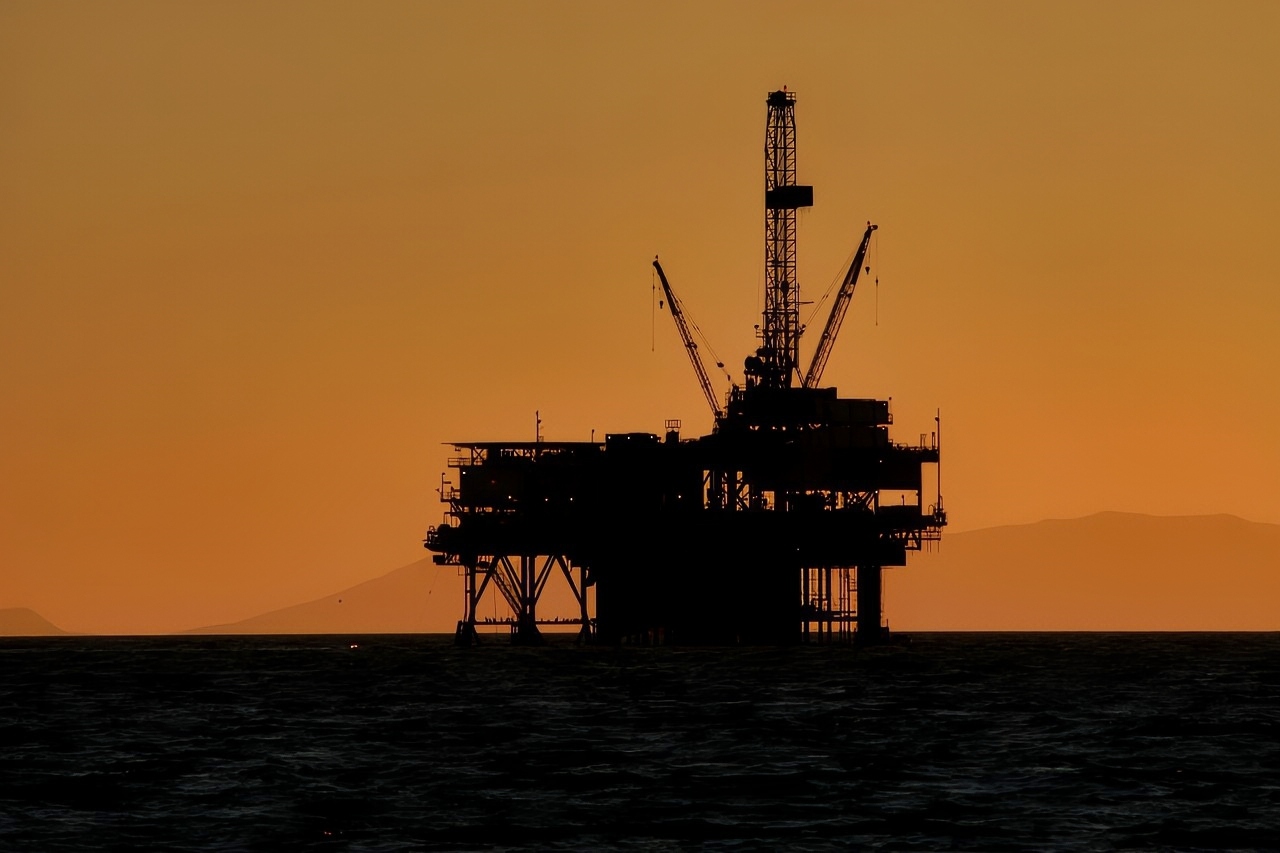
Oil Platform. Image Credit: Creative Commons.

Generic Oil Tanker Image. Image Credit: Creative Commons.
Commercial shipping has increasingly become a target since military hostilities resumed just over a week ago.
Prices Reach Familiar Heights
On Monday, 7th September, oil prices reached their highest levels since Friday, 24th July. The price of Brent crude rose by 0.9% to $97.13 at midday EDT, while U.S. West Texas Intermediate crude rose 1.3% to $92.63 a barrel. WTI futures also rose to their highest point in six weeks, reaching $93.29 a barrel.
Brent crude prices hovered around $72 a barrel before the conflict began at the end of February. Shortly after Operation Epic Fury was launched, Iran effectively closed the Strait of Hormuz – a key shipping lane that previously allowed Middle Eastern countries to export around 20% of the world’s oil by sea. Since then, prices have fluctuated with the ferocity of hostilities, dropping to pre-war levels shortly after a Memorandum of Understanding was signed between the U.S. and Iran in June.
The strait’s narrow geography means it’s easy for Iran to target commercial vessels it sees as not abiding by its regulations. While a handful of ships have been able to pass through, the vast majority cannot exit the Persian Gulf. This also stems from growing concerns among shipowners about whether their vessels will be attacked if they attempt to transit the Strait of Hormuz.
Tensions Rising
On Saturday, 5th September, Defense Secretary Pete Hegseth warned Iran to refrain from targeting U.S. ships.
“It’s simple: if Iran shoots at U.S. ships, we will destroy (and sink) their oil tankers. All they have to do is not shoot at [the] U.S. Navy,” he wrote on social media, adding that Iranian vessels were defenseless.
In response, Iranian Parliament Speaker Mohammad Baqer Qalibaf said: “Strike our assets and you get struck. We’ve already proven it. Ask the bases that are no longer viable.”
Last week, U.S. officials announced a new “tanker for tanker” policy after Iran claimed to have struck several commercial vessels in the Strait of Hormuz. As the name implies, the U.S. has pledged retaliatory strikes against Iranian oil tankers if Iran hits a commercial ship in the key waterway.
Commercial Shipping Attacks
Over the weekend, the U.S. military said it had “permanently destroyed” two Iran-linked oil tankers and “completely destroyed” a third. In response, Tehran claimed to have attacked three U.S.-affiliated vessels on top of a further three which state media claimed were sailing along an “unauthorized” route in the Strait of Hormuz.
Maritime intelligence firm Marisks noted a major escalation over the weekend. It said in a statement: “Commercial tankers are now being deliberately used as instruments of reciprocal economic pressure, substantially weakening the previous distinction between military confrontation and commercial shipping.”
Prices Rise as Middle East Seeks Alternatives
Rising tensions may signal a continued rise in oil prices, with Goldman Sachs warning that prices could reach as high as $120 a barrel if attacks on commercial shipping continue. Iran also plans to create a new “exclusion zone” in the Strait of Hormuz, with Supreme National Security Council chief Mohsen Rezaei threatening sanctions against ships that try to pass through the strait without Iranian permission.
Traffic through the Strait of Hormuz remains well below pre-war levels, with the ten-day moving average falling to its lowest level since May following renewed fighting in the Persian Gulf. Only two vessels passed through the strait on Saturday, with six sailing through the following day.
Given the lack of a clear conclusion to the war in Iran and the ongoing disruption to shipping, Middle Eastern countries are exploring alternative routes to export energy.
On Monday, Anwar Gargash, a presidential advisor for the United Arab Emirates, said his country could no longer be “held hostage” by the ongoing conflict. He added that the country was expanding capacity along its eastern coast – thereby bypassing the Strait of Hormuz – while developing pipelines, railways and trade routes for new corridors to export oil.
“Our energy exports will not be held hostage, nor will our trade and economic activity,” Gargash told the Hili Forum in Abu Dhabi.
About the Author: Shay Bottomley
Shay Bottomley is a British journalist. He has written for the Western Standard, Business Insider, Maidenhead Advertiser, Slough Express, Windsor Express, Berkshire Live and Southend Echo.