
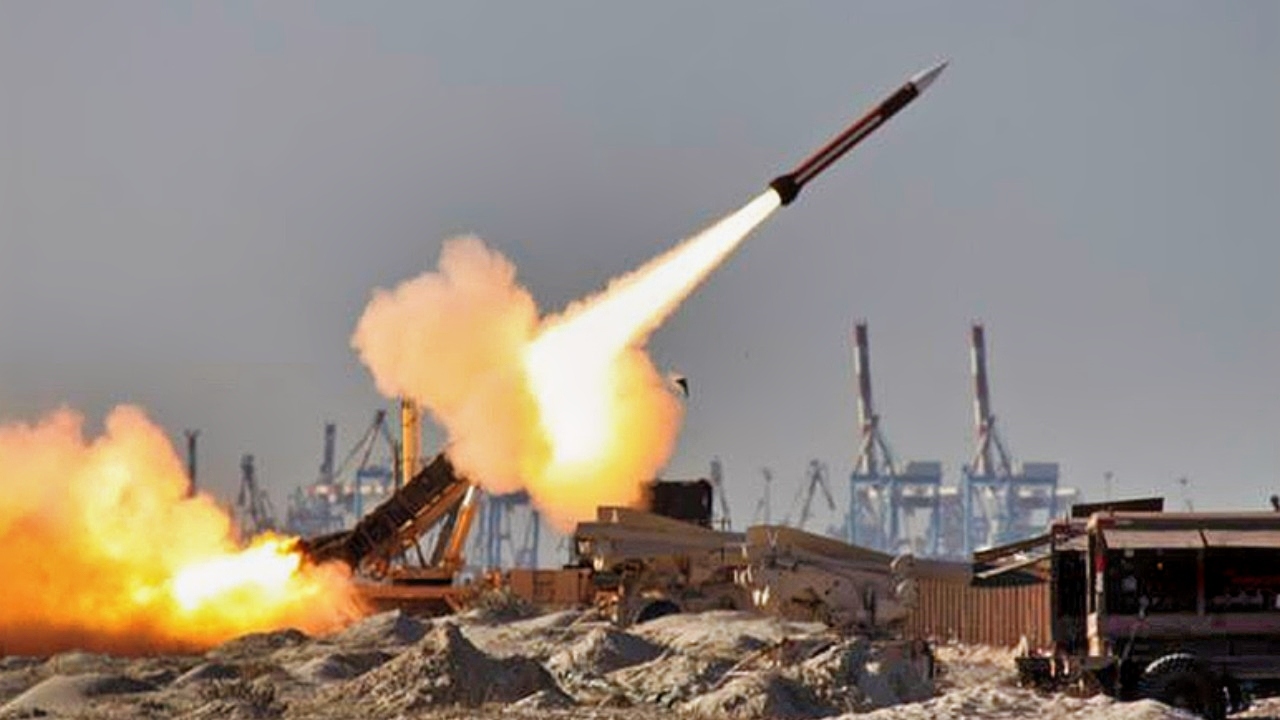
Ukraine’s Patriot Problem Eased But Not Solved – Ukraine is still grappling with a shortage of missile interceptors capable of stopping Russian ballistic attacks, but supplies are being replenished — at least at a slow rate. But at least supplies are moving, with new commitments announced on Tuesday, September 8.
Germany announced on Tuesday that it will urgently transfer additional Patriot PAC-2 interceptor missiles directly from its Bundeswehr stock. Britain also pledged an additional £100 million for Ukrainian air defenses, including U.S.-made equipment. The announcement came right as Ukraine needed it, too, as Russia resumed long-range strikes against Kyiv following a brief pause that had been implemented during visits by U.S. envoys Steve Witkoff and Jared Kushner to Moscow and Kyiv.
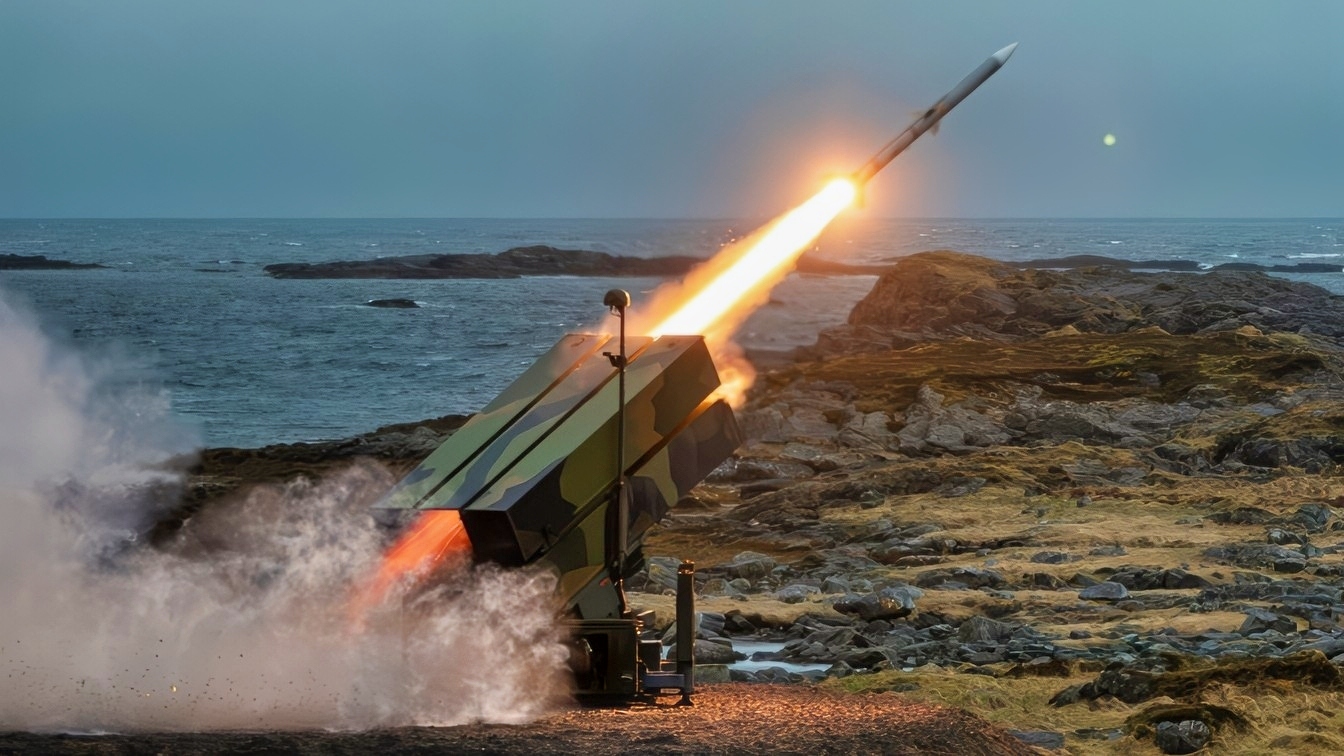
The Norwegian Army fires a National Advanced Surface-to-Air Missile System (NASAMS) from the Andøya Space Range in Andøya, Norway against a simulated threat in support of exercise Formidable Shield 2023, May 10, 2023. Formidable Shield is a biennial integrated air and missile defense (IAMD) exercise involving a series of live-fire events against subsonic, supersonic, and ballistic targets, incorporating multiple Allied ships, aircraft, and ground forces working across battlespaces to deliver effects. (Courtesy photo by Royal Norwegian Navy)
During the most recent strikes, which took place overnight into Tuesday, September 8, Ukraine was able to intercept two Russian ballistic missiles. This was a substantial improvement over August, when Patriot crews were often unable to fire because their launchers lacked interceptors.
Ukraine’s Patriot Launchers Ran Empty
On August 5, Russia launched 24 ballistic missiles alongside four Zircon missiles and 125 drones against Kyiv and the surrounding region over two hours.
Ukrainian air defense successfully destroyed 98 drones but failed to intercept a single ballistic missile. The strikes killed 17 people and injured at least 44.
Reports cited Ukrainian officials in mid-August that Patriot launchers sat empty after Kyiv exhausted the small number of interceptors Washington had sent.
And when Russia attacked Kyiv just three days after the August 5 strikes, Ukraine again failed to intercept any of the six ballistic missiles that were fired at the capital city.
President Volodymyr Zelenskyy said on August 5 that Ukraine had only received about one-third as many air defense missiles at that point in the year as it had during the same period in 2025, and blamed much of the decline on the increased pressure placed on U.S. stockpiles by the war in Iran.
And his assessment was accurate.
Russia Has Increased the Pressure
Russia is already taking advantage of Ukraine’s shortage. The Ukrainian Air Force says that Russia launched 381 missiles against Ukraine in July alone — the highest monthly total of the war. Of those, at least 126 were ballistic missiles. Kyiv was under attack roughly once every three days during July, with ballistic missiles being a particular problem.
Weapons such as the Iskander-M descend at several times the speed of sound on steep trajectories, giving Ukrainian crews very little time to engage them. And the U.S. Patriot is Ukraine’s main proven defense against that threat.
New Patriots Are Coming
Ukraine isn’t on track to get all the Patriot missile interceptors it needs just yet, but supplies are moving. A small new batch of Patriots was delivered in August, restoring at least some of the ammunition required to begin defending against Russian ballistic strikes. At the time, Zelenskyy said that Ukraine was receiving around 1% of U.S. Patriot production but that 5% was necessary to effectively defend against Russia.
And the overnight strike on Tuesday proved that those deliveries did indeed arrive, and Ukraine currently has some capacity to fight back.
More deliveries are expected, too.
On Tuesday, September 8, German Defense Minister Boris Pistorius announced during a meeting of international supporters of Ukraine that Germany would begin urgently transferring PAC-2 Patriot interceptors from its stocks rather than waiting for new missiles to be manufactured. Pistorius also promised more air-to-air missiles and an expansion of planned ammunition deliveries to help Ukraine prepare for a winter of ongoing Russian strikes.
Britain also announced additional support during the same meeting, committing £100 million to strengthen Ukrainian air defenses. British Defense Secretary John Healey said that the funding would be used to obtain urgently needed U.S.-made equipment, including Patriot missiles, through NATO’s Prioritized Ukraine Requirements List procurement system.
Ukraine is independently contracting for roughly 1,000 more Patriot missiles over the longer term, but Ukrainian Defense Minister Yevhenii Khmara said on Tuesday that Kyiv still needs around 300 missiles to arrive in the coming months to deal with increased Russian ballistic missile strikes.
Europe Opens A New Route for Patriots
Also on Tuesday, Ukraine secured another important source of funding for new Patriots. European Commission President Ursula von der Leyen said EU member states had agreed to exempt Patriot equipment from procurement restrictions attached to the bloc’s €90 billion loan to Ukraine. It means that Kyiv will now be able to use European money to purchase American-made equipment that it urgently needs to defend against Russian ballistic missile strikes.
It means that Ukraine is now exploring every avenue it can to secure new Patriots, not just asking European and Western nations to supply missiles directly, but also to provide funding to procure them. Kyiv is also currently trying to finance much larger orders that can sustain its defenses for years, rather than months, and the next €3.2 billion disbursement from the EU loan can now help make that happen.
About the Author: Jack Buckby
Jack Buckby is a British researcher and analyst specializing in defense and national security, based in New York. His work focuses on military capability, procurement, and strategic competition, producing and editing analysis for policy and defense audiences. He brings extensive editorial experience, with a career output spanning over 1,000 articles at 19FortyFive and National Security Journal, and has previously authored books and papers on extremism and deradicalization.


