


Consumer prices in Canada are up several percent, while Canadian exports have fallen because of U.S. President Donald Trump’s ongoing trade war with Canada.
Steel and Lumber Exports Diminished While Groceries Continue to Rise
Canada’s steel, lumber, aluminum, and automobile industries have all been severely impacted by Trump’s tariffs on Canadian goods into the U.S., according to Fox News, which reported on Saturday that steel exports had been cut roughly in half, while lumber exports had declined by around 20% since 2024.
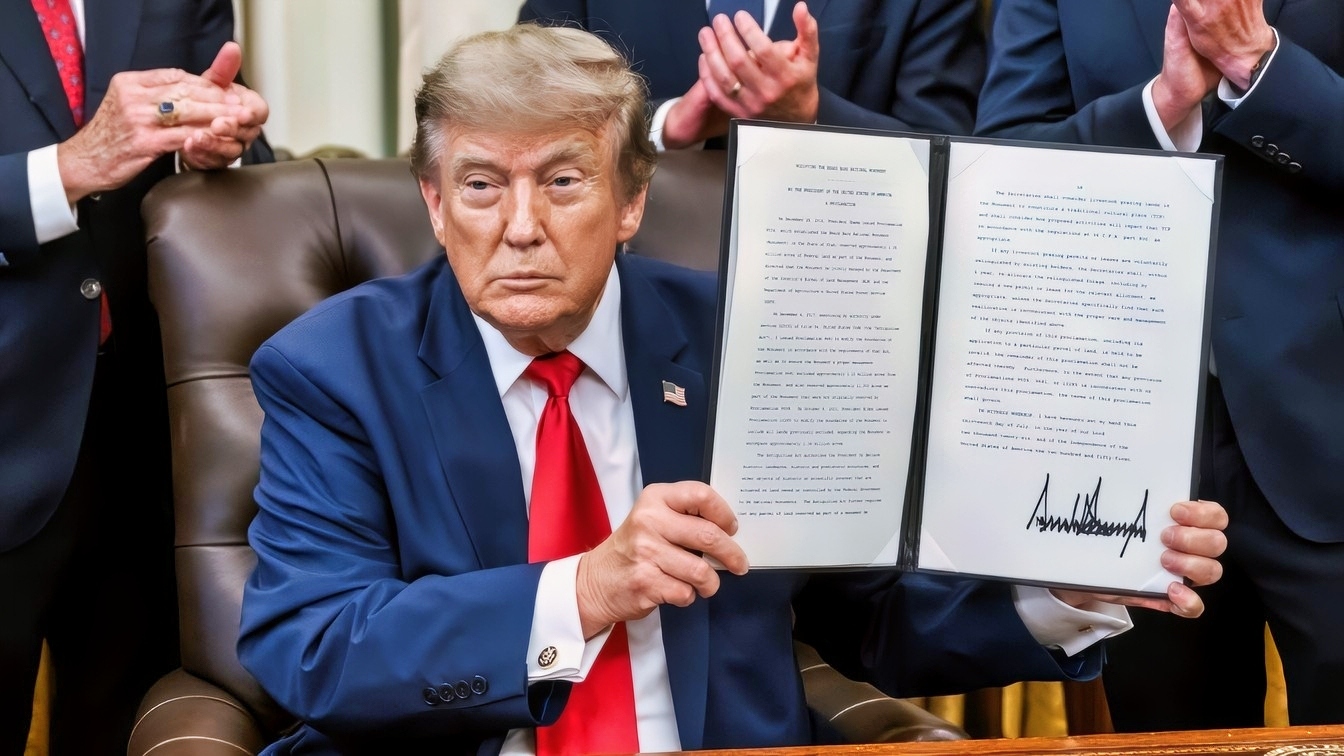
President Donald J. Trump signs executive orders alongside Utah Governor Spencer Cox and members of the Utah congressional delegation in the Oval Office, Monday, July 13, 2026. (Official White House Photo by Molly Riley)

President Donald J. Trump participates in an interview with Trey Yingst, foreign correspondent for Fox New, in the Roosevelt Room of the White House, Tuesday, July 14, 2026. (Official White House Photo by Joyce Boghosian)
In addition, Canada’s Consumer Price Index rose 3% in August compared with the same month last year, with grocery prices up 2.8% and transportation up 7.5%.
“Canadian travel to the United States declined sharply in 2025, putting downward pressure on prices for airfares and travel tours,” stated the Government of Canada in its August Consumer Price Index report. “Given that this decline has now stopped affecting the 12-month price movement, along with the introduction of fuel surcharges amid higher prices for jet fuel, upward pressure has been put on the travel tours index.”
Tariffs Have Been Lifted on Some Products But Replaced With Others
The White House announced on Friday that it would be lifting its whopping 50% tariffs on certain Canadian goods, including plywood, packing crates and boxes, machinery, and refrigeration equipment after Republican Senator Susan Collins lobbied Trump to ease tariffs on Canadian products “crucial to Maine’s agricultural industries” ahead of the midterm elections.
Collins, who won 68% of the vote in 2014, came much closer to losing her seat in 2020 — clinging on with just under 51%. While Democrats have failed to win a Senate seat in Maine since 1988, Collins’ seat has repeatedly been flagged as one of the most likely Senate seats to flip in the 2026 midterms.
While the administration will lift tariffs on certain Canadian products, it will replace them with tariffs on others, including carpets, waste products, and “certain valves.”
The changes are scheduled to take place on October 30.
The Trump Administration Has Accused Canada of Discrimination
After Trump’s inauguration last year, the White House accused Canada of discriminating against the U.S. through protectionist tariffs on U.S. imports in certain industries.
The Trump administration then imposed high tariffs on Canadian goods, and those tariffs have continued to rise after Canada responded with its own.
“Canada continues to retaliate against the United States for its efforts to correct trade imbalances and protect American workers, farmers, and businesses,” protested the White House in a statement on Friday. “Over the past year and a half, only two countries have chosen to retaliate against President Trump’s tariffs rather than negotiate a deal with the United States: The People’s Republic of China and Canada.”
The White House concluded, “Today’s action reflects President Trump’s continued efforts to defend American workers and ensure fair trade, offsetting the burden and disadvantage on U.S. commerce from Canada’s discriminatory treatment.”
Canada-U.S. Relationship At An All-Time Low
As a result of the trade war and other incidents — including Trump’s repeated threats to annex Canada and turn it into the 51st state — relations between the two countries have cratered to an all-time low.
Last year, Canadian Prime Minister Mark Carney announced that Canada’s historic relationship with the U.S. was “over.” That same year, favorable opinions of Canadians towards the U.S. dropped to their lowest point in Pew Research’s recorded history.
In 2025, 64% of Canadians expressed an unfavorable opinion of the U.S.—a 23% rise from just a few years earlier—while 59% named the U.S. as their country’s biggest threat, according to the Pew Research Center.
By comparison, just 17% of Canadians considered China their country’s biggest threat.
At the same time, Canada has grown closer to Europe, with Canada and the European Union both expressing interest in Canada becoming an “associate member” of the EU in the near future.
Far from improving, the declining relationship between the U.S. and Canada shows no sign of slowing down. Just last month, Trump described Canada as “one of the worst countries in the entire world.”
About the Author: Charlie Nash
Charlie Nash is a journalist and author whose work has appeared in The Spectator, Mediaite, New Statesman, and the American Conservative, among other major publications. The Washington Post, Fox News, the Daily Beast, MS NOW, NewsNation, Hannity, and more have featured his reporting. You can follow Charlie on X at @CharlieNash and on LinkedIn.


