
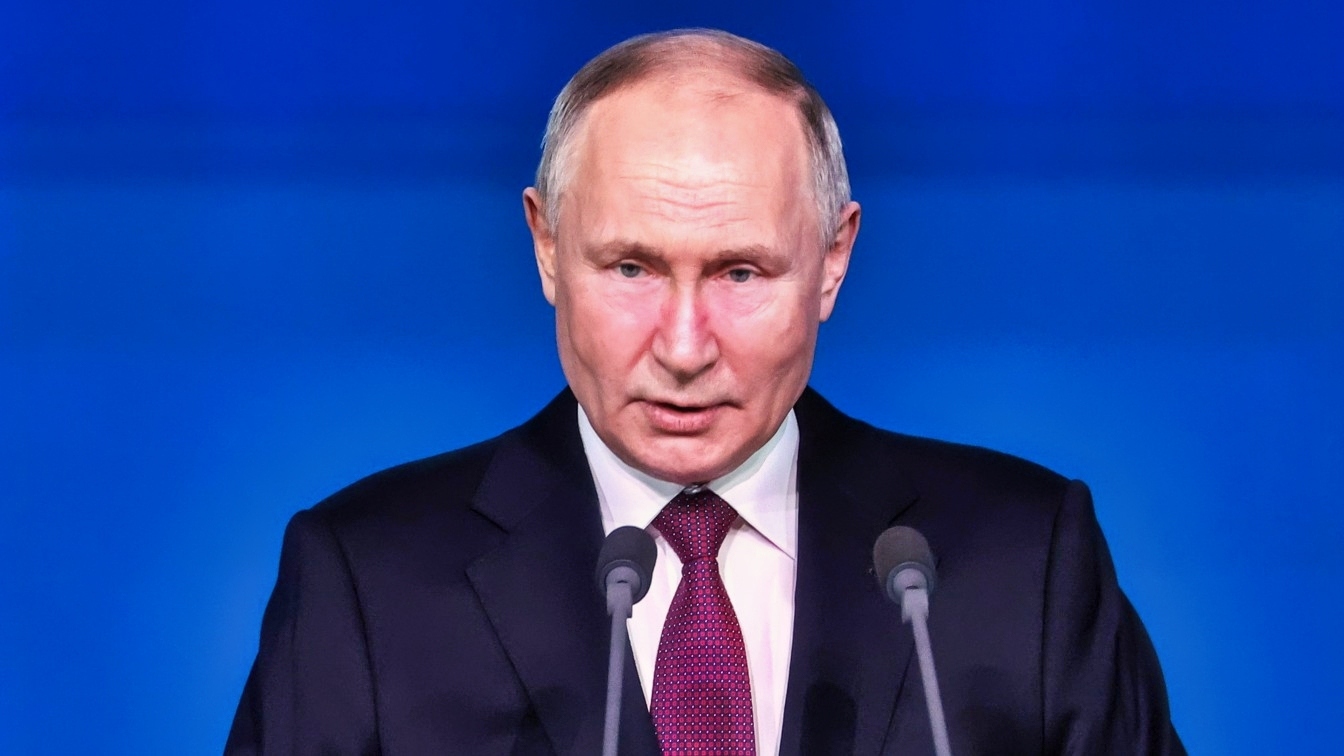
Ukraine Needs Patriot Missiles, Fast – Russia resumed its long-range, large-scale missile and drone strikes across Ukraine overnight into Tuesday, September 8, killing at least five people and injuring dozens more just as Kyiv presented allies with a request for hundreds more air defense interceptors intended to counter Russian attacks.
Ukraine: We Need More Patriot Missiles
The fresh missile and drone bombardment followed a brief, three-day pause in attacks on Kyiv while U.S. envoys Steve Witkoff and Jared Kushner traveled to Moscow and the Ukrainian capital.
But the attacks overnight into Tuesday also highlighted that Ukraine, while technically capable of intercepting some ballistic missile attacks, is running short on the ammunition it needs to defend its cities through the winter.
And Russia is planning to continue its scaled-up ballistic missile strikes.
Putin Back in June 2021. Image Credit: Creative Commons.
Putin in 2025, Looking Stern. Image Credit: Creative Commons.
At a meeting of the Ukraine Defense Contact Group later on Tuesday, Kyiv laid out its requirements to its allies, noting that it needs 300 Patriot interceptor missiles from allied inventories to see it through the next several months.
Ukraine also requested an additional 500 air-to-air interceptors capable of destroying cruise missiles and $2 billion in aid to support its drone programs.
Germany and Britain responded to the requests with new commitments, but Kyiv still needs more.
Russia Launches Major Overnight Assault
Russia launched 166 drones and 32 Kh-101 cruise missiles overnight, along with a series of ballistic and Oniks anti-ship missiles, according to the Ukrainian Air Force. Ukraine said that its defenses destroyed or suppressed 142 drones and intercepted 31 of the 32 cruise missiles.
Ukraine also reportedly intercepted two missiles from the Iskander-M/KN-23/S-400 categories. It marked a major achievement for Ukrainian forces after weeks of failures to intercept ballistic attacks.
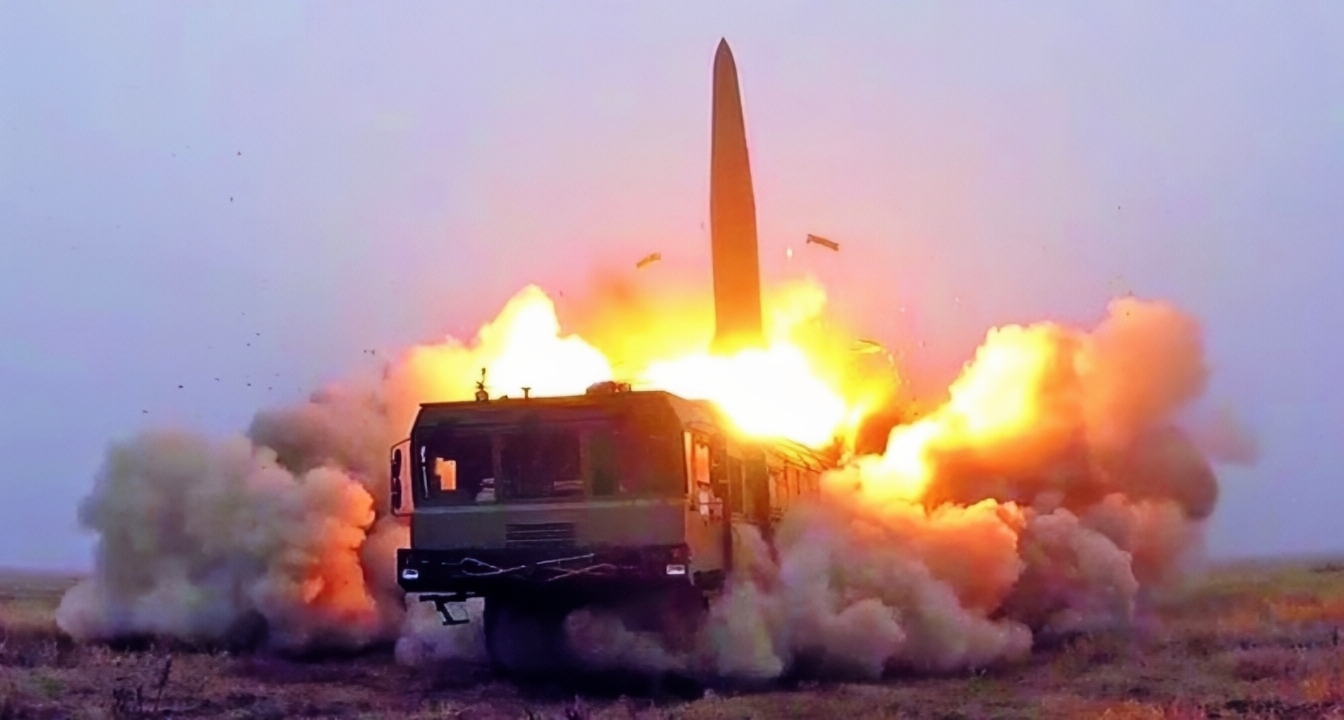
Iskander Missile Attack Creative Commons Image
Kyiv suffered some of the heaviest damage from the strikes, which were recorded at dozens of locations. Five people were killed, and nearly 30 were injured in the capital, according to reports from city authorities. Residential buildings and civilian facilities, including a clinic and a school, were also reportedly damaged. Casualties and damage were also reported after attacks in Donetsk, Kherson, Zaporizhzhia, Kharkiv, Sumy, Chernihiv, and Dnipropetrovsk oblasts.
Russia’s Defense Ministry said that its forces targeted Ukrainian drone production and storage facilities, logistics infrastructure around Kyiv, and targets around the Black Sea. It was a return to Russia’s long-range attacks that have been gradually escalating over the last several months as Ukrainian long-range strikes have caused significant damage to Russian oil and energy infrastructure, warehouses, and other critical sites.
Ukraine Wants 300 Patriot Interceptors
Soon after the Russian strikes, Kyiv pressed its allies in the Ukraine Defense Contact Group to release more ammunition for its air defense systems from their existing inventories, rather than waiting for additional ammunition to be manufactured.
British Defense Secretary Wes Streeting said following the meeting that Ukraine requested 300 Patriot missiles from partner stocks and 500 air-to-air interceptors capable of engaging cruise missiles.
Ukrainian Defense Minister Lays Out Requirements
Ukrainian Defense Minister Yevhenii Khmara also said that while Kyiv is signing contracts for 1,000 new Patriot interceptors with support from its partners, most of them will not arrive for years. And by then, their arrival could prove too little, too late.
“We are contracting for around 1,000 missiles for Patriot systems with the help of our partners and through an EU loan. We are grateful to you for this,” Khmara said.
Noting that the missiles will not arrive for years, he continued:
“Therefore, we ask you to provide us with missiles from your stocks today in exchange for the advanced missiles that will be delivered under our future contracts.”
He also called on allies to provide air-to-air missiles and man-portable air defense systems. And, he noted that Ukrainian industry is working on novel systems designed to tackle Russian Shahed drones.
“I would also like to add that, together with dozens of other Ukrainian companies, we are finding low-cost solutions to intercept jet-powered Shaheds,” he said. “Some interceptors are already undergoing combat trials.”
Russia Makes Its Shaheds Faster
Ukraine is not only racing to intercept Russian ballistic missiles, but also to prevent further damage being done by Russia’s increasingly capable Shahed drone designs. More than half of the 166 Shahed-type drones used in Tuesday’s attack appear to have been jet-powered variants, according to the Ukrainian Air Force. The faster drones have already prompted Ukraine to accelerate development of a new generation of cheaper interceptors. On September 3, President Zelenskyy convened his senior military leadership to discuss increasing production of high-speed interceptor drones capable of engaging the jet-powered Shaheds.
“Ukraine has manufacturers capable of carrying out this task. Prototypes have been developed, and work is underway to bring this new weapon up to the necessary level of effectiveness,” Zelenskyy said in a statement after the meeting.
Ukraine has a huge challenge ahead of it, and countering ballistic missiles through the winter is a huge part of it. And right now, it’s unclear exactly how that will be possible.
About the Author: Jack Buckby
Jack Buckby is a British researcher and analyst specializing in defense and national security, based in New York. His work focuses on military capability, procurement, and strategic competition, producing and editing analysis for policy and defense audiences. He brings extensive editorial experience, with a career output spanning over 1,000 articles at 19FortyFive and National Security Journal, and has previously authored books and papers on extremism and deradicalization.


