

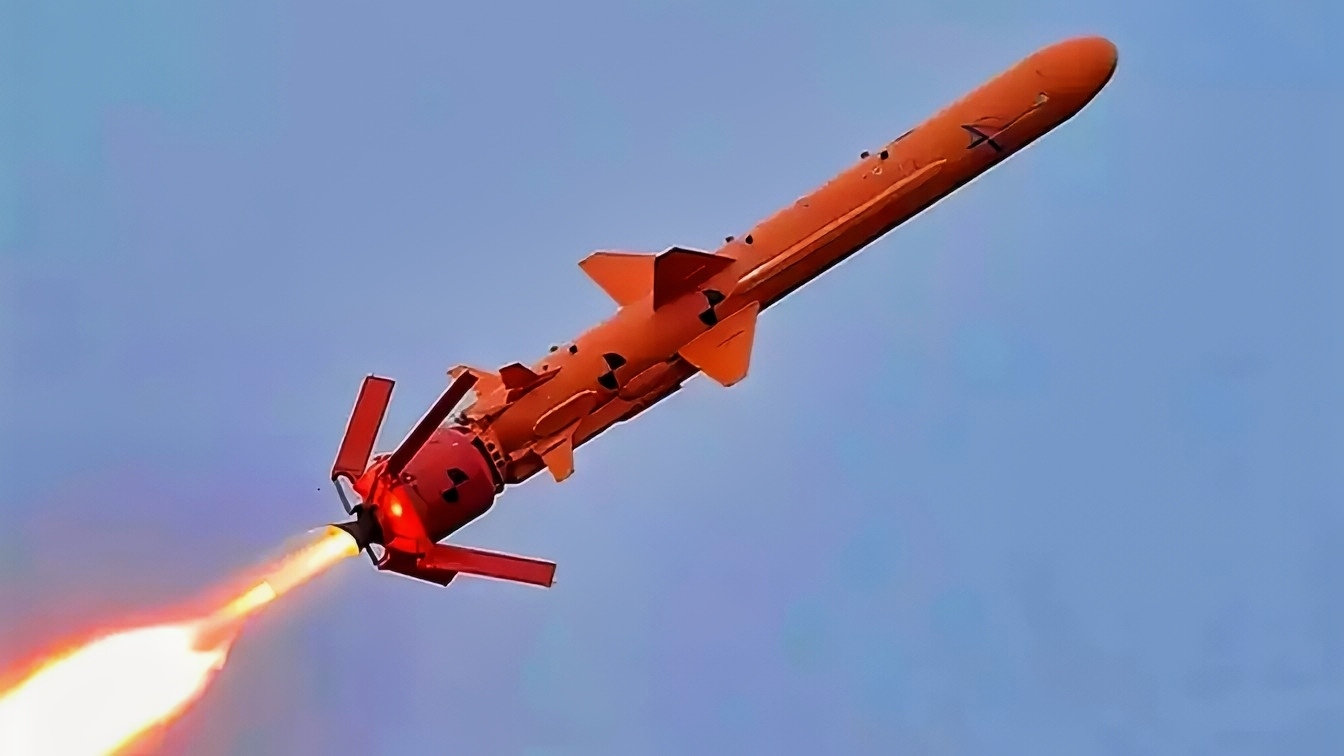
The war between Russia and Ukraine, over the course of its more than four years, has made history when it comes to how important drone warfare has been.
Ukraine has developed its own drone industry that has influenced warfare around the world, while Russia has wreaked massive havoc with its own drones throughout the war.
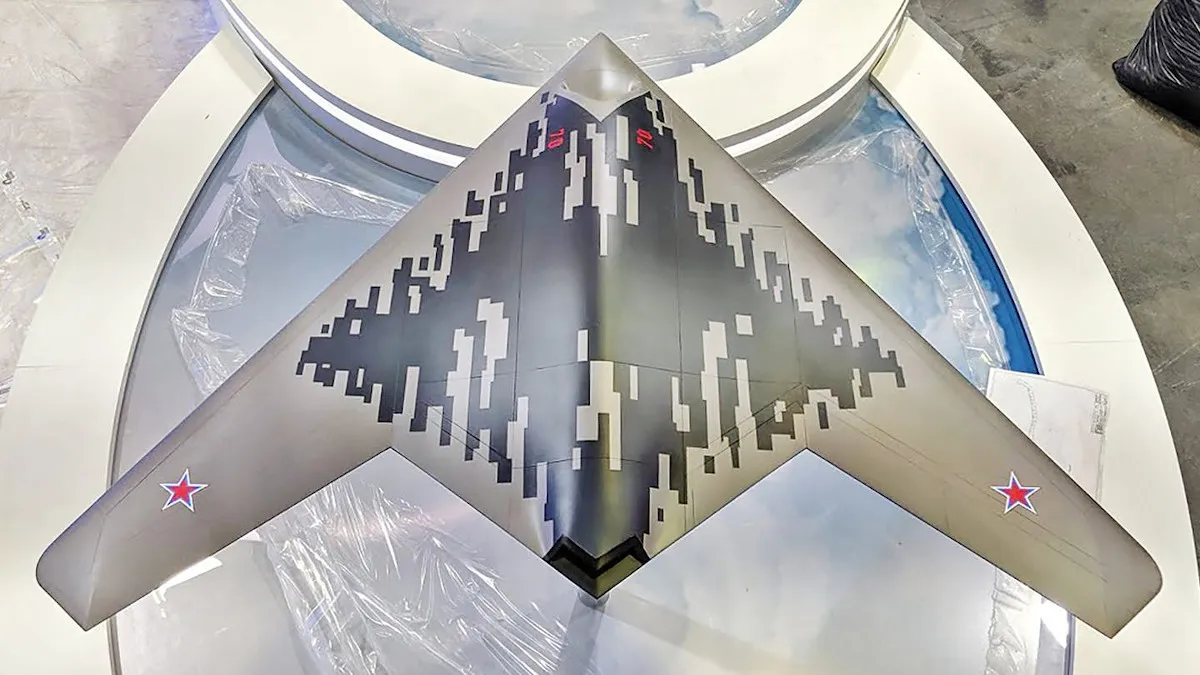
S-70 Drone VIA X Screenshot. Image Credit: X Screenshot.

Shahed Drone from Ukraine. Image Credit: Creative Commons.
Just in the last few days, Ukraine has launched over a thousand drones at Russia, part of which was the largest attack on Moscow of the entire war, while a Russian attack that included drones led to a scrambling of jets by the NATO countries of Romania and Poland.
What’s next? Autonomous drones, which do not require human intervention, are the next frontier, with some already emerging.
And one expert is sounding the alarm about what that could mean.
“Like a Dystopian Sci-Fi Plot”
Amy McAuliffe, a Visiting Distinguished Professor of the Practice at the University of Notre Dame and a weapons technology expert, wrote an op-ed this week for The Conversation titled “Russia‑Ukraine war is accelerating the dangerous race toward fully autonomous drones.”
McAuliffe has worked in government, including as assistant director of the CIA for weapons and counterproliferation, and as chair of the Intelligence Community’s think tank, the National Intelligence Council (NIC). Among the topics she has published on, according to her biography, is “Iran’s role in assisting Russia’s development of attack drones.”
In her Conversation op-ed, McAuliffe states that while fully autonomous drones have not yet reached the battlefield, the use of drones so far in the Russia-Ukraine conflict has “moved modern warfare a notch down that road.” She compared that scenario to something that would appear in a “dystopian sci-fi plot.”
Both countries have already used semi-autonomous drones, with Business Insider reporting last week that Ukrainian soldiers are asking for robots and drones that do more of the work themselves, in part by “letting one operator oversee multiple systems instead of manually controlling each one.”
McAuliffe predicted that, given the pace of development, a battlefield with as many as thousands of fully autonomous drones operating is possible within just a few years.
She also expressed concern that the technology “risks outpacing the Russian and Ukrainian frameworks for maintaining some degree of human control over weapons.”
Autonomous drones, McAuliffe writes, “come with serious ethical concerns.”
She worries that certain things will be pushed aside as a result, including concerns about the use of proportional force and limits on collateral damage.
The Drone Singularity?
Al Jazeera had reported earlier this month on a July attack by Russia on the southern Ukrainian city of Zaporizhzhia, which was “the first recorded case of Russia’s use of a fully autonomous attack drone powered by artificial intelligence.”
After the July attack, Ukrainian officials discovered something unique about the unmanned vehicle found in the wreckage: rather than an antenna, it featured an “AI-powered minicomputer” manufactured by Nvidia. This is called “reconnaissance-strike architecture.”
Ukraine, Al Jazeera reported, is working on its own version, known as “DELTA.” Russia’s version is called Svod Tactical Situational Awareness Complex.
McAuliffe, in her op-ed, pointed to an incident in late 2025, when a Ukrainian drone, using an AI-assisted guidance system, struck a Russian tank. As Reuters reported at the time, the drone’s communications link had been disrupted during the attack, so the drone “guided the final stages of the attack.”
As far back as 2024, Ukraine used “fully-autonomous” quadcopter drones on the battlefield, killing Russian soldiers in the process.
McAuliffe wrote of the prospect of “swarming drones,” in large numbers, who have the ability to “autonomously alter their behavior based on communicating with one another present a frightening challenge to maintaining human control.
The Pentagon Version
Will the United States have its own autonomous drones? That’s in the works.
According to a May report by DefenseOne, the Pentagon submitted a funding request this year for $54 billion for the Defense Autonomous Warfare Group, which includes autonomous drones and other weapons.
This represented a massive increase over the money requested for the previous version of the program, known as Replicator.
Former General and CIA director David Petraeus called the Defense Autonomous Warfare Group “the largest single commitment to autonomous warfare in history.”
About the Author: Stephen Silver
Stephen Silver is an award-winning journalist, essayist, and film critic, and contributor to the Philadelphia Inquirer, the Jewish Telegraphic Agency, Broad Street Review, and Splice Today. The co-founder of the Philadelphia Film Critics Circle, Stephen lives in suburban Philadelphia with his wife and two sons. For over a decade, Stephen has authored thousands of articles that focus on politics, national security, technology, and the economy. Follow him on X (formerly Twitter) at @StephenSilver, and subscribe to his Substack newsletter.


