

Denmark has warned that Russia could attack NATO within months in a new intelligence report. The Danish Defense Intelligence Service (DDIS) identifies a “low but growing risk” that Russia could carry out isolated attacks on infrastructure that is critical to supporting Ukraine. It follows growing concerns over hybrid attacks by Moscow as part of its four-and-a-half-year full-scale invasion of Ukraine.
Situation Deteriorating over Ukraine War
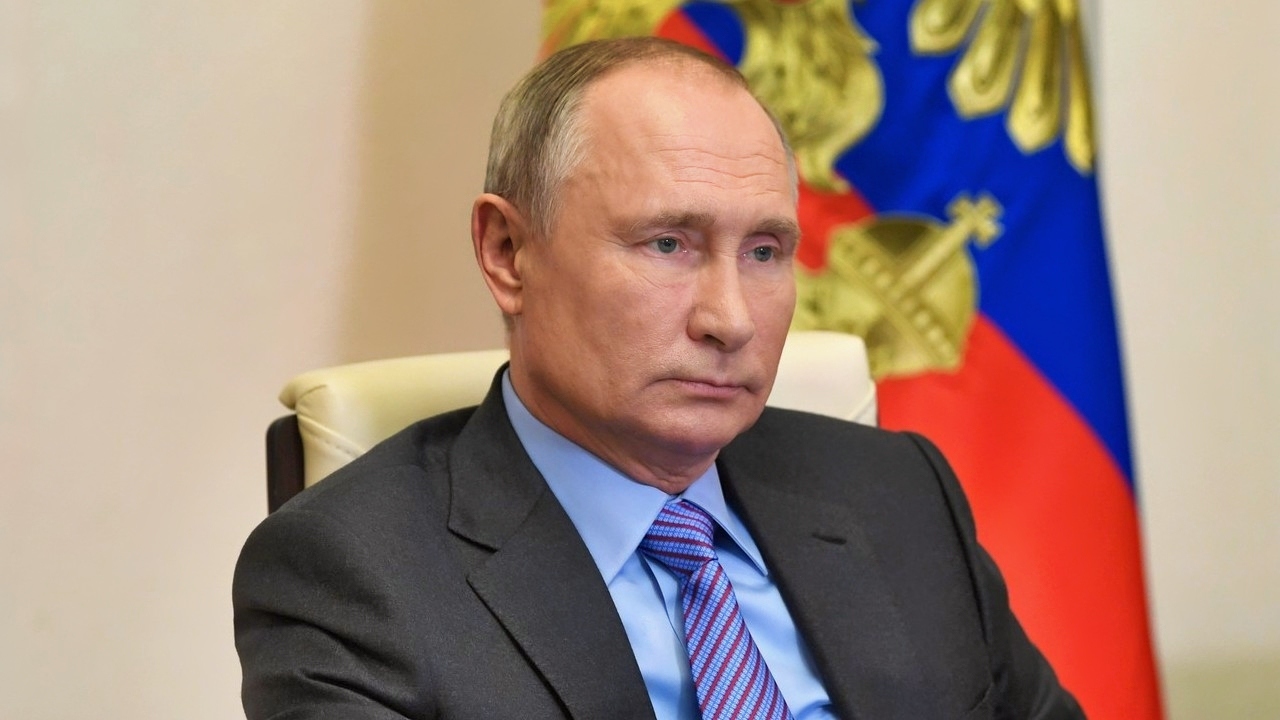
Putin in December of 2020 Creative Commons Photo
The three-page intelligence assessment begins with a warning that the security situation in Europe has “deteriorated further,” noting intensified sabotage, cyberattacks and drone attacks.
It references the recent foiled drone attack on Germany’s Leipzig Airport, stating that Moscow is “more willing to take risks.” It also cites an incident earlier this month where a Russian frigate fired flares towards a Danish military helicopter in the Baltic Sea.
The assessment then moves on to the war in Ukraine, which is well into its fifth year. Despite the lengthy conflict, Russia’s battleground gains have been minimal, with Kyiv retaliating through long-range attacks across its aggressor’s territory.
“Russia is under more pressure than it has been at any other point during the war against Ukraine,” DDIS writes. “Ukraine’s sustained long‑range attacks are causing still more extensive damage deep inside Russia.
Russia is suffering heavy losses for marginal territorial gains in Ukraine.
At the same time, the Russian economy is on the brink of a major crisis, driven by military expenditures, international sanctions and Ukrainian strikes on Russian energy infrastructure.”
Ukrainian Stalemate
The report continues to say that Western “economic and military support to Ukraine is vital to the country’s capability to hold back Russian forces and to raise the cost to Russia of sustaining the war,” noting that despite the absence of major breakthroughs expected on the frontline, President Vladimir Putin is “highly unlikely” to compromise on his main objectives for the full-scale invasion.
It adds: “Russia believes that Europe will gradually develop an autonomous military capability which, by 2030, will pose an increasing threat to Russia.
For Russia, the coming years therefore present a window of opportunity, during which President Putin could conclude that it is worth the risk attempting to drastically change the security order in Europe.”
Hybrid War Escalating
Russia, according to DDIS, will “intensify its hybrid war by carrying out more frequent attacks against the West and NATO” in the coming months, including destructive cyberattacks or sabotage that carries a high risk of casualties.
Hybrid warfare refers to non-conventional methods of military action, such as cyberattacks or using proxies to carry out missions on behalf of a state.
The most shocking part of the report came a few paragraphs later, with DDIS noting “a low but growing risk that Russia will launch a limited military attack against one or several NATO countries bordering Russia.”
“This could happen even if Russia continues the war against Ukraine and has not built the military capabilities necessary to wage a regional war,” the report added, noting that such an attack would be a “desperate move” but one which could “potentially take place in the coming months.”
“Such a limited military attack could take the form of isolated strikes with long‑range weapons on infrastructure that is vital to the support to Ukraine,” DDIS said. “In this situation, Russia might then claim that the weapons only struck NATO territory because they were jammed by Ukraine.
It could also be a so-called false flag operation, where Russia uses Ukrainian‑made drones to attack a NATO country.”
Invasion Highly Unlikely
Although the report warns that Russia may deploy military forces without insignia into bordering countries, it clarifies that such a move would require a build-up of forces near the border – something that would be difficult to conceal.
“The DDIS still sees no indications that Russia will launch an outright invasion of one or several NATO countries,” the report reads. “Even if Russia decides to invade a NATO country, it would likely take Russia at least six months to prepare and build up the necessary forces. Although a Russian invasion is highly unlikely, it cannot be ruled out.”
It concludes by affirming that Russia would only attack upon assessment that military action would not provoke a collaborative NATO response, adding doubt over Russia’s certainty about what could, and what couldn’t, cause Article 5 to be invoked.
“Consequently, there is a risk that Russia assesses that the NATO countries will not respond collectively, especially if Russia assesses that the United States cannot or will not support the European NATO countries in a potential war against Russia,” DDIS concludes.
About the Author: Shay Bottomley
Shay Bottomley is a British journalist. He has written for the Western Standard, Business Insider, Maidenhead Advertiser, Slough Express, Windsor Express, Berkshire Live and Southend Echo.