

A potential deal to ease traffic in the Strait of Hormuz is reportedly being cautioned against by Saudi Arabia and the United Arab Emirates (UAE).
The countries are keen to ensure that U.S. President Trump does not concede too much to Iran.
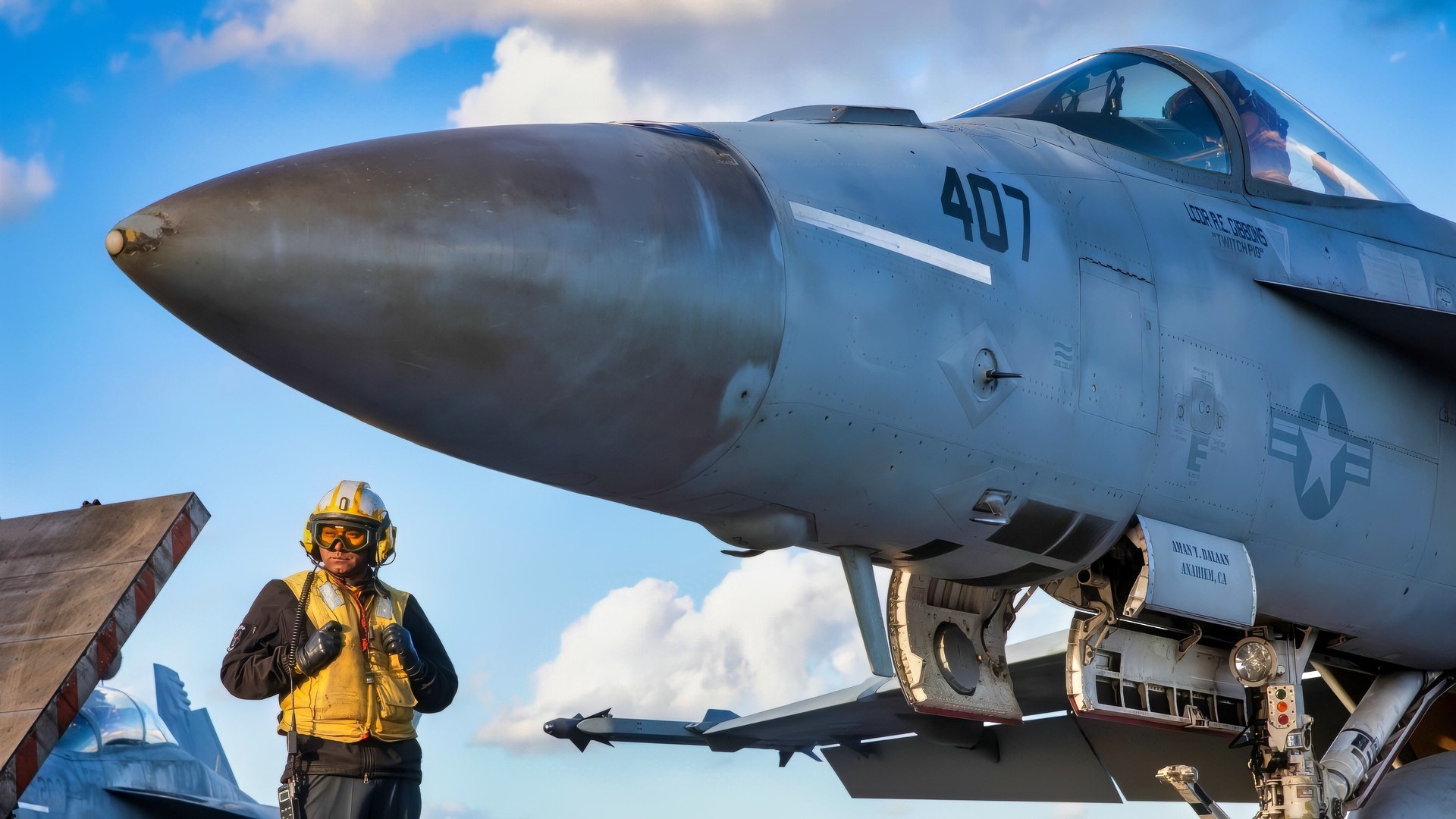
Aviation Boatswain’s Mate (Aircraft Handling) 1st Class Jose Mejiacastro, assigned to Air Department aboard the world’s largest aircraft carrier, USS Gerald R. Ford (CVN 78), prepares to signal to a Carrier Air Wing 8 F/A-18E Super Hornet attached to Strike Fighter Squadron 87 on the flight deck, Sept. 26, 2025. Gerald R. Ford, a first-in-class aircraft carrier and deployed flagship of Carrier Strike Group Twelve, is on a scheduled deployment in the U.S. 6th Fleet area of operations to support the warfighting effectiveness, lethality and readiness of U.S. Naval Forces Europe-Africa, and defend U.S., Allied and partner interests in the region. (U.S. Navy photo by Mass Communication Specialist 2nd Class Mariano Lopez)
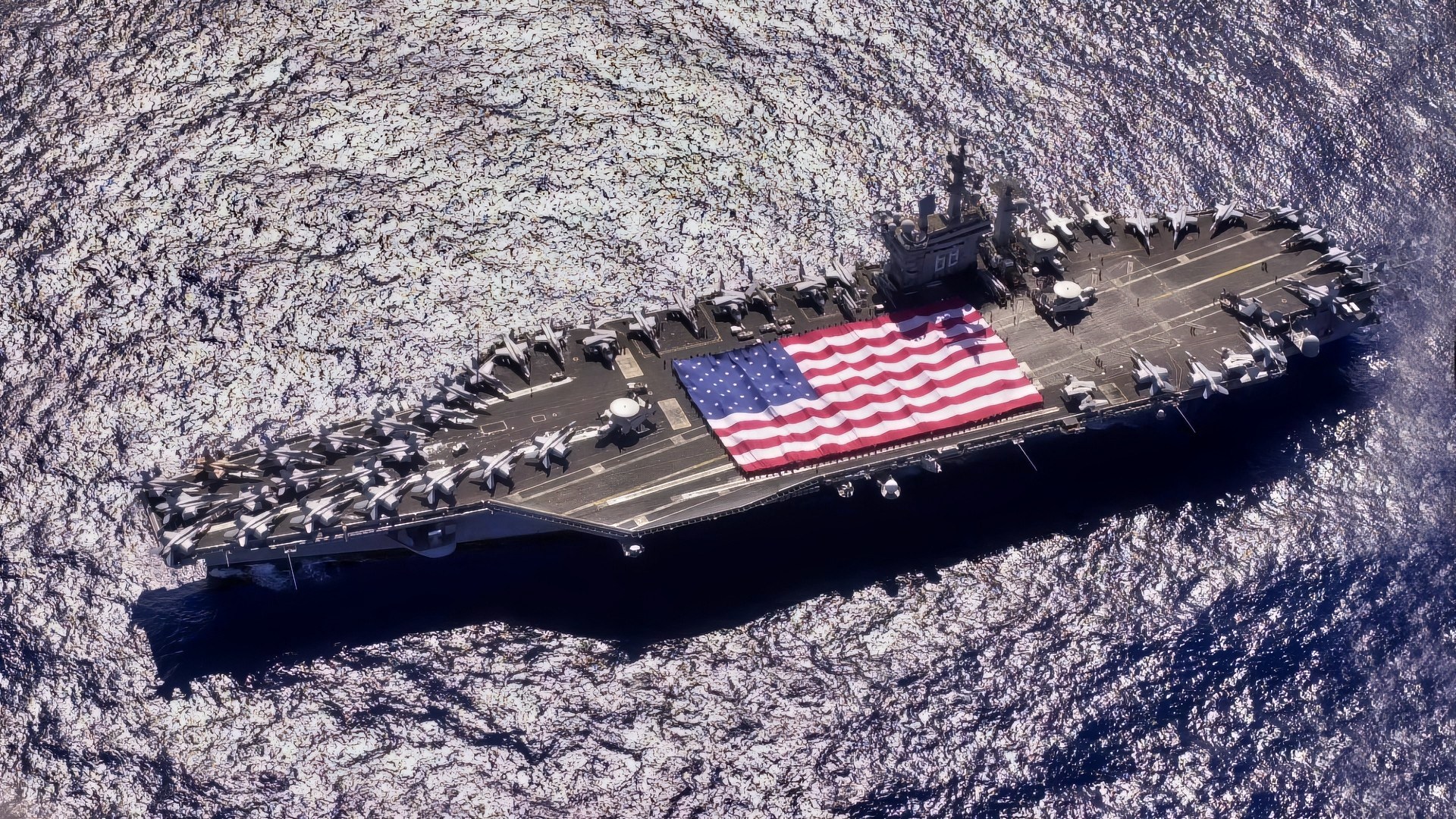
Pacific Ocean (November 3, 2003) — During Tiger Cruise aboard USS Nimitz (CVN 68), Nimitz and Carrier Air Wing Eleven personnel participate in a flag unfurling rehearsal with the help of fellow tigers on the flight deck. The Nimitz Carrier Strike Force and Carrier Air Wing Eleven (CVW-11) are in route to Nimitz homeport of San Diego, California after an eight-month deployment to the Arabian Gulf in support of Operation Iraqi Freedom. U.S. Navy photo.
In stark contrast, Qatar and Oman have called for the once-busy waterway to reopen and for hostilities to de-escalate.
On Thursday, the Wall Street Journal reported that Riyadh and Abu Dhabi were aiming for the U.S. to keep up its naval blockade and sanctions on Iran while talks are ongoing.
Crown Prince Lobbies U.S.
Privately, Saudi Crown Prince Mohammed bin Salman is lobbying American officials to maintain the embargo until Tehran signs a new agreement.
“There may be no greater force pushing the Gulf Cooperation Council (GCC) to conform with U.S. sanctions than the regime reactivating the Houthi threat to their south after months of having blocked shipping in the Strait of Hormuz,” claimed Behnam Ben Taleblu, an analyst for the Washington, D.C.-based Foundation for Defense of Democracies think tank.
Houthis Hold Strategic Island
Earlier this month, the Yemen-based terror group, which receives financial and military support from Iran, captured the ports of Mokha and Mayyun Island.
These areas border Bab el-Mandeb, the narrow gap between the Red Sea and the Gulf of Aden.
Houthi forces also took Greater and Lesser Hanish islands, continuing to put the crucial shipping lane at risk.
Despite the mayhem some of its proxies are generating, it remains to be seen what path Tehran will now take.
One White House official told Reuters this week that Iran was “desperate for a deal,” and that “The President holds all the cards,” with the U.S. being in a “very strong position.”
Dennis Ross, a former negotiator, argued that: “The blockade is what’s really squeezing the Iranians. It’s strangling them.”
Will the Strait of Hormuz Open Soon?
Iranian Foreign Minister Abbas Araqchi predicted on Thursday that within seven days of an agreement, hostilities in all areas, including Lebanon, will cease, and the United States will lift the blockade on Iran and the Islamic Republic’s assets and remove the oil sanctions.
“The Strait of Hormuz will be reopened on the last day,” he added.
A senior Iranian official, speaking to Reuters on condition of anonymity, outlined a possible sequence of steps for a deal.
“One way forward would be to solve the crisis in stages. The first would be to end the blockade and reopen Hormuz,” he said.
However, the Iranian figure warned that the Iranians have their fingers “on the trigger”.
President Trump was upbeat in New York on Thursday after his envoys Steve Witkoff and Jared Kushner held talks with mediators.
“Steve and Jared had a very productive meeting today with mediators of Iran…,” Trump said about the meeting, adding: “I think there’s a lot of momentum for them to make a deal.”
What Does Qatar Want?
Qatar has urged that reopening of the Strait not be tied up in knots with other disputes.
Mohammed bin Abdulaziz Al Khulaifi, the Qatari minister of state for foreign affairs, said this week that “the resumption of safe navigation should not depend on the resolution of every outstanding political dispute.”
Qatar also seems to be facilitating an informal mediation effort with Pakistan to help de-escalate the crisis between Washington and Tehran.
The West’s Partner?
This does not mean Doha is a friendly partner for the West.
Writing for the Washington Free Beacon last year, former Hudson Institute fellow Mike Watson explained how: “Villains like Hamas and the Taliban live comfortably in Qatar… Its TV channel, Al Jazeera, stirs up unrest in the region and spreads anti-American propaganda.” But the country got a kind of rebrand from the Biden Administration, which formally made it a non-NATO ally.
Meanwhile, Saudi Arabia faces a different dilemma as it tries to balance competing security priorities.
On Thursday, the Houthis claimed to have launched dozens of missiles and drones at Saudi Arabia while Riyadh said its forces had shot down six ballistic missiles.
In addition to the attacks, the East-West Saudi oil pipeline to the Red Sea was previously shut down for several days due to drone strikes.
The pipeline is a vital back-up route for Saudi oil exports westward while the Strait of Hormuz remains risky.
“That means that the responsibility for dealing with this threat is not just on Saudi Arabia; it is also on the whole international community,” warned foreign minister Prince Faisal bin Farhan in an interview with Fox News.
About the Author: Georgia Gilholy
Georgia Gilholy is a journalist based in the United Kingdom who has been published in Newsweek, The Times of Israel, and the Spectator. Gilholy writes about international politics, culture, and education. You can follow her on X: @llggeorgia.


