
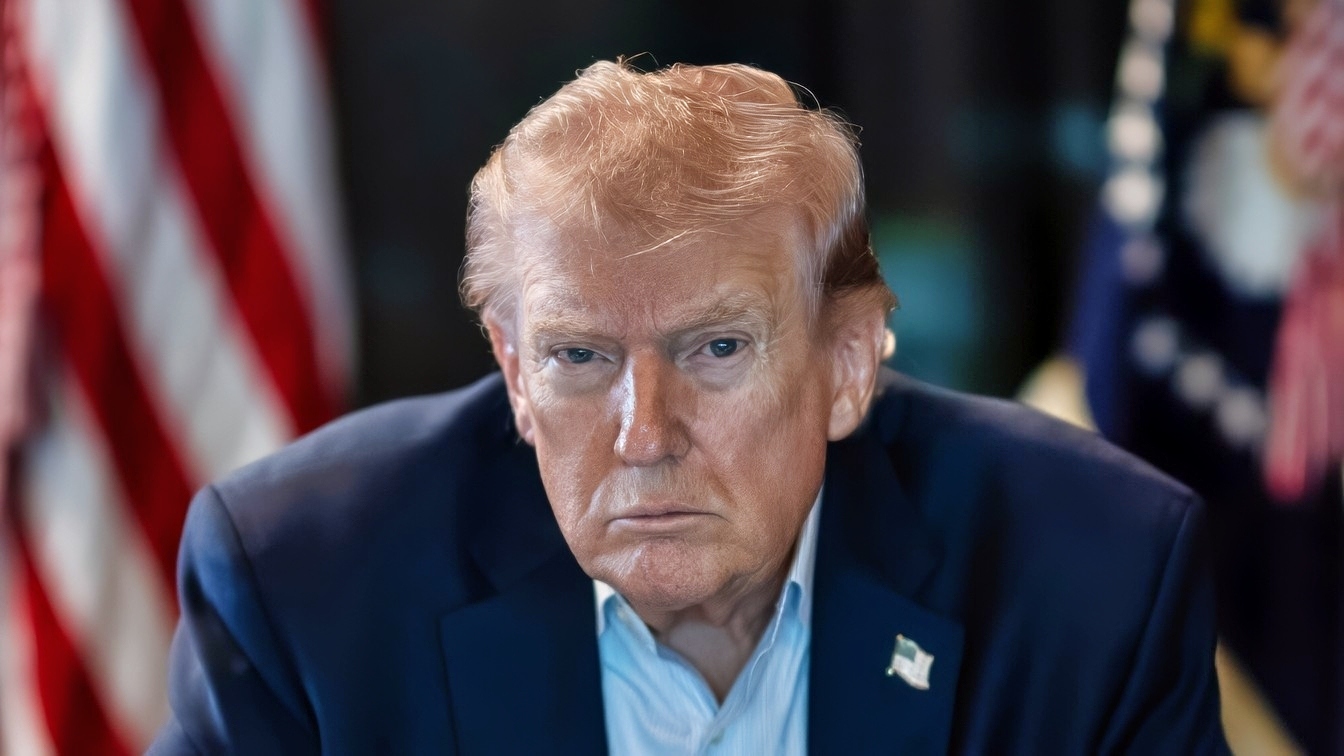
Donald Trump Says He Doesn’t Know Who’s Ruling Iran: U.S. President Donald Trump has said his biggest problem in resolving the Iran war is that he has no clue who runs Iran.
Trump brought up the conflict at an event in Maryland on Tuesday, 6th October.
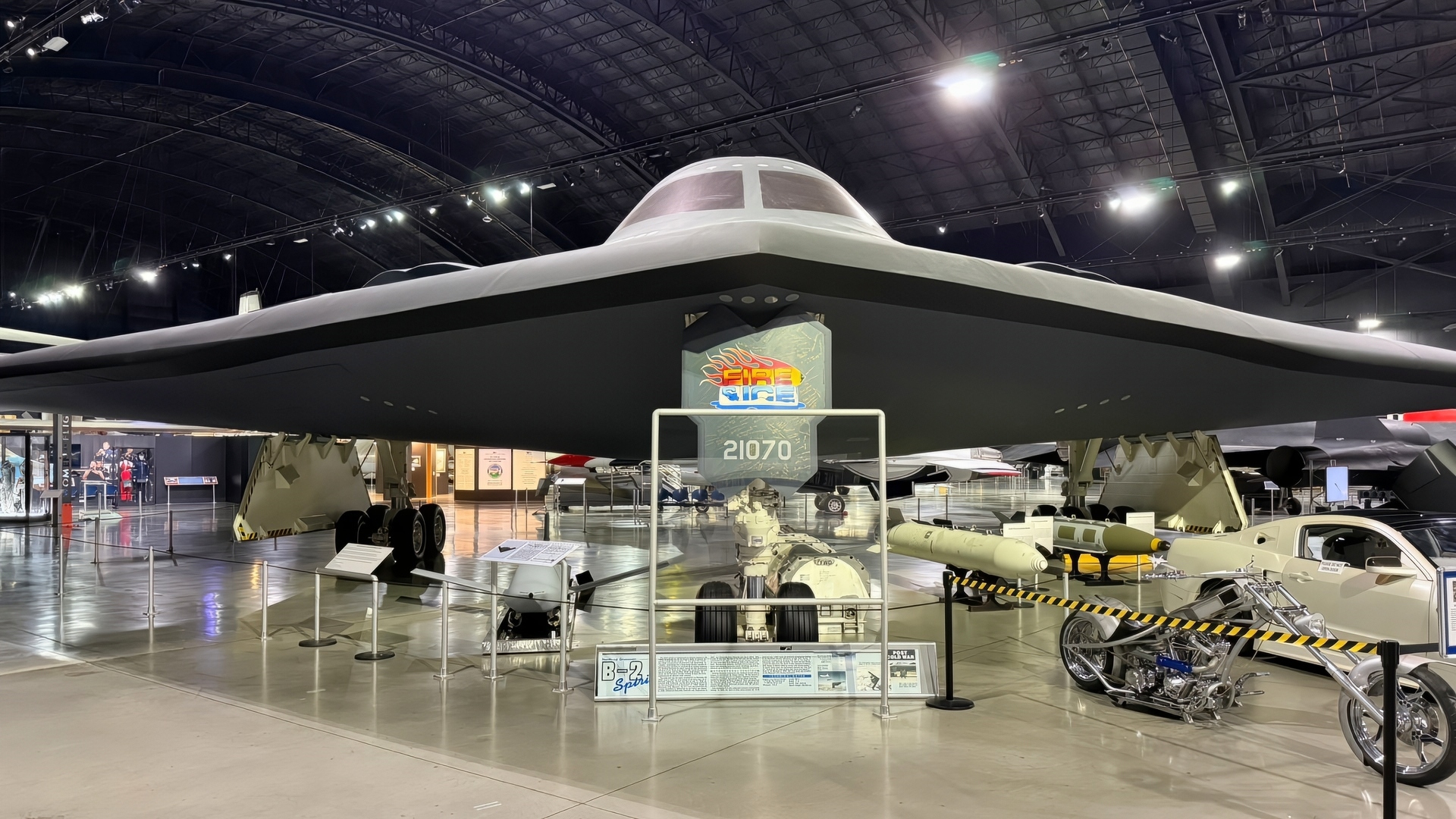
B-2A Spirit On Display. Image by Editor Harry J. Kazianis/National Security Journal.
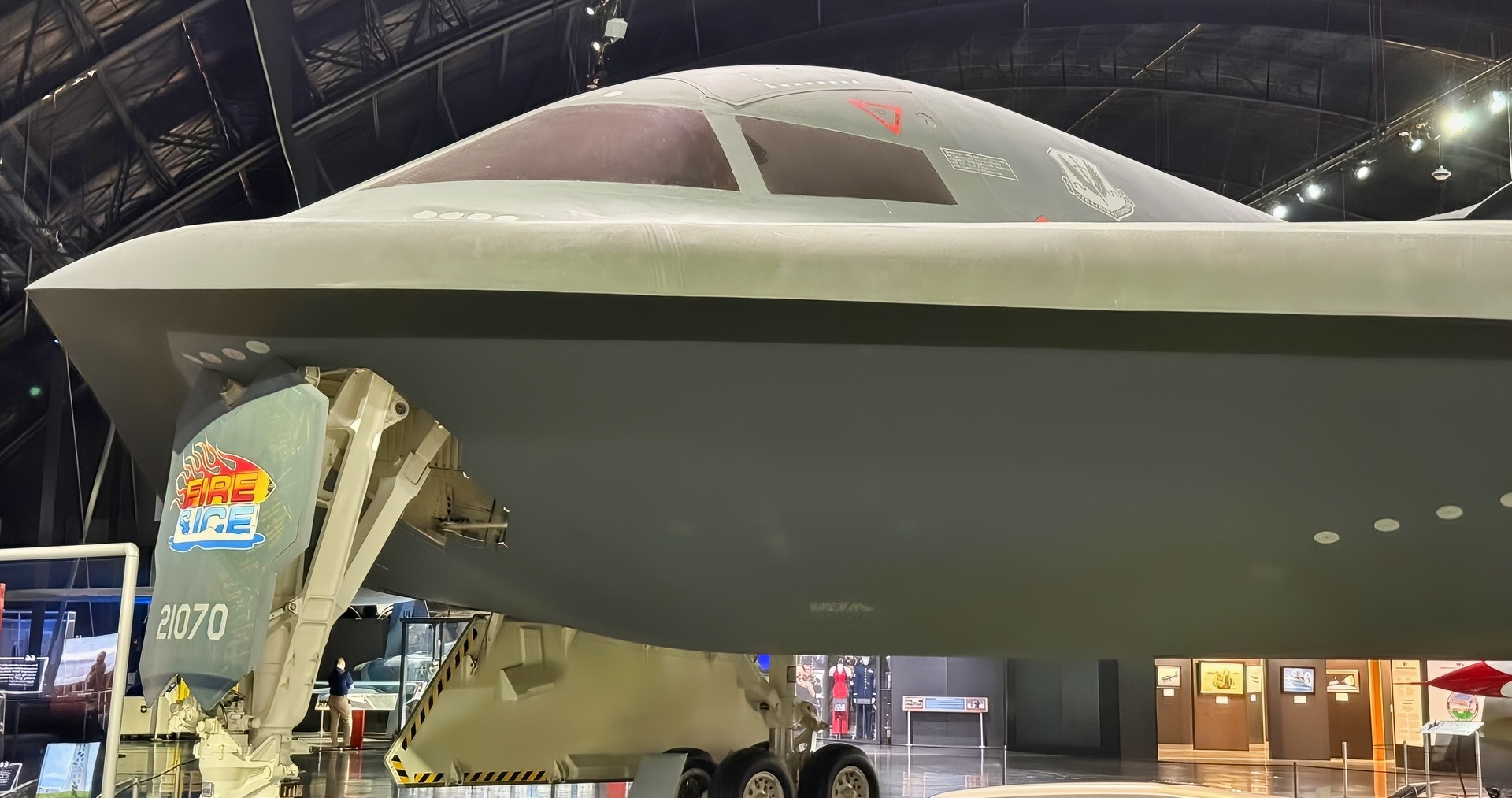
B-2A Spirit Stealth Bomber USAF Museum. Image Credit: Harry J. Kazianis/National Security Journal.
It comes amid growing regional tensions in the Middle East between Saudi Arabia and the Iranian-backed Houthi rebels.
Additional Investment
Trump spoke at Sparrows Point, Maryland, to announce a new investment from military technology company Anduril in the Baltimore shipyard. The $3.7 billion investment will fund components for nuclear-powered submarines.
“Workers of Baltimore and shipyard here at Sparrows Point have been a vital part of the American industrial strength for literally over a hundred years,” the President said, noting that the work being done “is going to be a big component for our future military.”
No Peace, No Progress
Trump then pivoted to the war in Iran, which has been ongoing for more than seven months.
After more than five weeks of mass bombardment, during which the country’s supreme leader was killed, the war has turned into one of economics, with both sides exchanging strikes on a semi-regular, retaliatory basis. Mojtaba Khamenei, who succeeded his father as the country’s supreme leader, has not been seen in public since he took office in March.
The two warring nations signed a memorandum of understanding in June to halt fighting while they negotiated a longer-term peace deal.
It fell through within weeks, however, after Iran allegedly struck a commercial vessel that was trying to sail through the Strait of Hormuz. The memorandum of understanding expired in mid-August.
Since then, Iran, which is suffering from a struggling economy due to sanctions and a U.S. Naval blockade that has caused its oil exports to effectively cease, has presented a proposal to the U.S. that mirrors the memorandum of understanding.
Tehran’s demands include “an end to the war on all fronts” as well as the release of frozen funds and an end to the ongoing U.S. naval blockade of Iranian ports.
If agreed, the Strait of Hormuz would reopen after seven days, and discussions over the country’s nuclear program would begin immediately afterward.
Who’s in Charge?
The U.S. has rejected the deal, and nearly a week of meetings through mediators on the side of last month’s United Nations General Assembly has done little to move a permanent peace agreement forward.
Despite this, Trump seemed perplexed by who exactly was running the country in his remarks on Tuesday.
“Thanks to the men and women of America’s armed forces, dozens of Iran’s terrorist leaders have been blown out of existence and straight through to the gates of hell,” Trump told the audience at Sparrow Point. “As you know, their leaders are gone. Their second group of leaders is gone. And the biggest problem I have is nobody knows who the hell is running the country. Nobody knows. But maybe that’s a good thing.”
Iran has refuted Trump’s claim, which follows public questions from senior U.S. officials over the authoritarian regime’s command structure. While U.S.officials have spoken with Iranian President Masoud Pezeshkian and Foreign Minister Abbas Araqchi, Vice President J.D. Vance said it was “not totally clear how their country makes decisions” during negotiations.
In response, Foreign Ministry spokesman Esmaeil Baghaei said U.S. officials were very clear over who to speak to in Iran. “The problem is actually the opposite; it lies in the contradictory positions and mixed messaging from U.S. officials,” he said on Sunday.
Elsewhere in the Region
While fighting between Iran and the U.S. is on another unofficial pause, tensions are flaring between Saudi Arabia and the Houthi rebels in Yemen.
After a four-year ceasefire, fighting has all but resumed between the Kingdom and the Iranian-backed militia group. The latter’s advances in northern Yemen have taken them to the Bab al-Mandeb Strait, threatening commercial shipping through Saudi Arabia’s southern bypass route around the Strait of Hormuz.
On Wednesday, 7th October, the Houthis claimed they had attacked military sites in Saudi Arabia, including the King Khalid International Airport in Riyadh.
The group, which did not provide evidence, said they had used ballistic and cruise missiles as well as drones in the attack.
The Saudi-led coalition, which backs the Yemeni government in the decade-long civil war, said it intercepted a ballistic missile north of the capital that was reportedly launched from Yemen. The Associated Press also reported a brief disruption to flights as attacks intensified.
About the Author: Shay Bottomley
Shay Bottomley is a British journalist. He has written for the Western Standard, Business Insider, Maidenhead Advertiser, Slough Express, Windsor Express, Berkshire Live and Southend Echo.