
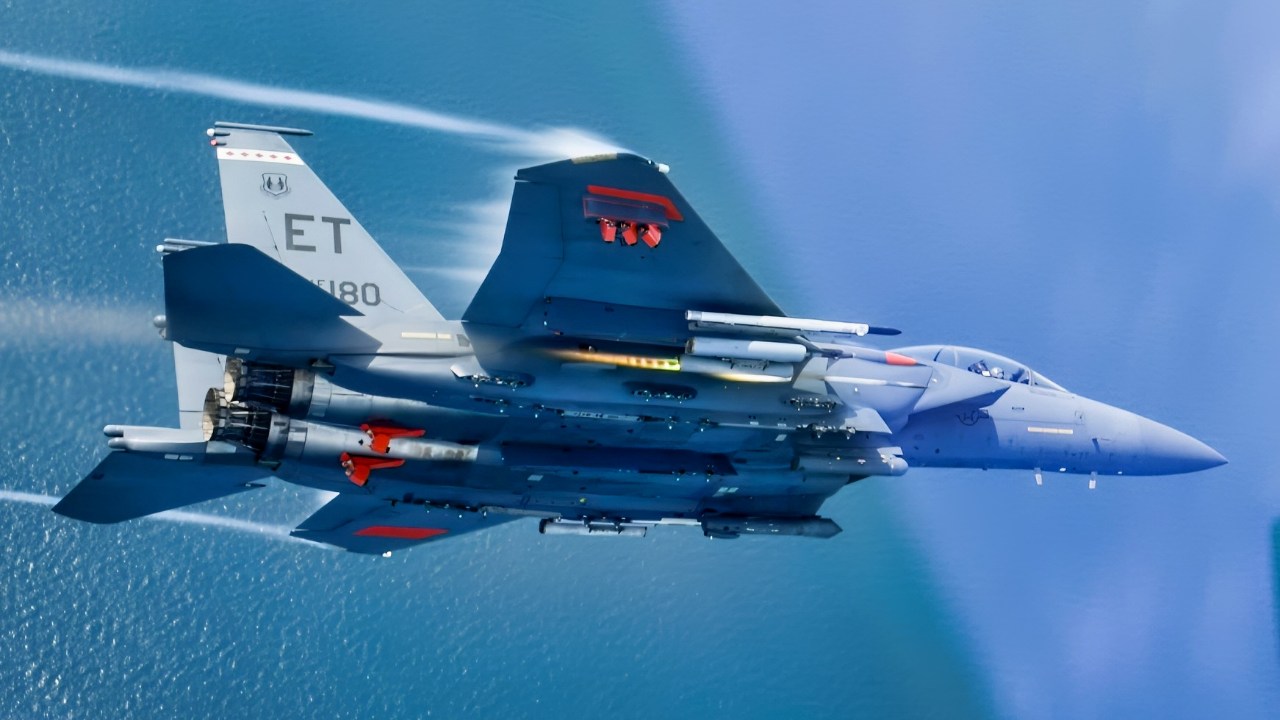
A new Congressional Research Service report has revealed that 81 aircraft, helicopters and drones have been lost or damaged during the seven-month-long war against Iran.
The damage costs $3.3 billion, according to the report published on Monday, 5th October, by the nonpartisan body.

F-15 Fighter Taken on July 19, 2025. Image Credit: National Security Journal.
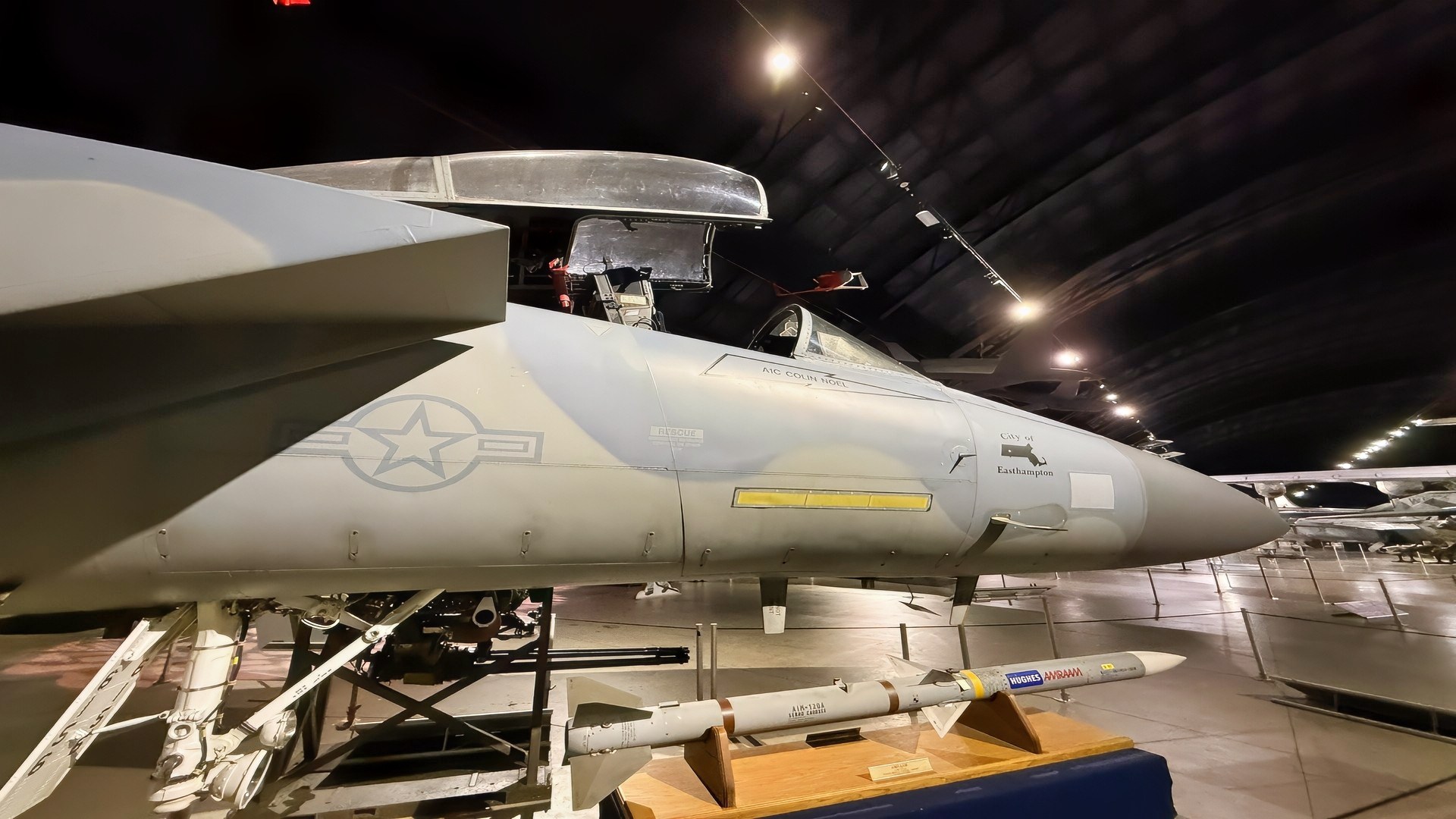
F-15 Fighter at the U.S. Air Force Museum. Image Taken on July 19, 2025 by National Security Journal.
It follows a report by the Pentagon’s inspector general, released last month, that outlined how the conflict had cost America $33.4 billion through the end of June, notably warning that the conflict “has resulted in strategic inventory shortfalls and revealed industrial base bottlenecks for munitions resupply” for advanced weapons.
81 Losses
The report outlines that 81 aircraft have been lost or damaged since Operation Epic Fury began at the end of February.
Four F-15E Strike Eagle fighter aircraft were lost in the early months of the war, with three shot down by friendly fire over Kuwait on Monday, 2nd March, according to the U.S. Central Command (CENTCOM).
Another was destroyed on Sunday, 5th April over Iranian territory. An F-35A Lightning II was also damaged over Iran on Thursday, 19th March.
Furthermore, eight F-15s sustained “light damage” in an Iranian strike on Muwaffaq Salti Air Base, Jordan, before being returned to service in early September.
The same strike also severely damaged an A-10 Thunderbolt II ground-attack aircraft – the second incident involving that aircraft after an A-10 was destroyed after being struck by enemy fire.

An A-10C Thunderbolt II sits under a sun shade July 29, 2014, at Moody Air Force Base, Ga. The A-10’s primary weapon is a single 30mm GAU-8/A seven-barrel Gatling gun. It can also carry up to 16,000 pounds of mixed ordnance such as cluster bomb units, joint direct attack munitions and AIM-9 Sidewinder missiles. (U.S. Air Force photo/Airman 1st Class Ryan Callaghan)
Early Losses
One of the highest American loss of human life incidents took place on Thursday, 12th March, when a KC-135 Stratotanker crashed in Iraq, resulting in the deaths of all six aircrew.
A second KC-135 was also involved and was forced to land in an emergency.
Five KC-135s were damaged two days later, after an Iranian attack on the Prince Sultan Air Base in Saudi Arabia.
At the same base a fortnight later, an E-3 Sentry airborne early warning-and-control system aircraft was damaged in a direct hit by an Iranian projectile.
April saw several incidents. Sunday, the 5th, saw two MC-130Js that were searching for the aforementioned downed F-15E intentionally destroyed during a search and rescue mission that saw a HH-60W helicopter also sustain damage.
A week later, an MQ-4C uncrewed aircraft “crashed in a mishap,” according to a U.S. Navy document.
Crewed and Uncrewed Damages
Several uncrewed aircraft were destroyed from February to the end of September.
On Sunday, 31st May, a MQ-1 uncrewed aircraft was shot down by Iran, with two others downed in mid-September. Furthermore, at least 45 MQ-9 Reapers had been lost during operations against Iran by mid-August.
Monday’s report also included several helicopter losses previously reported.
The AH-64 Apache helicopter that was shot down over the Strait of Hormuz was highlighted, as were the four AH-6 Little Bird attack choppers that were destroyed in rescue missions.
The report also featured an MH-60 lost in the Arabian Sea.
Congressional Considerations
The report concludes with a list of “potential issues” for Congress to consider.
On information available to Congress, the report said lawmakers “may assess whether or not it has sufficient information and time to evaluate the potential effects of aircraft damage and losses in U.S. military operations and potential DOD [Department of Defense] plans or programs to acquire replacements.”
It also notes budgetary impacts, suggesting lawmakers “may consider whether or not to approve, reject, or modify requests for funding” to replace aircraft damaged or lost during Operation Epic Fury.
On force sufficiency, the report said: “Congress may assess whether losses in certain high-demand platforms that are aging and limited in number, such as the E-3 Sentry, create capability gaps or increased risk in other theaters.”
The report also notes considerations for industrial base capacity and whether the U.S. has the production lines and supply chains to replace lost aircraft within DOD’s required timeframes. “Congress may seek information about the extent to which competing demands, including foreign military sales or production constraints, may affect DoD’s ability to regenerate capacity,” the report adds.
Finally, the report concludes on operational risk.
It considers whether Congress “may assess whether reported losses reflect changes in the threat environment or in adversary capabilities,” adding: “Congress may also assess whether any changes to the threat might signal the need to adjust US equipment; operational concepts; tactics, techniques, and procedures; or basing posture.”
About the Author: Shay Bottomley
Shay Bottomley is a British journalist. He has written for the Western Standard, Business Insider, Maidenhead Advertiser, Slough Express, Windsor Express, Berkshire Live and Southend Echo.